「はじめてずかん1000」、ただの図鑑で終わらせるのはもったいない!
買ってからほぼ毎日子供と遊んでいたら、
2歳前で四語文が話せたり、英語も30単語くらい話せるようなりました。
語彙力がぐんぐん伸びた、我が家のリアルな活用法です。
① 自然と遊べる仕組みに: 本とペンは常に子供の遊び場の目立つところに。
② 親も一緒に遊ぶ: 英語の音を鳴らして、親も楽しむのが一番の近道。
③ 生活の中で復習: 聞いた言葉を普段からポロッと言ってみる。これだけで定着します。
「勉強させなきゃ」って気負わず、日常の中に溶け込ませるのがコツ。道具は使ってナンボです!
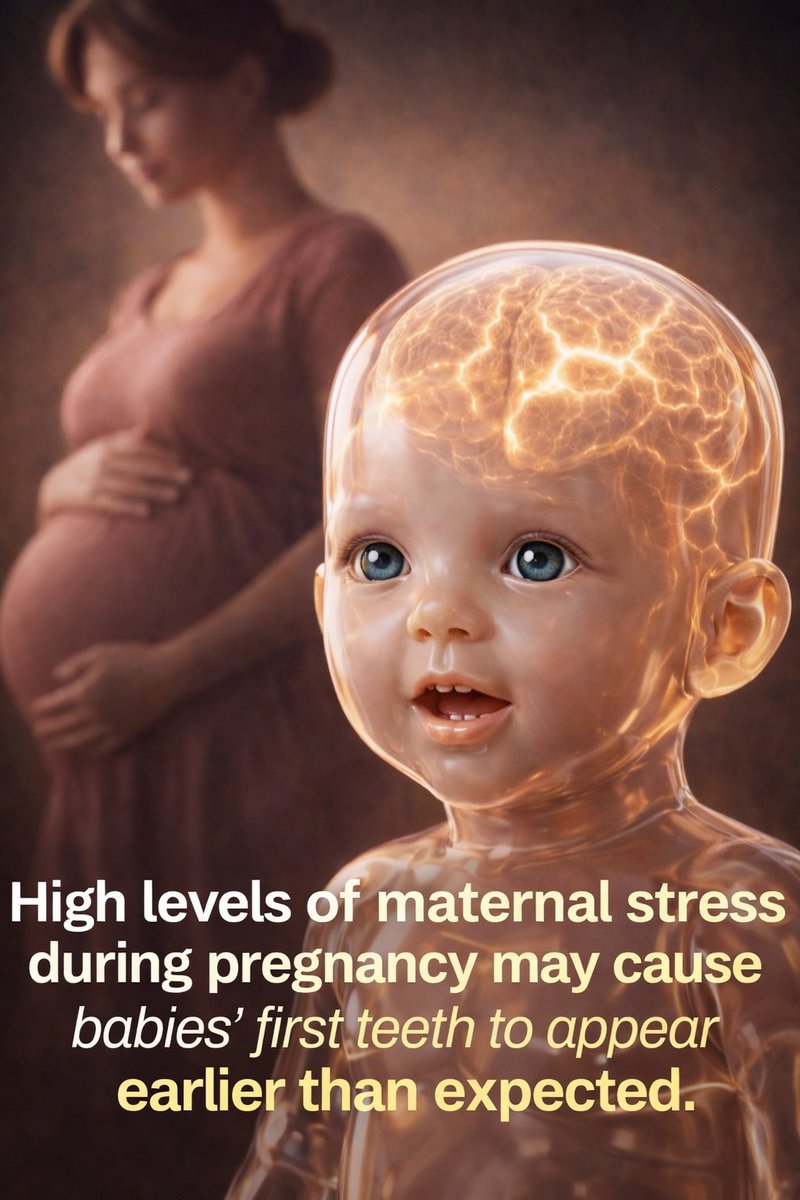
🚨 Stress in Pregnancy May Change a Baby Before Birth — Even Their First Tooth 🦷
What if a mother’s stress during pregnancy could quietly speed up a baby’s biological clock? New research suggests exactly that — and the evidence is showing up in babies’ mouths.
Scientists have found that babies born to mothers with high stress levels late in pregnancy tend to get their first teeth earlier than usual. The key player is cortisol, the body’s main stress hormone. When cortisol levels stay high during pregnancy, it may influence how fast a baby’s body develops — including bones and teeth.
In the study, infants whose mothers experienced the most stress had significantly more teeth erupted by just six months of age compared to others. This means stress before birth doesn’t just affect emotions — it may actually speed up physical development inside the womb.
Why does this matter? Researchers believe early teething could be an early warning sign of future health risks linked to prenatal stress. In other words, a baby’s teeth might be quietly telling a deeper story about their earliest environment.
This research, led by scientists from the University of Rochester Medical Center in collaboration with dental experts from the American Dental Association, highlights something powerful: a mother’s mental state during pregnancy can leave lasting biological footprints on her child.
Research reveals that holding your baby during sleep helps build the neural pathways essential for lifelong emotional resilience.
Science is increasingly validating what many parents have intuitively known for generations: the gentle act of holding a sleeping baby plays a profound role in shaping early brain development.
Research demonstrates that consistent, soothing physical contact—such as skin-to-skin holding during rest—helps strengthen functional and structural connections between the prefrontal cortex (the brain's hub for higher-order emotional regulation, decision-making, and cognitive control) and the amygdala (the core region for processing fear, threat detection, and emotional reactivity). These prefrontal-amygdala pathways form a critical top-down regulatory circuit: the prefrontal cortex modulates amygdala responses, dampening excessive fear signals and enabling calmer emotional processing over time.
By providing reliable, nurturing touch early in life, caregivers essentially "wire" the infant brain for better stress resilience and emotional balance. This early reinforcement promotes more efficient neural patterns that support self-regulation, reducing vulnerability to intense fear responses or anxiety as the child grows. The benefits extend well into adulthood, establishing a foundational biological scaffold for healthier mental health outcomes—helping individuals cope more adaptively with future stressors and challenges.
In essence, that quiet moment of embrace during sleep transcends mere comfort; it actively contributes to building a child's long-term psychological resilience through targeted neurodevelopmental sculpting.
[Tottenham, N. (2020). "Maternal buffering of human amygdala-prefrontal circuitry during childhood but not during adolescence." Nature Neuroscience]
According to PubMed, when a baby cannot locate their mother, the brain interprets the absence as an immediate threat to survival. Within seconds, the infant stress response system activates, releasing cortisol to heighten alertness and drive urgent behavior.
Studies indexed on PubMed show that this hormonal surge can increase cortisol levels by 200–300% in less than a minute.
For an infant, safety is biologically tied to the presence of a caregiver rather than conscious understanding. What appears as panic is in fact a rapid, hard-wired survival response aimed at restoring connection.
Excessive screen time before age five has been linked to slower growth of white-matter pathways in the developing brain. These pathways are essential for language, literacy, and cognitive processing, making their healthy development crucial during early childhood.
MRI scans reviewed in a study published in JAMA Pediatrics show that children with higher screen exposure demonstrate reduced white-matter integrity. As a result, toddlers may face an increased risk of speech delays and difficulties in communication. The findings highlight the importance of mindful screen-use habits during the early years to support optimal brain development.
「許可したコンテンツのみ表示」っていう設定があるらしい!
設定方法はこんな感じ👇
① YouTube Kids アプリの設定を開く
② プロフィール →「設定を編集」 →「許可したコンテンツ」をオンにする
③ 見せたい動画を「+」ボタンで追加していく
これやったら、YouTube見せることへの罪悪感がだいぶ減ったという話も!是非試してみてください🙌