@AISuccessors were literally born during the hackathon at @agihouse_org back in November 2025.
Since then, we've won w/ our UI mapping tech at yet another hackathon at AGI House this April, and now, we're doing a 3rd step:
Open-sourcing UI Atlas - our UI mapper for Computer Use
AI agents get lost in unfamiliar software, just like people get lost in a new city. We��ve just open-sourced UI Atlas, a tool that maps Windows apps—their screens, buttons, and what happens when you click.
Learn more in the article below ⬇⬇⬇ https://t.co/c8tn6QNN3P
1/5 | AI Successors is now Ilmen (@IlmenAI). ✨
A lot of this journey has happened at @agihouse_org: UI maps, a harness that checks AI actions, then “Boring Computer Use.”
Different builds. The same question: how do we make AI useful in the software businesses already have?
AI Successors is now @IlmenAI.
Even superintelligence will need to work with that Windows app from 2003.
We’re connecting old software, web apps and files so AI can do real work—even without APIs.
Connect the unconnectable.
https://t.co/6MuxtEq3rH
Computer-use agents have a data and grounding problem.
Language models had an enormous corpus to learn from: the web, books, code, conversations.
Computer-use systems don't yet have an equivalent corpus of structured experience describing how real software behaves.
To operate software reliably, an agent needs to answer questions like:
* Which control is this?
* What actions does it support?
* What changed after the click?
* Have I seen this state before?
* Where did this popup come from?
* And what evidence tells me any of this is true?
Today, much of that understanding still has to be reconstructed from pixels, accessibility information, and the current interaction context.
So we started asking a different question:
What if software could be mapped instead of rediscovered from scratch every single time?
Today, @emiliiale and me (with support from @MikhailBurtsev and our friends and advisors) at @AISuccessors are open-sourcing UI Atlas.
UI Atlas is our experiment in open infrastructure for computer-use data and grounding.
It observes real desktop software and turns UI evidence, controls, interactions, states, and transitions into structured, reusable UI Maps.
The goal isn't to build another autonomous agent.
It's to explore whether persistent, evidence-backed representations of software can become useful infrastructure for:
grounding → evaluation → testing → and eventually better computer-use training data.
The first release is deliberately narrow: Windows, local-first, attended observation and map construction. The project is MIT-licensed, and we're opening it because this problem is much bigger than the applications and environments we can test ourselves.
And alongside the code, we finally wrote down what we actually mean by a UI Map — what it is, what it isn't, how UIAtlas constructs one, and which assumptions we want the community to challenge.
O UI Map, What Art Thou? Introducing UI-Atlas
→ Medium: https://t.co/vMgf9oNIEq
Try / inspect / break UI Atlas:
→ GitHub: https://t.co/8dBqRv5Wjr
LLMs had the web.
Computer-use agents need a map of the software world.
#ComputerUse #Autonomy #AIAgents #AGI
Andrej Karpathy just broke the entire premise of modern AI:
"Agents aren't magic. They're distillation at scale."
99.99% of your LLM's capacity is wasted on garbage data it never needed.
Small model + right tools + closed loop = terrifying capability.
In a 16-minute conversation, Karpathy reveals the full reasoning stack.
Worth more than any $500 AI course you've seen this year.
A terrifyingly simple idea: AI worker is a yet another person ("artificial person") in your existing systems like Slack or email.
But what would make you trust it in executing your tasks?
@AISuccessors and Perform It are at AI Rabbit Hole 2026.
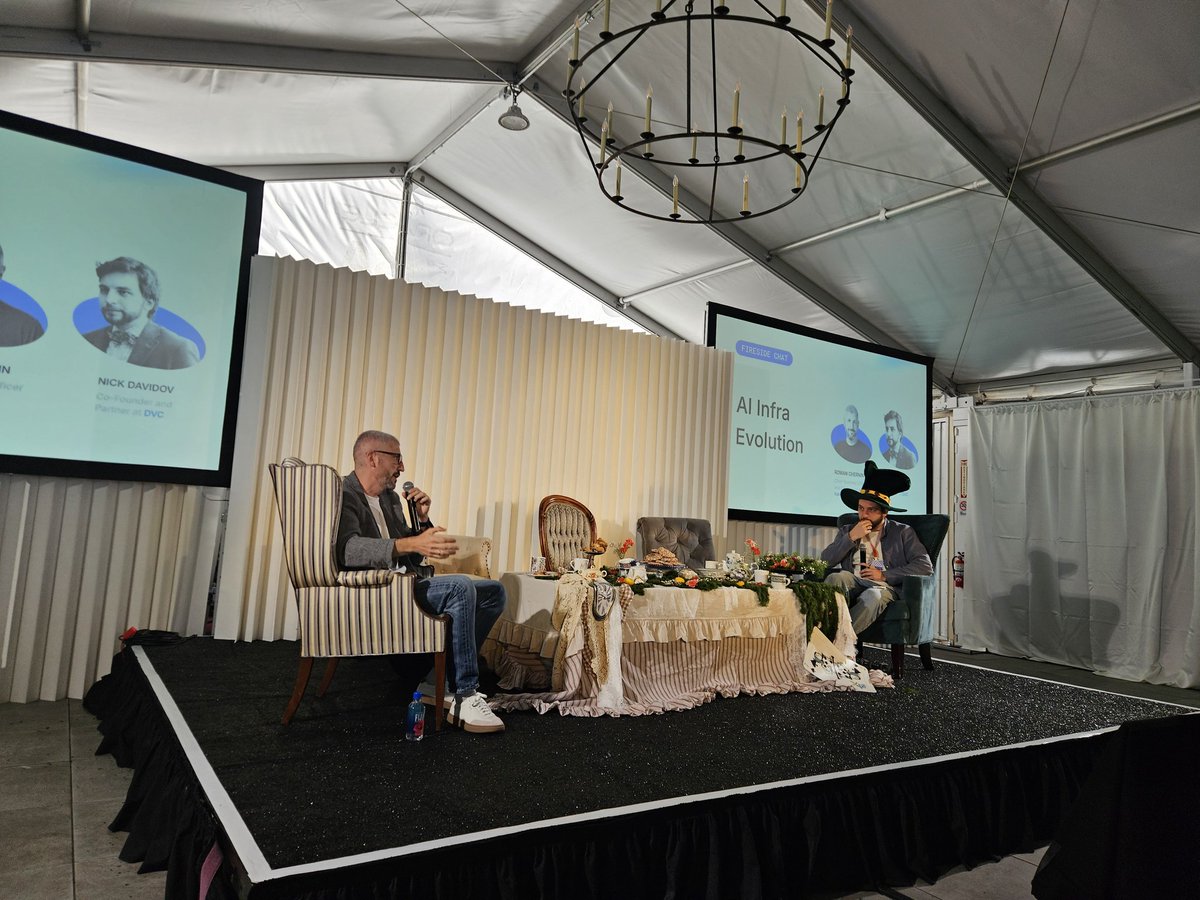
Just listened to overview of AI Report by @vanessaparli from Stanford and now listening to @romanchernin and @Nick_Davidov discussing how @nebiusai is preparing it's business to scale beyond its deals with Microsoft, Meta, and others.
What a day!
This. Thanks to @levie. Very well said.
With the speed we're delegating more and more tasks to the AI Agents, it becomes painfully clear that a reliability layer is the must.
Want to know more?
Claude can use software like a human tester.
At @AISuccessors, we're building the reliability layer that makes software-operating UI agents usable in high-stakes enterprise environments.
Want to learn more?