My essay "When the Crescent met the Swastika" is out with @theindernet — my first attempt to bring my MA thesis to a wider audience. Writing it for a general readership meant a lot.
https://t.co/25RsPyTFPp
My new piece in Dawn Images today: I went to Portugal for a conference and found the age of crusades turning quietly into the age of empire.
Templar Tomar, the caravels, Ceuta painted in tiles above a railway platform.
https://t.co/4hzHDTymfQ
@dekkani@theindernet Thank you for highlighting this! I know a little — Iqbal Shedai's collaboration with the Italian fascists, and Khwaja Abbas writing against Nazi propaganda — but would love to read more. Also a big admirer of your work, especially the piece on the "little Führer of Bombay."🙂
My essay "When the Crescent met the Swastika" is out with @theindernet — my first attempt to bring my MA thesis to a wider audience. Writing it for a general readership meant a lot.
https://t.co/25RsPyTFPp
Polanyi on the rise of fascism:
"the victory of fascism was made practically unavoidable by the liberals' obstruction of any reform involving planning, regulation, or control."
Amazing review in the @thewire_in of @BaijayantiDiya's new book. It's a must-read for anyone interested in Indo-German entanglement from the early 20th century until at least WW II. Her work fascinates me since it intersects with my master's thesis.
https://t.co/GkVYW2CRkQ
Here’s a little ditty I wrote in @FTAlphaville today about the arithmetic gymnastics behind the assertion that Pakistan’s debt is sustainable.
This assertion requires a suspension of disbelief.
With thanks to the indefatigable @RobinWigg
(and apologies to @JoyDivision)
Thread 1/n: My kids and I were horrified at our recent visit to New York City’s American Museum of Natural History @AMNH . It was mindboggling, after the carefully curated exhibitions at the New-York Historical Society down the street. Is this a museum or a time-capsule? Why are
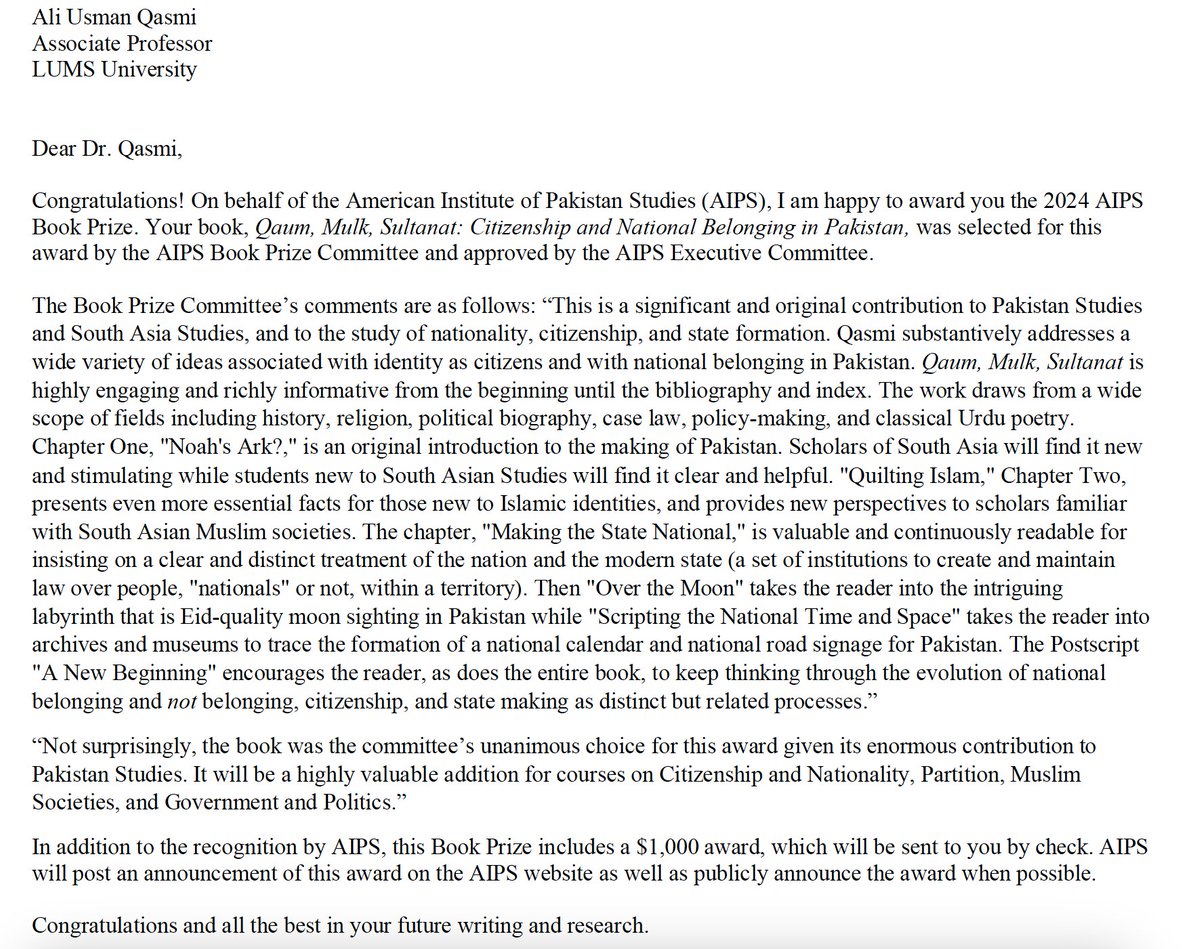
Delighted to receive the 2024 AIPS Book Prize for my recently published book. This recognition is profoundly meaningful, given the award's prestige & rigorous selection process by leading scholars. Grateful to everyone whose support made writing & researching this book possible🙏
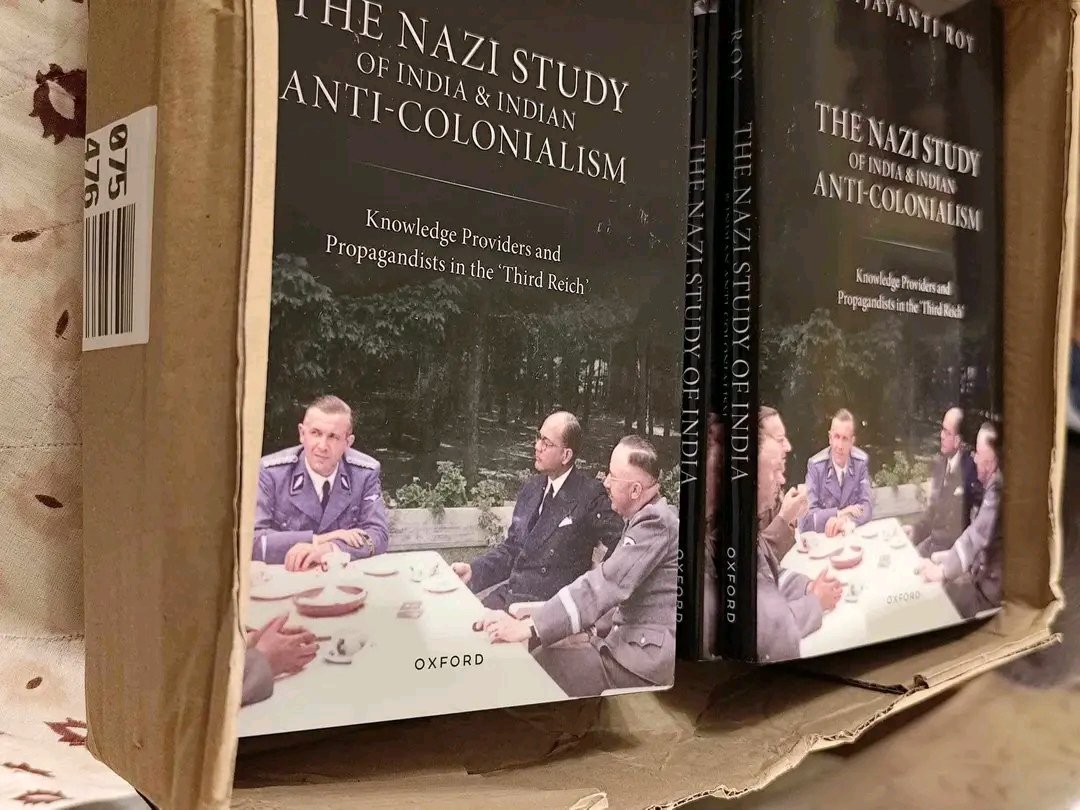
I haven't finished indexing yet but myforthcoming book is already listed in Amazon.
The Nazi Study of India and Indian Anti-Colonialism: Knowledge Providers and Propagandists in the 'Third Reich' https://t.co/SNArKoegya
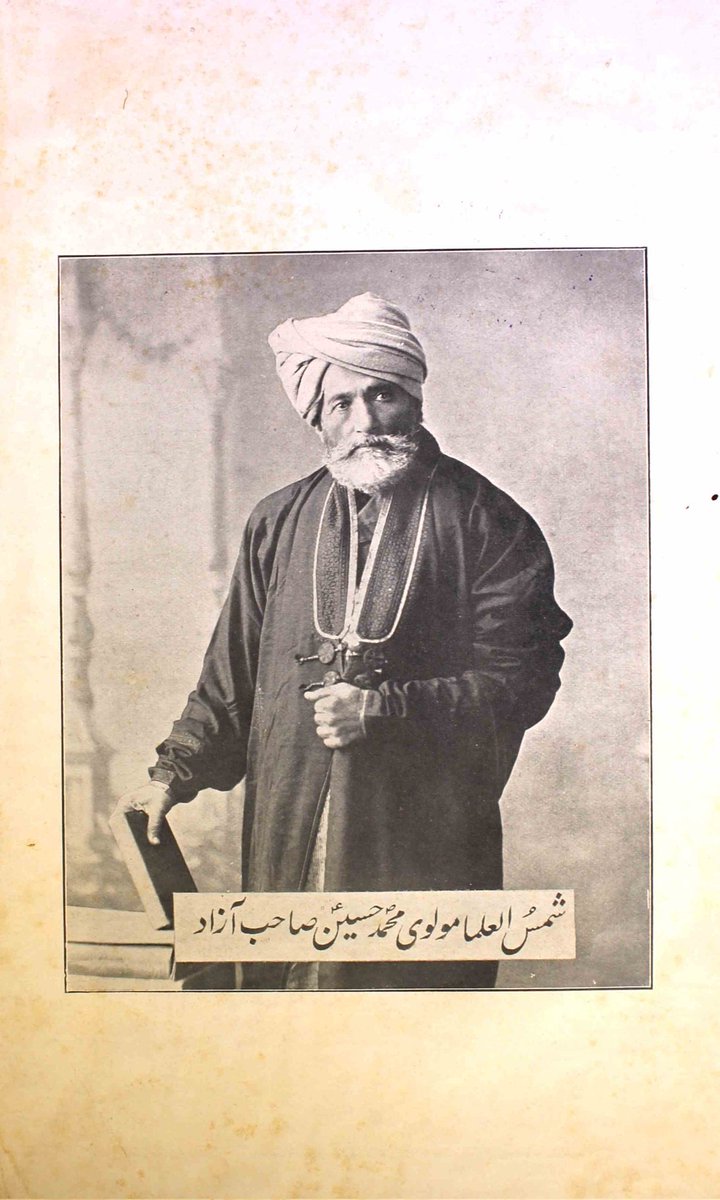
A facsimile of an Urdu poem published in Dehli Urdu Akhbar on 24 May,1857 by the famous Urdu scholar Maulana Muhammad Hussain Azad. Delhi was briefly free of the British & the poem was about the 'Inquilab' (Revolution).
The newspaper was run by his father,Maulvi Muhammad Baqir.
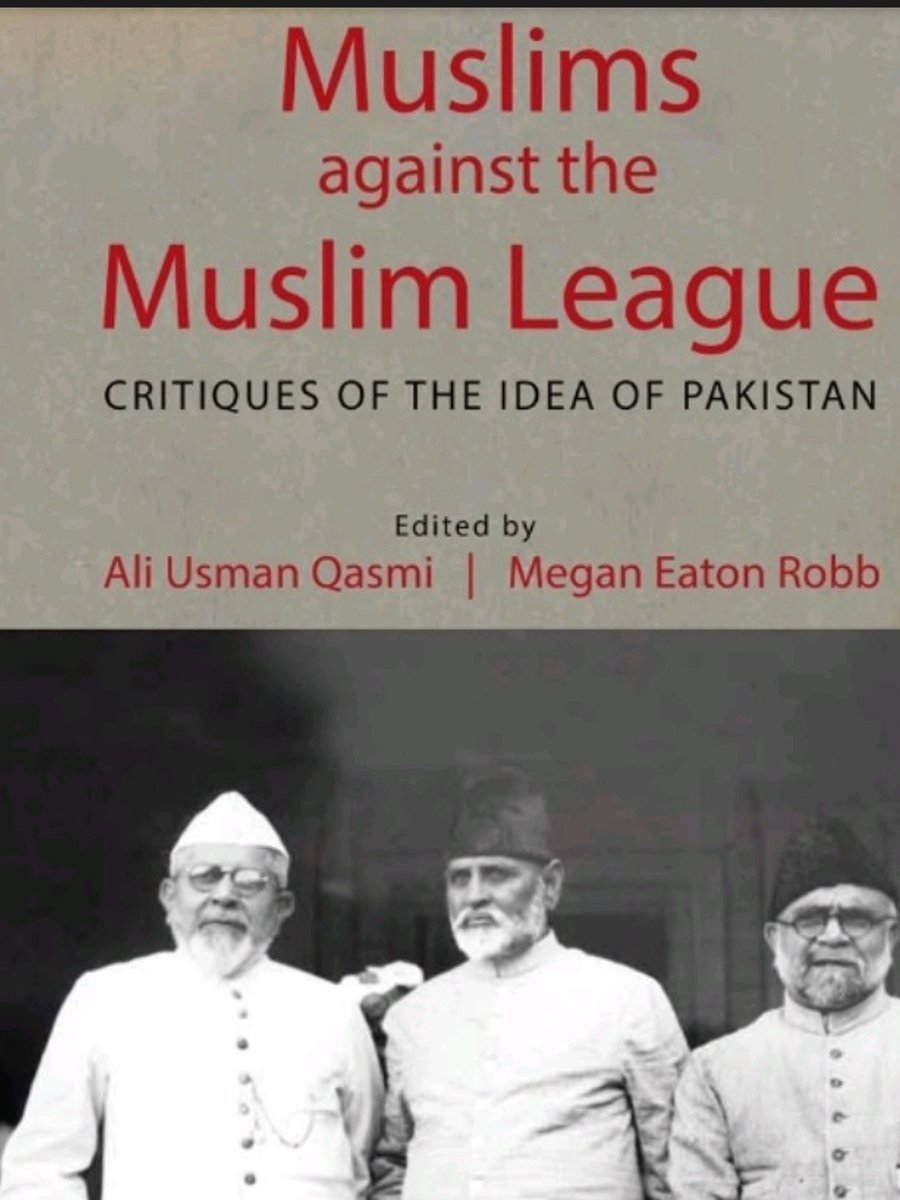
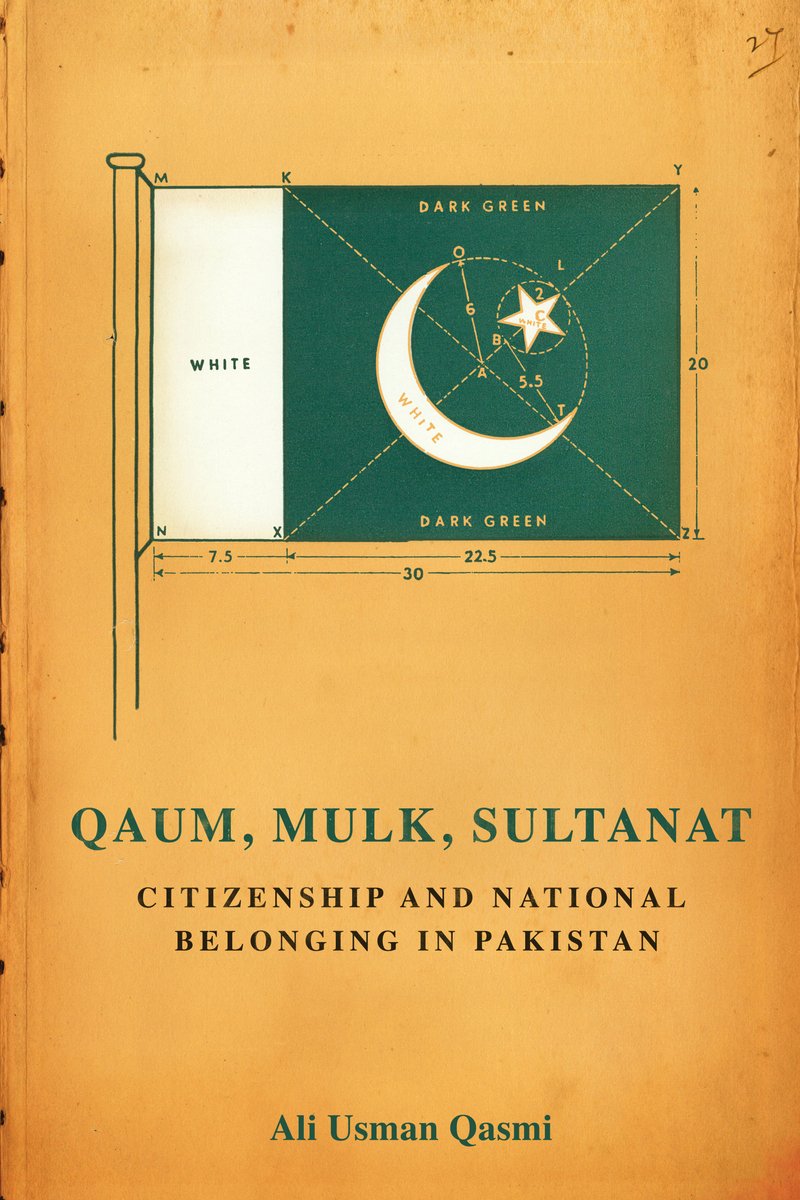
Our volume edited by @NeetiNair on citizenship and belonging across South Asia, originally published in Asian Affairs, is now available in book form through Routledge. Lots of great articles. Do check it out! https://t.co/ZQ77lWPuDa
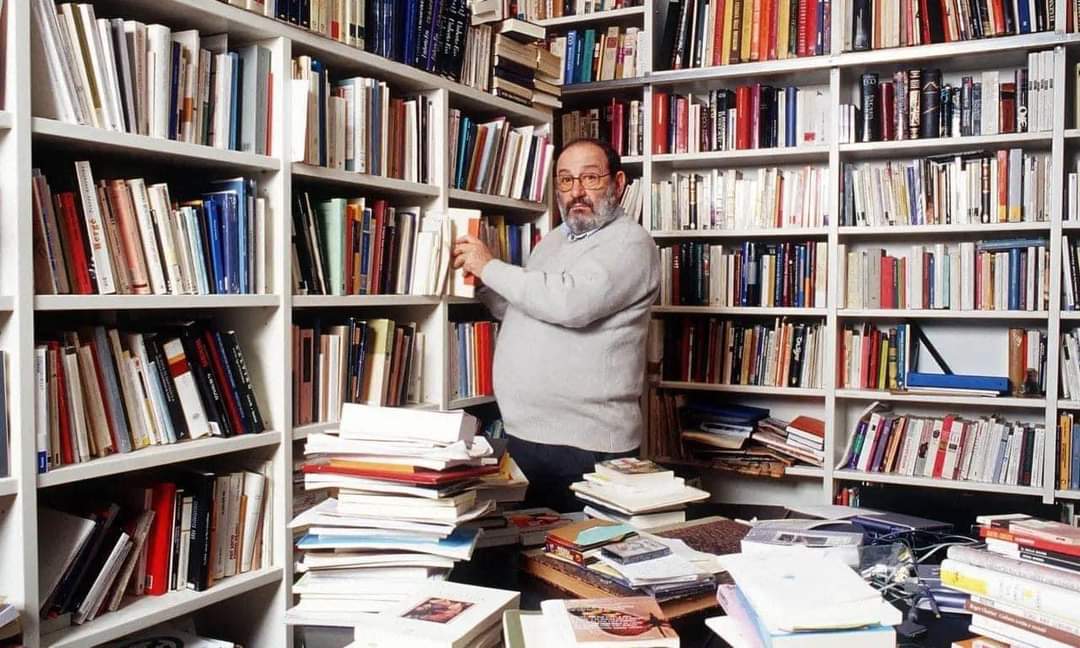
Umberto Eco, who owned 50,000 books, had this to say about home libraries:
"It is foolish to think that you have to read all the books you buy, as it is foolish to criticize those who buy more books than they will ever be able to read. It would be like saying that you should use all the cutlery or glasses or screwdrivers or drill bits you bought before buying new ones.
"There are things in life that we need to always have plenty of supplies, even if we will only use a small portion.
"If, for example, we consider books as medicine, we understand that it is good to have many at home rather than a few: when you want to feel better, then you go to the 'medicine closet' and choose a book. Not a random one, but the right book for that moment. That's why you should always have a nutrition choice!
"Those who buy only one book, read only that one and then get rid of it. They simply apply the consumer mentality to books, that is, they consider them a consumer product, a good. Those who love books know that a book is anything but a commodity."