CVS says it's going to break itself up. After more than a decade of calls to separate its retail pharmacies from its PBM/insurance business, that's big news. But here's the thing: CVS's breakup has two major loopholes. Both are designed to preserve its power.
First, CVS Health would keep its specialty pharmacy business. These pharmacies dispense expensive, often complex medications. They account for 40+% of the pharmacy market by revenue. They're a major site of anticompetitive practices that squeeze independent pharmacies.
Second, CVS says the ties between the two new companies will be "preserved in commercial agreements." In other words, separate ownership, but keep the arrangements that create conflicts of interest and enable anticompetitive practices. A real (government-led) breakup would sever those ties.
CVS didn't arrive here all on its own. Tennessee and Arkansas passed laws forcing a breakup of vertically integrated pharmacy giants like CVS. CVS is fighting the laws in court. Senators Warren and Hawley have a federal bill. Antitrust scrutiny has grown, both at the state level and when @linamkhan ran the FTC.
Trying to sidestep these efforts is one motivation here.
But CVS also has business reasons to jettison its struggling retail stores. Amazon's growing pharmacy business is one. The perils of running an overbuilt retail chain when you haven't invested in workers is another. Anyone who's been inside a CVS lately knows these stores suck.
For more than a decade, I've been working with independent pharmacies and my colleagues here at @ilsr to expose the anticompetitive structures and practices that have driven so many local pharmacies out of business, and calling for a breakup of CVS.
But CVS shouldn't get to decide what counts as an effective breakup. Policymakers need to ensure that it actually dismantles its power.
WWII and Nazism taught Americans that a monopolized economy leads to authoritarianism. So for years we fought monopolies to protect our democracy.
Those lessons were stolen from us, by politicians and corporations alike. We must relearn them today. New from me in @DemJournal
https://t.co/pXu5FUW5G6
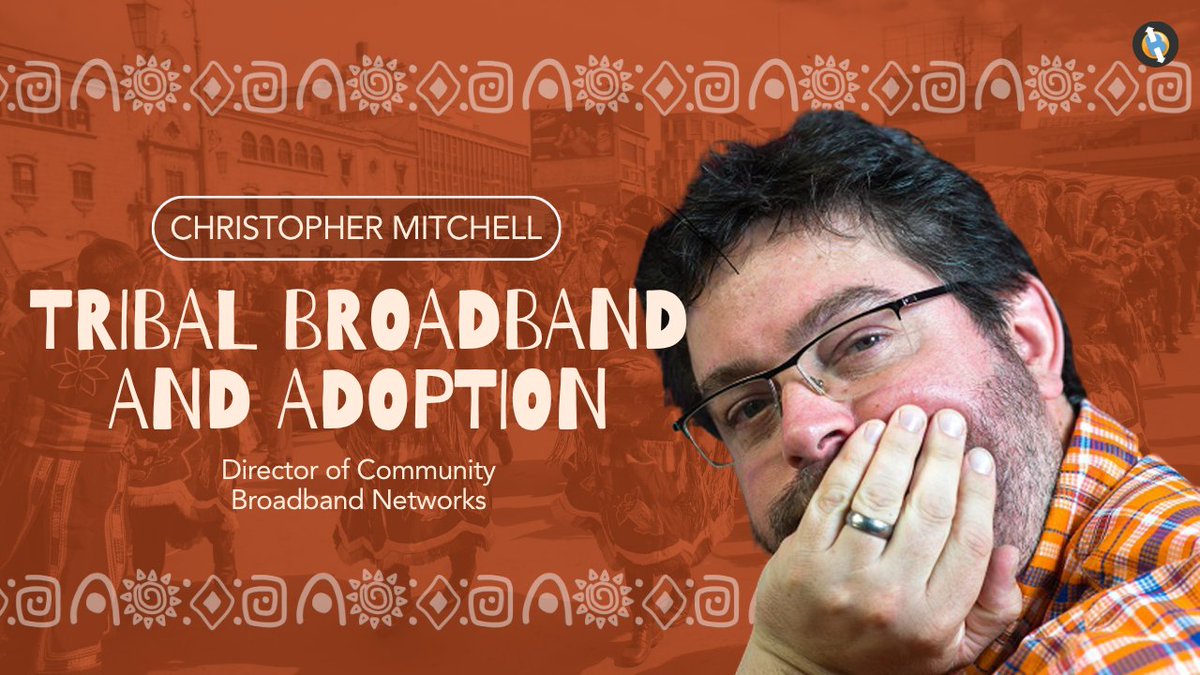
Few people know community broadband like Christopher Mitchell (@communitynets).
A leading national expert on community networks, internet access, and local broadband policy, Mitchell directs the Community Broadband Networks Initiative at the Institute for Local Self-Reliance (@ilsr). He also hosts Community Broadband Bits and Connect This!
Join him for a timely conversation about closing tribal broadband adoption gaps with solutions built around local needs and community power.
‣ Wednesday, September 30
‣ 12 p.m. ET
‣ Join: https://t.co/lUwr0lYGXb
#CommunityBroadband #TribalBroadband #LocalPower #DigitalEquity #BroadbandBreakfast
Ever wonder why your neighborhood doesn’t have a grocery store or pharmacy? The reason could be a sneaky lease clause used by big chains to keep competitors out — restrictive covenants.
Join @ilsr on Sep 22nd for Locked Out — The Clause That’s Killing Your Main Street.
Banger of a video from Robert Reich explaining how excessive utility profits are driving up your bill. Thanks for the h/t on @ilsr map of public power campaigns! https://t.co/QayG0yUVL3
If you own a small business and are fed up with Amazon, we need your help!
Right now, 17 States and the FTC are suing Amazon for using its power to crush small businesses.
https://t.co/2MlXFTjc6g
Three years ago, the FTC and 17 states sued Amazon over its monopoly abuse. Since then, Amazon’s abuse of its shoppers and exploitation of its sellers has only grown more brazen.
Today, @ilsr has published a memo detailing Amazon’s ongoing harm to competition and consumers. 👇
Democrats are talking about the soaring electricity prices and a broken utility system — but so far none have had the guts to attack the underlying issue. "No politicians or candidates yet have talked about breaking up the monopolies themselves," writes @johnffarrell in @Capitol_Forum
1. Amazon has built powerful pricing algorithms that have learned how to steer prices upward — not just on Amazon, but across the web. I have a new piece on how these algorithms work, and how they help sustain Amazon’s monopoly.
The Consumer Grocery Pricing Fairness Act is a critical law to protect citizens who need affordable groceries AND independent grocers, both of whom are getting beaten up by big chains.
The law would enshrine in New York what has been federal law for a century, but hasn't been federally enforced (with a brief moment during Lina Khan's tenure as the exception).
Walmart will try to tell people that they have an impossible choice -- either cheap food or community-access and independent grocers--but after a recent lawsuit was released through the work of @ilsr, recent research by Asil Aslihan, and some powerful truthtelling by @NSAGLOBAL and @ActionYama and others, the game is up. Its clear they are using their power to manipulate prices and bully out competition so they can hike prices more. The coalition around the Consumer Grocery Pricing Fairness Act is growing.
Terrific work by @SenatorCCleare and @MicahLasher to build the support to get it passed in New York!
Online price swings look like fierce competition. In reality, they’re part of an invisible strategy that steers the entire market upward, writes @stacyfmitchell of the @ilsr.
https://t.co/o7B6WthXl1
Walmart used its power over suppliers to push grocery prices up. This terrific explainer draws on newly unsealed details from an antitrust case filed under @linamkhan & dropped by the Trump FTC. I’m proud that @ilsr helped get the case unsealed. And thrilled to help tell the story.
@stacyfmitchell from the @ILSR joins to talk about unsealed FTC case docs that may reveal a key unlawful reason why your food bill skyrocketed this decade. @matthewstoller & @ddayen help get to the bottom of it all on this week's episode.
Link in reply.
Want a step-by-step guide for getting your state or city to cancel their contracts with Amazon? RSVP for the Jan 8th webinar with us, @powerswitchact and @ilsr! https://t.co/63YlgUZvNn
1. New York’s affordability crisis flows from a deeper problem: essential systems — groceries, energy, Internet, banking, healthcare — have consolidated in the hands of distant corporations. Today, ILSR sent the Mamdani team a memo laying out policies to reclaim local control.
From me: Trump's FTC dismissed a Lina Khan case against Pepsi's price discrimination, then claimed it was "purely political" with no evidence. But advocates got the now-defunct case unsealed, & it reveals how pricing really works in America.
https://t.co/Tjx7w42atg
"To the end consumer, it creates an optical illusion. Walmart appears to be a low-cost retailer, but that’s because it induces its suppliers to push prices up at rivals." Exactly right.