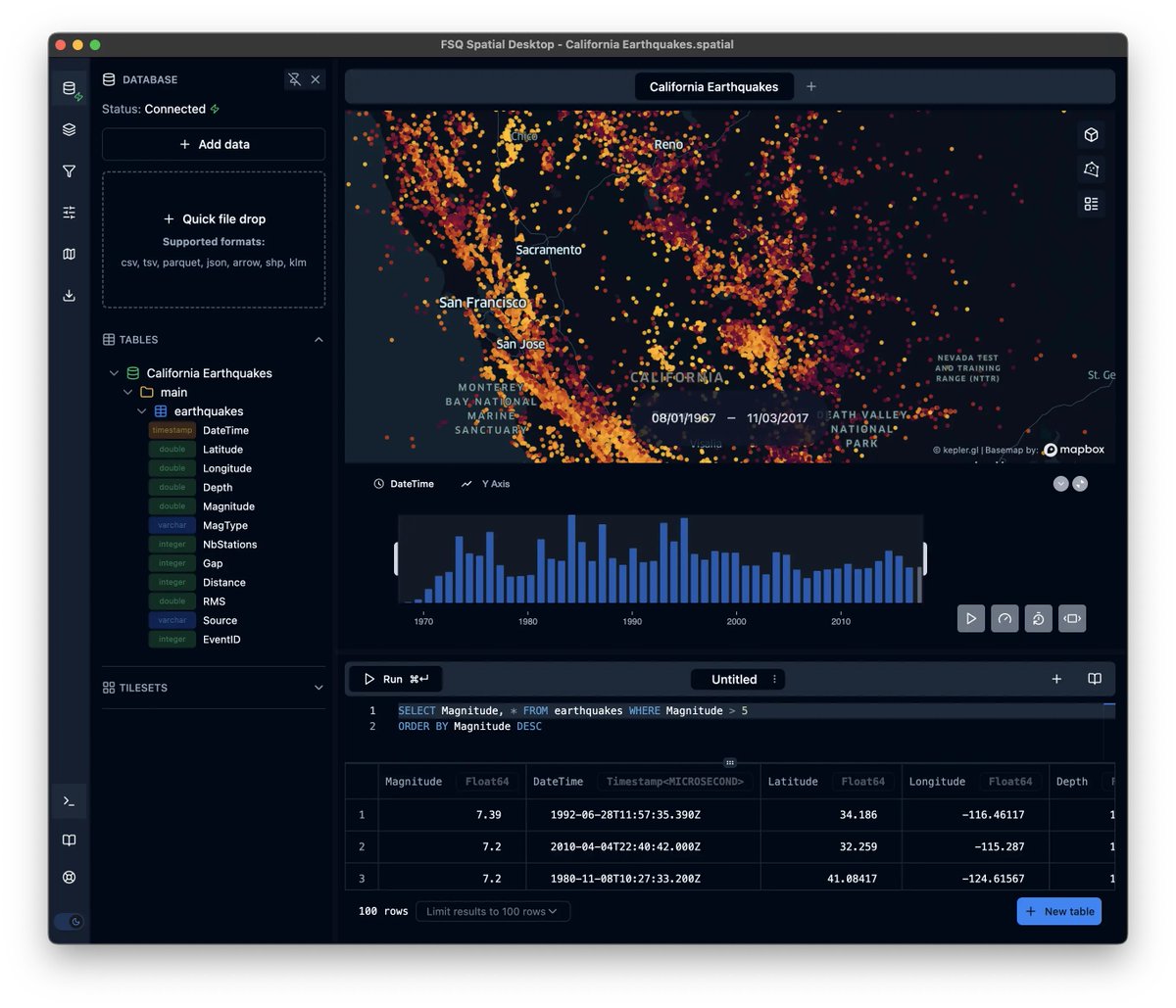
We just launched Foursquare Spatial Desktop – a geospatial analysis tool powered by embedded DuckDB and built on https://t.co/0yFGg2kXlM. Everything runs locally. A modern reimagining of https://t.co/OBp5DjqXfa. Mac only for now.
https://t.co/Fl174snyuV
Today, we're thrilled to launch SQLRooms — a modular React toolkit that enables developers to build powerful single-node data applications running entirely in browsers or on desktop, with zero backend infrastructure required.
While modern analytics frameworks still depend on hub-and-spoke architectures with heavy server-side processing, recent breakthroughs in single-node computing have fundamentally changed what's possible.
💡 We asked ourselves: what if data applications were architected for single-node performance from day one?
SQLRooms, architected by @ilyabo, is our answer. By integrating @duckdb as the core compute engine, embedding AI assistance through @ollama, and providing a comprehensive component library, SQLRooms empowers developers to create enterprise-grade applications that run directly where where users need them — in browsers and on laptops.
Key highlights 👇
→ DuckDB-WASM at the core: Lightning-fast columnar SQL processing in-browser.
→ Modular & developer-centric: Mix and match UI components, layouts, SQL engines, data tables, editors, and visualizations.
→ Interactive SQL + visual analytics: Built-in SQL editor with syntax highlighting, query history, and seamless visualization library integrations.
→ AI-native analytics: Integrated agents that write and execute SQL queries, generating insights locally – no server roundtrips required.
We believe single-node computing will unlock a new category of applications, especially as data privacy concerns grow and the proliferation of powerful edge models makes local processing the new standard.
✨ SQLRooms is our contribution to making that future accessible today.
Ready to explore browser-native analytics? Read the full launch blog post by our CTO, @vikramgundeti, below and check out the SQLRooms homepage in the thread to get started with building your first single-node data application 👇
https://t.co/tCvjaKE2m4
#SQLRooms #DataApps
Published version 0.1 of the JavaScript geoarrow/deck.gl-layers library!
Now it's just one function call to render a GeoArrow table in https://t.co/OQskk5siXN with amazing performance. Fully binary. 🚀
https://t.co/w4iWECKRgJ
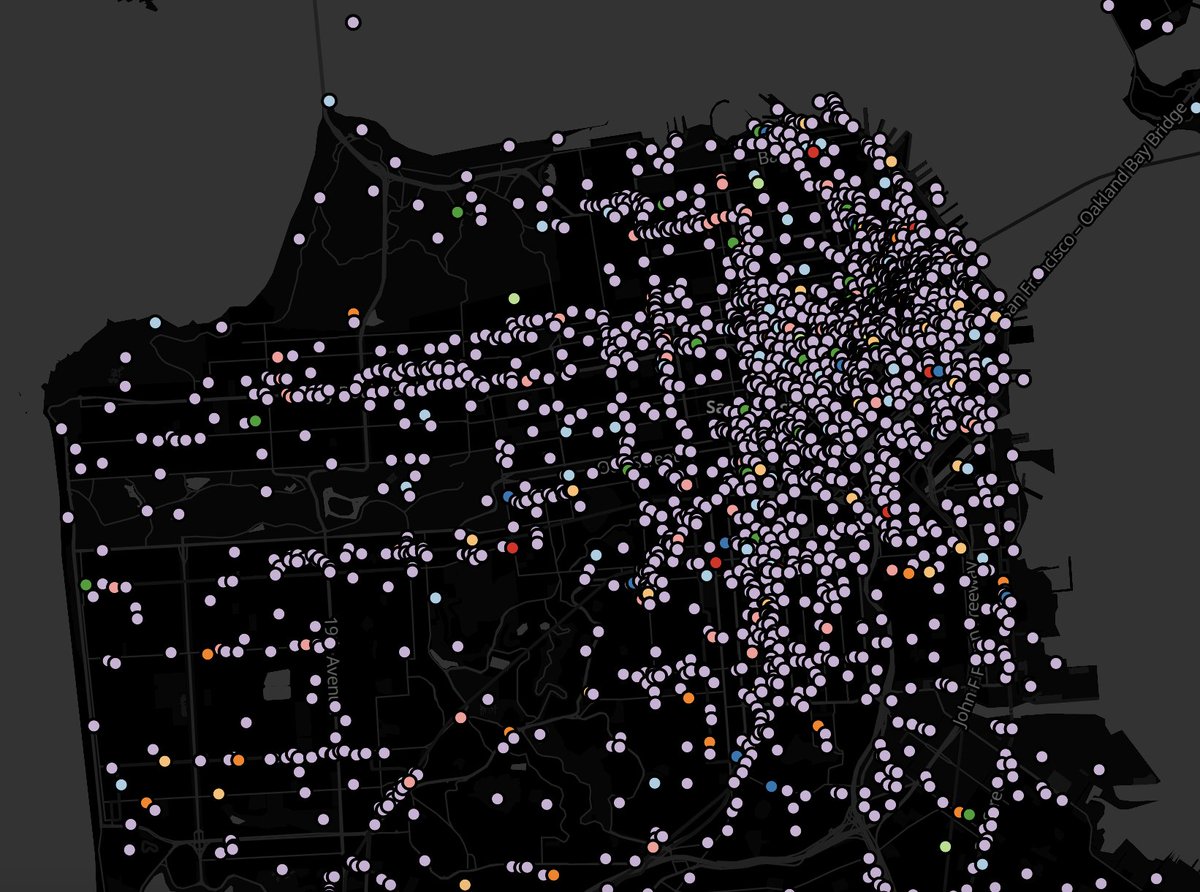
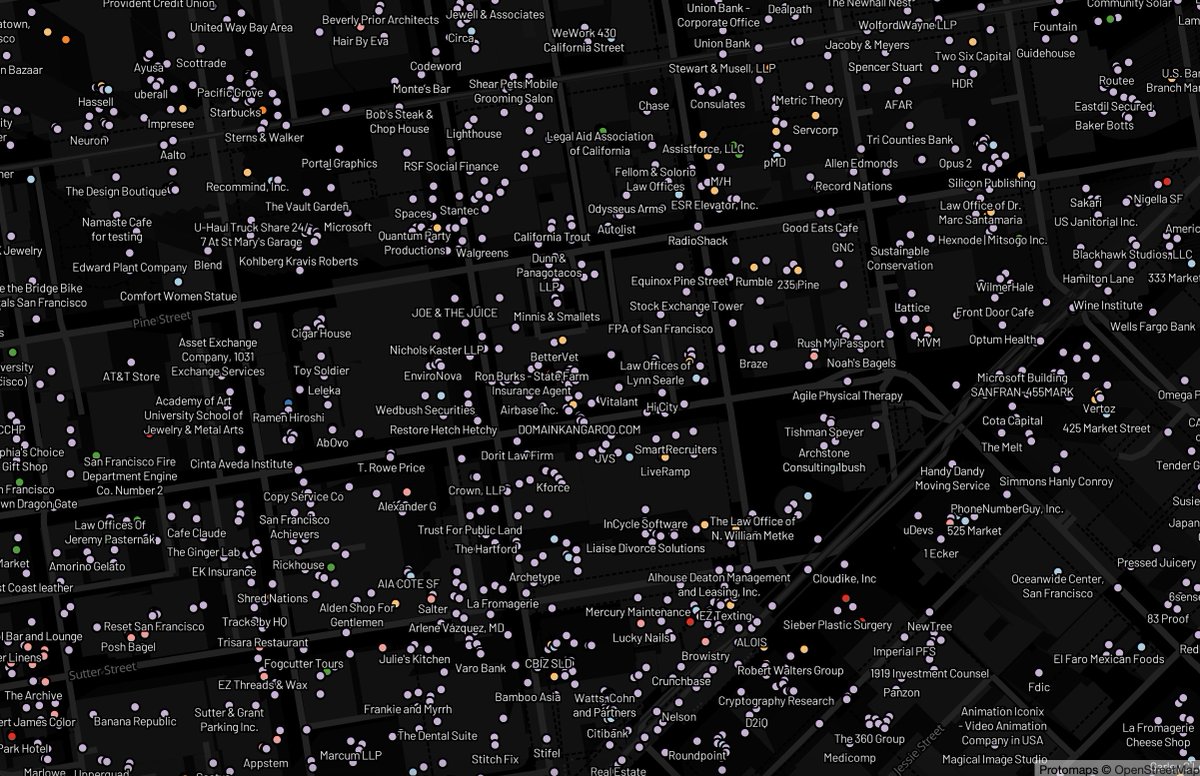
All @OvertureMaps places - 60 million of them - displayed in @maplibre with a 3.7GB tile archive:
https://t.co/qqo0003kgn
instructions https://t.co/0ZC0wg4DqC
2 steps
@duckdb parquet -> CSV
@felt tippecanoe CSV -> pmtiles
Thanks @Maxxen_@opencholmes for the tips!
Read in #TheTorch:
- CPJ’s support to exiled journalists jumped 227% in 3 years
- CPJ to release report on rising threats to press freedom in Ecuador
- Georgian journalist Nika Gvaramia pardoned
- Bangladeshi journalist Golam Rabbani Nadim beaten to death
https://t.co/Loz59gjOE2
With https://t.co/tGKFSwLC13 built by @ilyabo, anyone can create visually attractive and informative representations of data on geographic movements.
Learn how it's built with Mapbox GL JS: https://t.co/323L4M0hWc
#BuiltWithMapbox#datavisualization#gischat
With millions of data entries, cross-filtering is painfully laggy
Not with our (me and @domoritz) new JavaScript library FalconVis!
With FalconVis, you can cross-filter your visualizations at scale with no interaction delay!
Try it out! https://t.co/W45HCkXLm4
🧵👇
new logo! because...
Protomaps is moving from being "open-core", or partly proprietary, to an open source project.
The only closed part has been the basemap planet.pmtiles generation; an open source implementation is WIP here!
https://t.co/ujBHDIfAG9
More updates soon!