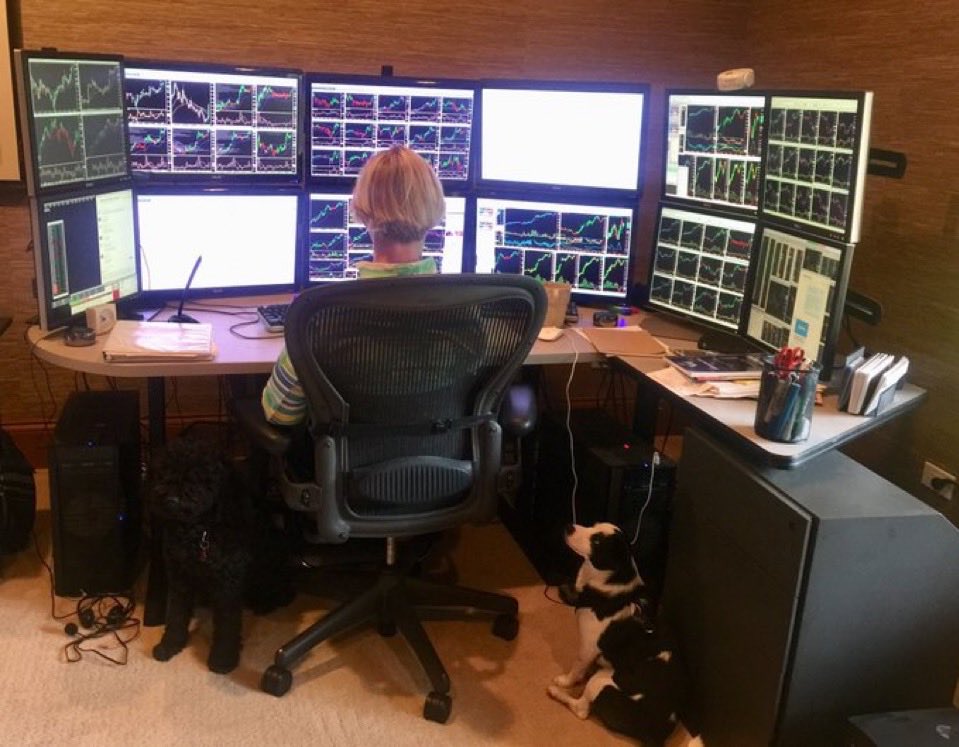
One thing to keep away from is negativity. There is lot of negativity beginner trader will be sucked in to. There is lot of jealousy and back biting in this industry. But all the successful traders I know are inherently optimistic. The negative people don’t go anywhere in this industry.
Unless you are optimist it is difficult to make it in this field which will challenge you in many ways.
You can hate him all you want
But Andrew Tate changed a generation of young men and saved a lot of boys from becoming wage cucks, future divorce rape cases and made many men better.
The Top G title was earned.
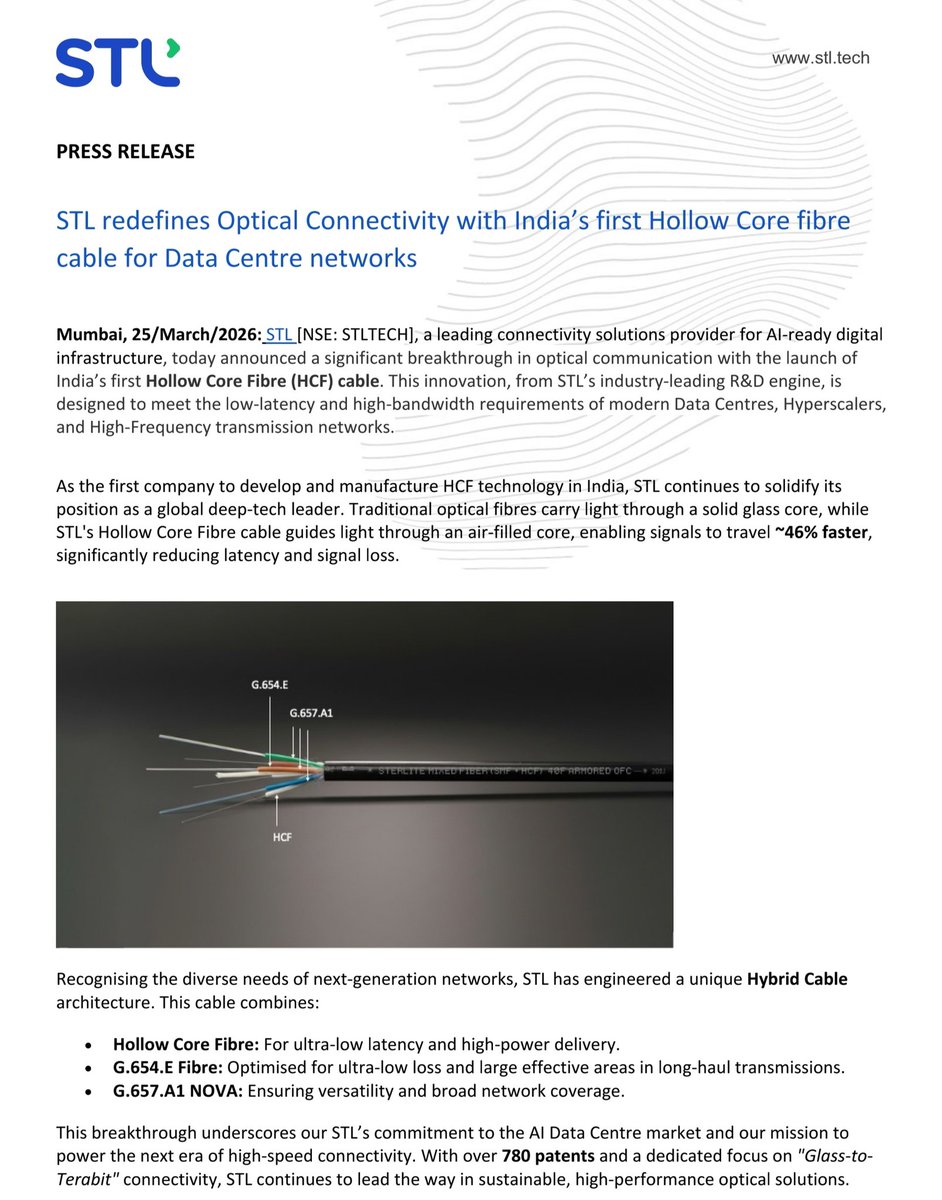
I don't know how true the story said by the management of Sterlite Tech regarding Data Centres is true, but I will trust it because the price is acting right.
Below 125 the management is lying
Why CPUs are the next bottleneck?
Demand for CPUs from AMD, Arm and Intel is spiking mainly because AI workloads are shifting from “GPU-only training” to AI agents and inference at scale that lean heavily on CPUs, creating a structural shortage and new pricing power.
Core reasons demand is exploding
AI data center build‑out: Cloud providers and enterprises are in an AI arms race, pouring billions into new data centers, which need racks of server CPUs alongside GPUs and custom accelerators. These AI-driven data centers are “swallowing” enormous numbers of high‑performance CPUs from AMD and Intel, and driving licensing demand for Arm’s architectures.
From training (GPU) to inference (CPU-heavy): Training large models is GPU‑dominated, but running them in production (inference), orchestrating requests, and managing memory and networking is far more CPU‑intensive. Intel’s recent earnings explicitly highlighted customers moving away from GPU‑only configurations toward setups where CPUs play a much larger role in AI inference and “agentic” systems.
Agentic AI and RAG need lots of “brains around the GPUs”: New “agentic” AI systems, where multiple AI agents coordinate tasks, plus retrieval‑augmented generation (RAG) pipelines, involve heavy scheduling, I/O, database calls and orchestration logic—all CPU‑bound activities. Analysts argue that these workloads can multiply CPU demand several‑fold because every GPU cluster needs a much fatter layer of host CPUs to avoid bottlenecks.
Why this hits AMD, Arm and Intel specifically
AMD (EPYC, x86 servers): AMD’s EPYC data center CPUs are direct beneficiaries of the surge in AI‑oriented server demand, with record data‑center revenue growth (over 30% YoY in late 2025) tied to AI and cloud build‑outs. As customers expand CPU footprints for AI inference and agents, analysts see a path for AMD to keep taking server share from Intel over time.
Intel (Xeon, data center CPU “comeback”): Intel just reported a sharp rebound in data center and AI CPU revenue (22% YoY), surprising the market and showing strong demand even amid supply constraints. Commentary from management emphasized that AI is moving “from foundational models to inference to agentic,” which requires more CPUs per GPU than older architectures, helping drive a “CPU renaissance.”
Arm (architectures for efficient CPUs): Arm does not sell CPUs directly in the same way, but licenses power‑efficient architectures used by hyperscalers (e.g., custom data center chips) and edge devices. As AI inference and agentic workloads move to energy‑sensitive environments (cloud, mobile, edge), Arm’s efficient designs become more valuable, boosting its licensing and royalty outlook, which investors are pricing into the stock.
Structural shortage and pricing power
Real CPU shortage: Reports now describe a genuine CPU crunch: demand from AI workloads and server refresh cycles is so strong that even lower‑tier Intel chips (“scrap” or downgraded dies) are selling at full price, which is unusual in normal cycles. PC and server OEMs like HP and Dell are already seeing a clear mismatch between CPU supply and demand, with rising costs and stretched lead times.
Price hikes and margin expansion: Intel and AMD have both moved to raise CPU prices roughly 10–15% in early 2026 for server and consumer products, something they can do only because demand is outstripping supply. This pricing power is a big part of why their stocks are reacting so strongly: higher ASPs plus strong volumes boost revenue and margins simultaneously.
NVDA expects its CPU revenue this year to approach $20 billion, explicitly clarifying that this figure refers to sales revenue from standalone CPUs.
NVDA stated that the Vera CPU opens up a brand-new $200 billion TAM for NVIDIA (compared to AMD’s early-May forecast of a >$120 billion TAM, NVDA clearly anticipates a larger CPU market).
Smallcaps spent 18-19 months in a painful choppy downtrend (Sep 2024–March 2026) before this April 2026 sharp rally. Markets don't usually head back into a bear phase immediately after such a major upmove that was backed by large number of stocks making 50%+ moves. This rally—climbing a 'wall of worry' despite Rupee/fuel concerns—shows that the worst has likely got discounted
You may also check out weekly chart of Smallcap 250 which looks like a nice long bullish consolidation base with 2023 bull market acting as a prior uptrend.
If these uptrending momentum stocks give back more than 40-50% of the April rally I would change my stance. But at the moment I see most of these stocks pulling back to 20 or 50SMA which is a healthy thing for the next round of upmove.
Rainmatter started in 2016, with a few of us doubling up on our day jobs and trying to help startups that were trying to expand India’s capital markets ecosystem. Nine years later, it has grown into something far bigger than we ever imagined.
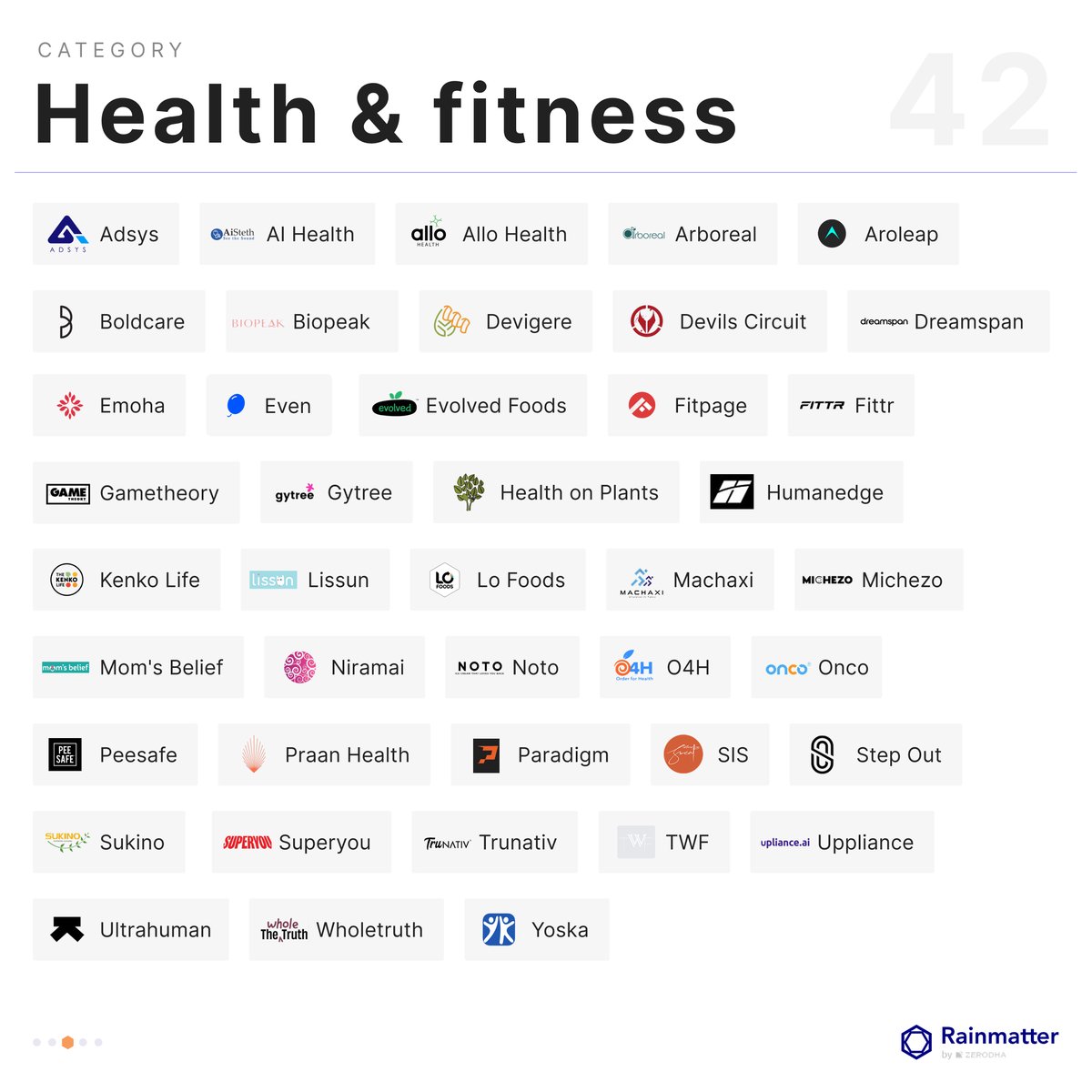
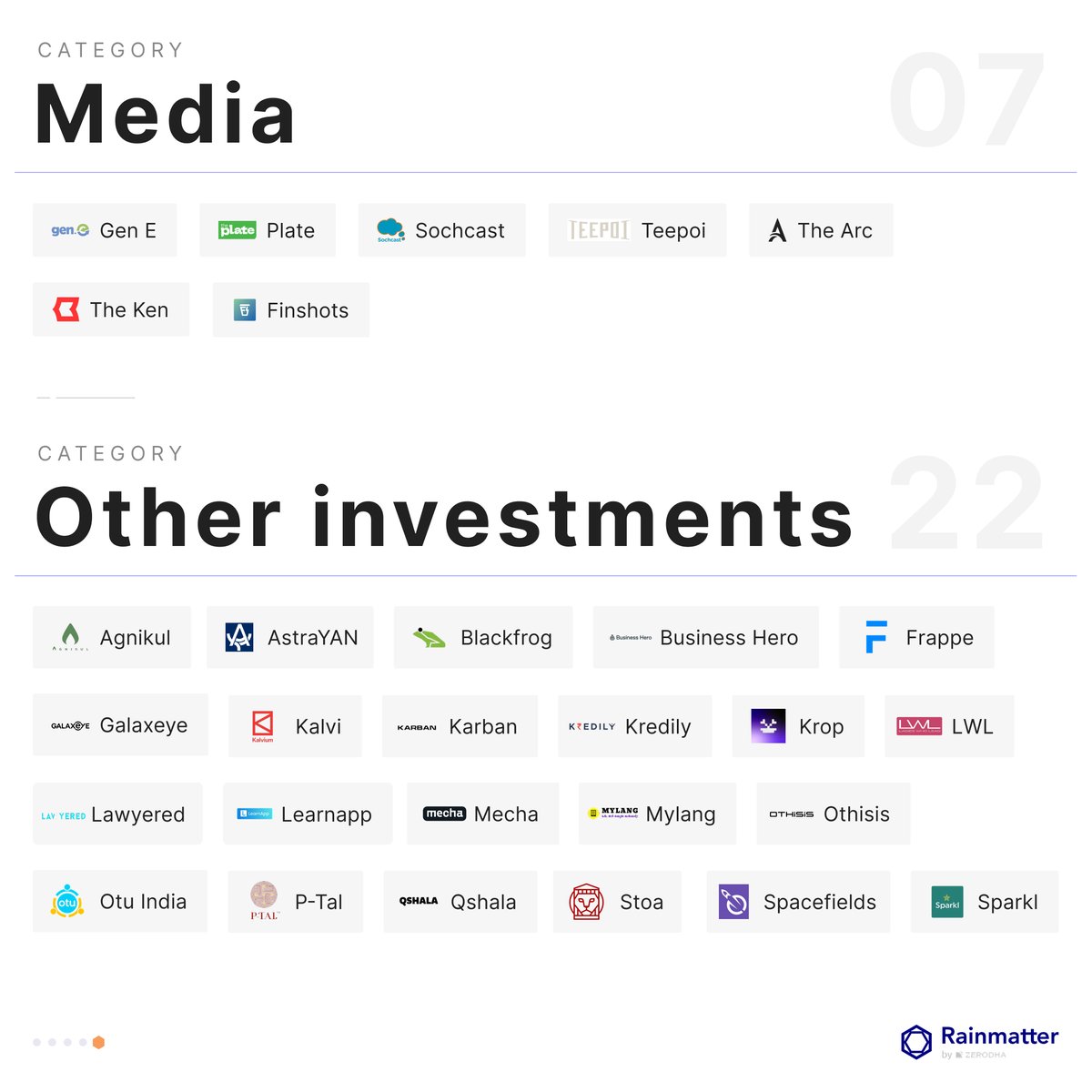
So far, we’ve invested over ₹1,500 crore across 160+ startups spanning fintech, climate, health, media, and deep tech. We’ve also earmarked 10% of everything Zerodha earns to invest in startups, and another 10% for the social sector through the @RainmatterOrg.
The thesis has evolved from just expanding the capital markets, but the thread running through it is simple. As a country, we need to own more of what we consume. Sovereignty, in the truest sense.
We’re not a typical VC. We don’t take board seats, and we’re not in this for quick exits. We’re not interested in forcing founders into short-term decisions just so we can make money in five or six years.
The simple reality is that building a good business is hard. Building one that is genuinely useful, scalable, and profitable is even harder when investors are pushing you to speedrun success and sustainability.
That kind of pressure usually leads to shortcuts. And shortcuts, more often than not, come at the consumer’s expense.
So our approach has been simple: be patient, back founders for the long term, and help them build the business the right way.
That, more than anything else, is the heart of @Rainmatterin.
Sterlite Technologies becomes the first India company to develop Hollow Core Fibre (HCF) technology. It is the latest tech for Data Centre OFC demand.
HFCL, another OFC player to receive 10,000 cr OFC orders recently, is yet to announce its HFC breakthrough. It is working with IIT Delhi to develop its HCF tech.
Good time to be an OFC player.
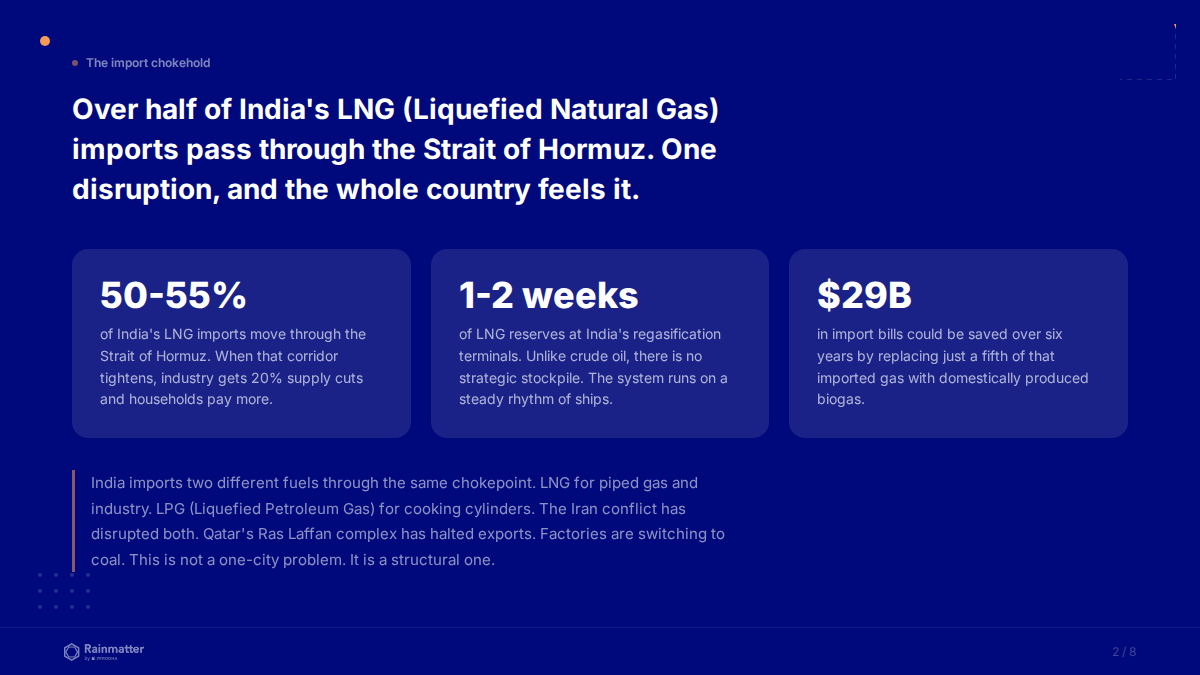
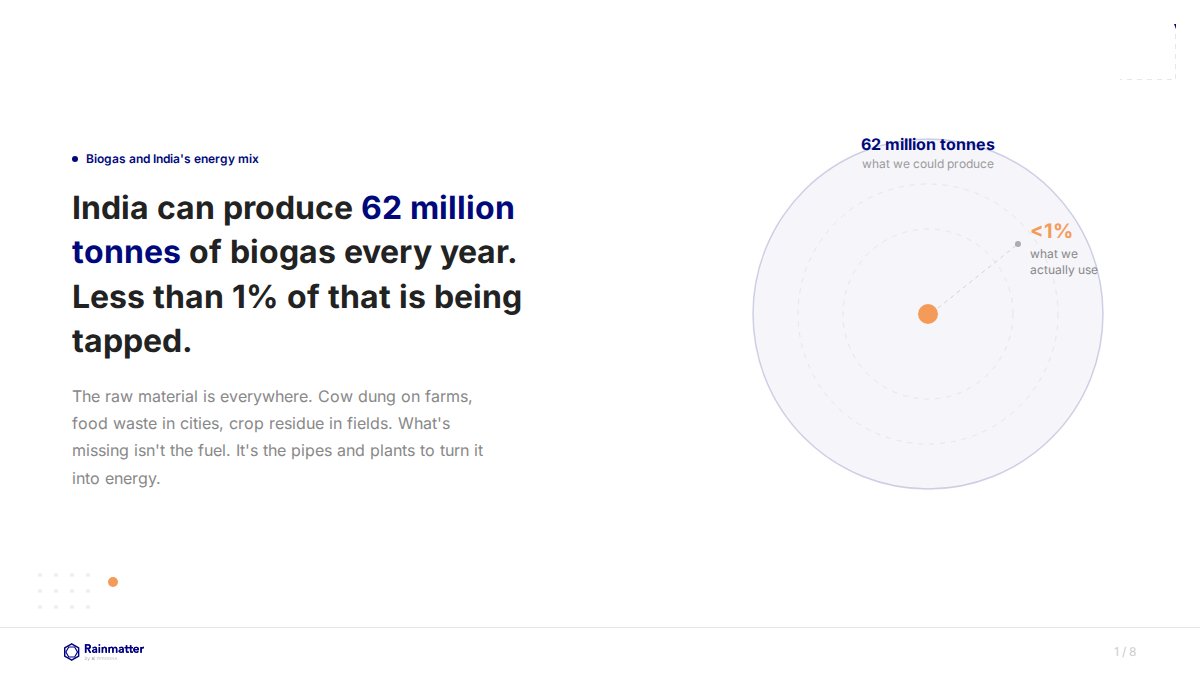
What's happening in the Gulf is a reminder of how critically dependent India is on a single region for most of its energy. Most of our crude and natural gas (LPG, CNG) is imported, and our vulnerability to disruption in these imports is obvious.
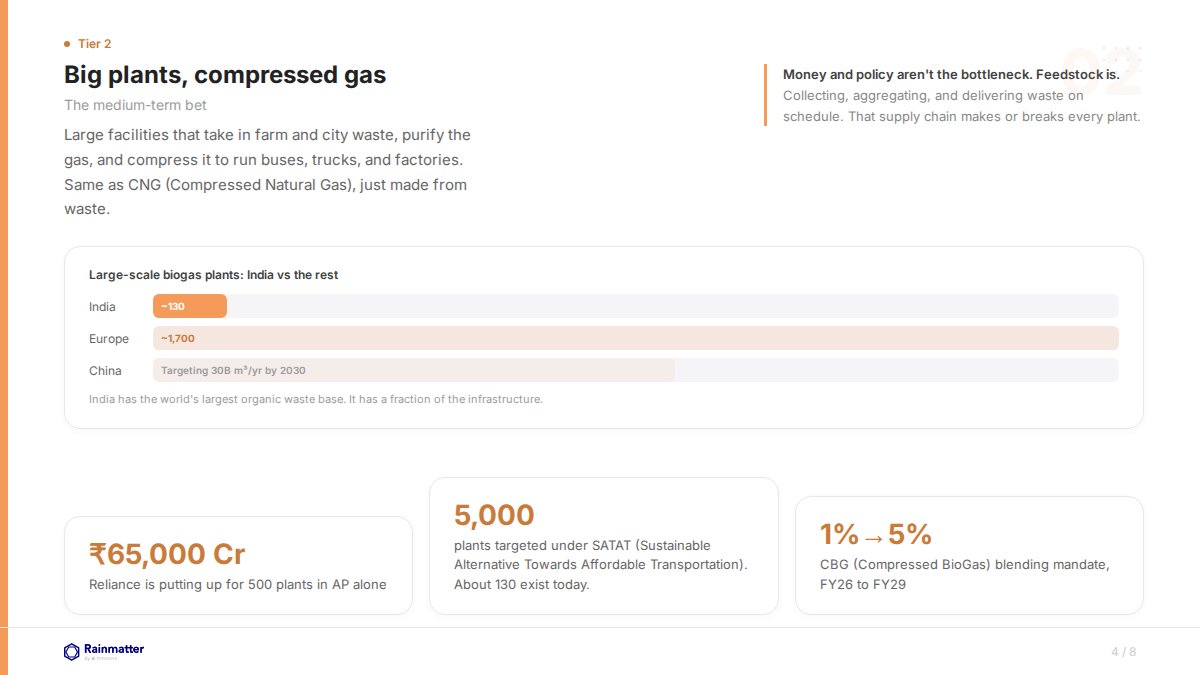
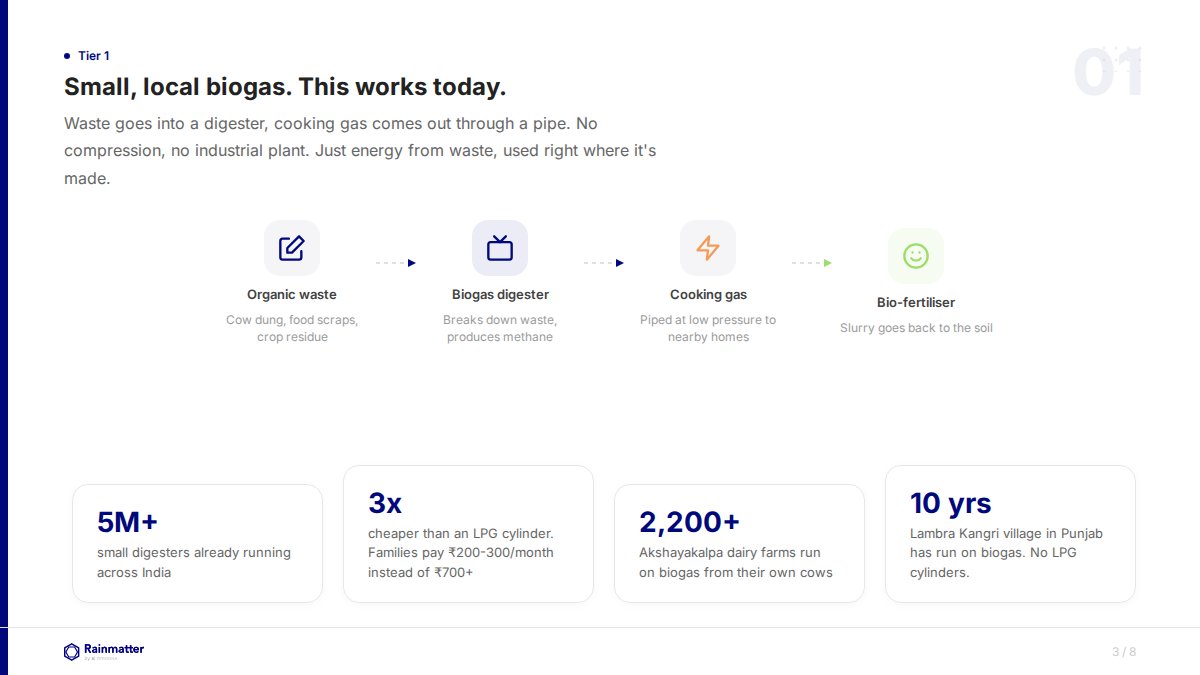
As the saying goes, never waste a good crisis. Now is when we should focus on alternatives like biogas, which we can produce locally and is also more environmentally friendly. India is currently tapping less than 1% of its biogas production potential. It is also important to continue efforts, even after the crisis has passed, to build long-term resilience.
Through @Rainmatterin, we've backed a few companies — Farmwatt, Akshaykalpa, Hasirudala, and Wisebin — that are working to make biogas more mainstream. But the investment needed to actually move the needle is far larger than what a few startups can absorb. This one needs policy and capital at scale.
Read the blog by @AbhinavNegi93 in the comments to read more. 1/3
I don't use net banking apps on my phone because the mandatory permissions they ask for make no sense.
Why does a banking app need access to my SMS, phone, contacts, etc., in the name of security, when not seeking invasive device permissions is, in fact, the global benchmark for cybersecurity. This is called the Principle of Least Privilege (PoLP).
“Don't do unto others what you don't want done unto you” has been at the heart of the Zerodha philosophy.
This is exactly why we've built Zerodha the way we have. Kite asks for ZERO permissions on mobile, for instance, and this is one of the big reasons why millions of people trust us. What has enabled us is SEBI's mandatory strong two-factor authentication framework strike the right balance between security and privacy.
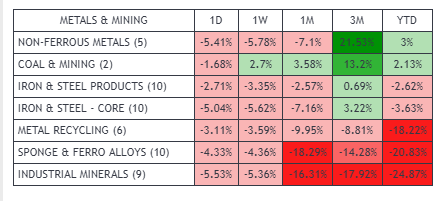
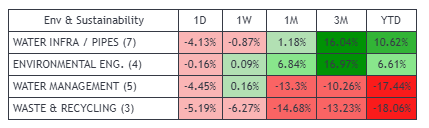
Coal,Water Management,Power grid and generation,Exchange & platform remains to be doing relatively in this market
Power cables space seen brutal correction over last 1 week where the strength was incredibly strong before the war
Staying out of the market during this turmoil will give mental peace
Don't try to catch falling knife,Nobody can catch the bottom
Strong stocks reveal themselves during corrections. 📉➡️📈
Most traders stop doing homework when the market gets tough.
I do the opposite.
Corrections are the best phase to identify the next leaders.
Here’s what I focus on 👇
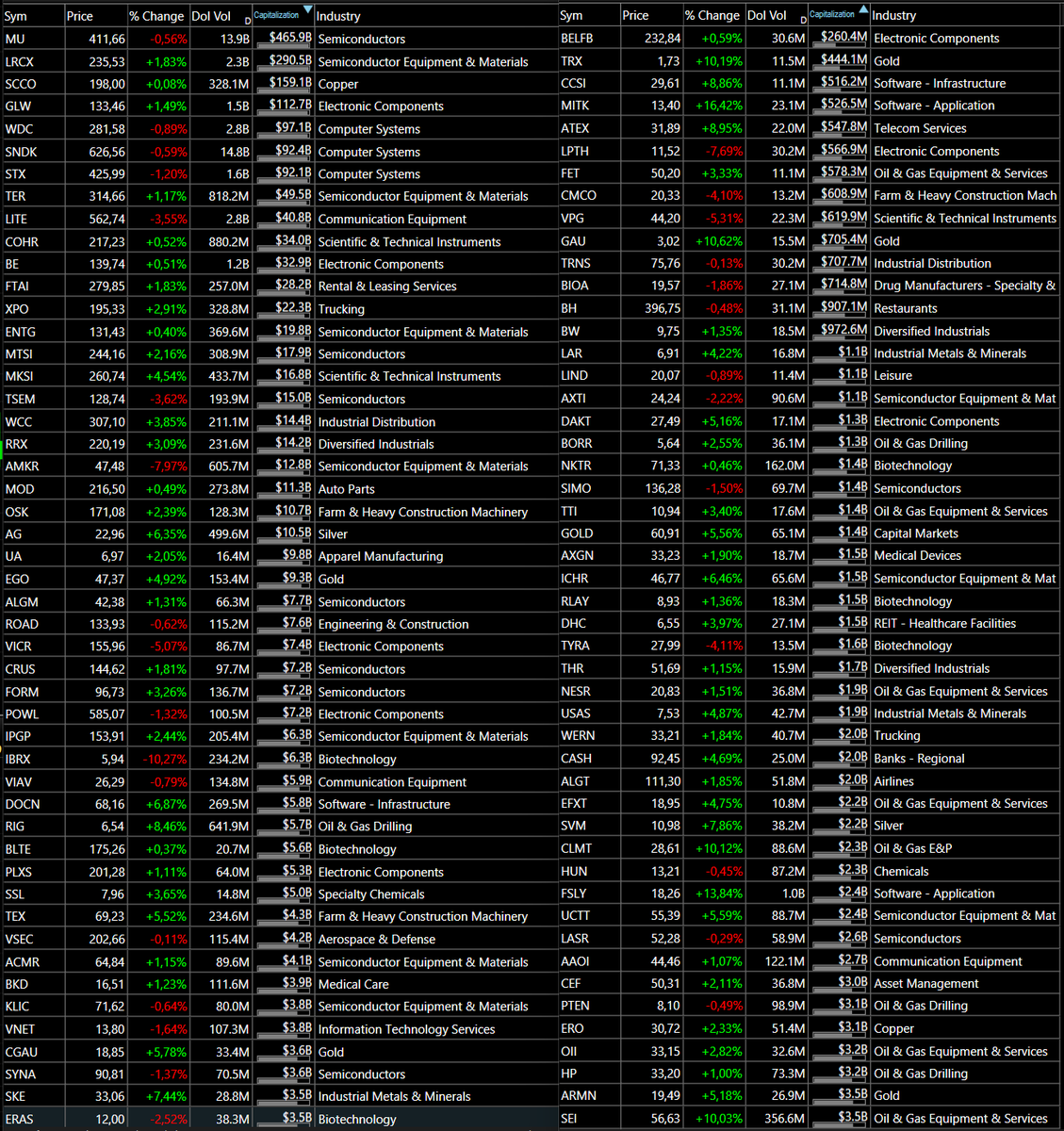
1. Leading Themes: Data-center infrastructure is holding up extremely well despite market weakness. That tells me institutional demand is still there.
2. Relative Strength: Stocks that refuse to break during corrections often become the next big winners once the market turns.
3. Leader Candidates: AXTI, AAOI, BW, VRT, AMPX and FSLY are all showing strong resilience while many stocks are falling.
4. Story + Structure: These companies sit in powerful themes like AI infrastructure, data center power, and connectivity.
5. Patience: I’m not forcing trades now. I track them, study them, and wait for clean setups.
This is the real work of a trader.
Do the homework now.
Trade the leaders later.
These patterns repeat. I’ve taught this process to thousands of traders. I think everybody can learn these patterns. 🚀💰
This is what colonialism looks like.
telling a civilisation that is a centre of diversity of rice, mustard,urad,moth,tur,gourds,jackfruit,banana,mango,black pepper,millets to change our seeds to nutitionally empty ,toxic #GMO seeds
#BijaSwaraj is defending our #SeedSovereignty
Philanthropy as Plunder
Bill Gates doesn’t donate to save the world, he invests to own it. By capturing seed banks, gutting global protections, and weaponising “net zero,” land becomes collateral and life becomes property. This isn’t climate action; it’s enclosure, updated for empire.
“It’s a land grab.” Watch till the end…
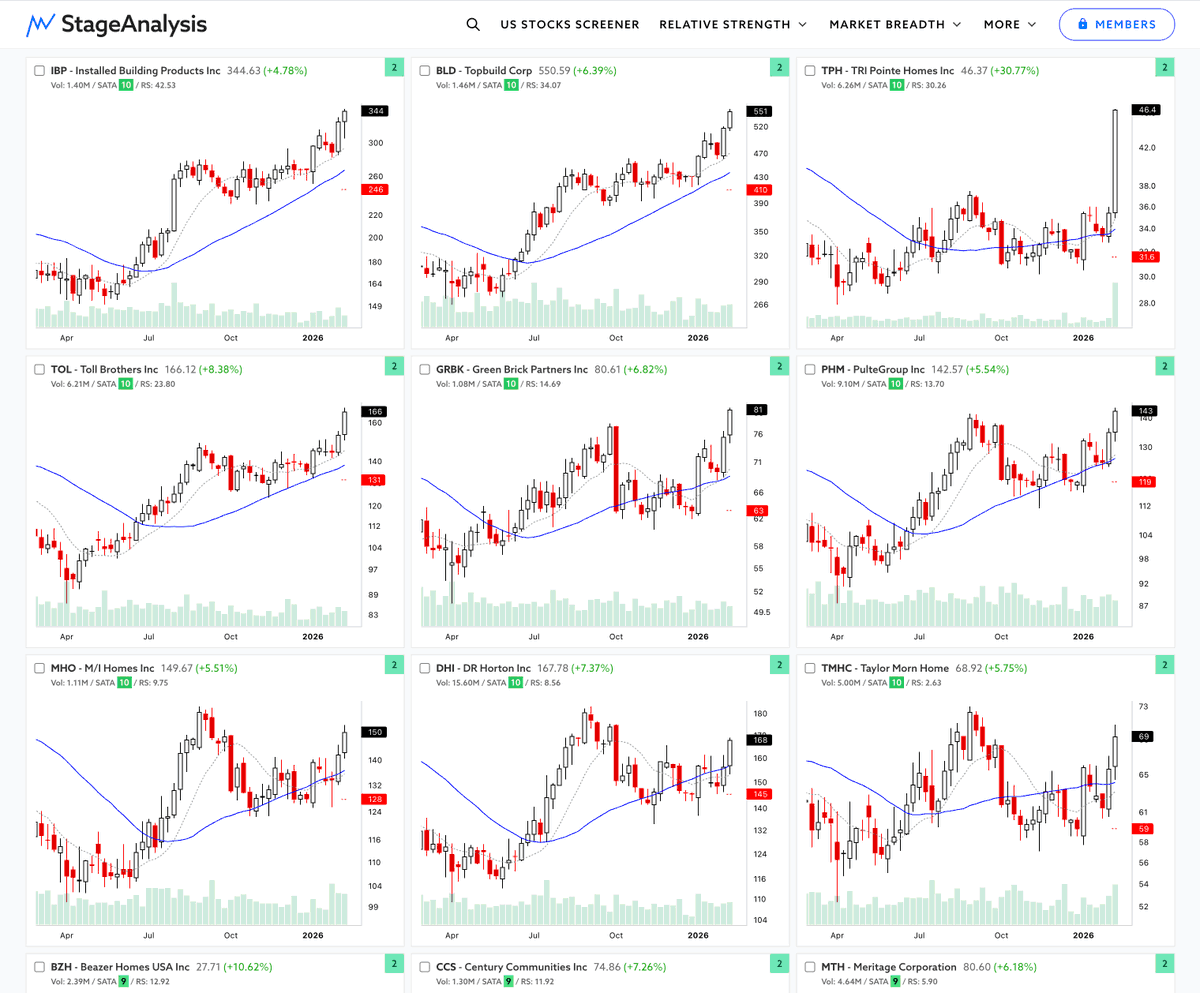
Homebuilding sub-industry was one of the standout groups this week, with four Stage changes into Stage 2, and a number of new highs.
Homebuilding stocks in order of strength:
IBP, BLD, TPH, TOL, GRBK, PHM, MHO, DHI, TMHC, BZH, CCS, MTH, KBH, LGIH, SKY, HOV, CVCO, LEN-B, LEGH, DFH, LEN, NVR, SDHC, CHCI, SPHL
Current list of VOLUME growers...
Volume is the best TELL that something is GOING ON with a stock, it might already be known and is being priced in or not yet known information...
Real setups ONLY ooccurs on ACTIVE stocks. Fake setups on no volume. It is easy to be fooled...