A non-profit organization for open and interactive mathematics. We specialize in science communications, mathematics events, physical and digital exhibits
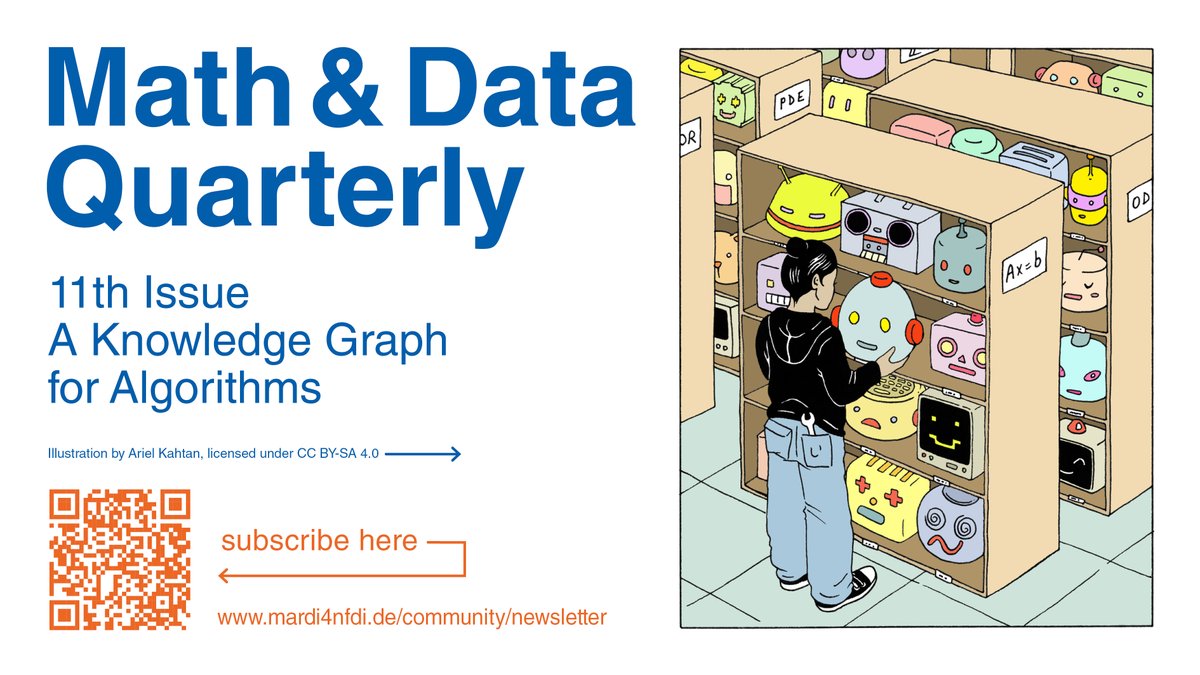
In the new #MaRDI newsletter, you can learn all about MathAlgoDB, a peer-reviewed knowledge graph of numerical algorithms from MaRDI's team @uni_muenster. Explore this and much more here: https://t.co/qnGW7SjZ75 #ResearchData#mathRD#KnowledgeGraphs ^im
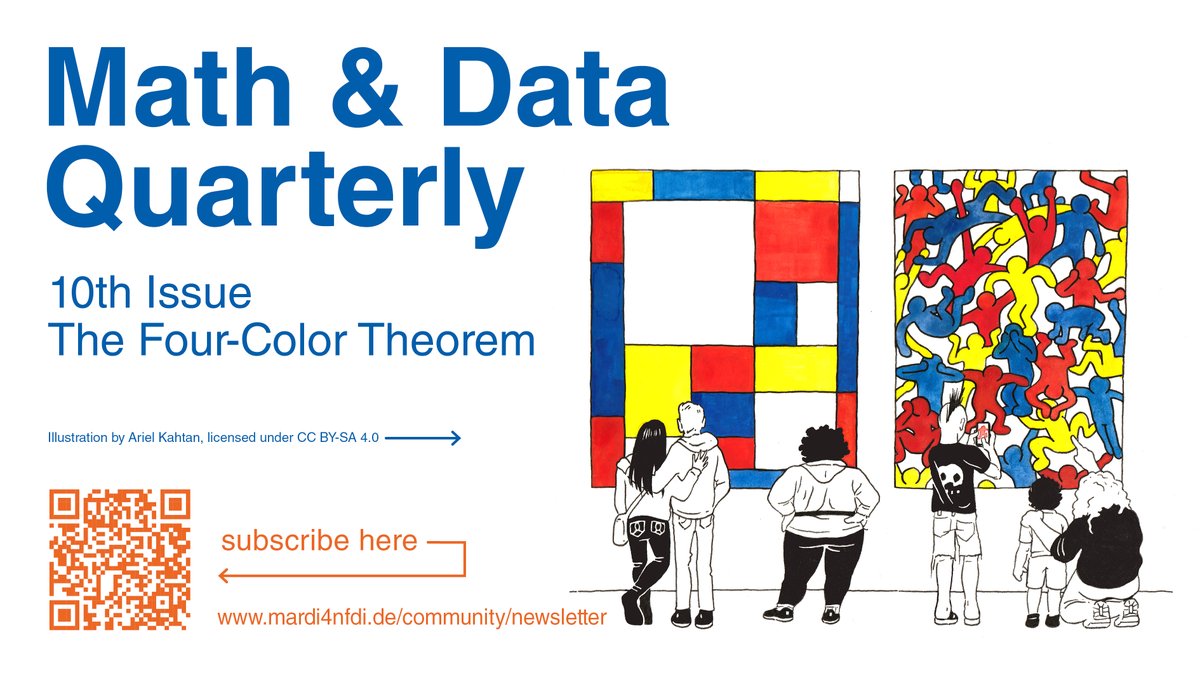
The four-color theorem has a fascinating history and highlights how research data became relevant in mathematics. Explore this and much more in our 10th #MaRDI newsletter! Read here: https://t.co/qnGW7Sjrhx #ResearchData#mathRD ^im
"I have no data" – a statement many mathematicians resonate with. The key article in our 9th issue of the #MaRDI Newsletter tackles this and envisions a future where you can search for theorems instead of articles. https://t.co/qnGW7Sjrhx #ResearchData#mathRD#DataManagement ^im
We're delighted to be on the longlist for the Enter Award 2024 in the category "pioneering work"! Sponsored by the @BMBF_Bund and organized by the independent think tank @iRightslab, the award recognizes outstanding achievements in the field of Open Access #EnterAward#OpenAccess
Do you know someone who's making mathematics come alive in extraordinary ways? Nominate yourself or someone else TODAY! Find more information about the prize here: https://t.co/LGyEtMyEBO
Rock-paper-scissors, or pen-paper-compass, what (else) does a researcher need? Follow the evolution of scientific tools that have changed the practice of research in the spring issue of the #MaRDI Newsletter: https://t.co/qnGW7Sjrhx #ResearchData#mathRD#DataManagement ^im
It’s #LoveDataWeek! To celebrate, the #MaRDI (Mathematical Research Data Initiative) consortium developed the game "Data ♥️ Quest". Join the interactive online adventure set in a math conference: https://t.co/Skmn3SLyOa
#LoveData24
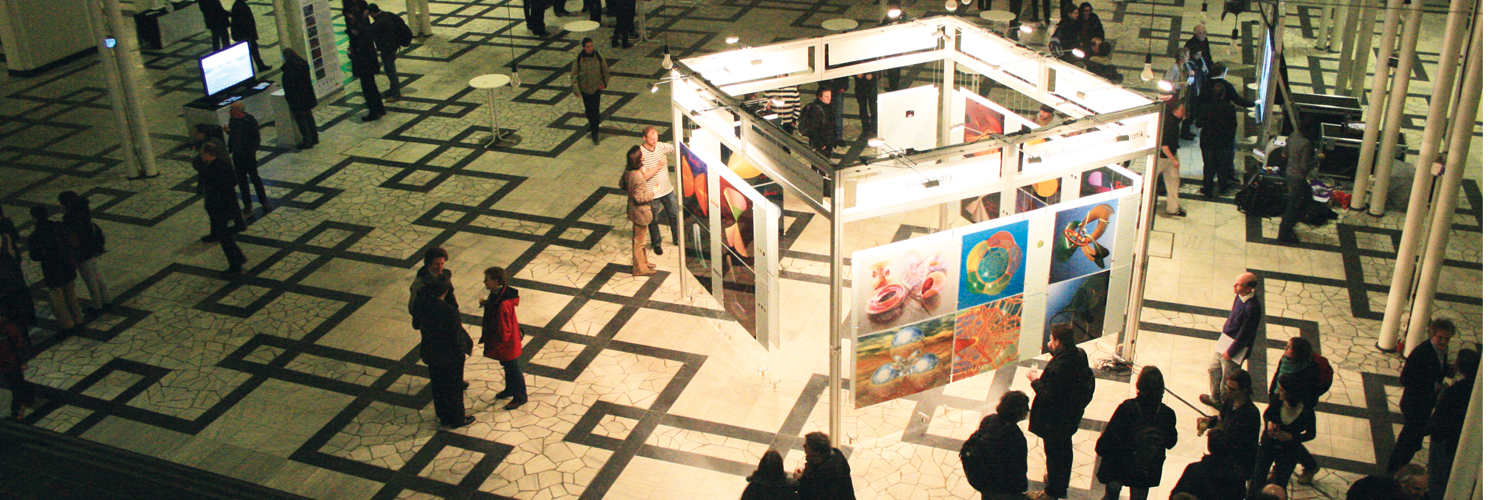
10 years ago, the first "Snapshot of Modern #mathematics from Oberwolfach" was released. Nearly 130 articles across #math fields have followed since. Free download on our platform:
👉https://t.co/HmOfxtzLr8
Image credit: IMAGINARY/B. Dozier, Snapshot 2022-013, CC-BY SA 4.0.
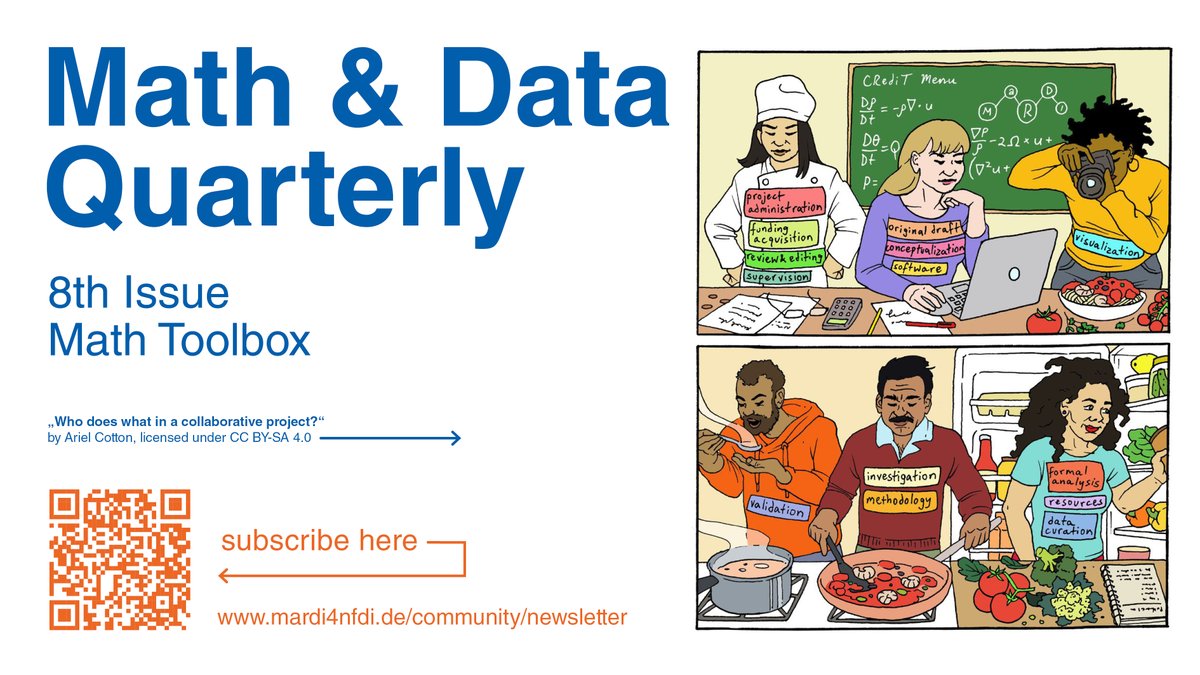
Curious about what goes into a Research Data Management Plan or how to handle math research data? Explore key points, examples, and tools in the 7th #MaRDI newsletter! Read and subscribe here: https://t.co/SSqQLhwq5u
Image: Ariel Cotton, CC BY-SA 4.0.
#DataManagement#MathData
Explore Mathematical Research Data in the 6th #MaRDI newsletter! Learn what makes it unique and how it differs from other scientific data.
Read and subscribe here: https://t.co/SSqQLhwq5u
#MathResearch#ResearchData#MathData#mathRD
Discover the power of knowledge graphs – the topic of the fifth issue of our #MaRDI newsletter “Math & Data Quarterly”. Read and subscribe here: https://t.co/SSqQLhwXV2
#knowledgegraphs#KnowledgeGraph#semanticweb#LinkedData
Image credit: Ariel Cotton (CC BY-SA 4.0).
Reserve your spot on 11.07.23 for the test run at 11:00 or at 14:00.
Limited slots are available, lasting 60-90 minutes.
You can also bring a companion! Max 20 persons per timeslot.
Note: photos and videos will be taken for documentation and publication.
Test our new exhibit for the "Digital Democracy" area @FuturiumD!
When? Join us on 11.07.2023!
Where? IMAGINARY, Mittenwalder Str. 48, 10961 Kreuzberg-Berlin (back building, 2nd floor).
Register now: https://t.co/wRDwLftacu
More info’s in the thread 🧵
On Sunday Oct 23rd we are hosting an exciting matinée musical performance at MAINS Heidelberg together with @HLForum, supported by @kulturstiftung. More information here: https://t.co/Dzgou4ZP3N
In case you missed our talk by @imaginary_math team member @ppxasjsm at the #HLF22 you can rewatch it here and get some insights into the new I AM #AI exhibition on explaining how artificial intelligence works behind the scenes: https://t.co/u3MeJ4RLxO
Taking a peek at the Heidelberg Laureate Forum videos, the video about an "explain how AI works" art exhibit, which led me to this github org for "Open Mathematics" https://t.co/IfG1YAOwyT
This is the frontend: https://t.co/v6rUZU1DmS
Has some pretty nice interactive demos
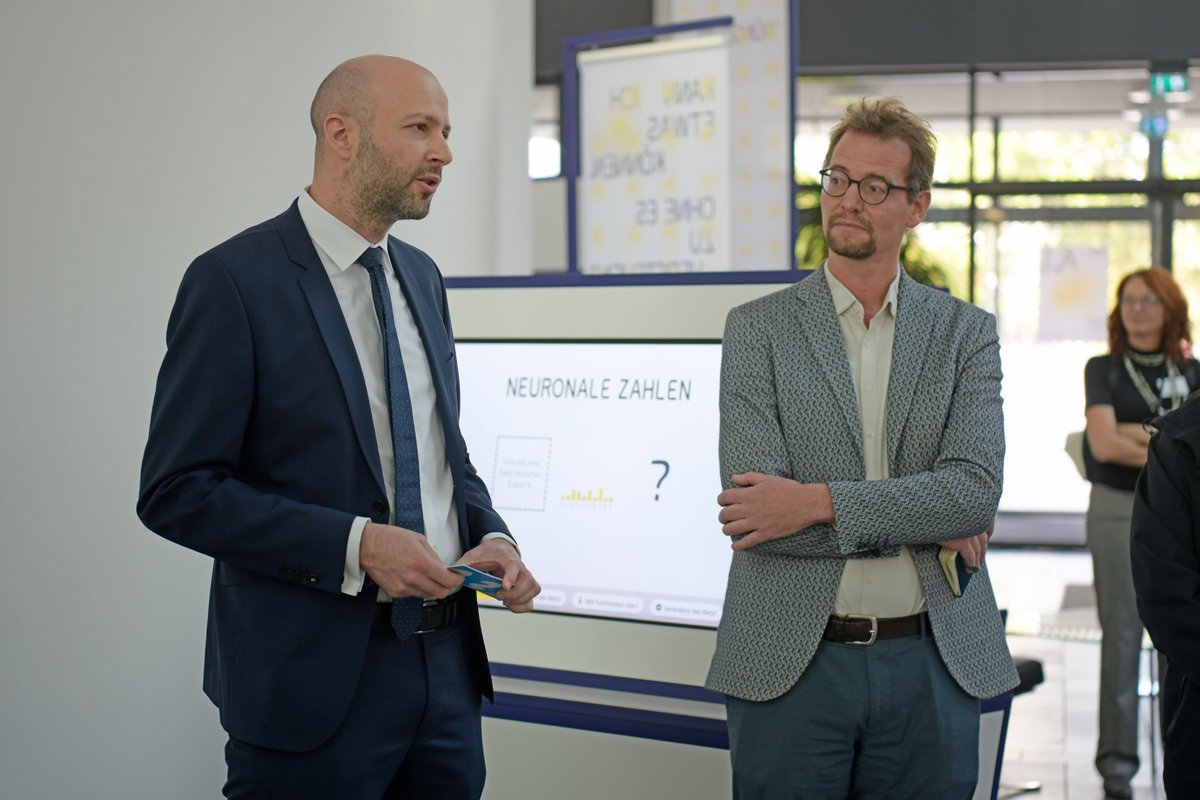
Warum kann ein Computer erkennen, welche Worte ich spreche? Kann man etwas können, ohne es zu verstehen? Macht eine Künstliche Intelligenz (#KI) Fehler? Wie lernen Neuronale Netzwerke? Antworten ab sofort bei uns in der interaktiven Ausstellung I AM AI ➡️ https://t.co/wtP9RHqQOX