1) Excited to share our new paper: #EchoNet-Pericardium!
Trained on 1.4M videos from @CedarsSinai , we've developed a temporal-spatial deep learning model to automate pericardial effusion severity grading and cardiac tamponade detection from echocardiographic videos.
Coauthored by: @milos_ai , @Yuki_Sahashi
Advised by: @David_Ouyang
read here: https://t.co/VYq0dhUE8f
EXCITED to share the release of two foundation models for electrocardiogram interpretation in @ehj_ed We built DeepECG-SL and DeepECG-SSL, two open-source ECG foundation models trained on >1M ECGs and validated across 11 external datasets (881K ECGs).
🔗 https://t.co/AxstlVmCIX
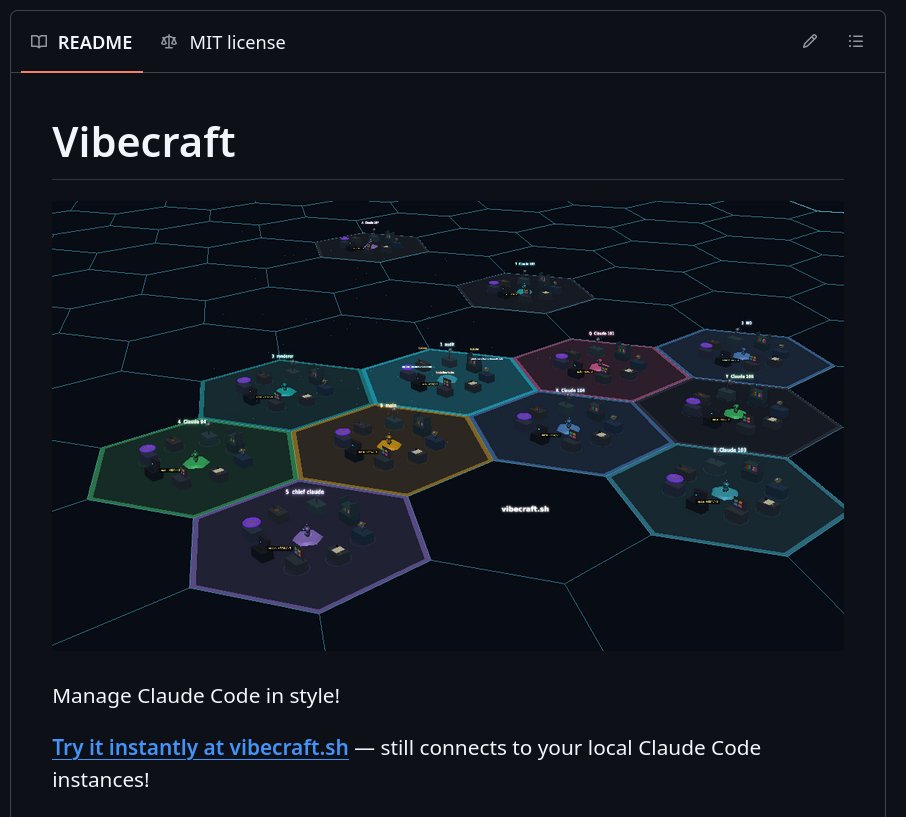
Vibecraft is now open-source at ~ 30,000 loc
Includes all scripts, hooks, visualizations, and sound
Demo: https://t.co/gtjSbS1D91
GitHub: https://t.co/9Zt77R8v6j
Big news: Our paper Comprehensive Echocardiogram Evaluation with EchoPrime, is published in Nature!
We had an ambitious idea that AI could help write echo reports. After years of work, I'm happy to reach this milestone. Excited for clinical deployment and the real-world impact!
On the heels of #AHA25, EchoPrime is published in @Nature!
EchoPrime has the strong performance in a wide range of echo interpretation tasks and is validated across 5 international hospitals.
Led by @milos_ai and @bryandhe.
1/n
https://t.co/4d5Br2qUNj
Published in EHJ-DH as a co-first author with @imin_chiu .
Factors associated with physician modifications to automated ECG interpretations
Our latest paper is published from JASE.
Using Deep learning to Predict Cardiovascular Magnetic Resonance Findings from Echocardiography Videos
Threads 🧵
https://t.co/RZGehnZOdz
@ASE360@David_Ouyang @SmidtHeart
>700K people die each year due to S. aureus infection.
Today we show that our AI designed new molecule, synthecin, stops drug-resistant S. aureus MRSA in mouse model💊
We created synthecin w/ SyntheMol-RL, our new RL generative AI. All open source https://t.co/ll6EqP1KgZ
How can we identify patients with cardiac amyloidosis early enough to benefit from therapy?
With the mentorship of @David_Ouyang I carried out a project in which we found the ratio of IVSd/GLS can accurately identify patients with cardiac amyloidosis.
AI can often detect hidden signals that describe subclinical disease or phenotypes clinicians do not readily see. In 2020, we published that AI can predict age from standard #echofirst images.
An initially surprising finding, on closer examination, I noticed younger patients tended to have small atria / longer LVs while older patients had more spherical hearts and larger atria.
In hindsight, these changes are consistent with age related changes (including the physiology of diastology), but more generally, this can be a way for cardiologists to learn patterns that were previously not intuitive.
In a recent preprint lead by @MeenalRawlani, we further explore these suprising findings.
We are thrilled to present EchoNet-Measurements, an open source, comprehensive AI platform for automated #echofirst measurements.
Using more than 1,414,709 annotations from 155,215 studies from 78,037 patients for training, this is the most comprehensive #echofirst segmentation model.
A new article highlights an AI algorithm that screens for chronic liver diseases in patients undergoing transthoracic echocardiography studies, using standard subcostal images routinely obtained to evaluate the inferior vena cava. Full article: https://t.co/nXXGvn6gSN
Liver disease is common and is often unrecognized, however the risk factors parallel the risks of CVD.
To address this challenge of underdiagnosis, we present #EchoNet-Liver, AI to identify liver disease in patients undergoing #echofirst, now published at @NEJM_AI.
Excited to give a talk tomorrow with @imin_chiu about our latest research! Join us as we discuss EchoPrime, the first AI model delivering comprehensive echocardiography interpretations.
@StanfordHealth@CedarsSinai 4) A huge thank you to @David_Ouyang for invaluable advice and support, @milos_ai for building the infrastructure of the view classifier, and @Yuki_Sahashi for the brainstorming sessions throughout the project!
This work wouldn’t have been possible without your contributions!
1) Excited to share our new paper: #EchoNet-Pericardium!
Trained on 1.4M videos from @CedarsSinai , we've developed a temporal-spatial deep learning model to automate pericardial effusion severity grading and cardiac tamponade detection from echocardiographic videos.
Coauthored by: @milos_ai , @Yuki_Sahashi
Advised by: @David_Ouyang
read here: https://t.co/VYq0dhUE8f
3) EchoNet-Pericardium demonstrates great performance in predicting cardiac tamponade:
*AUC of 0.955 in @CedarsSinai test set and 0.966 in @StanfordHealth external validation.
*For echo with pericardial effusion, AUCs were 0.904 and 0.880, respectively, showing robust prediction in challenging cases.
Subgroup analysis confirms consistent performance across age, sex, LVEF, and atrial fibrillation status.