@thsottiaux Allow dragging and dropping images etc into the gpt window in codex. I've noticed it on my system and other system it completely crashes codex when you do that and it just feels so natural.
@thsottiaux do you mean we're going to be able to drag an image into the GPT browser in codex without it crashing every instance you've got running that would be an awesome feature.
What I would love for you to implement is if I drag and drop an image or a document from desktop into the gpt browser in codex that it doesn't crash the whole shebang.
Especially when you've got four other codexs windows open.
After the third time of doing it accidentally I've learned not to do it but we should be able to do it
I've switched from Hermes to Codex.
Sol High rocks, it literally works away for hours. If something's a bit more intensive it's Sparks up sub agents.
It allows me to work on 4-5 different codex windows simultaneously because human in the loop is getting less and less frequent.
@matt_horncastle Boy did that billboard get a whole lot more exposure than you thought it would.
The Streisand effect in full force.
Hundreds and hundreds of thousands would have seen it now via pictures online.
You certainly got some bang for your buck, good work!!
If a company says it has “verification” of something, check the verification itself.
If you can’t see it, test it, or trace it back to source documents, then it isn’t verified.
Watch for fuzzy logic in so-called third-party verification.
Take $DIGAU / Dignity Gold as an example.
1/ Dignity Gold employs Caprock to provide an “independent valuation.”
2/ Caprock then employs Houlihan Lokey. So Houlihan Lokey is independent of Caprock.
3/ But Dignity supplies the valuations and assumptions that drive the deca-billion-dollar conclusion.
And there you have it:
Abracadabra.
A magical “independent third-party valuation.”
Except it appears to rely only on information supplied by Dignity itself.
By Dignity’s own admission, the project has already missed the first two years of projected mining targets from that report — not by a little, but by 100%.
So how reliable is the report?
4/ The supplied NI 43-101 report, used to support the “proven reserves” narrative, was allegedly “verified” by a Russian geologist Abe whom the BCSC said does not appear to have the professional credentials required under Canadian securities law to produce a technical mineral-resource report.
5/ The British Columbia Securities Commission warned that his reports should not be relied upon, and noted prior retractions of NI 43-101-style reports involving extraordinary mineral claims.
6/ That “proven reserves” report appears to be heavily based on the older 2022 pre-feasibility report — which the earlier author, Mark Slatten of Eco-Miners, has publicly accused others of copying or stealing.
7/ That 2022 report traces back to an older 2021 PFS, which traces back to a 2010 updated valuation report, which traces back to earlier 2008 material, which traces back to surface sampling from around 2001.
And who collected those original samples?
That remains unclear.
Photos show someone with a shovel and a jackhammer.
Zero reliable chain of custody.
8/ Wayne Aiken / Color Claims then appears to try and build credibility through references, corporate records, assay credentials, with legitimate third-parties — much like the way the Houlihan Lokey report was represented to BOS.
9/ But when you peel it back, the core question is simple:
Who collected the samples in 2001 - 2004 ?
Where exactly were they collected?
How were they documented?
Who controlled them from collection to assay?
In this case, that chain does not appear to exist.
A proper mineral-resource sample chain would normally show, at minimum:
who collected each sample, GPS/location, sample type and depth, method, sample mass, photos, field notes, sealed bags, custody transfer, independent lab prep, duplicates, blanks, standards, certified reference material, and independent qualified-person oversight.
Instead, several key assays were performed not on independently collected raw ore, but on client-prepared concentrates or copper/doré bars created after crushing, concentrating, fluxing, and smelting.
One handwritten discovery page describes:
“BLM samples taken by monuments”
a “Trade Secret” formula
and furnace treatment before the sample numbers later appear in assay summaries.
That is not a reliable mineral-resource chain.
That is a house of cards.
No serious subsurface drilling appears to have verified the claims.
No one appears to have received exploration permits for the claims.
Yet mining has supposedly been “about to begin” imminently many times for the last five years.
Blue Ocean Society #BOS
Why do:
David Weild — Weild & Co.
Roy Behren — Westchester Capital Partners
continue to sit by and watch this?
@MariusSm1th Also windy day like this is good for a walk through the main park in the centre of the town. It will rival anything you saw yesterday, 200 acres.
There will be no wind in the middle of it. And make sure you check out the fernery in there.
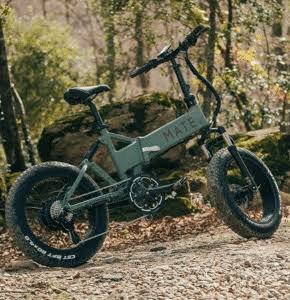
@MariusSm1th I got a couple of cool electric bikes here if you and the gf wanted to take them out for a blast along the waterfront walkway linear tracks around town. Although a little bit windy today