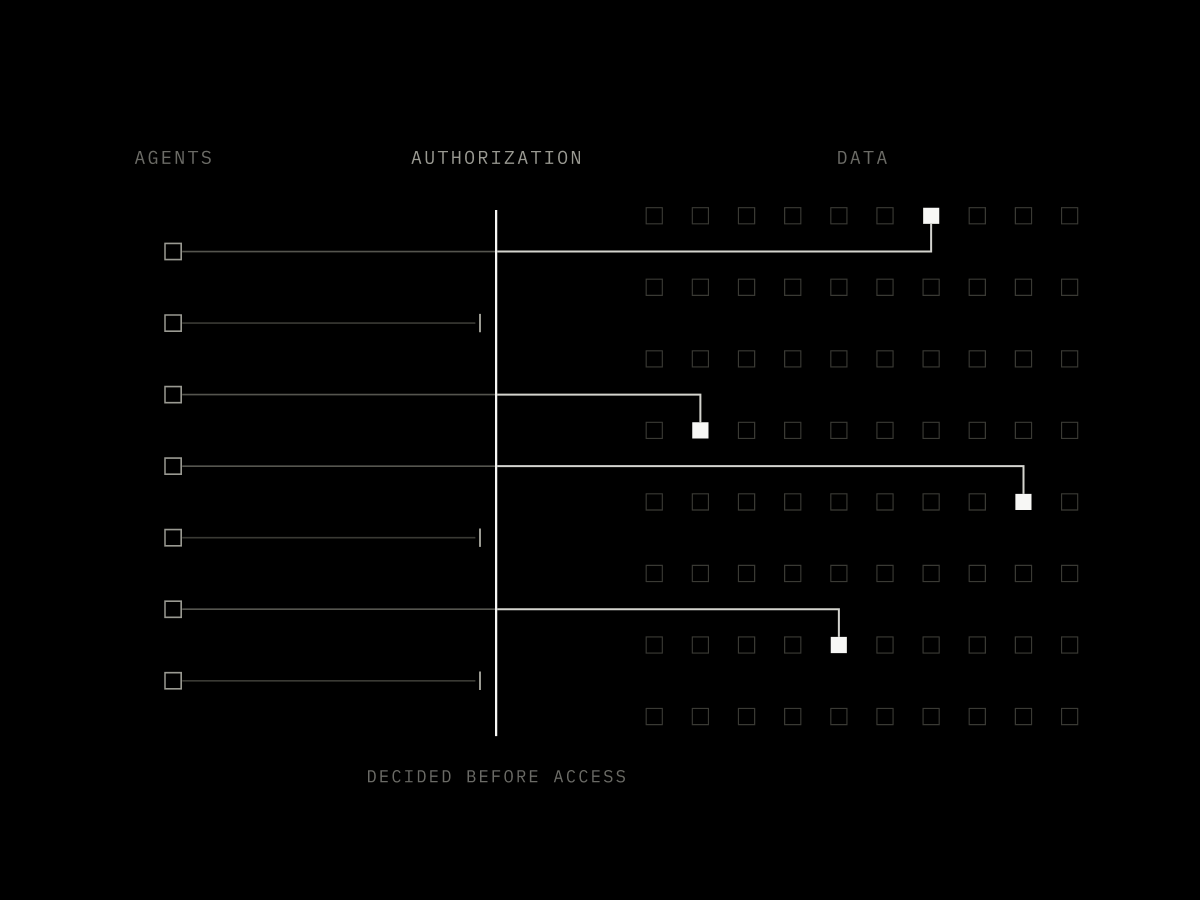
Just because access is approved in the moment doesn’t make it just-in-time access.
For AI agents, real just-in-time access means permissions are scoped to the task, enforced at the data layer, and removed when the work is done.
So what’s the difference between just-in-time consent and just-in-time access?
Our latest article breaks it down. https://t.co/9yE3l45Vab
How can AI improve control, quality, and consistency across critical datasets?
Join Anthony Farr, VP Alliances at Immuta, at FIMA Europe on November 17 for a practical AI case study exploring how organizations can strengthen control over master and reference data.
Anthony will look at how AI can help reduce duplication and inconsistency, establish clearer ownership and governance, and create a more trusted view of critical datasets.
November 17 | 4:30 PM GMT
https://t.co/8SqS8aAMdX
AI is changing financial services. But how do you give AI agents access to sensitive financial data without losing control?
From customer and transaction data to risk, fraud and research, organizations are looking to put AI to work across critical workflows.
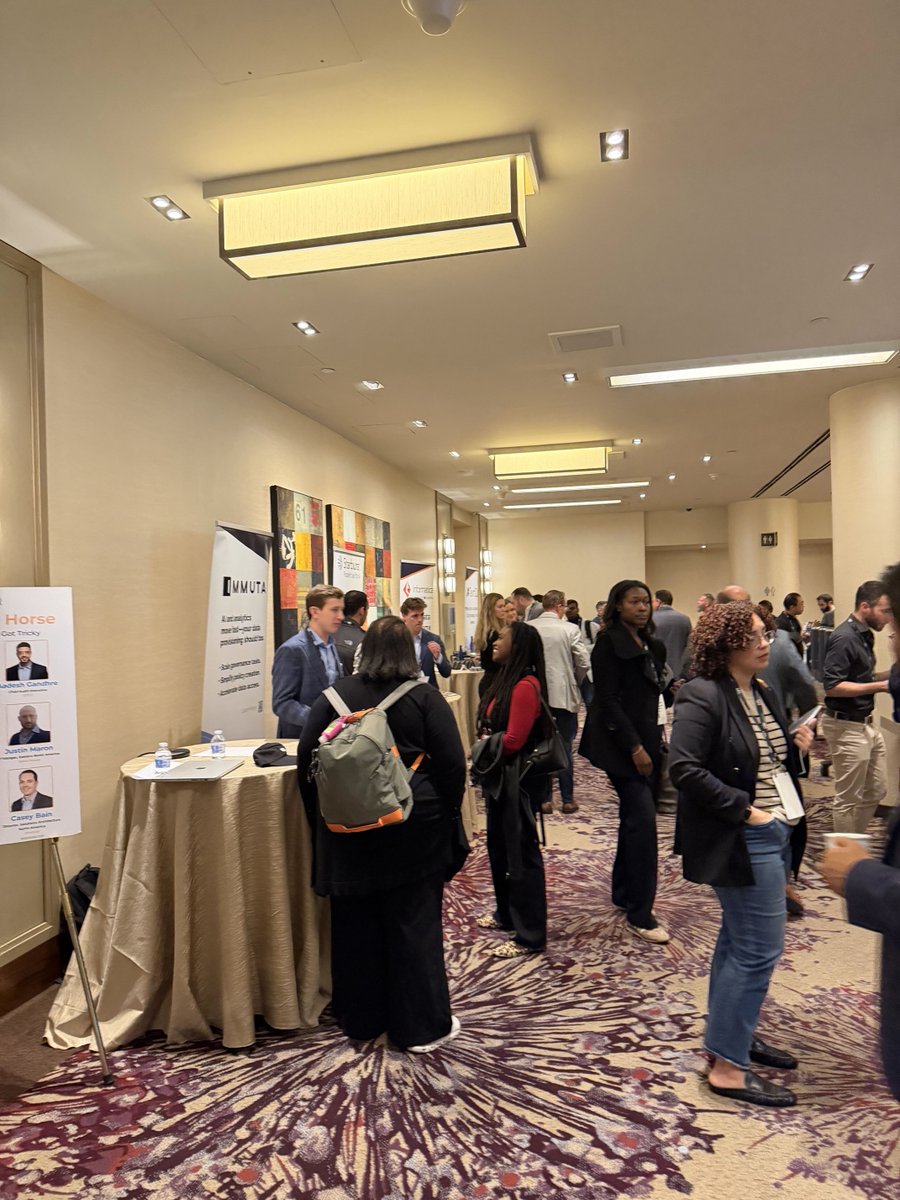
Join Immuta at GlobalData: AI in Financial Services to explore how financial services organizations can enable AI with policy-driven, temporary and task-specific access.
November 18 | Convene, One Liberty Plaza, New York City
Book a meeting with the team: https://t.co/XoD42u4q8g
Immuta is proud to be sponsoring FIMA Europe in London on November 17.
We’re looking forward to joining data and financial services leaders to discuss the challenges and opportunities shaping the future of AI, data, and governance.
If you’re attending, come and meet the Immuta team. We’d love to connect and hear what’s on your agenda.
See you there: https://t.co/HfWkrQoPhq
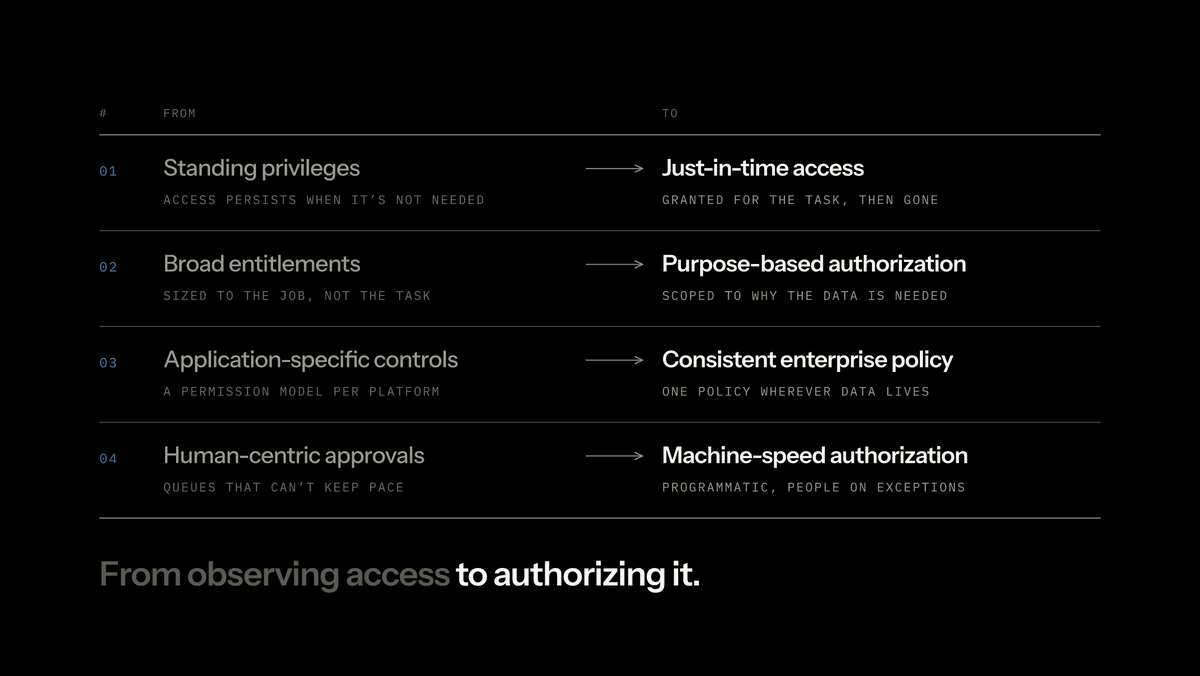
The security model is shifting.
As AI agents become more autonomous, observing what they do isn’t enough.
The next security architecture needs to make authorization decisions in real time, based on who is acting, why they are acting, and what they are allowed to do.
Read more about the shift: https://t.co/NH4A8bAHRj
Human-centric access controls were designed for people. AI agents work differently.
Traditional access controls make decisions before the work begins. But AI agents need access decisions while the work is happening.
The question is no longer simply whether an agent can authenticate. It’s whether you can govern what it can answer, on whose behalf, for what purpose, and with what evidence.
That’s the authorization model needed to move AI from experimentation to production.
Read the full article: https://t.co/FVJYC7o1nw
Major enterprises could face critical AI incidents within the next 18 months.
That’s the prediction from Immuta CISO Michael Scott in an interview with @helpnetsecurity.
But his bigger concern is what’s driving that risk: organizations are giving AI agents access to sensitive data before they’ve worked out how to properly control that access.
Agents shouldn’t automatically inherit everything a user can access. They need permissions that match the task, expire when the work is done, and remain traceable through every agent and tool involved.
Read the full interview: https://t.co/QLC7QY6bmC
Immuta is heading to the Data + AI Summit in Atlanta!
We’re looking forward to connecting with data and AI leaders and talking about what’s next for AI, data access, and governance.
If you’re attending, come and say hello.
Join Immuta and Atlan for an invite-only dinner with fellow data leaders exploring how AI is changing the way organizations think about data access.
Over dinner, we’ll trade notes from the day, discuss what teams are learning as AI tools begin working with company data, and share practical perspectives on what could come next.
Request your invite: https://t.co/gC4jPWwk1q
What does Immuta add to @Teradata AI Studio?
With Immuta’s functionality built into Tera skills, data owners, stewards, and governance teams can manage access without leaving the environment.
-Policy authoring and enforcement: Author policies in Immuta and have Teradata enforce them natively on every query, including row filtering and column masking for people and AI agents.
-Data request workflows: When a user needs data they can’t access, Tera can raise the request directly in the conversation, with purpose, regulation, and duration attached. Routine requests can be approved automatically, while others are routed to the right reviewer.
-Proof of compliance: Comply provides visibility into the policies, approvals, and access activity behind each decision, including who asked, which agent acted, and what was accessed.
Learn more: https://t.co/2eByz9BiFO
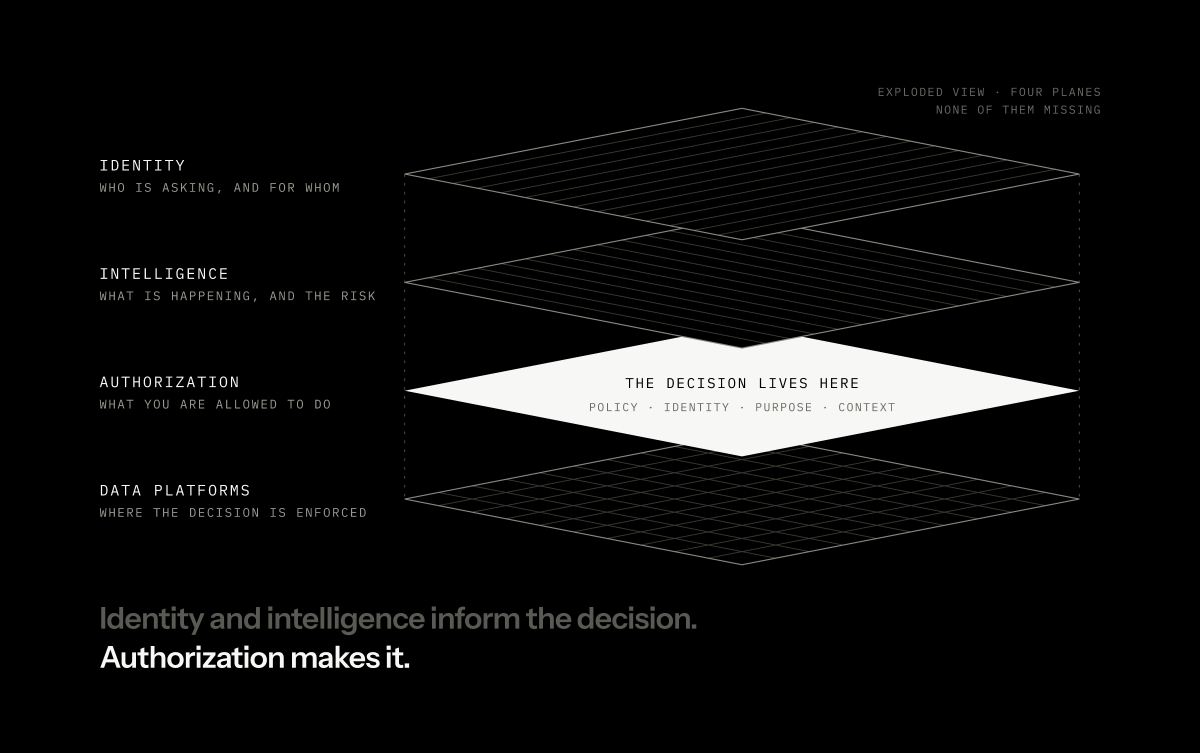
Intelligence can inform an authorization decision. It can’t replace one.
Identity tells you who is asking. Intelligence tells you what is happening. Authorization determines what they’re allowed to do.
As AI agents become direct consumers of enterprise data, that distinction becomes increasingly important.
The right approach brings these capabilities together, using identity, intelligence, policy, purpose, and context to make enforceable access decisions.
Identity and intelligence inform the decision. Authorization makes it.
Read more: https://t.co/3EF3se68sg
MCP is making it easier for AI agents to interact with tools and data. But there’s a problem: identity.
When an agent moves between MCP servers and tools, how do you know which user is actually behind the request?
Without that context, authorization becomes difficult. The agent may be authenticated, but the identity, purpose, and permissions of the person it is acting for can get lost along the way.
Our latest article explores the MCP identity gap, why it matters for enterprise data access, and what organizations need to consider as agentic workflows become more connected.
Read more: https://t.co/g065W6nik3
That’s a wrap on October.
It was a busy month for the Immuta team, with conversations taking us from London to New York and Paris to San Francisco.
We joined the @Teradata World Tour in London, the CDO Leadership Summit in New York, @Snowflake World Tour Paris, and AI + Data Afterhours with @ServiceNow during #SFTechWeek.
Different events, different audiences, but plenty of shared questions around how organizations are approaching AI, data access, and governance.
What happens when an AI agent uses a shared, overprovisioned credential?
You lose the relationship between the person asking the question and the identity actually accessing the data.
As Claude Zwicker explains, that could mean a finance analyst using a “chat with your data” interface to access information they would never normally be permitted to see.
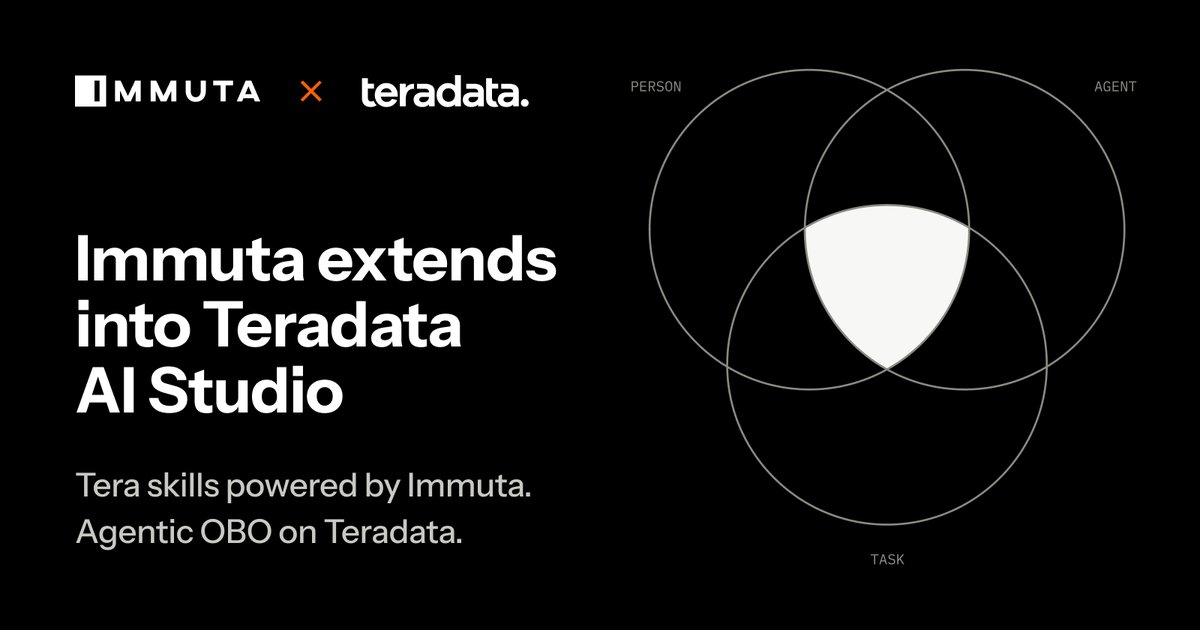
Immuta is extending its authorization layer into Teradata AI Studio.
As AI agents move from pilots into daily enterprise workflows, the question is no longer just whether an agent can access data, but what it should be allowed to do, and on whose behalf.
Read more about the integration: https://t.co/E7nQ39Thr2
11 requests a week for a person. 1,150 an hour for an AI agent.
The need-to-know principle still matters. But the way we apply it needs to change.
Read Part 1 of our new series on restoring need-to-know for the agentic enterprise. https://t.co/RQ4yt848vy
Inference and authorization are not the same thing.
Our latest resource explores the difference between inference and authorization, and why the distinction matters for governed AI data access.
Read more: https://t.co/2cZ5eNaDFA
Delegation, data-plane enforcement, and just-in-time access.
Our latest whitepaper explores how these principles can help organizations govern AI agents as distinct identities while preserving the context of the users they act for.
Read the whitepaper: https://t.co/ae6KWFKEV1
Manual governance hits a ceiling. And it can happen sooner than you think.
Too little access can leave people waiting for the data they need to do their jobs. Too much access can create unnecessary risk for the organization.