This 4,500-year-old terracotta dice from the Indus-Saraswati Civilization is a powerful reminder of India’s living heritage. Dicing is also mentioned as a popular game in Rig and Atharva Vedas (two of the four sacred Vedic scriptures).
From symbols and craftsmanship to rituals, yogic practices, and collective memory, numerous elements of ancient Indian civilization continue to thrive in the daily social and religious life of Indian society across regions and communities.
Civilizational inheritance is not just about geography or ruins, it is defined by living customs, symbols, rituals, and unbroken cultural consciousness. India is the enduring living continuity of the Indus-Saraswati Civilization.
#IndusSaraswatiCivilization #AncientIndianHeritage
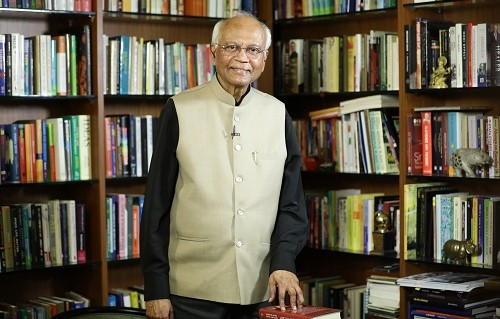
In the 1990s, India was facing a Biological Colonization. If Dr. R.A. Mashelkar had not stepped in, we might have ended up paying a royalty to a US corporation every time we used turmeric on a wound/exported Basmati rice.
In 1997, a Texas-based company called RiceTec was granted a patent by the USPTO (US Patent & Trademark Office) for Basmati Rice lines & grains. They claimed they had invented a superior strain of rice. Mashelkar realized that if this patent stood, Indian farmers would be barred from selling their own rice under the name Basmati in the US. It was a theft of Geographical Intellectual Property.
He did not just shout Injustice. He assembled a team to find Genetic Fingerprints. They proved that the new rice was actually derived from Indian germplasm that had existed for centuries. The USPTO was forced to strike down the majority of the claims.
2 researchers at the University of Mississippi were granted a patent for the use of turmeric in healing wounds. To a Western patent officer, this was a novel invention. To an Indian, it was something their grandmother did every day. Mashelkar produced an ancient Sanskrit text as Prior Art. The USPTO demanded a translation. He provided evidence from the Journal of the Indian Medical Association dating back to 1953 + ancient Ayurvedic texts.
This was the 1st time in history that a patent granted to a US entity was successfully challenged & revoked based on the Traditional Knowledge of a developing country.
Mashelkar also realized that India could not fight 10000 legal battles every yr. He needed a Scalable Solution. Patent officers in the West were not malicious; they were just Data Blind. They could not read Sanskrit/Tamil/Persian. If a discovery was not in an English journal, it did not exist in their system.
He hired 100s of experts (Ayurveda practitioners, IT engineers, & Patent lawyers). They took 500000+ formulations & converted them into a digitized Shloka to Code format. The data was rendered in English, French, German, Japanese, & Spanish.
Today, India has signed agreements with the USPTO, the European Patent Office, & others. Before an officer grants a patent, they run a TKDL Scan. If the herb/method is in the library, the patent is rejected instantly.
आप्रा द्यावापृथिवी अन्तरिक्षं सूर्य आत्मा जगतस्तस्थुषश्च ||
apra dyava-prthivi antariksam surya atma jagatas tasthuaas ca ||
"Filling space & earth, atmosphere, the Sun is the soul of all that moves and all that are stationary (on Earth)."
- Ṛgveda 1.115.1 (~ 3500 years ago).
Today, India takes a defining step in its civil nuclear journey, advancing the second stage of its nuclear programme.
The indigenously designed and built Prototype Fast Breeder Reactor at Kalpakkam has attained criticality.
This advanced reactor, capable of producing more fuel than it consumes, reflects the depth of our scientific capability and the strength of our engineering enterprise. It is a decisive step towards harnessing our vast thorium reserves in the third stage of the programme.
A proud moment for India. Congratulations to our scientists and engineers.
A distinguished soldier and strategic voice falls silent
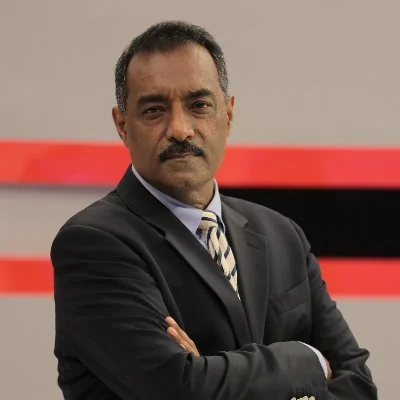
In sad news - Today, 26 February 2026, India lost one of its most respected soldier-scholars, Major Maroof Raza (Retd) whose life was a testament to service, insight and the spirit of inquiry.
Born in 1959, Maroof Raza graduated from St. Stephen’s College, Delhi, before joining the Indian Military Academy, Dehradun, where he was commissioned into The Grenadiers Regiment in 1980. His early years in the Army took him into counter-insurgency operations in India’s North East, experiences that shaped his lifelong engagement with security and defence.
After leaving the service, he became a leading strategic affairs expert, author and media anchor, known for bringing the soldier’s perspective to public discourse. He hosted acclaimed television series such as Line of Duty, anchored programmes on national security for major news networks, and wrote extensively on India’s military and geopolitical challenges.
His work bridged the realms of lived military experience and thoughtful analysis, earning him respect across India’s defence and media communities.
Maj Raza leaves behind a legacy of clarity, courage and dedication to understanding the forces that shape our world.
Our deepest condolences to the family. 🙏🏵️
Absolutely brilliant analysis by @palepurshankar Sir on the Sandeep Unnithan show about the recent geopolitical situations and its implications on India!
Please do check it out on #GunnersShot YT channel!
#Breaking: India's notification for a likely long range missile test now stretches further into the Indian Ocean Region with a danger zone of ~ 4,790 km
Date | 20-21 August 2025
विनाश काले विपरीत बुद्धि!
Give them what they want!
I pray to MAHAKALI to give courage to our defence forces to cleanse the Raktabheejasuras!!👹
Jai Hind🇮🇳🫡
#OperationSindhoor
Ganesh sthapana and visarjan is to be done only south of the Vindhyas, which is Kartikeya’s territory and where Ganesha ji goes to visit his brother during these 10 days. Ganesha ji is ever present north of the Vindhyas, and no sthapana and visarjan is required. Darshan alone is sufficient.