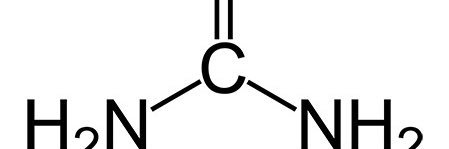
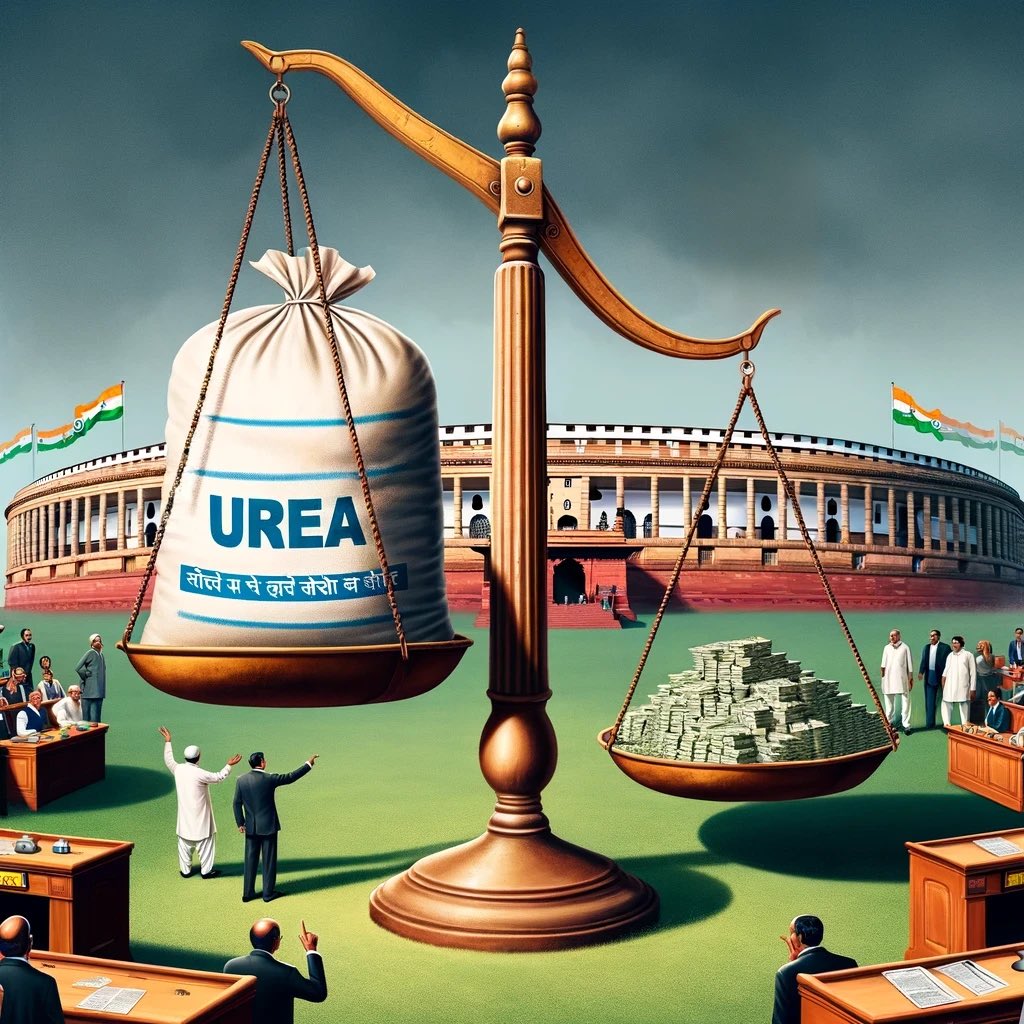
I had a very interesting discussion with one of the Indian urea producers at the recent IFA conference. My question to him related to the self-sufficiency of India in urea production. So, while discussing, we briefly went through the main input numbers.
As is widely known, the present Indian government has guaranteed that urea would be available for farmers at INR 242 per 45 kg bag. That’s roughly about $3 per 45 kg bag or, let’s round it, $70 per metric ton.
India's domestic natural gas production increased 2.4% annually on average between 2019 and 2022, while imports declined 1.5% annually. However, the country is still heavily dependent on imports. Today, as my fellow friend-producer said, imported gas is sold to urea producers at $16 per MMBtu.
Typically, producing one metric ton of urea requires about 28-32 MMBtu (million British thermal units) of natural gas, considering the energy needed for both the synthesis of ammonia and the subsequent conversion to urea. Assuming an average consumption of 30 MMBtu per ton of urea, the cost of natural gas would be 30 MMBtu x $16 per MMBtu = $480 per metric ton.
Apart from natural gas, there are additional costs involved in urea production, including:
- Labor, maintenance, utilities, and other operational expenses.
- Depreciation of plant and equipment.
- Transportation and distribution costs.
Let’s estimate these costs to be between $50-$100 per metric ton, which brings us to a price of $530-$580 per metric ton for local production.
If a new urea import tender happened today, the price wouldn't be above $350 per metric ton CFR. Adding another $50-$70 per metric ton for discharge, bagging, and delivery, we arrive at $400-$420 per metric ton delivered.
Now, let’s quickly recall that the fixed price for the farmers is $70 per metric ton.
There’s an election period in India. By June 15, the new government will be announced. Like in every country, the election campaign is a time of big promises and statements: urea self-sufficiency, record urea stocks, and fixed prices until next March. However, my gut feeling says that we need to wait until the end of June and some surprises will pop up.
Have a great week, everyone.
#urea #india #elections #ifa2024 #subsidy #production #fertilizers #fertilisers #imstory
Just 24 hours after the Chinese government reportedly lifted restrictions on urea export prices, those restrictions appear to have been reinstated.
What was the trigger?
The trigger was the expectation of very low and aggressive Chinese offers into the latest Indian urea tender.
Looking back, however, one has to ask whether lifting the restrictions immediately before the tender was really necessary. Would it not have been more logical to wait for the tender results first and then decide on any changes to export pricing policy?
I have a feeling that if the restrictions had remained in place until after the tender, traders might not have been so aggressive with their offers.
According to market sources, the L1 price is expected to be in the range of USD 417–422 CFR. The tender has not officially been announced yet, but if these numbers prove correct, the biggest loser may once again be the Indian importer.
At current market economics, it is becoming increasingly difficult to see how meaningful volumes can be shipped to India if Chinese export prices are effectively capped and anything below USD 500–510 FOB China becomes uneconomic.
The question now is simple: was this a policy adjustment, or was it an unintended market signal that encouraged traders to push prices lower than Beijing was prepared to accept?
Rumors in the street, that one trading company submitted a bid for all 1.7m tonnes and bid was really low….
#imstory #fertilizers #fertilisers #urea #phosphates #persiangulf #production #sulphur #supply #demand #market #analysis #thoughts #dof #nfl #tender
The most powerful force in markets Is not demand. It is forced demand.
I came across an interesting discussion recently around the potential IPO of SpaceX. The debate was not really about rockets, satellites or Elon Musk. The interesting part was something else entirely. The suggestion is that if SpaceX goes public, index providers may accelerate its inclusion into major indices. If that happens, ETFs and passive funds could be forced to buy tens of billions of dollars worth of stock, regardless of valuation and regardless of whether portfolio managers believe the shares are cheap or expensive. And that made me think, that most powerful moves in markets often do not happen because people want to buy something, but rather they happen because people have no choice but to buy it. In equities, this is called passive inflow. In fertilisers and agricultural commodities, we see exactly the same phenomenon every year. In one particular country - India. When India issues a tender for 1.5, 2 or even 2.5 million tonnes of urea, it is not because traders in Delhi suddenly become bullish on nitrogen. It is because the country needs product. Stocks need to be replenished, farmers need to be supplied and the system requires volume. One of the best recent examples came just now during the extraordinary market conditions of this spring. Urea prices approached USD 1,000 per tonne CFR India, yet India still purchased more than 2.5 million tonnes. Why? Because affordability may influence timing, but it does not eliminate demand. In reality, India is one of the largest passive buyers in the global fertiliser market. The trigger may be different, but the mechanics are remarkably similar to an ETF buying a stock after index inclusion.
#imstory #fertilizers #fertilisers #urea #phosphates #persiangulf #production #sulphur #supply #demand #market #analysis #thoughts #dof #nfl #tender #spacex #ipo #trading #eft #ggtrading
I’m presently reading Gary Klein’s Sources of Power. It’s fascinating how history keeps repeating itself.
Have a look at the picture and the quote from the book. Pay attention to the date - 3 May 1988.
Back then, the world was dealing with tensions in the Persian Gulf, attacks on shipping and concerns over freedom of navigation through the Strait of Hormuz during the final stages of the so-called “Tanker War” between Iran and Iraq. The Strait remained one of the world’s most critical maritime choke points - just as it is today.
#imstory #fertilisers #fertilizers #urea #persiangulf #usa #iran #war #oil #book #reading #ggtrading
Summer has officially started, and green is everywhere - including in the energy sector. green energy was mostly about carbon emissions, climate targets and ESG commitments.
Today, I wonder if the conversation is slowly changing.
Recent events in the Middle East have reminded the world how much of the global economy still depends on a relatively small number of strategic routes and energy hubs. When energy prices rise and supply chains become vulnerable, countries start asking a different question: not only how much energy costs, but how secure that energy really is.
This is why I would not be surprised if the current crisis accelerates two trends simultaneously.
First, investment into alternative infrastructure. New pipelines, railways, storage facilities, export corridors and logistics routes designed to reduce dependence on critical chokepoints.
Second, renewed interest in alternative energy sources. Green energy is often criticised for being expensive, intermittent and not always reliable. Many of those arguments remain valid. However, it also offers something increasingly valuable: a degree of energy independence.
The same question applies to our industry.
Will the current geopolitical environment accelerate investment into green ammonia, blue ammonia and other alternative production pathways? Not only because of environmental considerations, but because countries are looking for greater control over their own energy and fertiliser supply chains.
Perhaps the next chapter of the energy transition will be driven not only by sustainability, but by security.
#imstory #fertilisers #fertilizers #green #energy #sustainability #iran #oil #gas #supply #demand #ggtrading
Last week, the EU issued a temporary exemption from import duties of 6.5% on urea and 5.5% on ammonia - quite a timely step ahead of the restocking season for the 2027 campaign.
At the same time, the market has been filled with rumours of a potential deal between Iran and the United States, which could eventually lead to a normalisation of logistics through the Hormuz, Red Sea and Suez route.
Just a couple of quick thoughts on what this may actually lead to.
Let us start with the obvious losers.
The clear losers of this shift are likely to be Egypt and Algeria, two countries that had benefited from Europe’s limited supply options and tariff structure until last week.
We have only seen something similar once before - back in 2022, immediately after Russia invaded Ukraine and nitrogen prices moved to historic highs. At that time, the EU temporarily removed import duties and allowed imports of virtually any urea into Europe, with the exception of Russian and Belarusian product. The result was remarkable: even Vietnamese urea found its way into the EU market.
This time, however, the biggest winner may well be Nigeria. Geographically, it is very well positioned towards Europe and, importantly, Nigerian urea production has increased substantially since the exceptional market conditions of 2022.
For the rest of the world, the implications are also quite interesting.
Brazil is likely to face stronger competition from the EU for non-Russian nitrogen tonnes, which may tighten availability elsewhere.
At the same time, European buyers may become less aggressive in the early stages of the 2027 restocking campaign, understanding that they now potentially have a much broader selection - or, as I would put it, more of a “buffet table” of urea and ammonia origins available for the 2027 season.
In short, this may well become a meaningful shift in nitrogen trade flows.
For traders, however, more optionality usually means one thing: more opportunities.
#imstory #fertilisers #fertilizers #urea #eu #tariffs #sanctions #ammonia #analysis #thoughts #market #egypt #algeria #alternative #hormuz #iran #usa #russia #ukraine #ggtrading
It’s such a dull market at the moment. Honestly, not much is happening.
People keep loading urea to India, and for the time being it looks like the only truly active market. We are in that awkward period between seasons: the application season in the Northern Hemisphere is largely over, Australia is also done, while Brazil’s big season has not yet really started.
Brazil is still behind the pace, and I have a suspicion that, for now, traders are actively shorting positions there.
There are rumours of a new Indian tender coming soon - at least if we speak about urea and nitrogen. Beyond that, the market feels slow, dull and slightly price-depressing. As we all know, however, sentiment can change very quickly when a couple of sizeable tenders appear. Big demand has a way of waking markets up - but it takes time.
Phosphates are a different story. The market is relatively well supported, although affordability is becoming a clear point of resistance from the buyers’ side. That said, phosphates still seem to be holding up much better than nitrogen, and, in my view, probably have more upside resilience.
Potash is also interesting. We have seen another round of government-to-government deals in India. BPC seems to have been the first to pull the trigger, with annual contract has closed at $383pmt CFR with 180 days' credit - a $34pmt increase on last year, and $35pmt above China's $348pmt CFR settlement.
In short: summer mood in the fertiliser market.
Maybe it is time for a short holiday - a week or two - before we all head to the IFA conference in Monaco.
#imstory #fertilisers #fertilizers #nitrogen #urea #phosphates #potash #china #bpc #brazil #tender #trading #thoughts #ggtrading
I was waiting for the opening of the Asian session in soft commodities this morning.
Following President Trump’s visit to China and his talks with President Xi, a USD 17 billion purchase deal for soft commodities was announced. However, this does not include the soybean purchasing commitments China had reportedly made to the White House back in October 2025.
What surprised the market is that Beijing appears to be increasing its soybean purchase target beyond 25 million tonnes - something that was not fully priced in by the market.
At the same time, broader indications suggest that China may increase purchases of other US soft commodities as well, which immediately triggered a gap higher at the opening of the Asian markets.
An interesting situation - especially when combined with the still very tense situation in the Middle East.
Let’s see where this eventually leads fertilisers.
#imstory #fertilisers #fertilizers #soya #wheat #corn #commodities #usa #china #middleeast #iran #persiangulf #ggtrading
The market is slow. Really slow. And the key word today is affordability.
Yes, fertilisers became expensive. But unlike 2022, agri-commodities did not explode to the same level. Farmers’ economics are completely different now.
And we finally arrived at a rather unusual situation. There is literally almost no lineup in Brazil.
As our office tells us, normally at this time of the year the waiting time should be somewhere around 10-14 days. Today, vessels are berthing almost upon arrival.
So here is the real question for the final buyers.
What would you prefer?
To pull the trigger now and start bringing vessels while ports are quiet and logistics are smooth? Yes, maybe you pay slightly more for the product itself, but at the same time you save substantial hidden costs on demurrage, delays and operational stress.
Or do you continue pressing the market lower, trying to squeeze another few dollars out of suppliers, only to face congestion later and give all those “saved” dollars back through logistics and demurrage bills?
Sometimes the cheapest price is not actually the cheapest final cost.
#imstory #freight #fertilisers #fertilizers #brazil #urea #costs #market #analysis #urea #phosphates #ggtrading
Last week, the United Arab Emirates announced its exit from OPEC. I already mentioned that, to me, this looks like an early signal of much bigger changes we are likely to see in the Middle East once the current tensions around Israel, the US and Iran settle down. But even before that happens, it feels like those changes have already begun.
What stands out to me is that countries in the region will increasingly try to reduce their dependence on the Strait of Hormuz. It would not be surprising to see significant investments in alternative infrastructure, pipelines, railways and road networks, anything that allows them to bypass this bottleneck.
Maybe I’m wrong, but it feels like there is now a clear realisation of how fragile stability in the region actually is. And with that comes a push for greater independence and resilience.
At the same time, and unfortunately, a meaningful share of capital will likely be directed towards defence and security. This is no longer just about reliance on the United States, it increasingly looks like a shift towards self-defence.
This is not a post about fertilisers as such, but more a broader observation of where I see the region heading over the next decade, and where capital, attention and strategic focus are likely to be directed.
#imstory #fertilisers #fertilizers #oil #middleeast #persiangulf #arabgulf #oil #opec #cartel #thoughts #trading #logistics #war #defense
Many thanks to Natalie Noor-Dugan and the entire CRU crew for this post-interview following the recent Phosphate and Potash Conference in Paris.
It was a real pleasure to take part in the panel alongside other participants and discuss the key developments shaping today’s phosphate market, both on the supply and demand side.
We, at GG Trading DMCC are always open to further cooperation, and I would also like to thank all participants of the conference and, more broadly, our industry. It is truly a great industry to be part of.
https://t.co/stvbKKjtOw
#imstory #fertilisers #fertilizers #potash #phosphate #urea #ggtrading #industry #paris #conference
Some time ago, I published a note on oligopolies and how they function in the mineral fertiliser market, particularly in potash. But of course, potash is not the only example. We all know OPEC, which for decades has been one of the most visible and influential oligopolies in global commodities.
Today’s news about the UAE deciding to leave OPEC is, in that context, quite significant.
Interestingly, the market did not react in a dramatic way. Prices moved, but without panic, and then stabilised. Which, in itself, says a lot. It suggests that the market is already driven by multiple overlapping factors, and no single headline is enough to fully reset the direction.
That said, I do think we may be witnessing a structural shift. OPEC has been operating as a coordinated system for many years, effectively managing supply and, to a certain extent, influencing price formation. When a key player like the UAE steps out, it raises a broader question about how sustainable that coordination really is going forward.
Against the backdrop of the current tensions in the Middle East, this becomes even more relevant. Periods of instability tend to push countries towards more independent decision-making. The focus shifts from collective strategy to national priorities.
In that sense, the UAE’s move may be less about today’s price and more about positioning for the future, gaining flexibility not only in oil production policy, but more broadly across its economic strategy.
If that is the case, then this is not just a single event. It could be the beginning of a gradual rethinking of how coordination works in commodity markets and how long traditional oligopolies can remain intact under pressure.
#imstory #fertilisers #fertilizers #oil #middleeast #persiangulf #arabgulf #oil #opec #cartel #thoughts #trading
There is a story I’ve always liked about how Walt Disney approached the development of his second park, what later became Walt Disney World.
At the time, he understood one simple thing: if the market realised that Disney was buying land, prices would explode overnight. So instead of going directly, a network of different companies was created, each acquiring land quietly, piece by piece. Small parcels, different names, different intermediaries. For a long time, no one really understood what was happening. By the time the full picture emerged, the land had already been secured.
It was, in many ways, closer to an operation than a real estate transaction.
I was thinking about this today looking at the Indian tender.
We are seeing a very high price level, with a handful of major players committing close to 2 million tonnes. On paper, positions are taken. In reality, part of those tonnes will now have to be sourced from others who chose not to sell into the tender.
And this is where it becomes interesting.
Will we now see direct negotiations between the awardees and the rest of the market? Or will the buying be done quietly, through intermediaries, piece by piece, without showing the full hand?
Because in markets like ours, once intentions become visible, price is no longer the same. And sometimes, the real game only starts after the headline deal is done.
P.S. No, I can’t use Disney’s images for my drawings - it’s a violation of a third-party content.
#imstory #fertilizers #fertilisers #india #urea #tender #trading #strategy #waltdisney #market #thoughts
@sizov_andre@Ross__Hendricks Nigeria - already a producer of 3.5m tonnes per year with a planning expansion to 7-9m tonnes per year. Total potential is 9-12m tonnes. Ethiopia - another 3m tonnes by 2031. All from the local gas fields.
For couple of weeks, there is a narrative starting to build around a possible restriction on ammonium sulphate exports from China. I would not call it a fact yet, but the logic behind it is becoming increasingly difficult to ignore.
China is heavily dependent on imported sulphur, and a meaningful part of that flow comes from Iran and the wider Gulf. Any disruption there does not just affect sulphur availability - it hits the entire sulphuric acid chain.
And once sulphur becomes tight, the question is no longer “how much can be produced”, but rather: where will the sulphur go? It will go first into phosphates. Because phosphates are strategic, directly linked to food security, and already under tight export control. We are already seeing China maintaining restrictions on phosphate exports, and rising sulphur costs only reinforce that stance.
Which leaves ammonium sulphate in a very interesting position. Not because it is directly dependent on sulphur in the same way, but because it competes for the same upstream balance - sulphur, acid, logistics, and ultimately policy attention.
We are not there yet in terms of a formal restriction.
But if the current situation persists, I would not be surprised to see softer availability of Chinese ammonium sulphate or informal export tightening
Interesting to hear what my Chinese colleagues would say.
#imstory #fertilisers #fertilizers #sulphur #china #export #amsul #quotas #brazil #iran
My short take on last night’s ceasefire between Iran, Israel and the US.
First of all, it is genuinely reassuring to see that we are not sliding into the dark scenario of a broader global conflict. That alone matters.
At the same time, this ceasefire feels like a very fragile arrangement. The terms currently being discussed are complex and not necessarily aligned across all parties. I hope the negotiations in April will bring more clarity, but I would not place too much confidence in the durability of this ceasefire, unfortunately.
With that in mind, a quick look at what this may mean for fertiliser markets.
Starting with nitrogen.
The potential reopening of the Strait of Hormuz, even with certain conditions attached, is clearly a positive signal for global supply. There are already expectations that up to 800,000 tonnes of fertilisers have been loaded and are waiting for passage, with a significant share - potentially around 500,000 tonnes - linked to the previous Indian tender.
Now, with a new Indian tender of 2.5 million tonnes, supply could come from multiple origins: Nigeria, Russia, Egypt, Southeast Asia and the Gulf region. I don’t expect China to participate.
However, the key question remains: how much production capacity has actually been affected or damaged during the conflict?
My view is that Iran has been significantly impacted, and there are also questions around infrastructure in Saudi Arabia and Qatar. Rebuilding such facilities is not a short-term story - we are likely talking about years, not months.
As a result, while a correction in urea prices is likely, I would not expect a sharp or aggressive return to pre-war levels.
Turning to phosphates.
Here, I see very limited immediate change. Sulphur - the key raw material for sulphuric acid production - is likely to remain tight, given the damage to oil and gas infrastructure in the region. That suggests prices will remain elevated for some time, potentially for years.
At the same time, we have OCP indicating maintenance on up to 30% of production in the coming months, as well as the continued absence of China from the export market.
Another important element in this equation is freight.
With the easing of bunker prices, we should also expect freight rates to soften accordingly. In addition, a gradual return to more conventional routing patterns - including transit through the Suez Canal - will further normalise logistics flows.
This, in turn, should reduce some of the pressure we have seen on delivered prices over the past months, although not necessarily enough to offset the structural issues on the supply side.
Putting all of this together, the market may see some short-term relief, particularly on the nitrogen side. However, structurally, we are still operating in a constrained and fragile environment.
And in such conditions, the key question remains not only about price - but about availability, timing and reliability of supply.
#imstory #fertilizers #fertilisers #urea #phosphates #persiangulf #production #sulphur #supply #demand #market #analysis #thoughts
I have tried today to check the tickets. I was curious about the price of flights from London to Dubai - it’s about that time of the year to catch up with colleagues at the office, so I started looking at possible travel schedules for May. However, I realised that there are currently no British Airways flights from London to Dubai, as they have been temporarily halted due to the unstable political situation in the Middle East. So I caught myself with a strange sense of déjà vu.
The market feels familiar. Not because the fundamentals are the same, but because the behaviour is. Supply and demand still exist, of course, but they no longer move in a clean, predictable way. There are delays, distortions, frictions - and it starts to resemble what we went through during COVID.
Back then, the problem wasn’t simply a lack of product. It was a breakdown in how the market functioned.
Logistics were disrupted, decisions were no longer purely economic, and supply chains didn’t fail because goods didn’t exist - they failed because those goods couldn’t reach where they were needed. Today, the drivers are different, but the effect feels surprisingly similar.
During COVID: containers were in the wrong places, freight rates went through the roof, products existed “on paper” but were physically unavailable.
Today: sanctions and regulation are reshaping trade flows,banks, insurers and compliance are influencing deals as much as price, and origin sometimes matters more than cost.
In both cases, the result is the same: the market becomes inefficient. And once inefficiency sets in, price is no longer just a reflection of balance. It starts to include fear, risk premiums, logistical constraints and political factors.
There is another parallel - behaviour.
During COVID: people bought “just in case”,
no one wanted to be caught short,
inventories grew faster than actual consumption.
We are seeing a similar mindset now: companies prefer to secure product early, they are willing to pay more for certainty, decisions are driven not only by margin, but by availability.
That, in itself, creates additional demand.
Fundamentally, the world has not suddenly become dramatically more dependent on fertilisers or agricultural commodities. But the market has become far less predictable.
And that brings me to what I think is the key takeaway. Just like during COVID, the winners are not necessarily those who best predict price, but those who best understand flows. Those who can answer a very simple question:
not “what is the price?”, but “will it arrive?”
Because in times like these, the market doesn’t punish you for being wrong on price. It punishes you for assuming that things will work the way they used to. And they won’t.
#imstory #fertilisers #fertilizers #market #supply #demand #analysis #thoughts #covid #dubai
Oil prices keep moving higher. And despite all the statements from Donald Trump about a potential end to the conflict, the market doesn’t seem to be buying it just yet. More importantly, even if the conflict de-escalates, it increasingly feels like prices may stay elevated for some time.
Higher oil means higher gasoline and diesel prices. That part is straightforward. But here’s a more interesting angle. What else, besides electricity, can actually power cars?
This is where biofuels quietly come back into focus.
Ethanol is the most obvious one - widely used, especially in blends. Produced mainly from corn in the US and sugar cane in Brazil, it’s already a structural part of the fuel mix rather than some futuristic concept.
Then you have biodiesel and renewable diesel.
These are typically produced from soybean oil, rapeseed oil, used cooking oil, and other vegetable oils. Again - not theory, but existing large-scale demand.
There are also more niche but growing options:
biogas (from agricultural waste), and even synthetic fuels, although those are still not yet mainstream.
What matters is this: as traditional fuel prices rise, these alternatives stop being “green preferences” and start becoming economic choices. And that creates a direct link back to agriculture.
Corn, soybeans, sugar cane, rapeseed - they are no longer just food or feed, but energy inputs.
So the chain becomes very clear: oil → fuel prices → biofuels → agri-demand → prices. Which brings us back, once again, to the same conclusion: energy markets don’t just influence agriculture -
they reshape it.
#imstory #fertilizers #fertilisers #urea #nitrogen #war #iran #energy #biofuels #agriculture #trading #corn #soybeans #ethanol #biodiesel