Women from all over Ireland 🇮🇪 made this incredible patchwork quilt in Palestinian colours to express their anger and sadness .
Every square represents 10 children killed by Israel in the genocide in Gaza Palestine 🇵🇸
@SamsatDigital Saya sudah bayar lewat aplikasi Signal. Namun mengapa di aplikasi jadi 0. Tdk ada jejak di bagian transaksi. Saya bayar/transfer tgl 21 Sept. Untuk motor beat nomor D 4576 ABF, sebesar 227.500
@SamsatCare_ID Saya sudah bayar. Namun mengapa di aplikasi jadi 0. Tdk ada jejak di transaksi. Saya bayar/transfer tgl 21 Sept. Untuk motor beat nomor D 4576 ABF, sebesar 227.500.
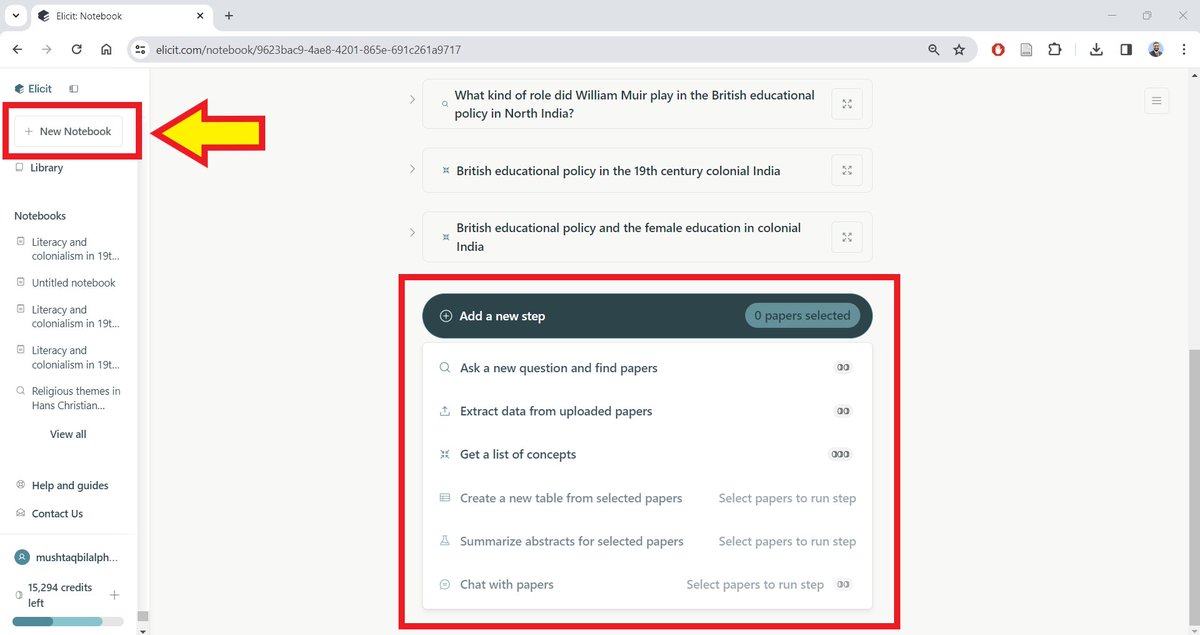
Elicit just had a major update. They've introduced AI-powered "Notebooks."
This will make the literature review process super efficient.
Here's how to use Notebooks in @elicitorg:
Tahukah Anda sarjana kedokteran Persia, Ibnu Sina (980-1037) menduga beberapa penyakit disebarkan oleh mikroorganisme.
Untuk mencegah penularan dari manusia ke manusia, ia menemukan metode isolasi selama 40 hari.
Thread: Ibnu Sina & pengaruhnya terhadap ilmu pengetahuan modern
Spending too long on reviewing the literature? ⌛️ 👀
Here I provide 9 open access resources that will save you time finding the sources you need. 😇
https://t.co/4sIgWgR5Do
#AcademicTwitter#AcademicChatter#PIchat
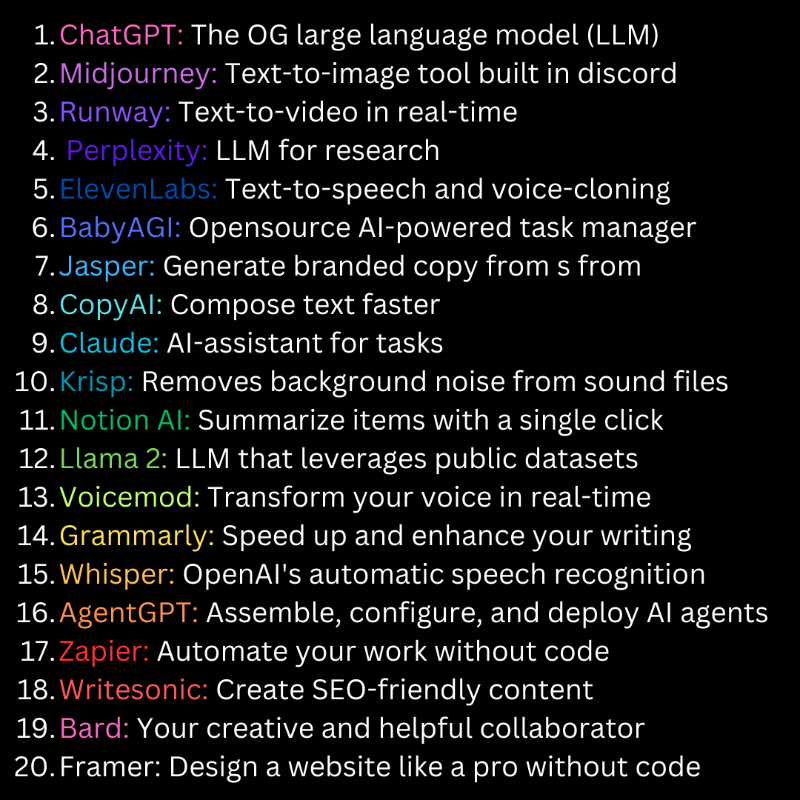
Some AI tools that can be used for research/teaching (updated - fully free vs freemium):
Fully free
1. SciSpace - Useful for chatting with papers, and understanding mathematical expressions. It also has a paraphrasing tool.
2. Research Rabbit - Free tool for finding and organizing academic papers.
3. Glasp - Useful for highlighting, taking notes and getting AI-powered summaries
5. BingAI - Useful for searching, reading articles, describing images and more
6. Bard - Useful for searching and generating text, among other things
7. Semantic Scholar - Academic search engine using AI for precise results.
8. GPT-3.5 - Language model that can summarize, rewrite, and generate text, among other things.
Freemium and/or paid
1. Claude 2 - AI assistant that can summarize academic papers and provide insights.
2. GPT-4 - Language model that can summarize, rewrite, and generate text, among other things.
3. Advanced Data Analysis - Useful for analyzing data ... and coding
4. Consensus - Answers questions based on academic research.
5. Elicit - AI research assistant that finds and summarizes relevant papers.
6. Scite - Checks citations and analyzes credibility of sources.
7. Perplexity AI - Search engine using scholarly and other credible sources.
8. Iris - It suggests relevant literature for research.
9. DeepL - Useful for translating (31 languages) and rewriting text (English and German) with AI
10. Gladia - Useful for transcriptions (1 hour of audio in less than 60s)
11. Paperpal - AI grammar checker and online academic writing tool
Do you know of any other useful tools?
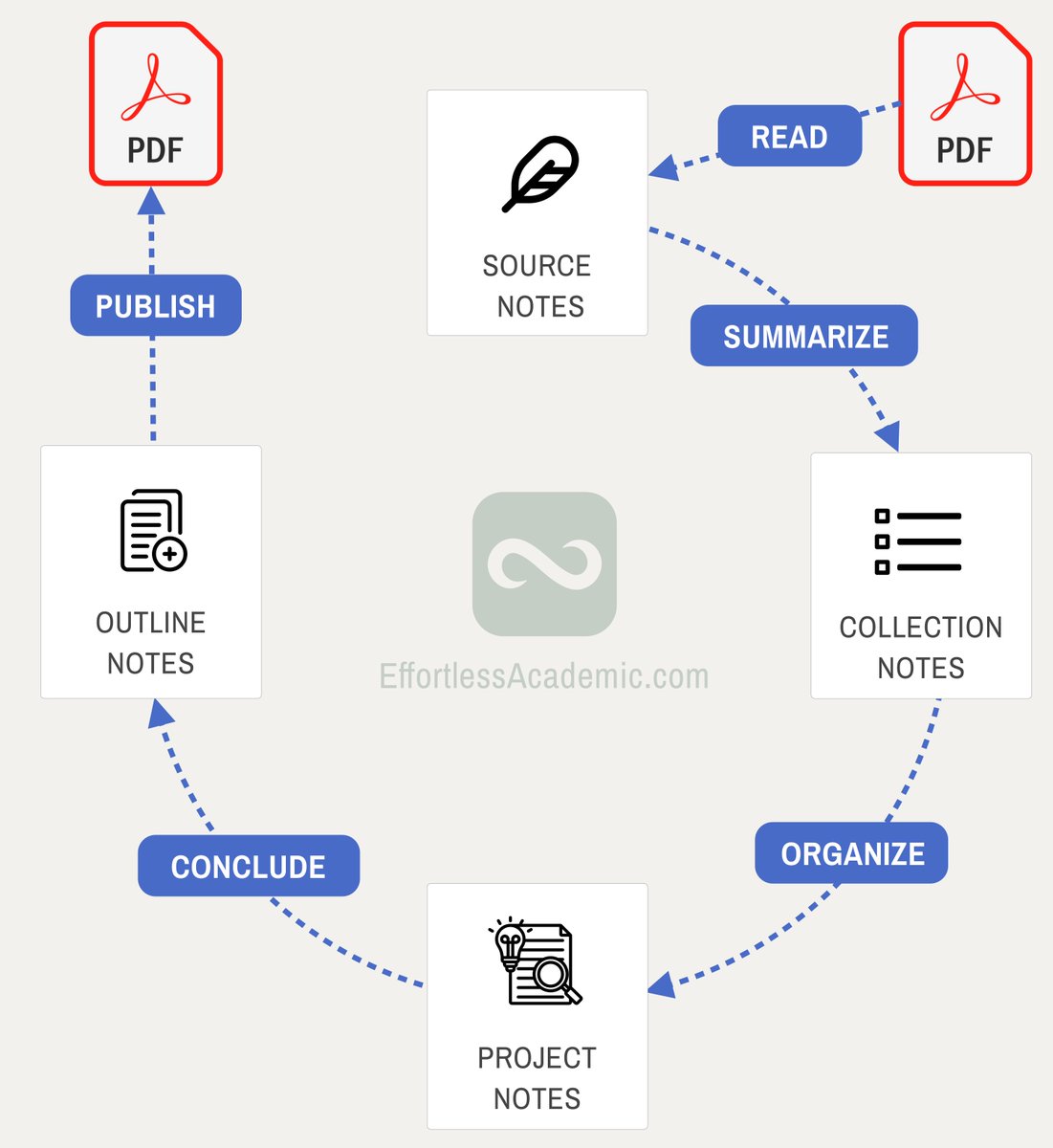
Six months ago, I dove into a PhD in Ecology with little background in the field.
Today, I've penned 100,000s of words in notes and feel 'at home.' A solid note-taking system was my lifesaver - it keeps surprising me just how powerful it is.
Here's my system:
1. Source Notes
One note for each paper I read. Contains summaries, key findings/figures and embeds the PDF.
I avoid highlighting as much as possible and try to write in my own words.
2. Concept Notes
These are notes on a single concept e.g. climate change. Each paper contributes a small finding to the concept of climate change. Instead of scattering these findings across source notes, I put all of them together into concept notes and add a link to the source note. Now all information on climate change resides in a single note from where I can find all the papers relating to it.
3. Project Notes
There are notes around one active topic I am looking into, e.g. "Predicting the impacts of climate change using Machine Learning". These notes contain my own ideas and reading growing reading-lists of papers that contribute to the goal of the project. They link concepts and source notes together around a practical topic.
4. Outlines
An outline note aims to be a comprehensive exploration of a topic, suitable for becoming a chapter in a review paper or a research proposal. It is a continuous summary of findings in projects and concepts.
These are the main note types. I also have others for example to document code, open research questions, get an overview of the data I use or plan out meetings.
Why do it this way?
1. Interconnectedness: Aligns with my brain's associative thinking, unlike Zettelkasten which is much rigid and hierarchical.
2. Domain-Specific Adaptability: Can be tailored to specific academic needs - from machine learning concepts to ecological data.
3. Traceability: It is easy to find who said what and when because of the Source notes. Every piece of information is always linked to the source and I know what are my ideas and what are others'.
4. Depth of Understanding: Focuses on building understanding rather than just knowledge. Outlines and Projects are particularly responsible for this, as they force you to summarize.
5. Continuity: This system keeps surprising me, I keep stumbling upon highly relevant concepts I spent reading about for 2 hours more than 4 months ago. While I completely forgot, the note system brings it up and suggests it in the right moment.
I tried many systems like "Building a Second Brain" (too simple for academics), to Zettelkasten (too rigid and hierarchic for me) or LYT (lacks traceability of sources) and borrowed ideas from all of them, but for academics there seems to be nothing out there yet.
How do you set it up?
Get a note-taking software like Obsidian or Notion that allows you to link notes together and search globally - experiment with your own system and slowly evolve!
We spend all week researching the top AI tools so you don't have to...
Get insights, tools, and news for free when you join our community of 60,000+ readers.
6 Juni 1944, pasukan Sekutu mendarat di Normandia, Prancis. Memulai invasi terbesar dalam sejarah umat manusia, serangan gabungan darat, laut dan udara ke wilayah Prancis yang tengah diduduki Nazi Jerman.