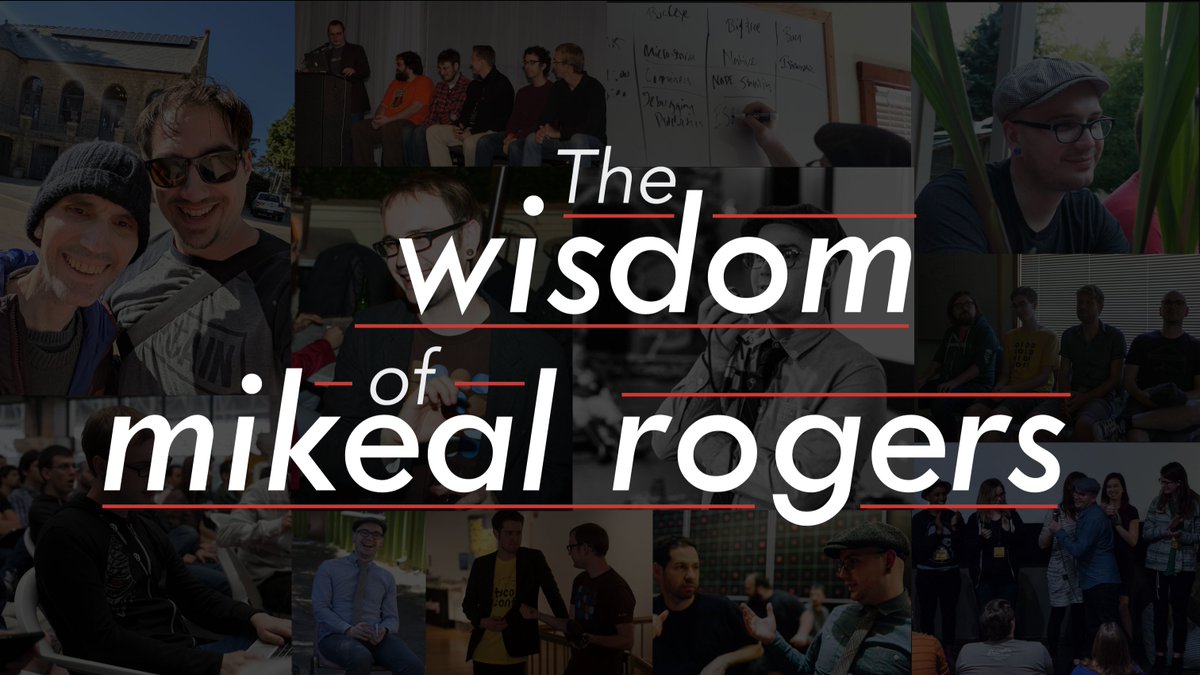
Looking back now after almost 20 years (Nov 2009 to now for me), I can see the arc from what node was then to what celld can be now as your thinking has evolved
A distributed operating system running in userspace is the primitive that can break apart the siloing that has become the default across the walled gardens we all operate in
All the best in what's to come 🐢✨🚀
i feel like people do not grok how important celld is.
it's scalable applications of arbitrary complexity. the only dependency is s3.
once you see it, you'll realize there's no point to traditional javascript runtimes in serving applications - only for build processes (eg bundling) and scripting.
the networking and scaleability are deeply rooted not only in the distributed runtime (celld), but in the programming model itself (largely kenton's design)
I wasn't quite sure when I started celld how well this could be made to work, but we've been running it in bigger capacities and getting user reports over the last months. Actually handles load surprisingly well. (any experience in the comments to share?)
because the programming model does not expose the underlying linux system, you can actually think of celld as a distributed operating system - running in user space of linux. it only runs one program / doesn't support multi-tenant, but it has system services like an operating system. it's all about networking - i like to think of it as the practical modern version of plan9 or even erlang beam.
If a tree falls in the forest, & no one is around to hear it: does it make a sound?
🧮 If a mathematical problem is solved with certainty, & no one gains a deeper understanding: was it truly solved?
For fifty years, mathematics was focused on one thing: proving basic arithmetic. Then in 1930, at age 24, in a discussion session at a conference Gödel announced the First Incompleteness Theorem almost trolling every mathematician that what they were after was itself unprovable.
Sitting in the audience was John von Neumann, who independently derived the Second Incompleteness Theorem within weeks. When he wrote Gödel about it, Gödel responded he had already derived it himself & published that same week. That mutual derivation & exchange is what set up Alan Turing just a few years later to think creatively about "Turing Machines" & what they could or could not decide. In the spring of 1935 von Neumann was lecturing at Cambridge & Turing took his class where von Neumann later said he "knew Mr. Turing very well".
Reading the history of how these seminal minds influenced each other is why I could not agree more with the 27 Fields medalists who agreed that open problems are "landmarks and lighthouses," because we have seen time & time again that merely solving the foundational mathematics problem is only the beginning.
It is the shared understanding that empowered Turing's breakthrough. To remove that human aspect of the outcome is indeed a form of strip-mining as Tao suggests. This piece from two applied mathematicians shows many more examples of the value derived from cross disciplinary shared understanding between pure & applied mathematicians. It is worth reading it instead of summarizing it
https://t.co/ZehZKXhFPq
I knew speaking at @jsconf 2025 would be hard, because so much of what I had to talk about I learned from @mikeal – and am still learning even now. The goal of the talk was to tell part of that story, a story about how the web isn't finished, yet 💡
https://t.co/fGpol0Rhud
Mikeal knew this, and I will be forever in his debt for what I learned from him. I'm looking forward to integrating his pkv (public key value cryptography) ideas into _all_docs in the coming months 🧠 we both didn't see it then, but he was onto something important 🚀
🚀 BIG NEWS: We just shipped @platformatic/python to help you run Python ASGI apps INSIDE your Node.js process!
This changes everything for AI/ML + Node.js apps 🧵
We've simplified local MCP usage by creating something new we call Desktop Extensions (.dxt files).
These package your local server, handle dependencies, and provide secure configuration so you can one-click share and install local servers on Claude Desktop and other apps.
May the force of my heart breaking over Mozilla's villainous choices echo for history.
To join the forces of Surveillance Capitalism as a last gasp before following Netscape to the grave spits in the face of what the Web they swore to me they would protect above all else ✊
A decade ago, I cheered hope on that FirefoxOS could break through the walled gardens of mobile phones. With this decision, FirefoxOS 2.0 would be of no higher moral fiber or ethical character than Android or iOS 😢
https://t.co/bREY9y4DGH
W T F
https://t.co/fgsYEcoUH5
"When you upload or input information through Firefox, you hereby grant us a nonexclusive, royalty-free, worldwide license to use that information to help you navigate, experience, and interact with online content as you indicate with your use of Firefox."
My arrogance is warranted from years of interactions where most people have a cursory understand of the idea but lack a truly deep or formal education on it
To call what exists today "free media" is to fly in the face of hundreds of years of US history & caselaw that led to how First Amendmend protections for Freedom of the Press are interpreted by US Courts
If you're educated in this field I'd love to know what US caselaw decisions you find most interesting on this topic from both a legal & historical context. Or what how Section 230 of the CDA and/or the current FCC rules should be changed to strengthen a free press in the US
And I'm not trying to shame you Tony – but we've got to be on the same page about what educated means here. That's what it means to me: formal legal education that is deep enough to have opinions on policy to improve it
"Free as in Free Press" is not "Free as in Beer" @rauchg
Please educate yourself my friend. Please 🙏
I was fortunate to know this because I was raised by an ACLU attorney who argued First Amendment issues in front of the high court – his SCOTUS bar admission hangs behind me every day.
A truly "free press" is one that is free from the bias that is implicit in centralized ownership. For the last 100 years this can be loosely summed up as "you can't own all the newspapers / tv stations in the same city" (see: FCC Broadcast Ownership Rules)
Sadly, those rules & regulations are decades out of date for social media platforms like 𝕏 because they are not considered media companies under Section 230.
I agree with Trump on Section 230 needing to change, but in different ways. Specifically: social media platforms should have safe harbor protections but they should also be subject to the same diversity in media ownership laws that apply to newspapers and TV stations because – for most intents and purposes – the content they served is consumed in lieu of TV & newspapers.
This should be implemented via a US-equivalent of GDPR that protects the privacy of Americans enshrined in the US Constitution by requiring social media platforms to report anonymous usage statistics for measuring reach & cross-market penetration so that content may be automatically injected & cross posted between them.
The open standards & open web to power a world like that would be exciting, but we are not there yet. I hope you will see that over time
Congrats President Trump 🇺🇸
Excited about the impact 𝕏, prediction markets, citizen journalism, podcasts, and the open web played in fostering democracy and a free media. It's a new world.