@alexanderrX_ In 1922 a change happened
'UK' was invented by our (insecure) Empire partner London, England
They ended shipbuilding, manufacturing, stock exchange
Empire is eating itself
Scotland is an extractive colony. Resource theft, exploitation
Bison are leading one of the most remarkable ecological comebacks in North American history.
For more than a century, the great herds of the American bison were fragmented, broken into isolated groups by roads, fences, and human development across the Great Plains and Yellowstone region.
Now, in a powerful wildlife success story, those artificial barriers are being overcome. On their own, bison are instinctively reuniting and reopening ancient migration corridors that had been lost for over 100 years.
This isn’t just movement: it’s a profound return to ancestral memory. Large, unified herds are once again flowing across the landscape as they did in centuries past.
As they travel, these iconic animals act as masterful ecosystem engineers. Their powerful hooves aerate compacted soil, their selective grazing encourages the growth of diverse native plants, and their dust wallows create seasonal watering holes that benefit countless other species. In doing so, they spread nutrients and help restore the health of the grasslands.
By simply allowing bison to roam freely across their historic ranges, nature is showing us that wild ecosystems recover best when their original architects are given the freedom to lead.
[Texas A&M University. After 120 Years of Conservation, Yellowstone Bison Are Now a Single Breeding Population. Journal of Heredity]
“Mr. Tambourine Man” is one of Bob Dylan’s most iconic songs, from his 1965 album Bringing It All Back Home. Built around dreamlike, poetic imagery, it showcases Dylan at his most imaginative and lyrical, turning abstract longing and surreal symbolism into something both intimate and universal.
The Byrds’ famous cover turned it into a #1 hit and helped shape the emerging folk-rock sound, while Dylan’s original remains a cornerstone of his catalog and one of the great hits of the 60s.
🎸🔥24-year-old Tracy Chapman, virtually unknown at the time, was suddenly pushed onto the Wembley Stadium stage as a last-minute replacement when Stevie Wonder couldn't perform due to a major technical glitch (his synth hard disk went missing). Armed with just her acoustic guitar and raw vocals, she delivered "Fast Car" and left the massive 72,000-person crowd in absolute stunned silence within seconds. This iconic 1988 moment literally launched her career overnight—does it give you goosebumps too? If you've ever heard "Fast Car" live (or even just this version) and didn't get chills or teary-eyed, drop your story below—I need to hear it!
@gRantK73@FUDdaily It wasn't *abolished* though dumbass
It merely changed its name to Britain and continued as was.
The exact same doppelganger parliament, traditions, laws all intact
Plus, added a few additional members outwith England
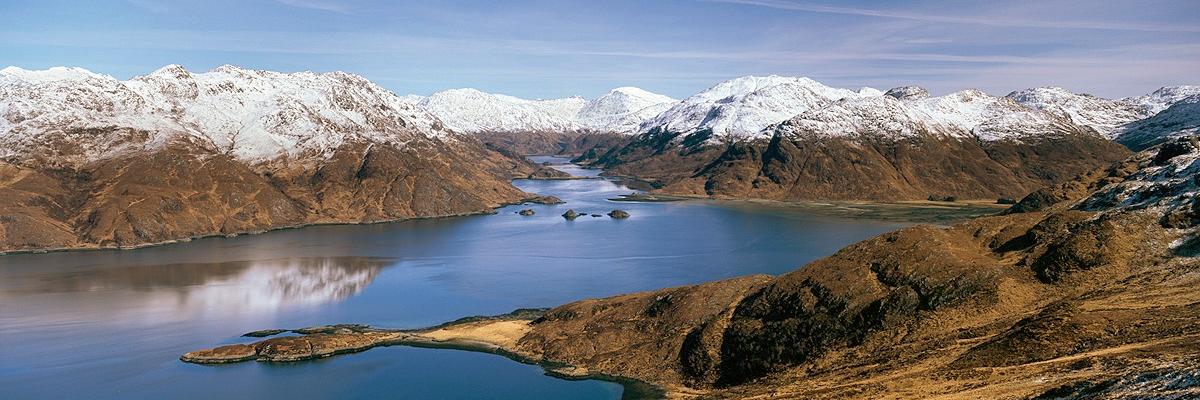
One of those rare photos that makes you stop in your tracks and whisper, "Wow..."
"Lochaber at Night" - wintery scene of Loch Linnhe, Caol Shore and Ben Nevis, taken from Corpach Pier by Mark Gillies.
@Tobias_Smythe Not a major issue when free-movement existed with EU, except for home office in London, England, obstructing other immigrants Scotland wished to attract
EU no longer assists England with undocumented migrant arrivals. Some of those and others fleeing England end up in Scotland
SCOTLAND 🏴
Winter 🧊 is approaching
All of sudden we will become a less favoured destination for immigrants or visiting street marauders, whatever their purpose
Only the toughest survive it
And that is the Scottish
The man who found out what happened to the Franklin expedition was a Scottish doctor who walked 6,500 miles across the Arctic on foot, lived off what he shot, and never lost a man. The Royal Navy never forgave him for it.
John Rae was born in Orkney in 1813 and went to the Hudson's Bay Company as a surgeon. He learned to hunt, to snowshoe, to build a snow house and to sleep in it, from the Cree and the Inuit, and he saw no reason to carry a year of salt pork when the country was full of food. On his first survey he took 12 men 1,200 miles with provisions for 4 months and fed them for 15 on caribou, fish and seal.
The Admiralty's expeditions went the other way. Franklin sailed in 1845 with 129 men, 2 ships, a library, silver cutlery and 8,000 tins of meat and soup, and died with every one of them. In 1854 Rae met Inuit on the Boothia Peninsula who had seen the last of the sailors, 40 men dragging a boat south, starving, and who had found the bodies after. Some had been eaten by the others.
Rae reported it as he was told it. London was outraged. Charles Dickens wrote that no Englishman would do such a thing and that the natives were lying. Lady Franklin saw to it that Rae never received the knighthood every other Arctic explorer of his rank was given, and the memorial in Westminster Abbey names Franklin as the discoverer of the passage Rae had actually found.
He died in 1893 at 79, still fit, still walking.
The Navy's men had the best provisions in Europe and died of scurvy in a land full of game. The Orkneyman ate what the Inuit ate, walked further than any of them, and was punished for coming home with the truth.