🦔320 million people in China now work in what the government calls "flexible employment," up from 240 million in 2024. That's 40% of the employed population. The category covers ride-share drivers, food delivery, housekeeping, and couriers.
"Flexible" means contract-based, hourly, no benefits and no retirement contributions. Of China's 15.9 million delivery riders, fewer than a million have full social insurance. The surge follows China's real estate crash, which used to drive a third of GDP growth.
My Take
When 40% of a country's workforce does gig work, the economy can't create stable jobs. China's real estate collapse took household wealth and domestic demand with it. The workers who would have built apartments and sold goods to homeowners now deliver food and drive for ride-share apps.
The US has the same problem on a smaller scale. Gig workers don't get 401ks or company matches, and in a country where the median retirement account already sits at $44,115, every job that moves to contract deepens the retirement problem. China just showed everyone what 40% gig employment looks like, and it's fair to ask how close the US is.
Hedgie🤗
A few good books worth reading:
- Atlas Shrugged by Ayn Rand - a classic that celebrates builders. Once you read it, you’ll notice the same characters and events taking place today.
- The Changing World Order by Ray Dalio - great for understanding how civilizations rise and fall and how crypto can help create better countries.
- From Third World to First by Lee Kuan Yu (founder of Singapore) - talks about building a new country, worth reading for understanding nation-building.
This 1 hour interview with the mathematician who outperformed Buffett, Soros, and Dalio, generated $100B+, avg. 66% returns will teach you more about investing than a $200K MBA.
Bookmark this & give it 1 hour, no matter what. It’ll be the most productive thing you do this week.
Best books
1. The Power of Habit
2. The Richest Man in Babylon
3. Rich Dad Poor Dad
4. Outwitting the Devil
5. The Millionaire Next Door
6. Mind of a Millionaire
The strongest nation never wins.
Not in ancient China. Not in Greece. Not in Mesoamerica. Not in the Middle East.
Every empire in history was conquered by the most marginalized, most isolated, most resource-poor people in the region.
Because resources create comfort. Comfort creates arrogance. Arrogance creates blindness.
And blindness gets you conquered by people you never took seriously.
If you want to learn about business, the late 1800s and 1900s offer absolute gems.
Here are the best books on some of the most successful businessmen of all time:
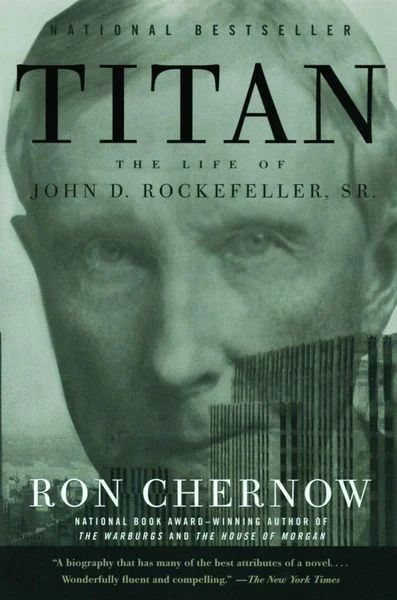
1. Titan - The Life of John D. Rockefeller
Inflation-adjusted, Rockefeller would be worth over $400 billion.
In 1983, Richard Feynman gave a 1-hour masterclass on imagination and physics.
He broke down:
• Fire
• Atoms
• Motion
• Energy
• Magnetism
But underneath it, he revealed how to think like a scientist
12 lessons from Feynman’s masterclass:
1. Imagination beats knowledge
In 1983, Steve Jobs predicted the next 50 years of technology.
His predictions:
• iPhone
• Internet
• Softwares
• App stores
• Artificial Intelligence
10 futuristic predictions from this talk that came true:
1. Every major revolution starts ugly