@DrBruggeman Disagree! - Transparency is an important foundation.
eg: HDHP & OOP employees and consumers of supplementary optional services constantly shop.
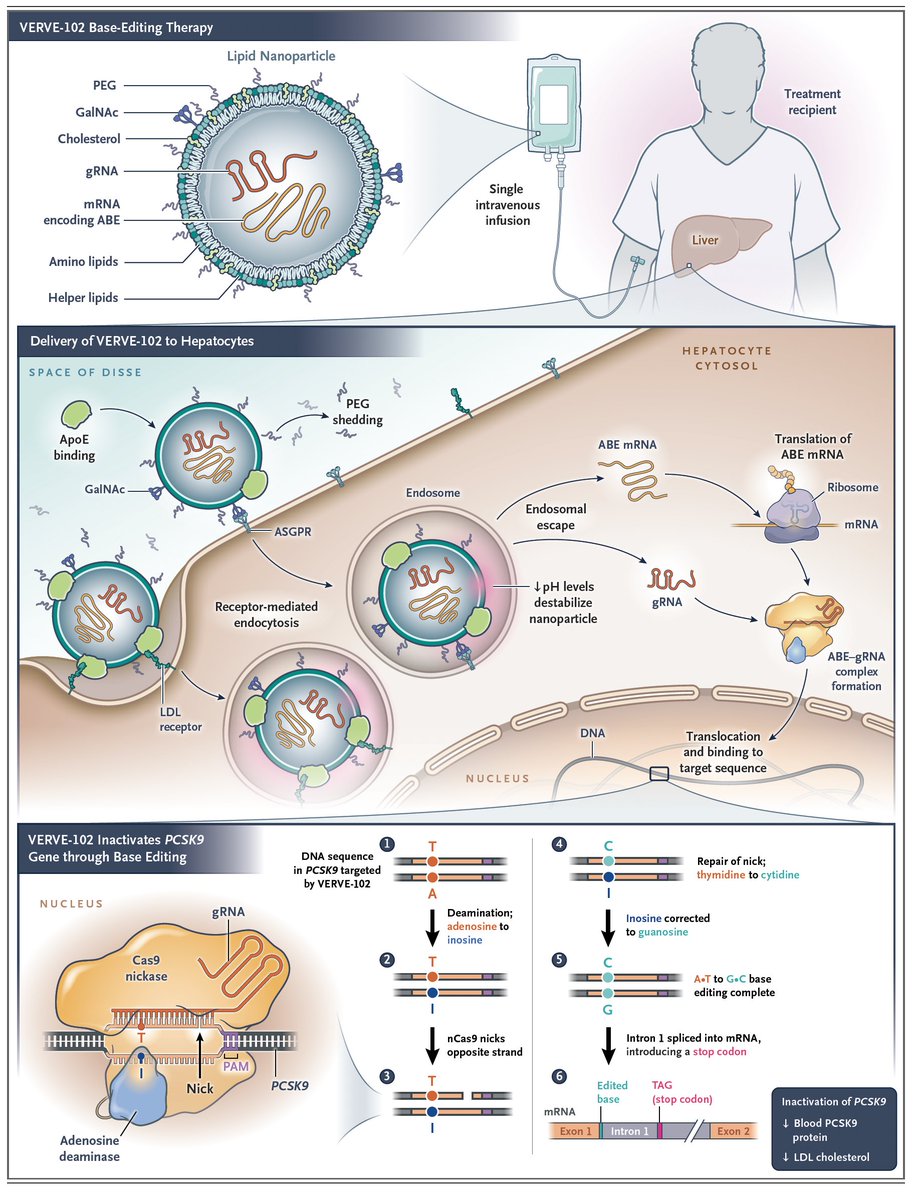
The ramp up of cancer immunotherapy is remarkable. Now we're seeing vaccines achieve some cures or remissions in the most refractory cancers: pancreatic, melanoma, glioblastoma, renal, triple-negative breast cancer.
✓ out the new Ground Truths (link in profile)
While April CPI inflation rose to 3.8%, inflation is much higher in many basic necessities:
1. Energy Commodity Inflation: +29.2%
2. Gasoline Inflation: +28.4%
3. Airfare Inflation: +20.7%
4. Energy Inflation: +17.9%
5. Electricity Inflation: +6.1%
6. Fruits and Vegetables Inflation: +6.1%
7. Hospital Services Inflation: +5.5%
8. Motor Vehicle Repair Inflation: +5.1%
9. Apparel Inflation: +4.2%
This has driven cumulative inflation since 2020 to +29%, meaning goods that cost $100 in 2020 now cost $129 today.
Inflation remains a major issue for Americans.
Xiaomi’s MiMo V2.5 Pro has landed at 54 in the Artificial Analysis Intelligence Index, tied with Moonshot’s Kimi K2.6 - the current top open weights model. MiMo V2.5 Pro’s weights are expected to be released soon, which would make MiMo V2.5 Pro the first equal open weights model - slightly ahead of DeepSeek V4 Pro
@Xiaomi’s MiMo V2.5 Pro shows an impressive improvement over MiMo V2 Pro (49), the previous generation of Xiaomi's flagship model family, which was released just over a month ago on March 19, 2026.
Key takeaways:
➤ MiMo V2.5 Pro is on the pareto frontier of our Intelligence Index vs Cost to Run Intelligence Index chart. It was slightly cheaper to run than GLM-5.1, and slightly more intelligent. It was significantly cheaper to run than Kimi K2.6, driven by using just over half the number of output tokens.
➤ MiMo V2.5 Pro will be the leading open weights model in GDPval-AA, our agentic real-world work tasks benchmark. It scores 1578, ahead of DeepSeek V4 Pro (1554), GLM-5.1 (1535), MiniMax-M2.7 (1514), and Kimi K2.6 (1484).
➤ It makes progress in reasoning and instruction following. The model scores 34% on HLE (+6% from MiMo V2.0) and 80% on IFBench (+11% from MiMo V2.0). However, compared to the previous generation, there is a small regression in CritPt (5% to 4%).
➤ MiMo V2.5 Pro's token efficiency remains competitive against peers in a similar intelligence tier, using ~92M output tokens for the Intelligence Index. This is more efficient than Kimi K2.6 (~170M) and GLM 5.1 (~110M). However, it does use 19% more than the previous generation model, MiMo V2 Pro (77M).
➤ Priced at $1.00/$3.00 per million input/output tokens on Xiaomi’s first-party API, MiMo V2.5 Pro is relatively cost-efficient for its intelligence tier. It costs only $462 to run the Artificial Analysis Intelligence Index, compared to $948 for Kimi K2.6 and $544 for GLM 5.1.
➤ MiMo V2.5 Pro scores 4 on the AA-Omniscience Index, a proprietary Artificial Analysis evaluation that measures factual accuracy and hallucination. This is a slight regression from MiMo V2 Pro (5), though both models still trail proprietary frontier models. MiMo V2.5 Pro demonstrates a relatively low hallucination rate (25%) but also low accuracy (23%).
Additional model details:
➤ Context window: 1M tokens ➤ Parameters: 1T total, 42B active ➤ License: Xiaomi has publicly announced that weights are to be released soon. The model will show on Artificial Analysis as a ‘proprietary’ until the weights are released ➤ Release date: April 22, 2026 ➤ Availability: MiMo V2.5 Pro is available via Xiaomi's first-party API
@operationdanish With exp. building TeleMed & 2nd Opinion in 2011 - Telemed /ChatGPT can handle seasonal illness, 2000 patients is too many for longitudinal tracking, commoditized by design & drowned in administration - u can see its value in Gatekeeping, Diagnostic synthesis & Reassurance.
@JonathanRoss321 Well that's where - Experience, Wisdom, Critical Thinking & little bit of philosophical mindset (seeking deeper meaning) will come to play / will be the USP of the individual.
@ZekeEmanuel Price transparency is not a consumer retail feature—it is the foundational information layer that allows payers to contract, providers to compete, and markets to clear. Its absence doesn't protect patients; it protects incumbents from scrutiny.
@DutchRojas Physicians had agency and failed to use it. The profession chose income security over autonomy, specialty competition over solidarity, and guild protection over market innovation—then expressed surprise when the system they fed, consumed them!
@sdixitmd Thoughtful thread. Visa leverage is real but corporatization didn’t start with foreign doctors. Lack of transparency & resistance to accountability created the vacuum so capital stepped inn. The Real Question Who controls medicine? Physicians or health systems? Labor or capital?
Brian Armstrong shares the most important lesson from his startup failure before Coinbase
After realizing he could make $60/hour tutoring as a college student, Brian and his roommate decided to build an online marketplace for tutors. They would match tutors with students and take a 10% fee on all of the payments.
It worked great but there was one hiccup:
“What would happen often is they would meet the tutor and do the first payment, but then afterwards they’d start paying them under the table. So I realized at a certain point, we were basically just getting in the way. They wanted us to just match them, but they didn’t want us to be the whole billing apparatus.”
After struggling with this problem for years, Brian decided it wasn’t working and took a job as an early employee at Airbnb. He was initially planning on shutting down the site, but because 5,000-10,000 people were still using it every month, he decided to remove the payments and just make it a free online tutoring directory. He also added the option for tutors to pay $10/mo. to promote their profiles on the site.
Then he stopped looking at the site to focus on his new job. But the site suddenly began to take off. It doubled every year, and eventually Brian was able to sell the business for $2 million.
Brian concludes:
“The lesson was to stop trying to extract value and start trying to create more value.”
Video source: @StevenBartlett (2022)
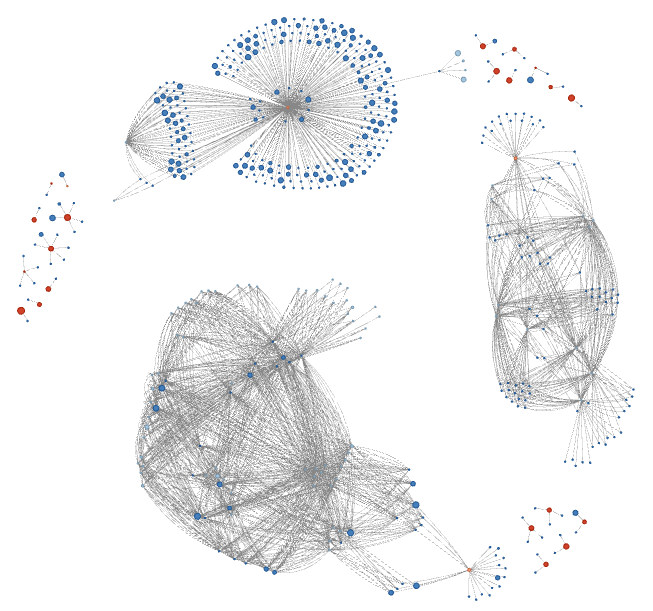
HHS just open-sourced the largest Medicaid dataset in history. About $1T in claims data, free for anyone to analyze via @DOGE_HHS. Everyone's looking at what was billed. At @MiddeskHQ, we're looking at who's behind the billing.
Here's what we found 🧵