Happy back-to-lab season!
Before getting back to work, why not dive into an evolutionary paradox: why do some viral lineages, though more virulent, never emerge?
In our latest article, we explore this question through the case of the Zika virus… 👇🏻👇🏻👇🏻
Bonne rentrée! Avant la reprise, pourquoi ne pas plonger dans un paradoxe évolutif : pourquoi certaines lignées virales, pourtant plus virulentes, n’émergent elles jamais ? Dans notre dernier article, nous explorons ce paradoxe à travers l’exemple du virus Zika … 👇🏻👇🏻👇🏻
Calling all African Health Care Leaders: the African STARS Fellowship; a fully funded Master of Business Administration (MBA). Opportunity provided by CERI at Stellenbosch University and the Institut Pasteur de Dakar, in partnership with the @MastercardFdn https://t.co/V5nd6uVQff
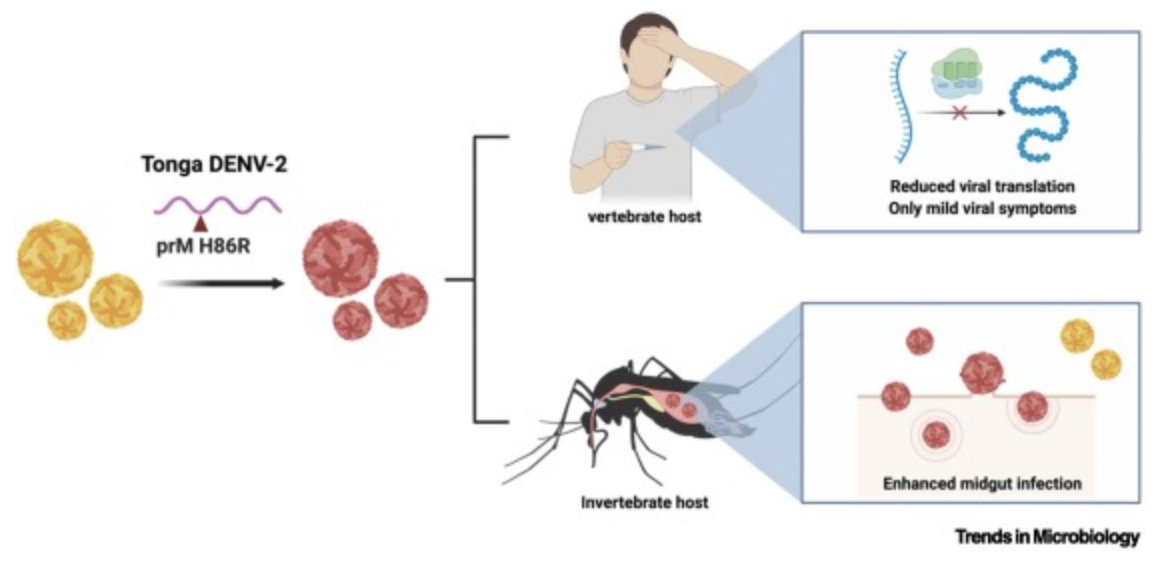
Genetics of dengue epidemics
- A review of how even a few genetic changes in the dengue virus genome can have major impact on virus transmission and outbreaks.
@AllysonChoi2@dukenus
https://t.co/Kcb8611BxE
Claire Lacouture, jeune chercheuse à @IRIM_life (équipe dirigée par @DMuriaux et C Favard) s'engage pour la recherche sur le VIH avec @Sidaction et participe à la campagne de collecte de dons :
https://t.co/1ZwS1dNaHL
https://t.co/iMGnD9kJO3
🚨 New publication in @PNAS!
Our team @IRIM_life, in collaboration with @WilsonLabCITIID, identifies MITD1 as a brain-specific ISG that blocks the replication of neurotropic flaviviruses (WNV, ZIKV...) in microglia! 🧠🦠
@Inserm@CNRSbiologie@umontpellier
https://t.co/hoZfHNaHlh
Happy International Day of Women and Girls in Science!
We will celebrate all the amazing female scientists from @IRIM_life over the next few weeks by posting here their portraits. Ladies, you rock!!
#WomenInScienceDay#WomenInScience
“Misinformation & disinformation can no longer be viewed simply as an academic nuisance, but rather they are a societal threat.”
All true, but as I launch this content to sail forth on this vast ocean of disinformation, it’s hard to feel optimistic about our prospects
This is a truly wild article. About 5% of cyanobacteria fished from the ocean are connected via nanotubes. These nanotubes are made from lipid membranes.
Also, E. coli will sometimes grab onto microbes of *other* species, using these nanotubes, and share nutrients.
SARS-CoV-2, grippe aviaire, mpox, toutes ces maladies sont d'origine animale. Nos programmes de surveillance doivent clairement se renforcer et intégrer non seulement le volet humain, mais aussi le versant animal et environnemental au risque de reproduire les mêmes erreurs ...
Cinq ans après le début de la pandémie COVID, les cas récents de grippe aviaire ou de mpox nous rappellent l'importance de prendre en compte les maladies dans leur ensemble. Plus de 75% des nouvelles maladies chez l'Homme sont d'origine animale! Une seule planète, une seule santé