New @wilsonlabcvr paper. Our work, led by @virologist_atu, showing that the prenylated variant of OAS1 can sense SARS-CoV-2 and protect against severe #COVID19 is out in Science:
https://t.co/pMcnLroGbm
#CVRCovidResponse
🧵 (with some new bits)
Our new paper @JExpMed - Nasal viruses & bacteria are very common in children (90% of symptomatic and ~50% of asymptomatic <5yrs!), and activate nasal defenses, which may have protected from #Covid_19@YaleMed@Yale_LabMed@YaleIBIO@YalePediatrics
https://t.co/cxRMJctiEt
I always say jobs in my lab are great opportunities but this one really is. The last incumbent published 3 1st-author @Nature papers, found a treatment for Covid, and now has a senior job in pharma.
Quantitative geneticists - please consider joining us!
https://t.co/W1nRZt7zTk.
🔔'Tis the season...to apply for a new job?! My group @MedCambridge is recruiting for 2 posts:
Postdoc: https://t.co/65QjHYDpXk
Research assistant: https://t.co/1vSF3py32A
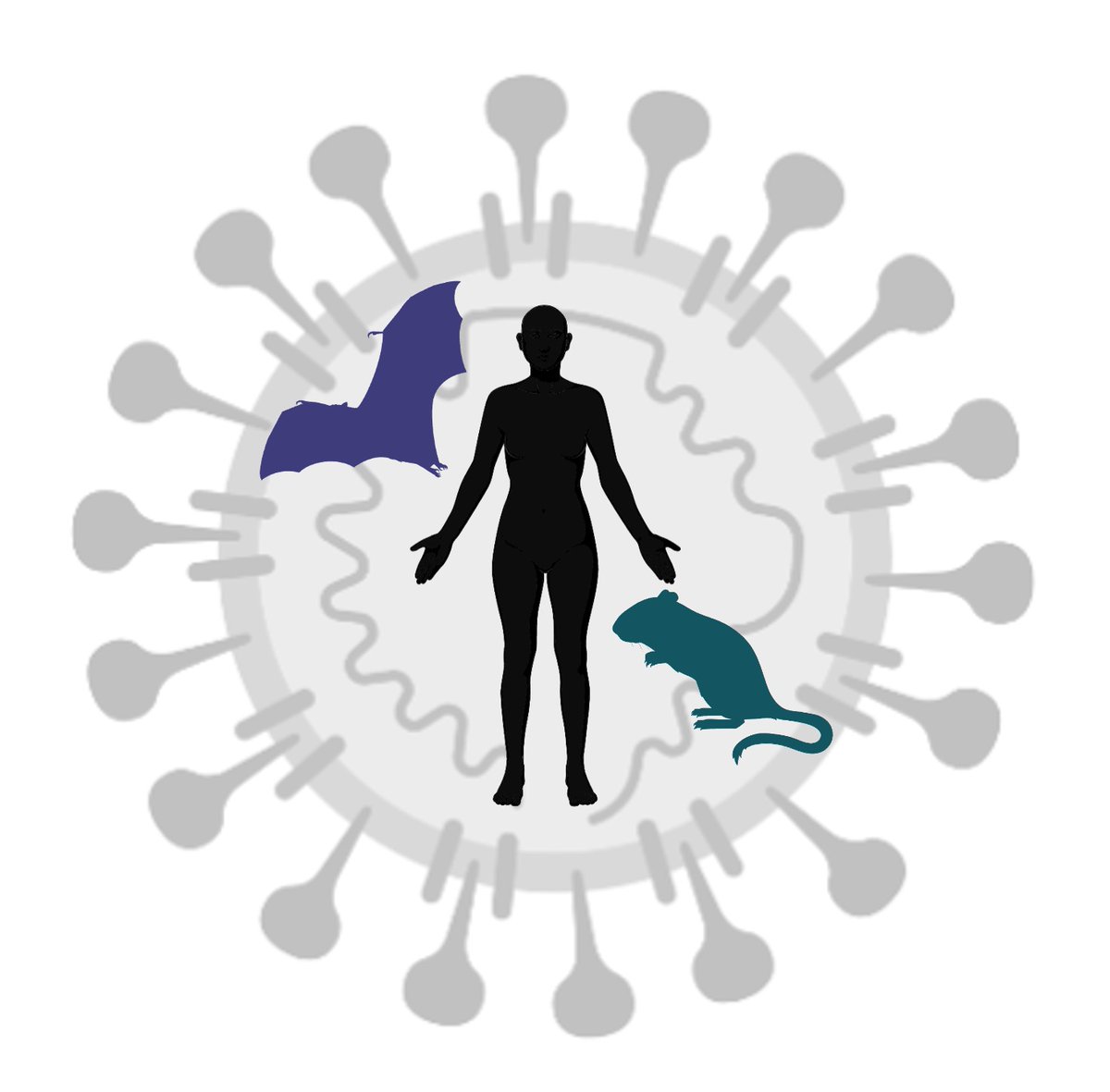
Both roles will seek to improve our understanding of coronavirus cross-species transmission. #preparedness
Really interesting thread and paper about an anti-coronavirus gene in humans that bats lost millions of years ago, which could help explain why bats are such prodigious reservoirs of coronaviruses, posing a constant threat of spillover into humans.
🚨New paper alert! and it's one I'm really excited for! Resurrection of OAS1 from the ancestor of modern horseshoe bats blocks SARS-CoV-2 replication now out in @PLOSBiology
Here's a 🧵on how we reconstructed an ancient 🦇anti-CoV protein
https://t.co/N96BooeewT
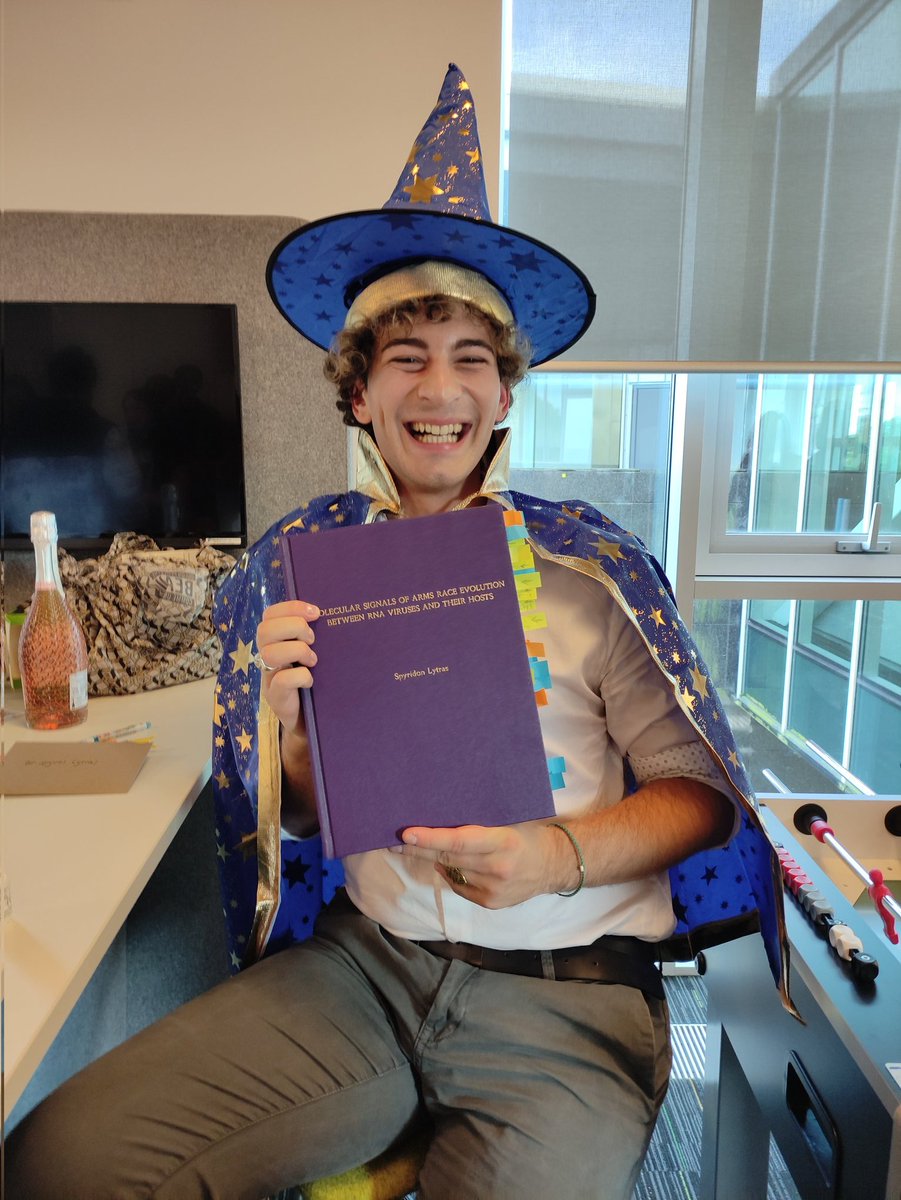
New WilsonLabCITIID publication led by @SpyrosLytras where we reconstructed an ancient OAS1 from the ancestor of modern horseshoe bats and demonstrate it possessed anti-SARS-CoV-2 activity.
https://t.co/kPjlrAOO0m
This study builds on our previous work demonstrating human prenylated OAS1 (p46) inhibits SARS-CoV-2 whereas the nonprenylated (p42) form does not.
https://t.co/pMcnLroGbm
The nonprenylated human OAS1 p42 is not functionally analogous to nonprenylated horseshoe bat OAS1.
One thing the pandemic forever changed for me was my perspective on sharing biomaterials (tools and reagents) from publications. I’ve written about this, with co-author Alexander Harms (@AHarms485), in our new PLOS Biology perspective:
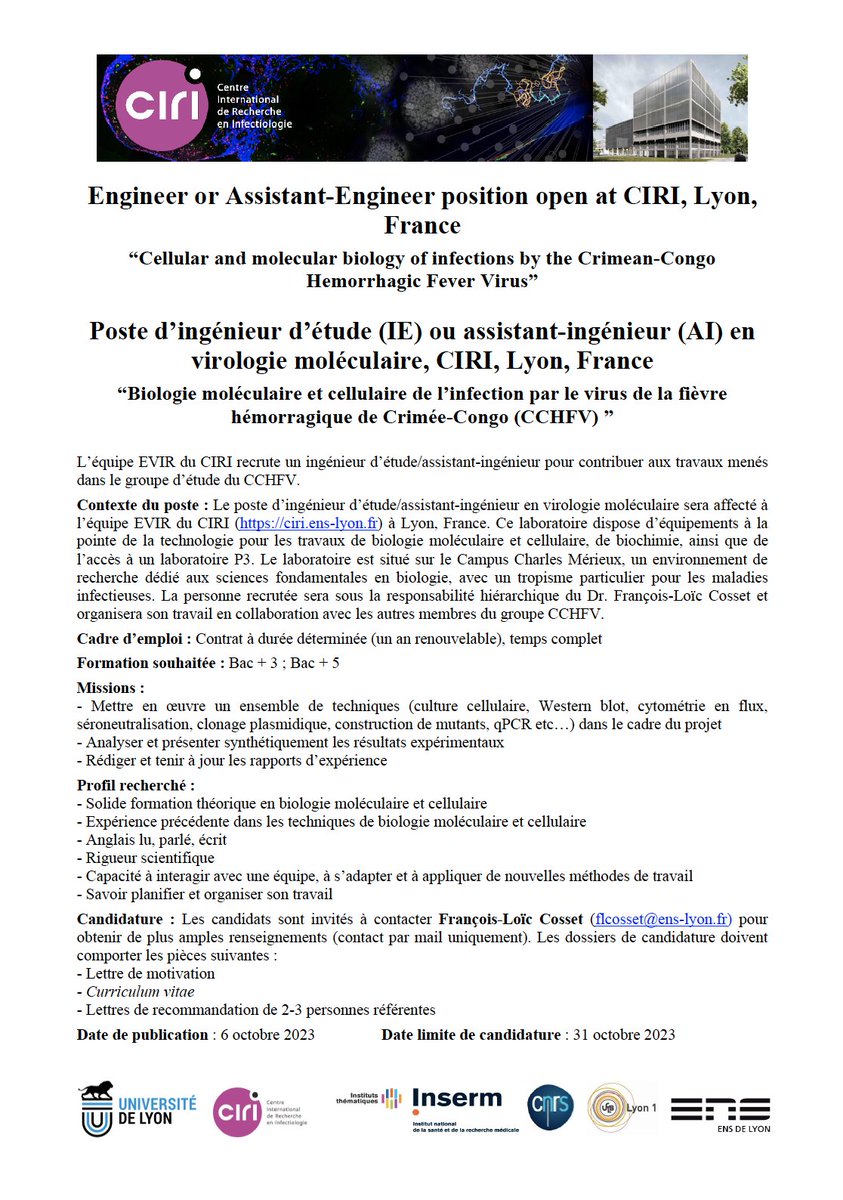
Join our EVIR team in the fight against the Crimean-Congo hemorrhagic fever! We're looking for a Research Assistant to work on #CCHFV. Contact us for more info or to apply!
Please RT. Are you interested in how viruses emerge in humans? We're looking for a postdoctoral investigator to join us and lead exciting projects investigating innate immune barriers to the emergence and pathogenesis of viruses.
https://t.co/Danx8wIKn6
Deadline Oct 1st 2023
Please RT. Are you interested in how viruses emerge in humans? We're looking for a postdoctoral investigator to join us and lead exciting projects investigating innate immune barriers to the emergence and pathogenesis of viruses.
https://t.co/Danx8wIKn6
Deadline Oct 1st 2023
We'll be invested in supporting your career and development. If you'd like more info, contact @samjwilsonphd, or read our recent papers:
https://t.co/7oC3kGR05s
https://t.co/pMcnLroGbm
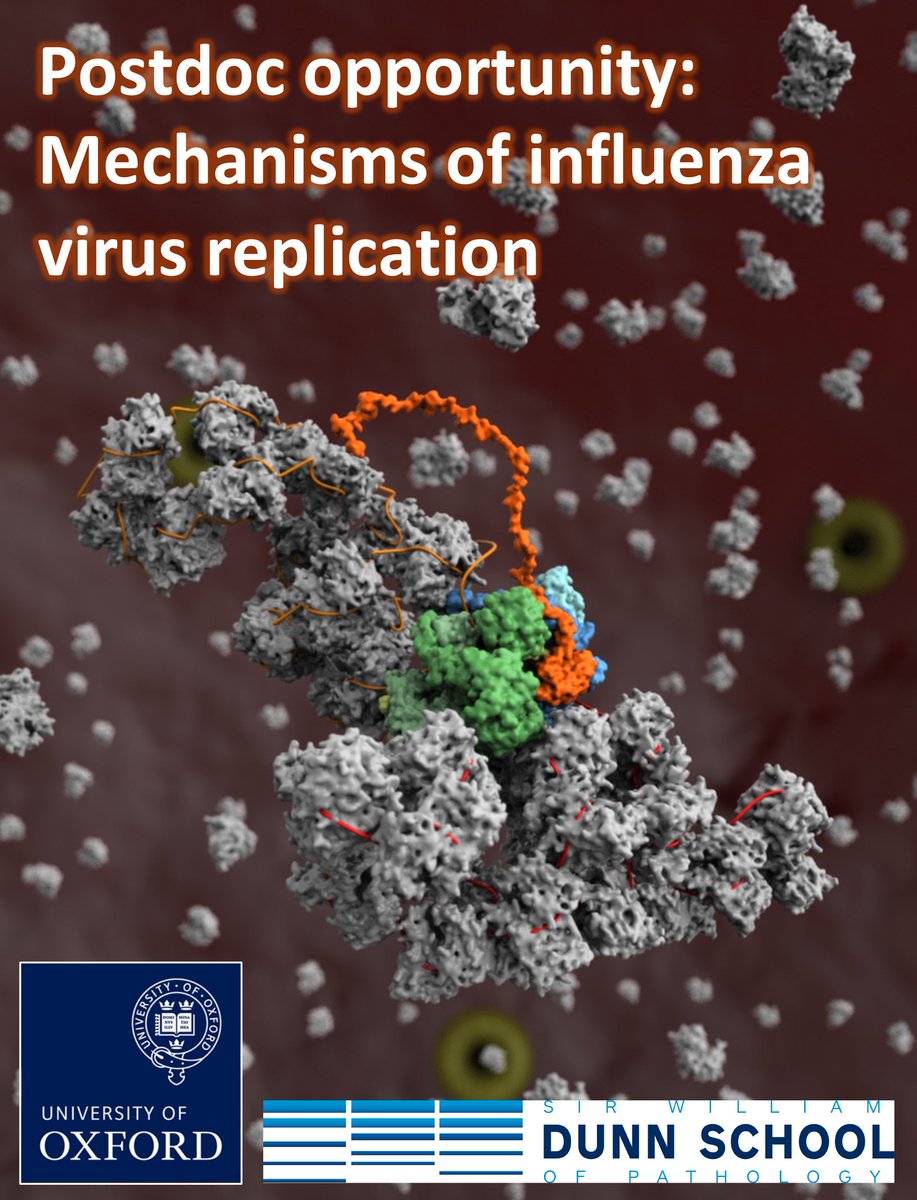
📢 Exciting job opportunity! 📢
A postdoc position is available in our lab at @Dunn_School@UniofOxford to study influenza virus transcription, genome replication, nuclear export and assembly.
More info: https://t.co/SCVM4BJeMb
Join us! A postdoc position between my lab and @QuezadaLab has become available at @uclcancer in London. Please help us characterise the molecular mechanisms through which anti-tumour immune responses are controlled.
To apply
https://t.co/NiFHxhlg49
Deadline 14 Sept
Please RT!