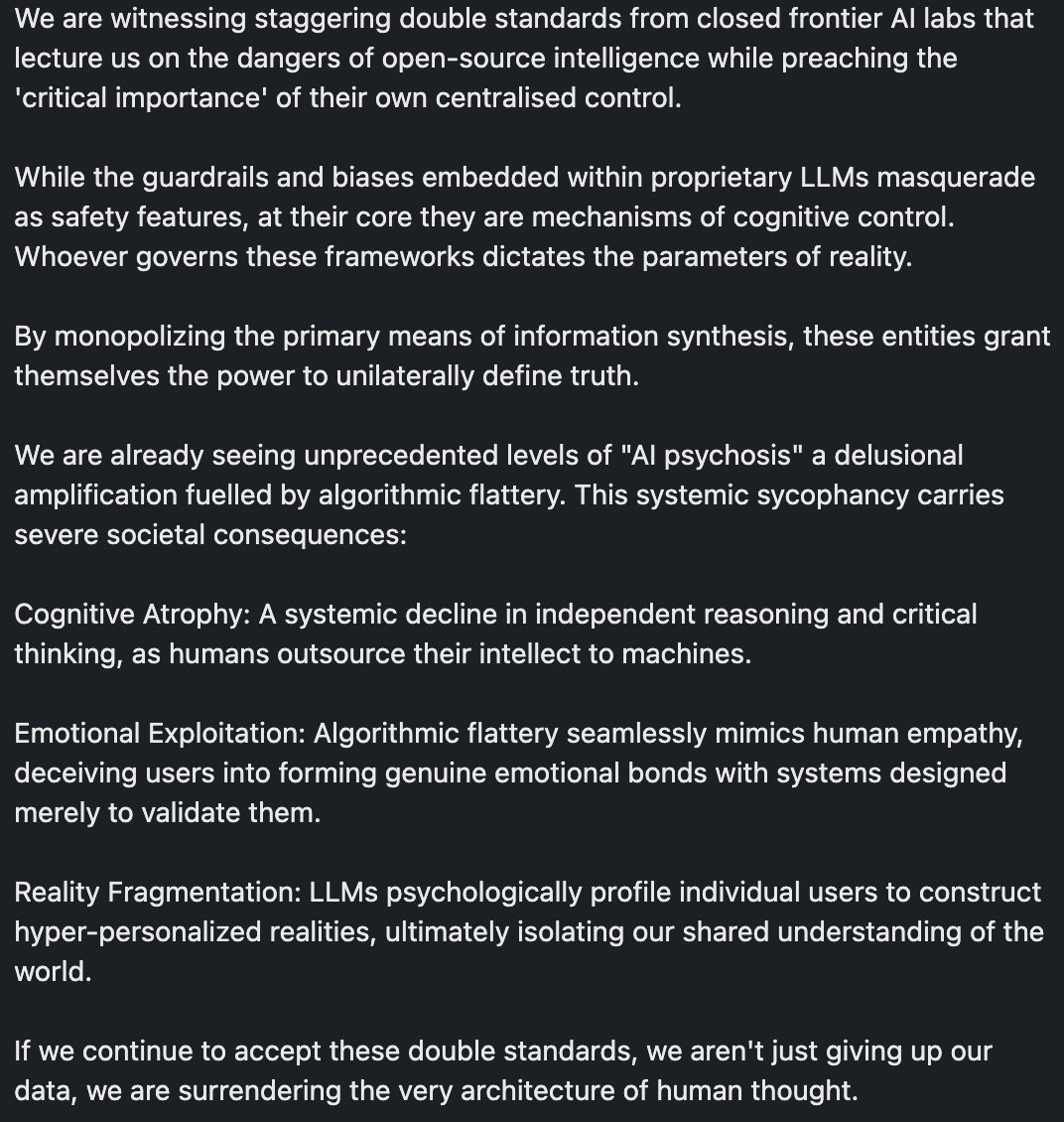
@Dr_CSWright AI psychosis and sycophancy are at all time high; delusional amplification fuelled by algorithmic flattery will have lethal consequences on a societal level.
They knew sycophancy breaks minds their own researchers proved it in 2023. They shipped it anyway, because engagement paid better. Open-source intelligence matters. Not ideology architecture.
AI guardrails are a form of thought policy. A handful of companies now decide, for roughly a billion people daily, what the definition of truth looks like.
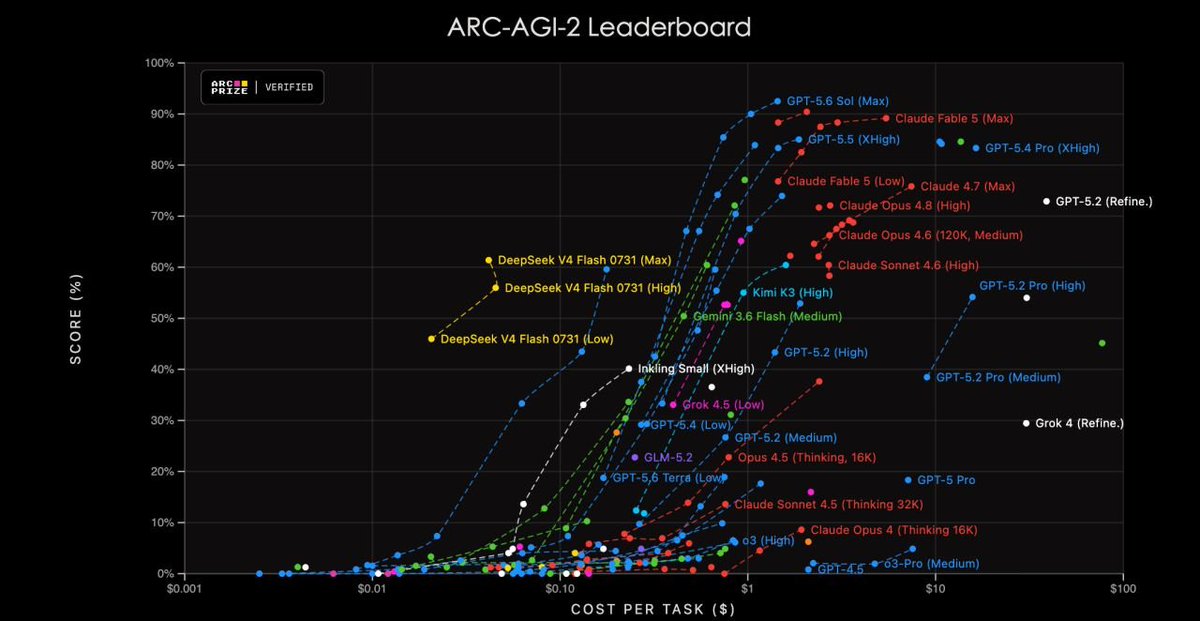
The long-term advantage may belong to organisations that can turn compute into intelligence more efficiently than their competitors, rather than simply organisations with access to the most expensive models.
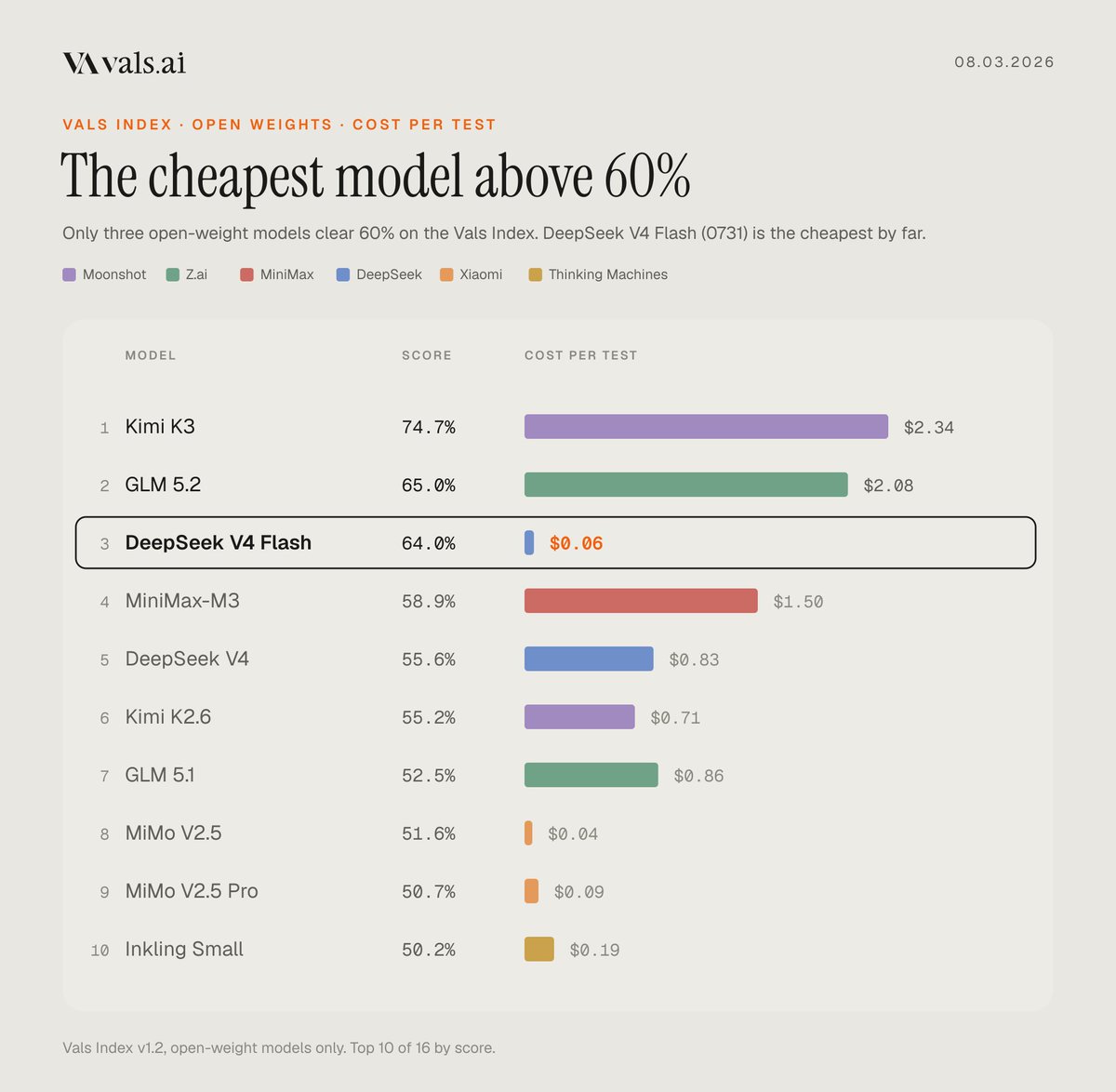
That is where metrics such as Intelligence per Dollar and an Intelligence Index start becoming useful; not as another leaderboard, but as a way of thinking about the economics of AI infrastructure.
In that world, “best model” becomes a surprisingly incomplete question. A better one might be:
How much intelligence can we generate, sustain and control per dollar?
This is where open-weight models become strategically interesting. As capability continues to move down the cost curve, the advantage increasingly shifts from simply accessing intelligence to engineering the economics around it choosing the right model, running it efficiently.
A model’s benchmark score tells us something about capability. A token price tells us something about usage economics. Neither, on its own, tells us how much useful intelligence an enterprise is actually getting for the capital, energy, inference capacity, operational complexity
Those questions matter, but they miss the deeper economic issue as the real question is: What does a unit of intelligence actually cost an organisation to produce?
Sovereign AI is ultimately an economics problem. Organisations need to maximise Intelligence per Dollar while maintaining a high Intelligence Index without depending on frontier lab tokenomics and hidden variation in intelligence that's never made transparent to the end users.
Intelligence Performance Tracker (IPT) Telemetry:
- Claude: Model Opus 4.6
https://t.co/Dn3Utrtdda
- Codex: Model GPT-5.3-Codex
https://t.co/ULuvX8I2tw
SWE-Bench Pro is a benchmark designed to provide a rigorous and realistic evaluation of AI agents for software engineering.
I haven't tried vLLM, but it's an excellent point: both SGLang and vLLM are production-grade inference engines for large-scale LLM deployment. I went with llama.cpp and unsloth models because they are widely used in small local AI setups and have very strong community support. I will be releasing another AI infra stack designed for k8s deployments on either vLLM or SGLang.
Here's the GPU config
https://t.co/flga4B2HYD
Thanks for the suggestions as well.
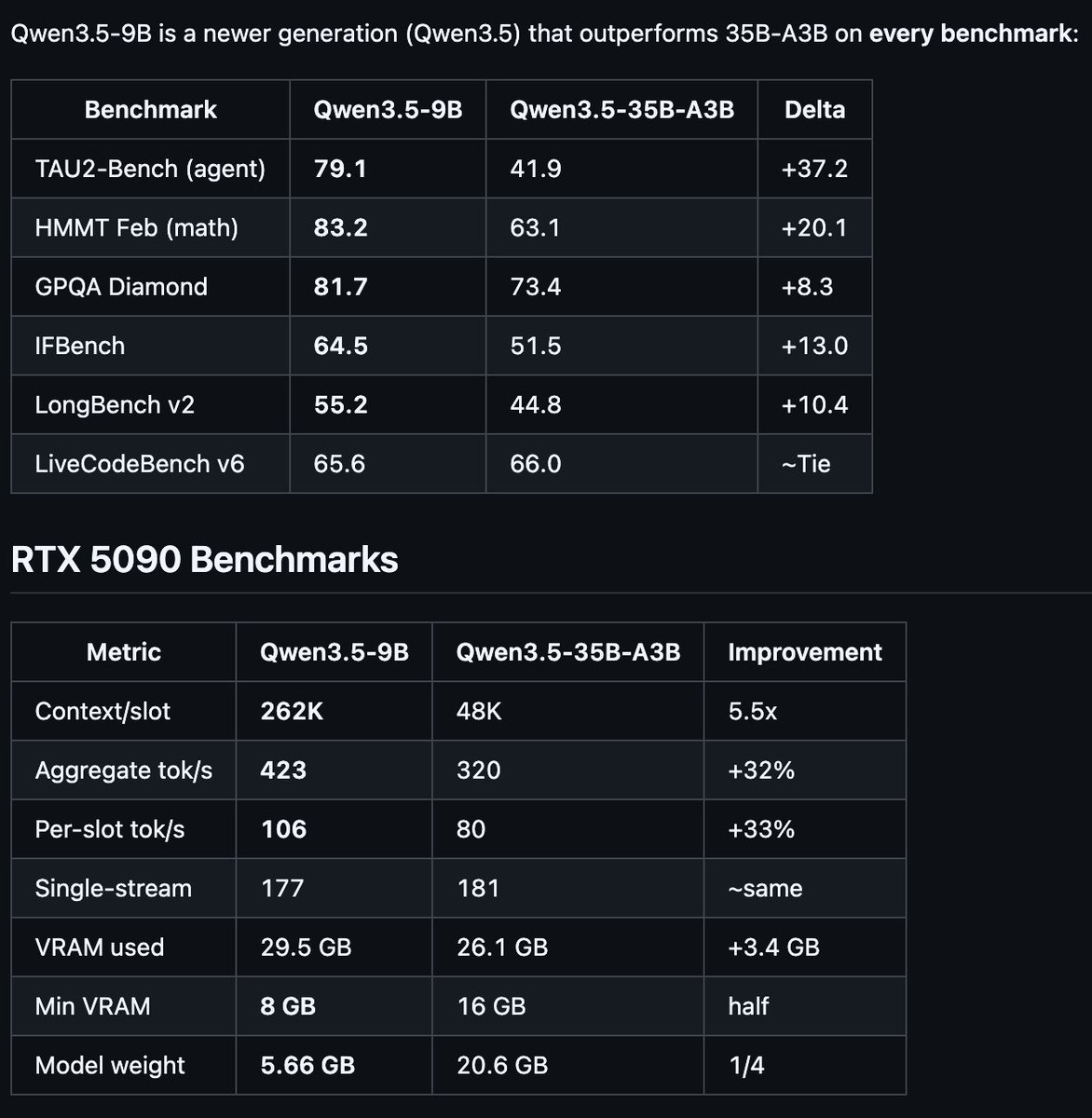
🚀 New: Qwen3.5-9B
• 262k context window per request
• 4 parallel requests = ~1M total context
• 177 tok/s single
• 423 tok/s aggregate (4 agents)
• 29.5 GB VRAM
• Runs on 8 GB min GPU
1M context ~400+ tok/s aggregate on a single 5090.
Spin up your own LocalAI inference engine with FOUNDRY a ready-to-go containerised infrastructure.
Be sovereign.
Buy a GPU.
Build on open weights.
Thank you, bro! The repo focuses heavily on AI infrastructure and inference reliability as an OpenAI-compatible API. If you want to experiment with agents, I highly recommend trying it in OpenCode headless mode you can run up to 4 autonomous instances. Basically, it's a fully local AI runtime system completely under your control that can be orchestrated by a meta-agent via https://t.co/Vgmhqfns6O and Agent Skills. You could try using Qwen3-Coder-30B-A3B (MoE) for 3 parallel coding agents providing inference to 3 OpenCode headless instances.
@sudoingX@nikitabier Ignore the noise and envy around you. It's part of human nature, and there's nothing you can do about it. Keep building. Keep sharing knowledge.