Meta bought WhatsApp 12 years ago for $19 billion. Then it bled them a billion dollars a year for six years straight, a fact that came out in court last year under oath.
The app was making about 10 cents per user when Meta bought it. We know that figure because it sat inside Meta's own slide deck the week before the deal closed.
WhatsApp's two founders, Jan Koum and Brian Acton, ran the app on a simple motto: "no ads, no games, no gimmicks." It was printed on the office wall.
They're both gone now. Acton walked out in 2017 and left roughly $850 million in shares on the table, because he didn't want ads inside the app. Koum followed a year later.
The new ads don't appear in your private chats, your group messages, or your calls. Those stay locked the way they always were, and Meta can't read them. The ads are going inside the Updates tab instead, the place with Status and Channels where you see the disappearing photos people post. 1.5 billion people open that tab every day. The new ads sit inside it and look exactly like the ones you scroll past between Instagram Stories.
To pick which ad to show you, Meta uses your country, your city, your language, the channels you follow, and the ads you've clicked on before.
Morgan Stanley thinks Meta brings in $3 to 5 billion a year from this. A Wall Street firm called Evercore puts it at around $10 billion a year by 2028, if Meta earns about $6 from each daily user.
For scale, Meta made $164 billion last year. Almost all of it, $160 billion, came from ads on Facebook and Instagram. WhatsApp's entire revenue was about $1.8 billion. Every dollar of that came from businesses paying to message customers on the app.
So the $19 billion bill from 2014 has been sitting on Meta's books for 12 years. WhatsApp now has 3.3 billion users every month. The Updates tab is how Meta finally starts paying that bill back.
This is how self earned success looks like.
> Year 1993- barely anyone stood for him when he visited aap ki Adalat as a normal star.
> Year 2015- whole room gave him standing ovation when he visited aap ki Adalat as biggest superstar.
Earned not begged like nepo stars.
January 20, 1995: Sandeep, the 13-year-old son of a cement businessman, left for school in Delhi but never returned.
The family searched extensively but couldn’t find him. The next day, the businessman received a call stating that his son had been kidnapped, with a ransom demand of ₹30,000.
The kidnappers instructed him to leave the money in a bus near Loni flyover and warned him not to inform the police. The family informed the police anyway, and a case was registered at Gokulpuri Police Station.
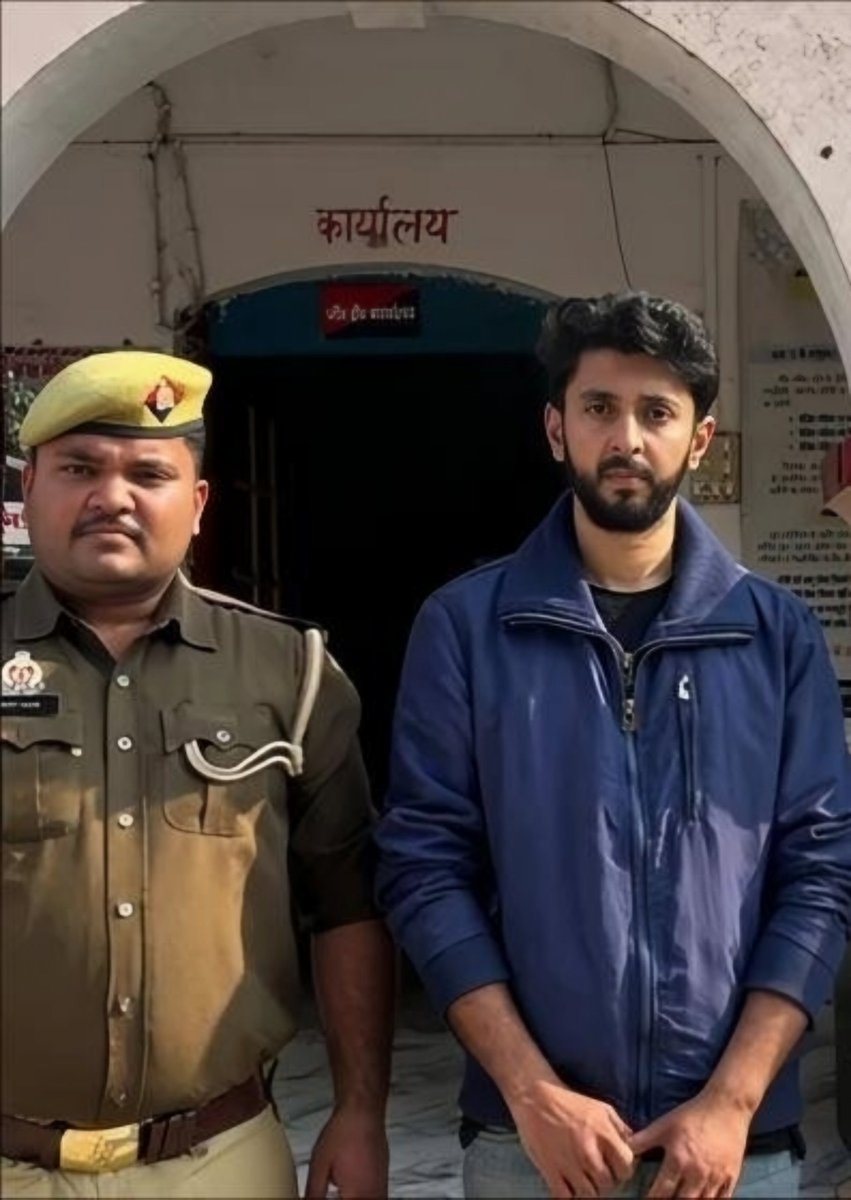
During the investigation, a neighbour said the child was seen in an autorickshaw with a tall man locally known as “Masterji” for being a school martial arts instructor. Police traced him, he was Salim Khan, a martial arts instructor at Ramjas School, Daryaganj. He confessed and led the police to a drain in Mustafabad, where the child’s body was found.
In 1997, the Karkardooma Court sentenced him to life imprisonment. He appealed in the Delhi High Court and was granted interim bail in 2000, but he absconded. In 2011, the High Court upheld his sentence, but he remained at large.
For 26 years, he hid in places like Karnal and Ambala, working as a wardrobe maker. Around 2010, he moved to Loni in Ghaziabad and opened a women’s clothing store. He later became a social activist and YouTuber under a new name, Salim Wastik, an ex-Muslim known for calling out radical preachers in Islam.
He had little name and fame until last month, when he was stabbed multiple times at his Ghaziabad home by two brothers, Zeeshan and Gulfam, for allegedly blasphemous comments on the Prophet, an incident that suddenly brought Salim into mainstream discussion. He survived, gaining newfound fame and a “warrior” image.
During this media coverage, the victim boy’s family noticed his face and suspected that he was the same Salim who had killed their son. They informed the police. Preliminary investigations, including fingerprint analysis, matched. Today, Salim Khan alias Salim Wastik was arrested.
Incidents like these make you believe that the consequences of your actions are paid here, in this life itself. Hope he rots in jail for the rest of his life.
She just reverse-engineered the psychology of every high-performer who can't turn off.
You can't tell a firefighter to nap. Their entire identity is built around staying alert when everyone else is asleep. Telling them to rest triggers the same resistance as telling them to quit.
"Let's watch a show" works because it reframes rest as togetherness. He didn't agree to sleep. He agreed to spend time with her. Sleep was just the side effect.
The best people in your life don't argue with your stubbornness. They just build a trap you walk into willingly.
In 1969 you could walk into Harrods and buy a lion. Two Australians did. What happened to the man who set that lion free is the part nobody tells.
George Adamson was already a legend by 1970. His wife Joy had written Born Free about Elsa, an orphaned lioness they raised and released into the wild. The book sold millions. The film won two Oscars. George was known across Kenya as "Baba ya Simba," Father of Lions. He lived in a collection of earthen-floored huts at Kora National Reserve, a 500-square-mile stretch of sun-scorched bush that nobody else wanted. He paid £750 a year to rent it. He wore shorts and sandals while walking among wild lions and sometimes went years without entering a city.
So when two 20-something Australians showed up with a lion cub they'd bought at Harrods for 250 guineas, Adamson said yes. The cub's name was Christian. He was fifth-generation zoo-bred, born at a small zoo in Devon, sold to Harrods' pet department, and purchased on impulse by John Rendall and Ace Bourke. They raised him in the basement of their furniture shop on King's Road in Chelsea. The shop was called Sophistocat. Christian rode around London in the back of a Mercedes convertible, played in a church graveyard because a local vicar gave permission, and became such a fixture that Rendall earned the nickname "The Lion Man of Chelsea."
The connection to Adamson happened by pure accident. Bill Travers and Virginia McKenna, the actors who played George and Joy in Born Free, walked into Sophistocat one afternoon looking for pine furniture. They saw a lion in the basement. They made the call.
Adamson didn't just release Christian. He spent months at Kora building a pride around him, introducing him to wild lionesses named Mona and Lisa, teaching a lion who'd been raised on King's Road how to survive in the African bush. When Rendall and Bourke flew back a year later, Adamson warned them Christian was fully wild now and might not recognize them. The documentary camera was rolling when Christian spotted them from a distance, paused, then sprinted and leapt onto both men, standing on his hind legs, wrapping his front legs around their shoulders. His wild lionesses, who had never been near a human, walked up and accepted them too.
That footage sat in a drawer for 35 years. In 2008, a girl found it on an obscure Japanese blog, added Whitney Houston's "I Will Always Love You," and posted it to YouTube. 45 million views in months. One of the top viral videos of the year. A 1971 reunion, reborn because someone paired it with a power ballad.
Joy Adamson was murdered at her camp in 1980 by a former employee she'd fired. George kept working alone at Kora for nine more years, rehabilitating lions nobody else would take. On the night of August 19, 1989, something strange happened. He hadn't seen or heard his lions in months. That night the entire pride gathered around his camp and roared until dawn. The next morning, Somali bandits with AK-47s ambushed his truck while he was driving to rescue a young tourist. He was 83.
John Rendall died of COVID complications in January 2022. Ace Bourke lives in Sydney with two house cats.
Christian was last seen in early 1973, heading north. He would have been three and a half. Fully wild. Leading a pride in the same reserve where the man who taught him to be a lion is now buried, between his brother and two of his favorite lions.
You handle booze 40 times better than an elephant. That's because of one gene. And it completely flips what's actually happening in this video.
That clip of "drunk elephants" everyone shares comes from a 1974 documentary called "Animals Are Beautiful People." Same director who made "The Gods Must Be Crazy." Won a Golden Globe. The footage went everywhere. And it was almost certainly faked. The animals were reportedly fed alcohol-soaked fruit before the cameras started rolling.
In 2006, biologists at the University of Bristol sat down and did the math. An elephant would need to eat about 1,400 fermented marula fruits in one sitting to even catch a buzz. An elephant eating nothing but marulas maxes out at around 714 fruits in a full day. Half the dose. The numbers just don't add up.
The same study caught something the tweet gets wrong. Elephants eat marula fruit straight off the tree. They don't touch the rotten ones on the ground. They'll literally knock whole trees over to grab the fresh stuff instead. And once swallowed, the fruit moves through an elephant's gut in 12 to 46 hours. Too fast for it to ferment inside them. The sugars turn into fat before any alcohol forms.
That looked like the final answer for about 14 years. Then a 2020 study from the University of Calgary blew it apart.
The Calgary team examined a gene called ADH7 in 85 different animals. This gene tells your body how to break down alcohol. You and I carry a version that works really well. We got it from our ancestors about 10 million years ago, back when they came down from the trees and started eating more rotting fruit off the ground. Bats that eat fruit have a similar setup, because flying drunk would kill them.
Elephants never got it. Their version of this gene is completely broken. African elephants, Asian elephants, and even woolly mammoths that went extinct thousands of years ago. The 2006 study assumed elephants handle alcohol the way humans do. They don't. An elephant could feel drunk from way less than those calculations said.
The Bristol researchers floated one more idea, too. Elephants chew on marula bark along with the fruit. Inside that bark live beetle larvae that the San people of the Kalahari have used for centuries as arrow poison. The toxin shreds red blood cells. If an elephant munches enough bark while eating fruit, the larvae might be what makes them wobble. Not the booze.
And there's a company making real money from this whole debate. Amarula, a South African cream liqueur, launched in 1989 with an elephant right on the bottle. Made from fermented marula fruit. Its parent company (now under Heineken) pulls in about $1.3 billion a year. The drunk elephant story is literally their entire brand.
आपला शत्रू पण आपल्या चारित्र्यावर बोट ठेऊ शकणार नाही असं चारित्र्य घडवलं होतं आमच्या छत्रपती शिवाजी महाराजांनी ❤️
शिवरायांचे विचार एकच सांगतात- "स्त्रीचा सन्मान म्हणजेच संस्कार" #शिवबा 🚩
पवारांची मुंडेंची जुगलबंदी चांगली रंगत होती.
दादा तुमचे सगळं झाकून होत पण जेव्हा तुम्ही गेलात तेव्हा सगळं उघड्यावर टाकून गेलात.
बाकी पवार काय बीड मध्ये गेले नाहीत आणि मुंडे काही बारामती मध्ये गेले नाहीत.दोघेही आपल्या मतदारसंघात राहिले.
#AjitPawarFuneral
He is Md Wasif.
He was arrested on 14 Jan for allegedly purchasing beef after police in Lucknow intercepted a vehicle carrying it to his office, following a tip-off from the Bajrang Dal.
Like any accused, he denied the charge, saying “phasaya gaya hai.” However, police noted that the OTP used to authenticate the beef delivery had been generated on Wasif’s own mobile phone.
But Wasif kept saying he was innocent and on his repeated requests, police visited his house and seized the CCTV footage. It revealed that at the time the OTP was generated, Wasif was inside the bathroom while his phone lay unattended.
It later emerged that his wife, Amina, was having an affair with a man named Amaan from Bhopal, whom she had met through insta. Using Wasif’s identity documents, Amaan booked an online porter to deliver beef to Wasif's office. The beef was transported from Bhopal, concealed in a cardboard box, and secretly loaded into the vehicle. To ensure quick police action, Amaan tipped off Bajrang Dal members using a fake identity, Rahul. The plan was to keep Wasif in jail so the two could spend more time together.
This was not the first attempt. Last year, nearly 20 kg of beef had also been planted in Wasif’s car. He was arrested then as well and spent some time in jail, but Wasif came out quickly that time, but his wife wanted him behind bars for longer.
Why do people find such creative ways to cheat and harass their spouses when they can simply divorce them and do whatever they want?