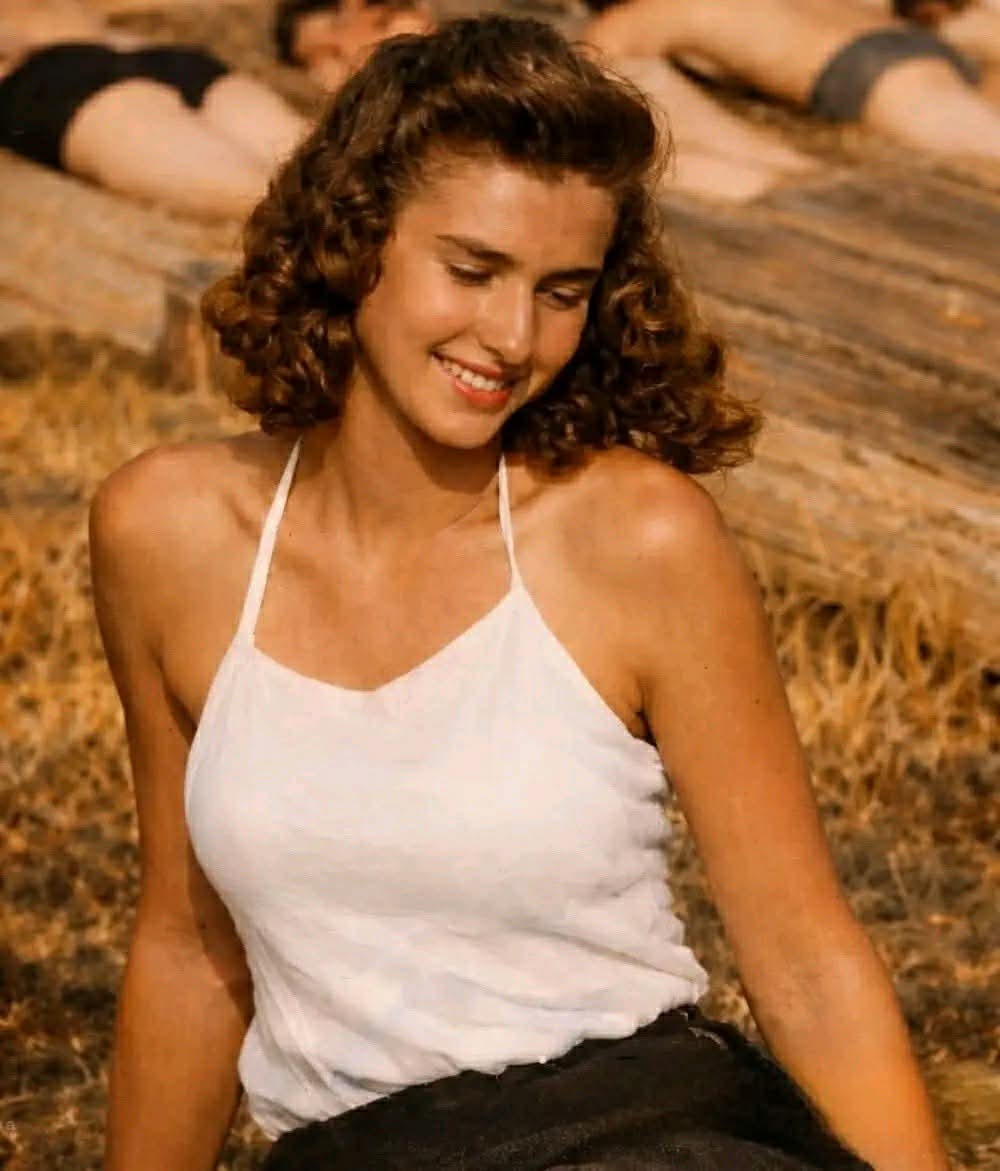
«En la vida encontrarás muchos imbéciles. Si te hieren, piensa que es su estupidez la que les empuja a hacerte daño. Así evitarás responder a su maldad... Mantén siempre tu dignidad, tu integridad y la fidelidad a ti misma».💎
Gracias,
Marjane Satrapi 🥀
Warum wird diese Doku nicht im Deutschen Fernsehen gezeigt? Warum braucht es die BILD, um sie zu veröffentlichen?
Ich habe sie gerade im Stream gesehen. Und ich habe vieles über die Geschichte des Nahost-Konflikts gelernt, zu dem ich nur Halbwissen hatte.
Diese Doku ist ein wertvolles und wichtiges Zeit-Dokument. Egal ob ZDF, ARD oder arte - alle hätten sich die Finger danach lecken und sie einkaufen müssen. Warum haben sie abgelehnt?
Hier ist der Link zum Stream via BILD: https://t.co/HikrRsLEDP
Inzwischen gibt es die Doku auch direkt via Youtube: https://t.co/NxSfrXc3zD
Ich bin Abijahrgang 1990 und studierte in der ersten Hälfte der 1990er Jahre Politikwissenschaften, Entwicklungs(länder)soziologie und Entwicklungspolitik. Meine Diplomarbeit schrieb ich über Wahlbeobachtung als Instrument für Demokratisierungsprozesse und war dafür 1995 Wahlbeobachterin in Haiti.
Es war die Zeit nach dem Fall der Mauer, die Zeit von Glasnost und Perestroika, der Freilassung von Nelson Mandela, des Oslo-Abkommens... Damals gab es wirklich eine Euphorie und eine Hoffnung für Demokratie, Menschenrechte und Frieden.
Nimm dir die eineinviertel Stunden Zeit für diese wirklich interessante Dokumentation.
Ich freue mich über die Wahl in den FDP-Bundesvorstand und danke für das Vertrauen sowie das beste Ergebnis bei den Beisitzern.
Eine liberale Partei darf nicht klingen wie die Pressestelle der Vorsicht. Freiheit braucht Mut.
🎙️ @_MartinHagen im DLF: „Wenn eine Minderheit in Deutschland nur noch der Meinung ist, man dürfe seine Meinung frei äußern, haben wir offensichtlich ein Problem.“ Die FDP wird hier ihrer Tradition folgen: Wir werden immer die Meinungsfreiheit verteidigen.
https://t.co/uv9PvY4fa5
Meet one of the most adorable birds in the world
Shimaenaga found only in Hokkaido Japan 🇯🇵
The long -tailed tit is also known as the winter bird.because they are mostly seen during winter.
Shimaenaga affectionately called the snow fairy is fluffy round and looks like a flying cotton ball.
#japan #naturelovers #shimaenaga #birds
In 1934, a wealthy New York socialite did something that baffled the locals in rural Pennsylvania. She walked into a real estate office and leased a mountain just to evict them.
Her name was Rosalie Edge, and she was 57 years old.
At the time, Kittatinny Ridge was known locally as "The Slaughterhouse." Every fall, thousands of hawks, falcons, and eagles migrated along the ridge, riding the air currents south for the winter. But waiting for them were hundreds of men with shotguns and easy targets.
It wasn't hunting for food; it was slaughter for sport. The ground was often carpeted with the rotting bodies of magnificent birds, while many others were left wounded to die slowly in the brush.
The state of Pennsylvania actually encouraged it, even paying a $5 bounty on goshawks. Predators were seen as "vermin" that threatened chickens and game birds, and the general consensus was that they should be wiped out. Even the National Audubon Society refused to intervene, telling Mrs. Edge that protecting hawks simply wasn't a priority.
She was furious. She famously stated, "The time to save a species is while it is still common."
But she didn't just write letters—she took action. She founded the Emergency Conservation Committee, and when established conservation groups wouldn't buy the land to stop the shooting, she did it herself. She secured a lease on 1,400 acres of the ridge and hired a warden, Maurice Broun, to guard it.
When the hunters arrived that season, expecting their usual sport, they found "No Trespassing" signs and a determined woman and her warden blocking the path. The shooting gallery was officially closed.
The hunters were angry. There were threats against her life and promises of violence, but Mrs. Edge stood firm, relying on her legal rights as a private property holder.
She turned a place of death into the world’s first sanctuary for birds of prey. She understood the value of predators, the delicate balance of the ecosystem, and the future of conservation. Her sanctuary, Hawk Mountain, later provided the crucial data that proved the dangers of DDT. Without her stubbornness, we might have lost the bald eagle entirely.
Rosalie Edge proved that a single citizen with a lease and a backbone can change the course of history.
🛰️ April 21, 2026 NASA Just Dropped This Insane View of the Grand Canyon from Space! 🛰️
Breaking News NASA just released this jaw-dropping new photograph of the Grand Canyon as seen from low Earth orbit — and honestly, it doesn’t even look real. The massive red-orange canyons, winding river, and dramatic clouds create a scene so breathtaking it feels like something from another planet. 🌍🔥
From hundreds of miles above, the Grand Canyon reveals its true scale and beauty. Layered red rock formations stretch for miles in every direction, carved over millions of years by the Colorado River that still snakes through the bottom of the chasm like a silver ribbon. Puffy white clouds cast soft shadows across the sunlit terrain, while Earth’s thin blue atmosphere and curved horizon glow at the top of the frame, reminding us we’re looking at our home from the edge of space.
🌍 Grand Canyon Majesty | 🏜️ Ancient Wonder | ☁️ Cloud Shadows | 🌌 Edge of Space
This image is a powerful reminder of just how extraordinary our planet really is. The Grand Canyon is one of Earth’s most iconic natural wonders — and from orbit, it looks even more surreal, more alive, and more fragile than we ever imagined.
⭐ What Makes This View So Powerful: The combination of the canyon’s massive scale, the rich red-orange colors, and the thin blue atmosphere at the top creates a perfect visual of Earth as both ancient and alive — a living masterpiece floating in the darkness of space.
⏰ Pro-Tips for Space Enthusiasts:
🌍 Zoom in on the Colorado River to see how it has carved this masterpiece over millions of years.
📸 Compare this orbital view with ground-level photos to appreciate the true scale of the canyon.
🔭 Notice how the white clouds and their shadows add depth and drama to the already stunning landscape.
🌌 Take a moment to appreciate the thin blue line of our atmosphere — it’s all that stands between us and the vacuum of space.
We live on a planet so beautiful it sometimes doesn’t look real — and today the Grand Canyon is showing us exactly why Earth is the most magnificent place in the universe. 🌍❤️
The cosmos gave us this masterpiece… and asked us to protect it. 🌌❤️
She was sixteen when she arrived at Auschwitz. That very night, she was ordered to dance in front of the man who had just sent her mother to die.
Edith Eger arrived at the camp on May 22, 1944, with her family. Josef Mengele stood at the selection line. A single gesture was enough to decide everything.
When it was her mother’s turn, he sent her to the left. Edith tried to follow her. Mengele stopped her. He said she would see her mother again later. It was a lie.
That same evening, he looked for her among the prisoners. He had heard that she was a dancer. He ordered her to perform.
Edith danced.
She closed her eyes and went somewhere else. In her mind, she was no longer there. She was in Budapest, in a theater, with music and an audience. Her body was in the camp. The rest of her was not.
When she finished, Mengele threw her a piece of bread.
She shared it with the other women in the barracks. That act was remembered. Later, one of them helped keep her alive.
Then came everything else.
Auschwitz, forced labor, the transfer to Mauthausen. Finally, the death march to Gunskirchen. Fifty-five kilometers on foot, with no strength left. At one point, Edith collapsed. She could no longer walk.
Two women recognized her. One of them was among those with whom she had shared the bread. Together with her sister Magda, they lifted her and carried her forward.
The camp at Gunskirchen was the final stop. Starvation, bodies everywhere, no medical care.
On May 4, 1945, American soldiers arrived. Edith was lying on the ground among the bodies, still alive. One soldier noticed movement and pulled her out.
She was seventeen years old.
After the war, she returned home. She found her sister Klara again. She tried to rebuild a life. She married, had children, left Hungary, and moved to the United States.
For years, she did not speak about what had happened.
Then she met Viktor Frankl. That encounter changed the course of her life. She returned to school. At the age of fifty, she earned a doctorate in clinical psychology. She began working with people marked by deep trauma.
In 1980, she returned to Auschwitz. She walked through the camp as an adult. She said that there she was finally able to do one specific thing: forgive herself for surviving.
Not those who had harmed her. Herself.
In 2017, she published The Choice. The book reached readers in many countries.
Today, she continues to speak, to work, and to tell her story.
One of the last things her mother said to her while they stood in line at Auschwitz was that no one can take away what you keep in your mind.
Edith Eger built her entire life on that sentence.
@Mr_Husky1@davidandhettie If you haven’t already read Viktor Frankl’s book ‘Man’s Search for Meaning’ I highly recommend it.
I also suggest reading Elie Wiesel’s ‘Night’.
She was just 21 when she saw Jewish children marked for death with yellow stars.
So Andrée Geulen covered the stars with school aprons—and then spent three years stealing children from the Nazis to save their lives.
A young schoolteacher in occupied Belgium, Andrée had no weapons, no power, no grand plan. Only a conscience that refused to stay silent.
In 1942, when her students arrived in class wearing those humiliating stars, shame burning in their eyes, something broke inside her.
The next morning, she brought aprons for every child—Jewish and non-Jewish alike. In one simple act, the stars vanished. There were no longer “marked” children and “safe” ones.
Just students.
That small rebellion changed everything.
She joined the underground Comité de Défense des Juifs and began the heartbreaking work of knocking on doors, begging terrified parents to hand their children to a stranger.
“Give me your child,” she’d whisper through tears. “I can’t promise you’ll see them again—but I can give them a chance to live.”
Hundreds of mothers and fathers made that impossible choice, trusting a 21-year-old teacher with everything they loved.
For three years, Andrée lived a double life: teaching by day, becoming a ghost by night—smuggling children to safe houses, convents, and farms. She forged papers, invented new identities, taught Jewish children Christian prayers, and kept secret notebooks with their real names so they could one day find their way home.
Even when the Gestapo stormed her classroom and a Nazi officer sneered, “Aren’t you ashamed to teach Jewish children?” Andrée looked him in the eye and replied:
“Aren’t you ashamed to make war on children?”
He walked away.
By liberation, she had saved between 1,000 and 3,000 Jewish children. After the war, her hidden notebooks helped reunite many with surviving family.
For those who had lost everyone, she became family—attending weddings, holding grandchildren, refusing to let their stories die.
Honored as Righteous Among the Nations, Andrée lived to 100. At her funeral, the “children” she saved—now grandparents—stood to honor the woman who risked everything when the world looked away.
Andrée Geulen proved that heroism doesn’t need an army or permission. It only needs one person brave enough to say:
“Not these children. Not on my watch.”
She saw innocent lives in danger and chose courage over fear.
Because of her, thousands lived—and thousands more were born.
That is the quiet, unbreakable power of one young woman who refused to do nothing.
A buried log holds water in the bed for weeks — the rotting wood does the work while you go about your summer. 🌿
A mini-hugelkultur bed is a raised bed with a buried heart of wood. As the wood decomposes, it absorbs water like a sponge during rain and releases it slowly to the roots during dry spells. From the second year onwards, the mycorrhizal fungi colonising the wood also begin transferring nutrients directly to plant roots.
What you need: pruning wood, small logs, dead leaves, and compost. Nothing to buy.
How to build it: dig a trench 40 cm deep and 80 cm wide. Place the largest logs at the base, then smaller branches above them, then a layer of dead leaves, then compost, and finally topsoil as the planting surface. The wood absorbs up to five times its own weight in water and releases it over weeks and months.
In a British context, this method is particularly useful for raised beds in dry, free-draining gardens, for beds on slopes where water tends to run off, and for allotment plots where watering infrastructure is limited. The decomposing wood also creates the warm, aerated growing conditions that British summer crops respond to well.
Use only untreated wood — no painted timber, no treated fence posts. Soft and hardwood both work; harder woods such as oak and apple decompose more slowly and hold moisture for longer. Avoid walnut, which releases compounds that suppress plant growth.
pruning wood → underground sponge → natural irrigation → continuous feeding 🌱
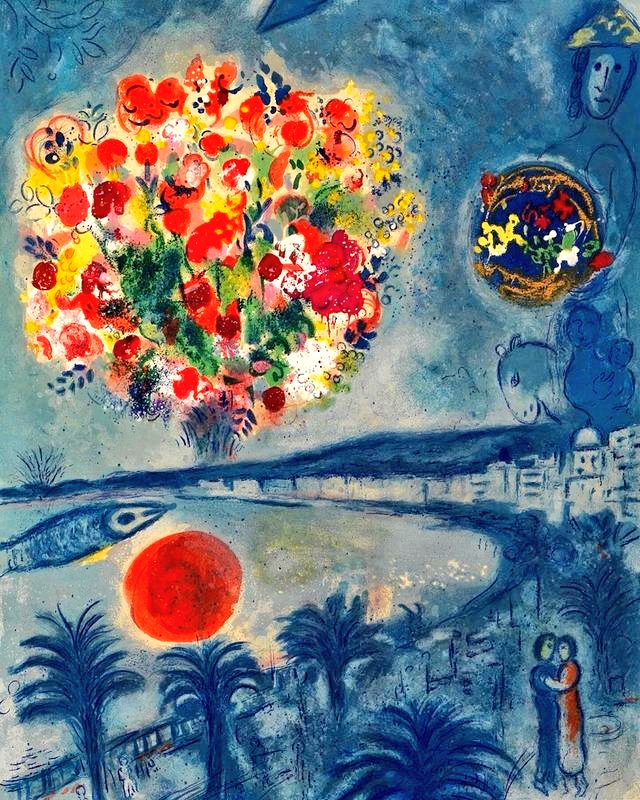
Pour remercier tous mes abonnés anciens et nouveaux.
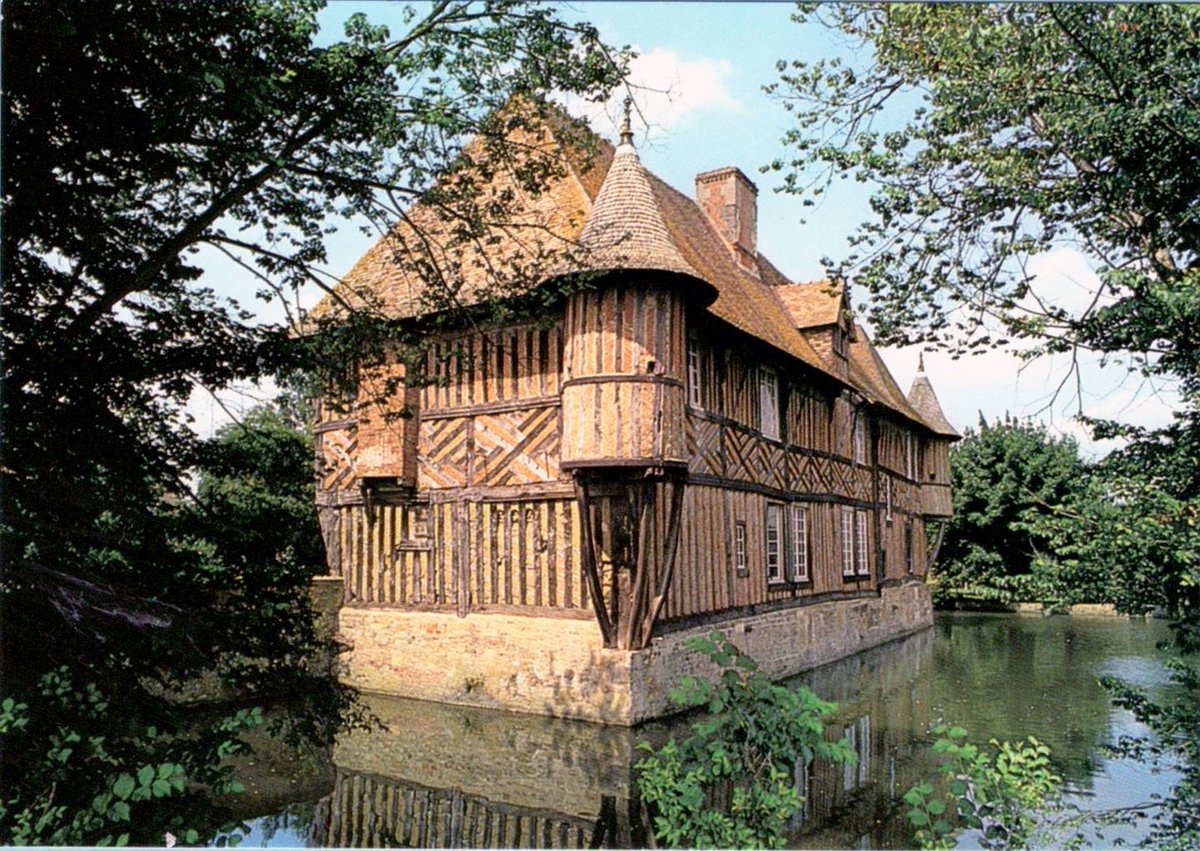
Le #Manoir de #Coupesarte dans le #Calvados en #Normandie est typiquement normand il a conservé sont ossature originelle en bois et offre une unité architecturale exceptionnelle. Construit sur des douves à partir du XVe siècle.
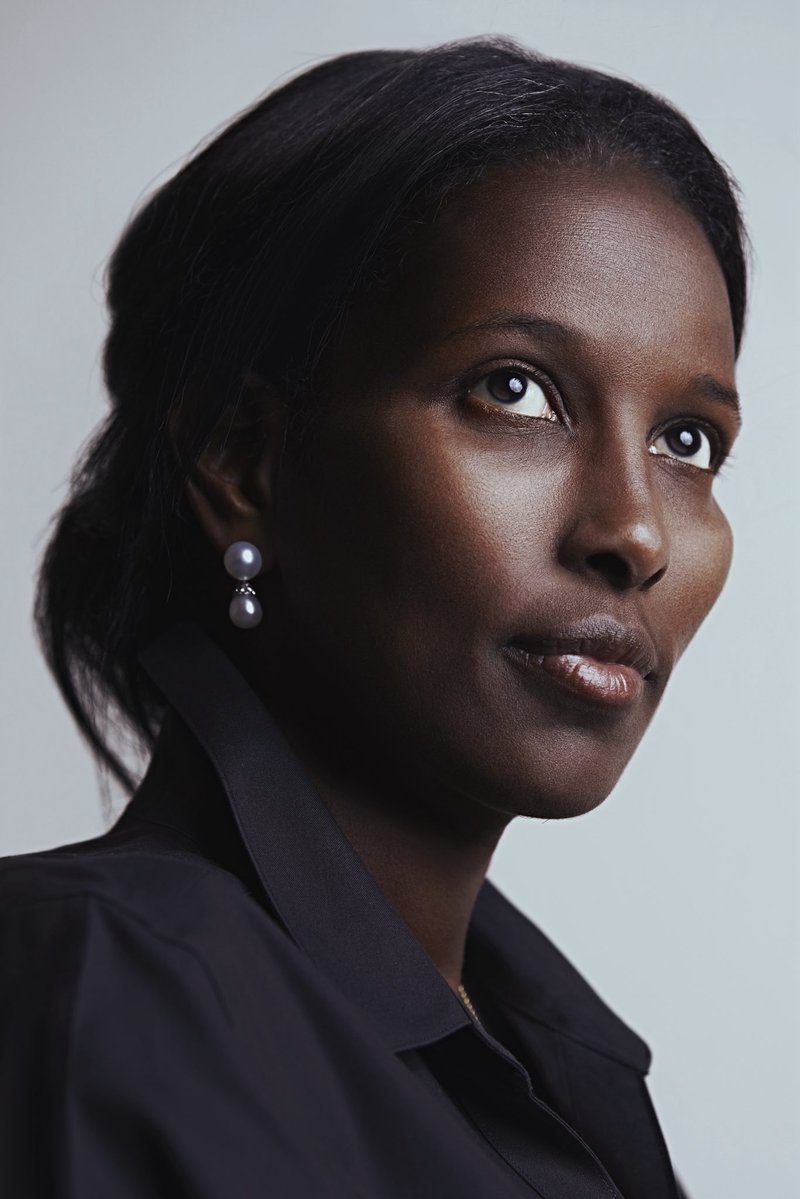
Ayaan Hirsi Ali - let’s talk a bit about her.
She is one of the most courageous voices of our time.
She was born in 1969 in Mogadishu, Somalia, into a strict Muslim family. As a young girl, she was subjected to female genital mutilation. She grew up between Saudi Arabia, Ethiopia, and Kenya under a strict Islamic upbringing.
In 1992, she fled to the Netherlands to escape an arranged marriage - she jumped off a train in Europe and applied for asylum.
There, she learned Dutch, earned a degree in political science, and began working with integration.
She lost her faith in Islam. She became an atheist, and later converted to Christianity in 2023.
She saw clearly how Islam oppresses women - forced marriages, honor killings, female genital mutilation, polygamy, and the total lack of freedom.
In 2004, she made the short film Submission together with Theo van Gogh. The film showed violence against women in Islam.
Shortly after, Theo van Gogh was murdered in broad daylight in Amsterdam by a radical Muslim. A threat against Ayaan was left pinned to his chest: she was next.
She received death threats for years. She had to live under police protection.
She was elected to the Dutch parliament for the Liberal Party, where she fought for Muslim women’s rights and against the illusions of multiculturalism.
She has written books such as Infidel, Nomad, and Heretic, where she directly criticizes the core of Islam - not just “extremism,” but the ideology itself.
Today, she lives in the United States, married to historian Niall Ferguson, and continues her work, among other things through her foundation (AHA Foundation).
She warns the West about mass immigration from Muslim countries, parallel societies, and the self-deception that claims Islam can be reformed without confronting its texts and history.
Like Salman Rushdie, Ayaan Hirsi Ali has paid a high price for speaking the truth. Rushdie was hunted for a book. She was hunted for showing the reality of her own life and the lives of millions of Muslim women.
She is not “Islamophobic.” She is a former Muslim who has seen the system from the inside and refuses to stay silent. She points to the uncomfortable truth: that Western values such as freedom of speech, gender equality, and individual liberty are incompatible with classical sharia Islam.
Ayaan Hirsi Ali is a living example of why the Enlightenment is still worth defending.
She risked her life to say what most people don’t dare: that the problem is not only “extremists,” but a religion that, at its core, oppresses women and rejects criticism.
She deserves respect from all of us - not because she is “controversial,” but because she refuses to lie in order to be politically correct. In a time where many bow to threats, she continues to speak the truth.
These are the kind of people who keep the soul of the West alive. Thank you Ayaan.❤️🔥🪽✝️
../
"Haus": In the past, movie theaters were magnificent, almost palatial buildings with a large auditorium and opulent furnishings.
"Picture Palace" was the term used in the USA in the 1920s.
Lichtspielhaus
"Licht" refers to the projection of films, which were "played" onto a screen using light sources.
"Spiel" emphasizes the nature of the films—like a theatrical performance, but on a screen.
…/