Muy triste, desilucionado y decepcionado con la inauguración del mundial de fútbol, apenas duró 15 minutos la variedad. Lo demás es bla bla bla estúpido en la tele.
Engineers don't just build things.
They think differently.
4 mental models that separate engineering thinking from everything else:
1. First principles
Don't assume. Break every problem down to what's physically true. Elon Musk on battery costs: "What are batteries made of? What's the market value?" Start there.
2. Failure mode analysis
Before asking "will this work?" ask "how will this fail?" The best engineers design failure in – slowly, visibly, safely.
3. Order of magnitude thinking
Approximate before you calculate. Being 10x right matters more than being 1% precise too late.
4. Systems thinking
Nothing fails in isolation. Every component has a relationship with everything else. The weak link is almost never where you're looking.
These 4 models built everything that works.
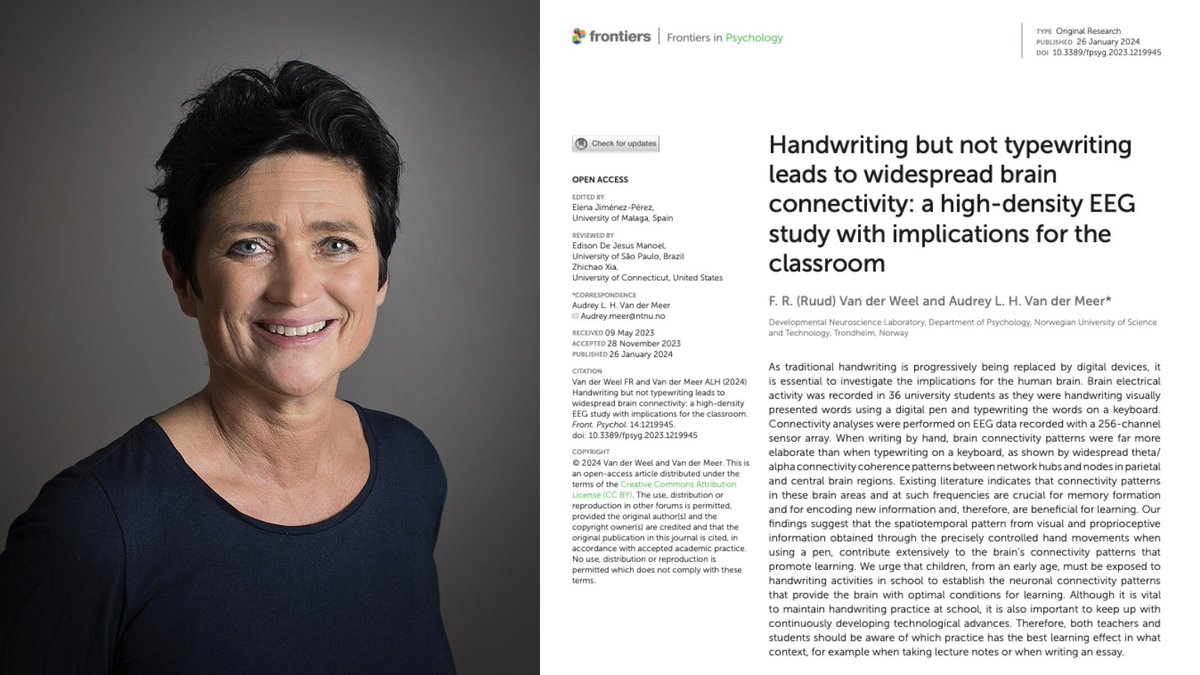
A Norwegian neuroscientist spent 20 years proving that the act of writing by hand changes the human brain in ways typing physically cannot, and almost nobody outside her field has read the paper.
Her name is Audrey van der Meer.
She runs a brain research lab in Trondheim, and the paper that closed the argument was published in 2024 in a journal called Frontiers in Psychology. The finding is brutal enough that it should have changed every classroom on Earth.
The experiment was simple. She recruited 36 university students and put each one in a cap with 256 sensors pressed against their scalp to record brain activity. Words flashed on a screen one at a time.
Sometimes the students wrote the word by hand on a touchscreen using a digital pen, and sometimes they typed the same word on a keyboard. Every neural response was recorded for the full five seconds the word stayed on screen.
Then her team looked at the part of the data most researchers had ignored for years, which is how different parts of the brain were communicating with each other during the task.
When the students wrote by hand, the brain lit up everywhere at once.
The regions responsible for memory, sensory integration, and the encoding of new information were all firing together in a coordinated pattern that spread across the entire cortex. The whole network was awake and connected.
When the same students typed the same word, that pattern collapsed almost completely.
Most of the brain went quiet, and the connections between regions that had been alive seconds earlier were nowhere to be found on the EEG.
Same word, same brain, same person, and two completely different neurological events.
The reason turned out to be something nobody had really paid attention to before her work. Writing by hand is not one motion but a sequence of thousands of tiny micro-movements coordinated with your eyes in real time, where each letter is a different shape that requires the brain to solve a slightly different spatial problem.
Your fingers, wrist, vision, and the parts of your brain that track position in space are all working together to produce one letter, then the next, then the next.
Typing throws all of that away. Every key on a keyboard requires the exact same finger motion regardless of which letter you are pressing, which means the brain has almost nothing to integrate and almost no problem to solve.
Van der Meer said it plainly in her interviews.
Pressing the same key with the same finger over and over does not stimulate the brain in any meaningful way, and she pointed out something that should scare every parent who handed their kid an iPad.
Children who learn to read and write on tablets often cannot tell letters like b and d apart, because they have never physically felt with their bodies what it takes to actually produce those letters on a page.
A decade before her, two researchers at Princeton ran the same fight using a completely different method and ended up at the same answer. Pam Mueller and Daniel Oppenheimer tested 327 students across three experiments, where half took notes on laptops with the internet disabled and half took notes by hand, before testing everyone on what they actually understood from the lectures they had watched.
The handwriting group won by a wide margin on every question that required real understanding rather than surface recall.
The reason was hiding in the transcripts of what the two groups had actually written down.
The laptop students typed almost word for word, capturing more total content but processing almost none of it as they went, while the handwriting students physically could not write fast enough to transcribe a lecture in real time, which forced them to listen carefully, decide what actually mattered, and put it in their own words on the page.
That single act of choosing what to keep was the learning itself, and the keyboard had quietly skipped the choosing and skipped the learning along with it.
Two studies. Two countries. Same answer.
Handwriting makes the brain work. Typing lets it coast.
Every note you have ever typed instead of written went into your brain through a thinner pipe. Every meeting, every book highlight, every idea you captured on your phone instead of on paper was processed at half depth.
You did not forget those things because your memory is bad. You forgot them because typing never woke the part of the brain that would have made them stick.
The fix is the thing your grandmother already knew.
Pick up a pen. Write the thing down. The slower road is the faster one.
«Cuanto más inculta es una persona, más dinero necesita para pasar los fines de semana, porque como no fabrica nada, no produce nada, todo lo tiene que comprar. Mientras que una persona con un cierto nivel de cultura, con la conversación, un libro o una música puede pasar el tiempo de una manera enriquecedora. La riqueza que nos dan los libros es una riqueza real más duradera y limpia que las que se tienen».
Fernando Savater
Anónimo
Subes al avión y encuentras a un hombre sentado en tu asiento de ventana, 4A.
Tú: Disculpe, creo que está en mi asiento.
Él: Sí, mi esposa está en el 4B. Toma mi asiento de atrás en la fila 32. Asiento del medio. Es el mismo avión, no importa.
Tú: No, pagué extra por el 4A. Por favor, muévete.
Él (en voz alta): ¿En serio? ¿De verdad vas a separar a una pareja en su aniversario? ¡Ten un poco de corazón!
Los pasajeros comienzan a mirar. Sientes el calor subiendo a tus mejillas. La presión de ser 'amable' y disolverte en el suelo es abrumadora.
Tú: No me voy a mover.
Él: ¡Todos te están mirando por ser egoísta! ¡Es solo un asiento!
Tú: Si es 'solo un asiento', entonces ve y siéntate en la fila 32. Tu mala planificación no es mi problema. Muévete.
El Resultado:
La azafata se acerca. Él gruñe, agarra su bolsa y camina a la fila 32. La esposa se disculpa en voz baja. Te pones los auriculares y duermes durante 4 horas. El avión no se estrelló porque dijiste 'No'.
La Reflexión:
Los manipuladores dependen de la incomodidad social para conseguir lo que quieren. Apuestan a que serás demasiado educado para armar un escándalo. Arman el "ojo público" para avergonzarte hasta que cedas.
Pero aquí está la verdad: No eres "difícil" por querer lo que pagaste. No eres "grosero" por existir en el espacio que te asignaron.
Cuando eliminas la vergüenza, eliminas su poder.
@universal_prog Muy aburrido que repitan tanto la pésima y patética serie Law and order: suv ¿tan pobres están de series o es más barato repetir lo mismo ad infinitum?
@AlexAndBooks_@dvalades If you're not going to read the same book a second time, why keep it? Give it away and make someone happy. Share the joy of reading a good book
Cada vez más estudios muestran que escribir a mano mejora la memoria y la comprensión conceptual. The Economist: Tomar apuntes con bolígrafo obliga a sintetizar ideas, mientras que teclear favorece copiar literalmente sin procesar la información. La diferencia no es nostalgia, es cognición. ✍️📚
https://t.co/REstYbkCDx?
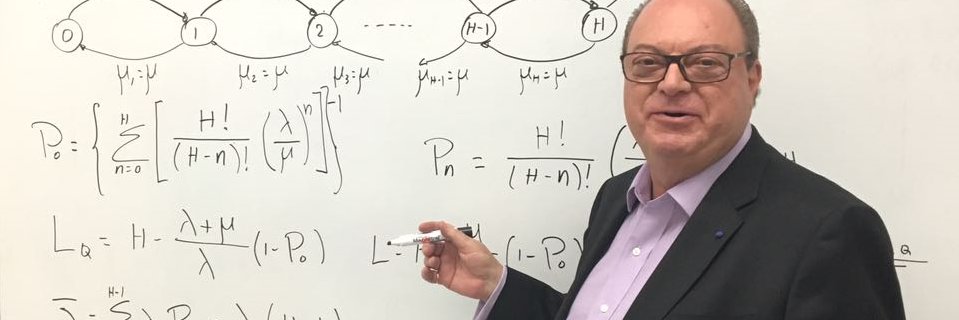
@Rainmaker1973 Como maestro universitario por más de 50 años, concuerdo con esta observación. Enseño en licenciatura y posgrado modelos matemáticos y mis alumnos actuales no pueden resolver problemas que mis alumnos de hace 50 años resolvían
@Mabe el servicio técnico de Mabe a las estufas es muy malo y extra caro, pagué más de $3000 por una perilla y ajuste del horno. No dejó el técnico comprobante. Por WhatsApp es imposible, su siste automatizado es pésimo. Llevo semanas tratando de llamar, paso horas en espera