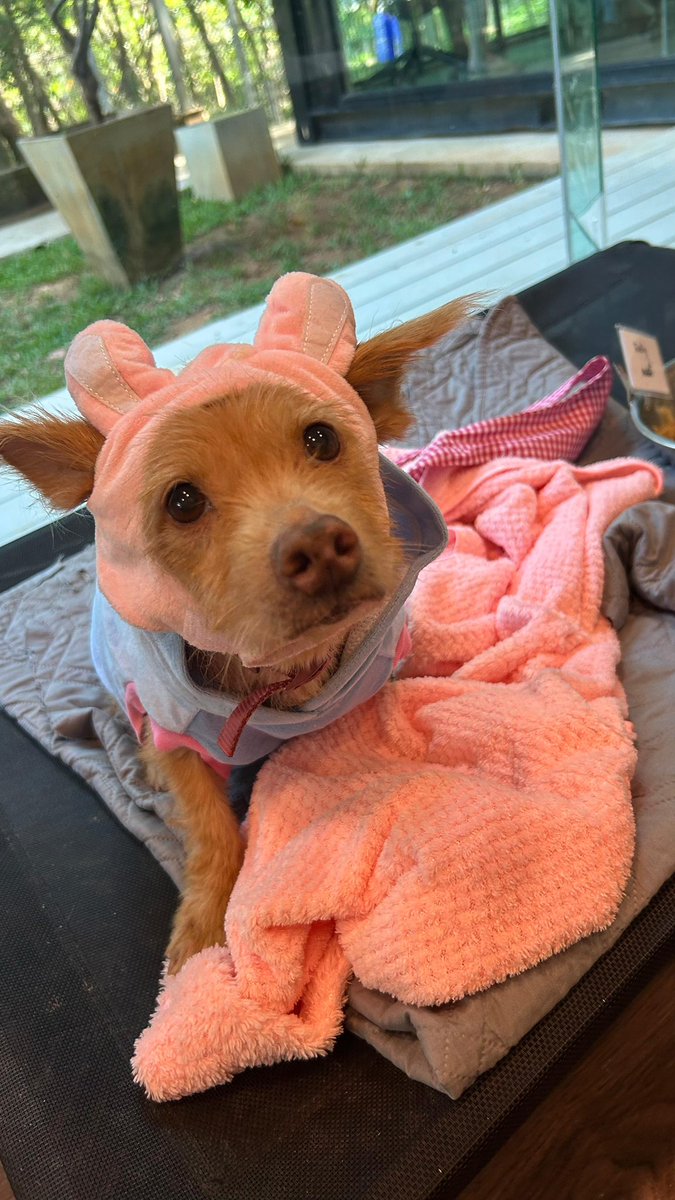
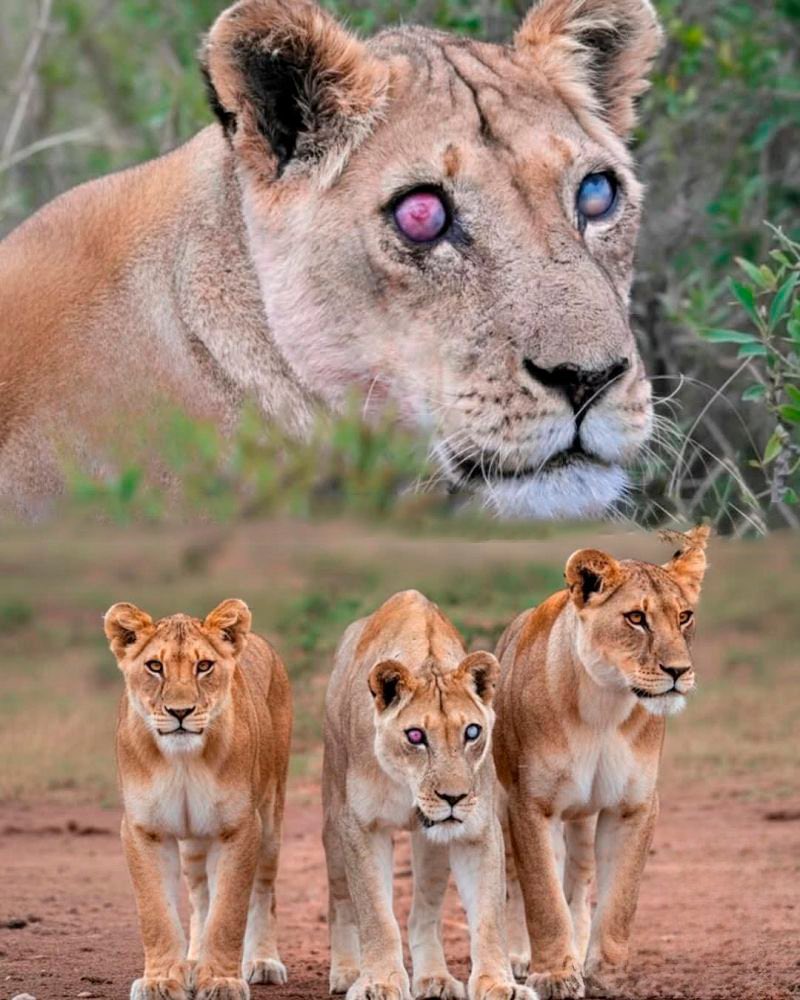
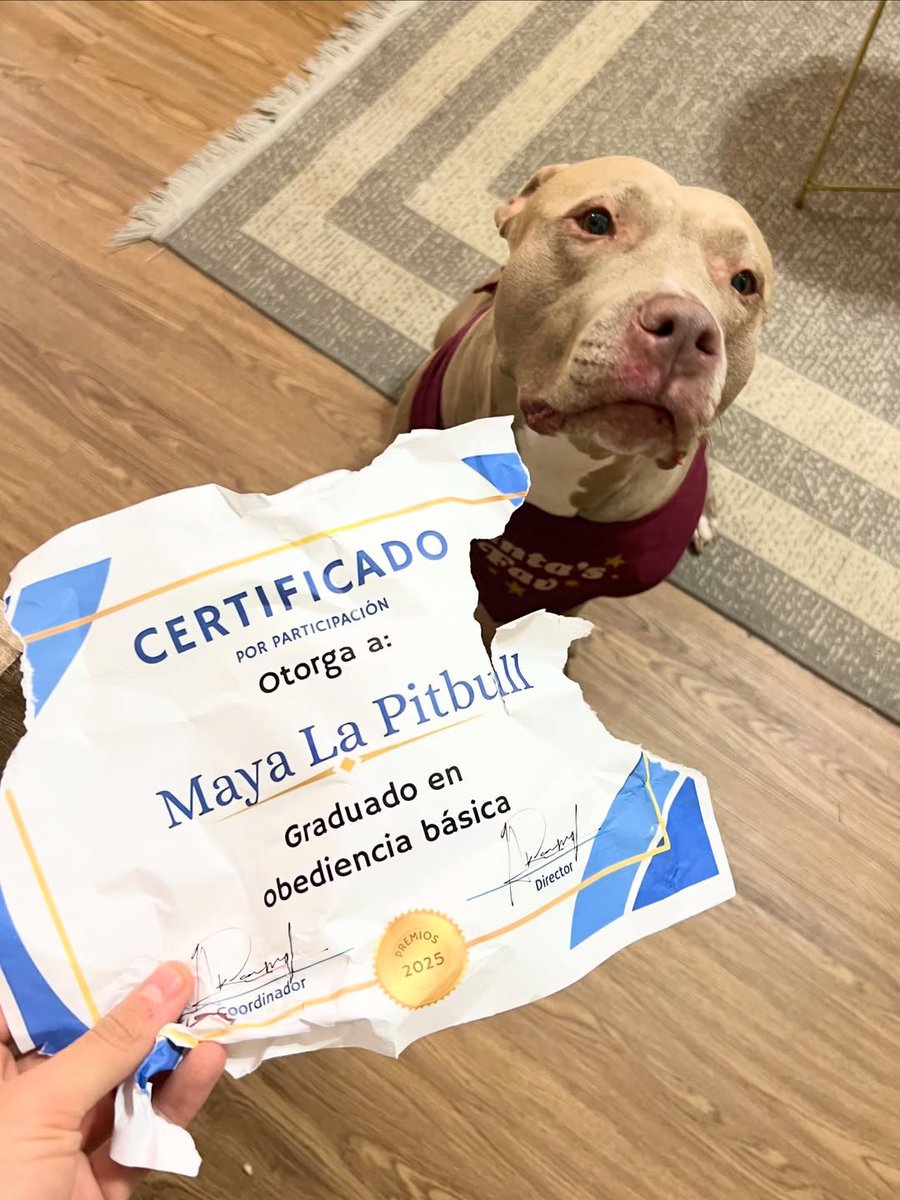
A heartfelt thank you to Sameera Reddy Ma'am for opening her heart and home to this beautiful Indie girl. ❤️
By choosing adoption over buying, you've not only transformed one innocent life forever but have also inspired thousands of people to look at our wonderful Indie dogs with love, compassion, and respect.
Just look at this adorable little girl she is absolutely precious! Every Indie dog deserves a loving family, a safe home, and a life filled with care. They may be born on the streets, but they have hearts full of unconditional love and unwavering loyalty.
If you're planning to welcome a dog into your family, please adopt, don't shop. Give an Indie or Desi dog the chance she deserves. One adoption saves a life and creates space for another animal in need.
Always Adopt Indies. Always Adopt Desi Dogs.
Thank you once again, Sameera Reddy Ma'am, for setting such a beautiful example of compassion. May your kindness inspire many more families to open their hearts and homes to these incredible souls.
#AdoptDontShop
#dogs
Our neighbor abandoned her cat, threw her out of the house and moved away. I tried to catch her, but she was so frightened. Today during an awful storm, she showed up in our yard and my husband was able to pick her up and bring her inside. We are both allergic to cats, but I can’t leave her hungry and in danger. She is not spayed. I will get that done and get her vaccinated. Meanwhile, we dried her off, fed her and got a litter box. She was nervous at first but now seems content.
At 74, I thought the quiet would be the hardest part of losing my husband.
The empty chair at the table.
The untouched side of the bed.
The silence that followed me from room to room like a shadow.
Then one cold evening, a gentle little tuxedo cat appeared outside my gate.
She looked exhausted… dusty fur, tired eyes, and a heart that seemed just as lost as mine.
But even then, she sat there calmly, watching me with the sweetest expression, like she somehow understood grief too.
I named her Bosi. 🤍
And somehow, from that moment on, life didn’t feel quite so lonely anymore.
Every morning, I wake up and see her curled near my door, quietly making sure I’m okay.
When my hands shake, she walks softly beside me.
When the nights feel heavy, she rests her head on my lap like she knows exactly when my heart hurts the most.
People say I rescued her…
But the truth is, this beautiful tuxedo cat rescued me.
She brought warmth back into a home that felt empty.
She gave meaning back to mornings I no longer looked forward to.
And in the middle of grief, she reminded me that love can still find us again… even after we think we’ve lost everything.
Growing old alone can feel frightening sometimes.
But knowing this loyal little soul is beside me makes the world feel softer, safer, and far less lonely every single day. 🐾🤍
THIS IS ABSOLUTELY INSANE…
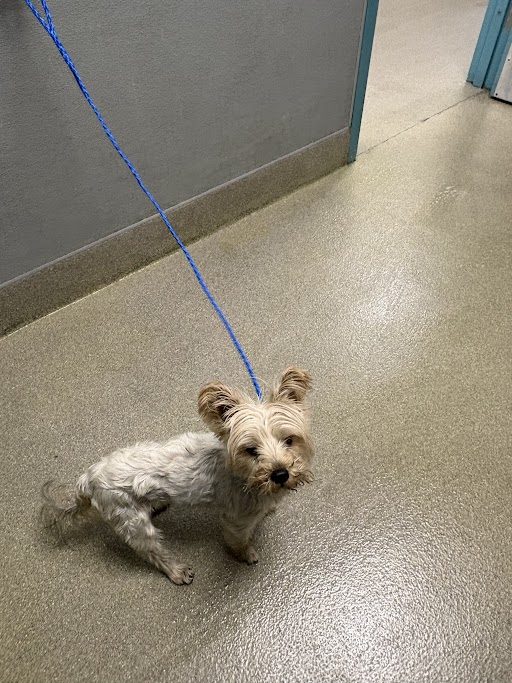
A TINY Yorkie is about to be e*thanized over a MINOR BITE.
Meet Jax 💔
Jax is at @animalfndlv Las Vegas, NV
ID: A1346620 | 📞 702-955-5932
According to the shelter, Jax is overwhelmed and anxious in the chaotic shelter environment. The “incident”? He gave a minor bite when someone picked him up while he was getting into trash. That’s it.
Meanwhile, staff also say he’s friendly, takes treats, and allows petting.
Jax doesn’t sound vicious he sounds stressed and overstimulated. Big difference.
He is currently listed as rescue only (no foster), and
⏳ He needs placement by 4/29 at 3 PM.
My parents are extraordinary people. They separated before I turned one, but somehow, I never felt like I came from a “broken home.” My dad was always there, raising me alongside my mom. Maybe that’s because they’re lifelong hippies—fifty years and counting.
I don’t remember ever being “disciplined” the usual way. No yelling, no punishments—just quiet guidance and gentle reminders when I lost my way.
I decided I wanted to be an actor at five. My parents never hesitated—they drove me to auditions, classes, and countless rejections, reshaping their lives around my dreams. Mom would say, “You don’t owe anyone anything. Stop whenever you want.” And Dad? He was my safety net after every “no.”
Once, when I broke down crying after another rejection, he looked me straight in the eye and said:
“One day, you’ll get the role. I have no doubt.”
Truthfully, I wasn’t a top student—I was small, restless, always cracking jokes or getting in trouble. School felt like a jungle, and I didn’t come with a map. But my parents never stopped believing.
My grandmother once told me that when I was three, Dad already called me an actor—even if I never became one—because I’d block the TV and act out whatever was on screen, apparently with surprising accuracy.
I got lucky. My parents are still hippies. Dad still has his long hair and beard, and to this day, I don’t take a role without his opinion. His garage is filled with scripts—he reads them all, sorts them, and passes along the ones worth my time.
Some people inherit wealth. I inherited belief. And that’s been worth everything.
"His name is Willie Hugh Nelson.
He was born on April 29, 1933, in Abbott, Texas — a small farming town of dusty roads and cotton fields during the worst years of the Great Depression.
His mother, Myrle, left when he was six months old. She headed west to work as a dancer, waitress, and card dealer. His father, Ira, remarried and moved away too.
Two children remained.
Willie and his older sister Bobbie.
Their paternal grandparents, Alfred and Nancy Nelson, were poor. They were tired. They had already raised their own children. They lived in a small house in Abbott, and they didn't have much of anything to spare.
They took the children in without hesitation.
To Willie and Bobbie, these grandparents were not grandparents.
They were Daddy and Mama.
Alfred worked as a blacksmith, hammering iron in the Texas sun to keep food on the table. Nancy picked cotton alongside neighbors — and she taught piano to the children of their community. She had studied music through a correspondence program with the Chicago Music Institute. On her death certificate, her occupation is listed simply as: music teacher.
Both Alfred and Nancy believed that music was one of the greatest gifts you could pass to a child.
So they passed it on.
When Willie was six years old, his grandfather Alfred bought him his very first guitar. Nothing fancy. Just a simple instrument. Alfred sat with the little boy and taught him a few basic chords. He showed him how to hold it. How to strum it.
How to let the music come out of him.
Willie wrote his first song at age seven. By the time he was nine, he was playing guitar in a local band at dances and churches, while his sister Bobbie played piano beside him.
In a small wooden house in Abbott, Texas, the future of American music was quietly taking shape.
In 1940, Grandfather Alfred died. Willie was six years old — barely old enough to understand what he had lost. The man who had placed that first guitar in his hands was gone.
Nancy stayed.
She stayed through the rest of the Depression. She stayed through the war years. She stayed through Willie's high school performances, his early struggles and failures, his years knocking on doors in Nashville that wouldn't open, and finally, finally, his rise.
Nancy Nelson lived until 1979. She was nearly 97 years old when she died.
By then, she had seen her grandson become one of the most celebrated voices in American music. She saw the 1975 masterpiece Red Headed Stranger. She saw the outlaw country legend who refused to bow to Nashville's rules. She saw the world slowly come around to understanding what she had always known.
That her boy was something.
Today, Willie Nelson is 92 years old.
He has written hundreds of songs. He has sold millions of records. He has played for presidents and farmers and everyone in between. He has won Grammys, started Farm Aid, become a living legend.
But if you ask him where it all began, he will not point to Nashville or a concert stage.
He will point to Abbott, Texas.
To a blacksmith who bought a six-year-old a guitar.
To a cotton picker and piano teacher who believed her grandchildren deserved music in their lives.
To two people who were poor in almost every way that the world measures poverty, but rich in exactly the ways that matter.
Every Willie Nelson song that has ever played on a radio — Crazy, On the Road Again, Always on My Mind, Blue Eyes Crying in the Rain — carries the fingerprints of Alfred and Nancy Nelson.
Two grandparents who had every reason to say:
We're too old. We're too poor. We've already done our part.
And chose to stay instead.
Real legacy is not about records sold or stages conquered.
It is about the hands that shaped you when you were small.
The hands that stayed when they didn't have to.
The hands that held a guitar out to a six-year-old boy and said:
Here. Let me show you.
Alfred and Nancy Nelson stayed.
And because they did, the world got Willie."
10 weeks ago we found Dolly living on the streets. She was close to death.
Today her health is coming back. She has moved into the office and best of all… she will be adopted on the 1st of June. Her new mum comes to pick her up ❤️
“He had just delivered the final verdict in a horrific animal cruelty case. But he couldn't go back to his chambers until he visited the one victim who wasn't in the courtroom.
Judge Martin Wallace was a 30-year veteran of the bench. He was known for being stern, fair, and almost impossible to rattle.
But the case of "Finn" had kept him awake at night.
It wasn't just neglect; it was a deliberate, malicious act. The dog had been found chained in an empty apartment after neighbors reported a smell. He had been left with no food or water for weeks. The evidence photos of the emaciated animal were something Judge Wallace couldn't shake.
Today, he had delivered the verdict, sentencing the dog's abuser to the maximum penalty allowed, his voice booming with cold anger in the courtroom.
But as he slammed his gavel, he felt no victory. He just felt the crushing weight of the dog's suffering.
He didn't go to his chambers. He didn't even take off his robes. He walked past his stunned staff and drove his own car to the county animal shelter.
A vet tech met him at the door. "He's very weak, Your Honor," she warned. "And he's terrified of everyone. We haven't been able to get him to respond to much."
She led him to the medical ward. Judge Wallace looked into the kennel and saw a frail, skeletal pit bull, who just stared blankly at the wall.
The judge unhooked the kennel door and slowly knelt on the concrete floor.
"Hey, buddy," he said softly. "I'm Martin. I'm the one who... I'm the one who heard your story."
The dog, who hadn't moved for anyone, slowly turned his head. He shakily got to his feet, all ribs and bones, and took a wobbly step forward.
Then, to the vet's astonishment, the dog crept into the judge's lap, let out a long sigh, and began to gently lick the tears from his face.
"Oh my... he can't get enough of you," the vet tech whispered.
Judge Wallace, the toughest man in the courthouse, wrapped his arms around the frail dog, his voice thick with emotion. "I can't get enough of him, either. Look at this face."
He buried his face in the dog's neck, not caring about the robe.
"You're safe now, pal," he choked out. "You're all right. It's all over."
Judge Wallace visited Finn every week during his recovery.
Two months later, Finn was finally cleared for adoption. The shelter was flooded with offers, but they all knew there was only one person he was going home with.
Judge Wallace signed the final papers, and the dog who had been left for dead walked out the front door, right into his new life.” Credit: Melissa Houska
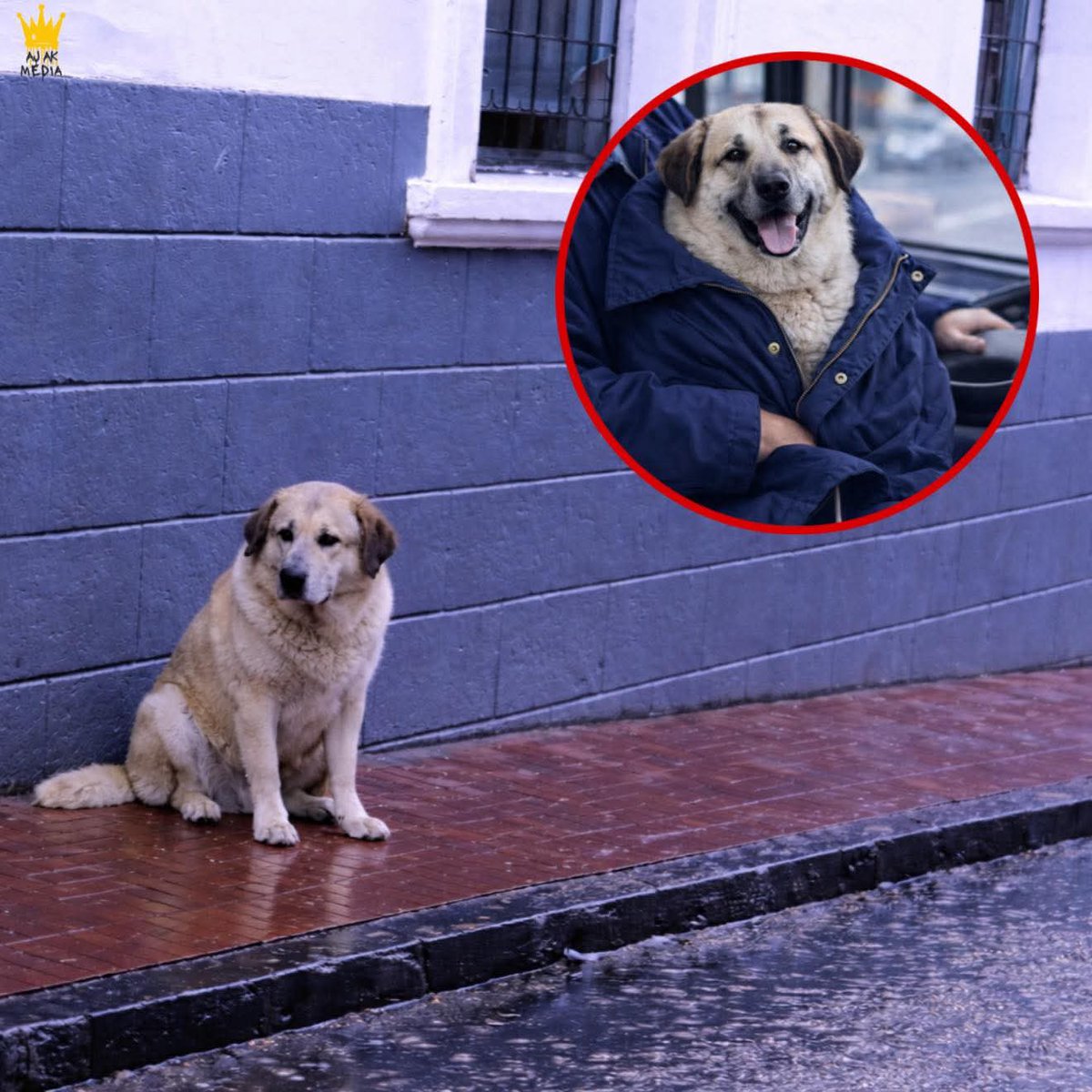
A dog waited at a bus stop for his owner day after day, until a bus driver realized the man was never coming back.
In Italy, people had gotten used to seeing the dog walk with his owner to the bus every morning. It was part of their routine. But after the man suddenly died from a heart attack, the dog kept returning to the same stop, waiting for someone who was never going to step off that bus again.
A bus driver eventually noticed him and started paying attention.
At first, he even tried talking to the dog, almost like explaining that the owner was not coming back, but of course the dog did not understand. The more he saw him waiting there, the harder it became to ignore, so he started asking questions and looking into what had happened.
That was when he learned the truth. Wanting to do something, the driver was eventually able to get the man’s jacket, and when the dog caught the scent, he immediately recognized it. Since the owner had no family and had only the dog, the bus driver made a decision of his own.
He took him in. From then on, he promised the dog he would take care of him, and what started as a heartbreaking sight at a lonely bus stop turned into something gentler, a promise that the love his owner gave him would still be honored.
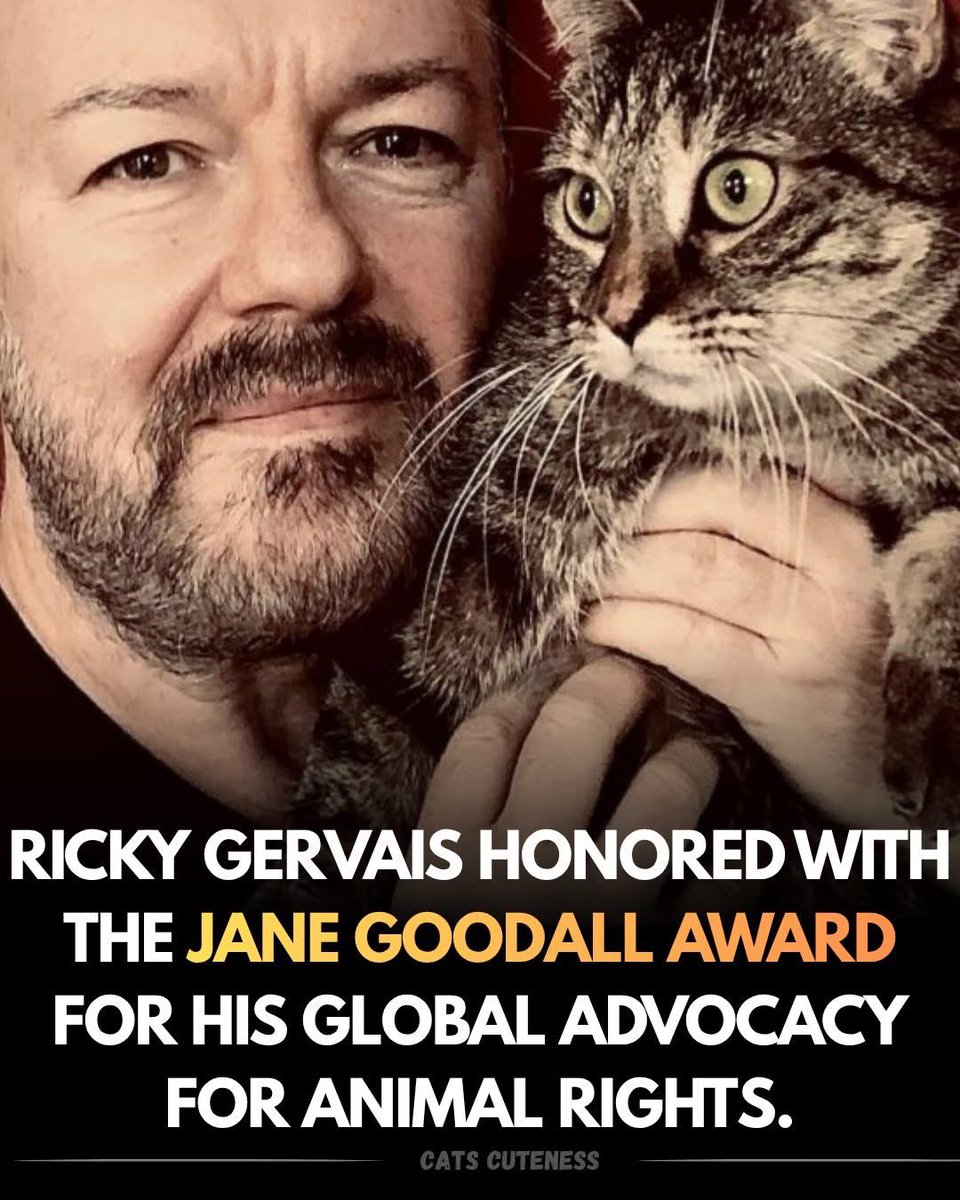
An actor who has given millions to support animals is now being recognized on a global stage.
Ricky Gervais has been awarded the Jane Goodall Award for his ongoing efforts to stand up for animals and call out cruelty worldwide.
Using his platform, he’s brought attention to issues like animal testing, fur farming, and trophy hunting—while also supporting charities and funding real change.
Inspired by Jane Goodall’s legacy, the award honors those deeply committed to protecting animals and the planet.
Supporters say this moment shows the impact of using influence for good—and how one voice can help spark global awareness.
Because real advocacy isn’t just words—it’s action.
Spain introduced paid menstrual leave. Women can take time off for severe period pain and still get paid. Scotland made period products free nationwide.
No one has to pay for basic menstrual products anymore.
And Estonia offers one of the longest paid maternity leaves.
Mothers can stay home with their newborns for over a year with financial support.
For years, women were told to just “deal with it.”
Now policies are finally catching up. Finally, countries that actually care about women.
A lonely little boy sat alone in his bedroom for hours, giving voices to toy soldiers because there was no one else to talk to.
That boy grew up to become Robin Williams — one of the funniest, most beloved human beings the world has ever known.
His father was a high-level executive who traveled constantly. His mother was a busy socialite. His older brothers were away at school. In the large, echoing family mansion in Chicago, young Robin was often the only person home. The silence felt heavy. The emptiness felt permanent.
To survive it, he turned his bedroom into a theater. Every toy soldier received a unique voice, a backstory, and a personality. He created entire worlds and conversations just to fill the quiet rooms around him.
“I’d be up there playing with my soldiers, giving them all these different accents,” he later recalled. “It was my way of populating a room that felt too empty.”
He discovered something powerful: if he could make people laugh, he became visible. His mother loved humor, so Robin learned to perform for her. He imitated characters, told jokes, and put on little shows — anything to earn her attention and affection.
“I became her court jester,” he said. “I realized that if I could make her laugh, I was visible. If I was funny, I was safe.”
That childhood need to be seen never left him. It became the engine that drove one of the most extraordinary careers in entertainment history.
From the wild, improvisational alien in Mork & Mindy to the tender, heartbreaking wisdom he brought to Good Will Hunting, Robin Williams poured his loneliness into performances that made millions feel less alone. He became the Genie in Aladdin — a character bursting with “phenomenal cosmic power” who was secretly trapped inside a lamp, desperate for connection.
For decades, he made the world laugh so hard it hurt. He lit up rooms. He lifted spirits. He gave voice to the kind of joy that felt like medicine.
But the little boy who once performed for his mother’s attention never fully disappeared.
Behind the whirlwind energy and rapid-fire genius was a man who still carried the ache of childhood isolation. Robin struggled openly with addiction and depression for much of his life. In his final years, he battled Lewy body dementia, a cruel disease that robbed him of the very mind that had brought so much light to others.
When he died in 2014, the world mourned not just a comedian, but a man who had spent his life trying to make sure no one else ever felt as invisible as he once had.
Robin Williams once said that the people who try hardest to make others happy are often the saddest inside. They know exactly how it feels to feel worthless, and they will do almost anything to keep others from experiencing that same pain.
That was Robin.
He turned his deepest wound into the greatest gift he gave the world: the ability to make people feel seen, loved, and less alone — even when he was quietly fighting his own darkness.
His story is a heartbreaking reminder that brilliance and brokenness can live in the same person. That the loudest laughter can sometimes hide the heaviest silence. And that even the most beloved among us can be carrying burdens we never see.
We don’t have to perform or be funny or perfect to deserve love and care. We matter simply because we exist.
May we learn from Robin’s light to be gentler with the people around us — to notice when someone is performing just to feel seen.
And may we learn from his shadow to be kinder to the lonely child still living inside ourselves.
Because every person who makes the world brighter has, at some point, sat alone in an empty room, trying to fill the silence with their own voice.
Robin Williams didn’t just make us laugh.
He reminded us that even the loneliest hearts can create joy for others — and that those hearts deserve gentleness, too.
Vulture populations in India collapsed. 500,000 people died as a result.
In the 1990s, Indian farmers started using a cheap painkiller called diclofenac on their cattle. When vultures ate the carcasses, the drug destroyed their kidneys.
Without vultures, cattle carcasses rotted in fields instead of being stripped clean in 45 minutes. Feral dog populations exploded by five million. Rabies cases surged. Pathogens spread through water supplies.
University of Chicago economists compared death rates in districts that used to have vultures to districts that never did. Human mortality rose more than 4% after the collapse. Over 100,000 extra deaths a year. Half a million in five years.
India banned the drug in 2006. The vultures still haven't recovered.
This is what a keystone species is to us. This is why we protect the animals nobody finds cute.
In 1978, twin brothers were born in Iowa, only minutes apart. Their lives would take dramatically different paths — but the bond between them would shape both of their futures in ways no one could have predicted.
The older twin was healthy and strong.
His younger brother, Michael, was born with cerebral palsy and later developed cardiomyopathy, a serious condition that severely weakened his heart.
Despite the challenges, the brothers grew up incredibly close. Ashton (the older twin) became fiercely protective. He helped Michael with everyday tasks, stood by him through countless hospital visits, and shared in the fear that came with every medical crisis.
When the twins were thirteen, the situation turned life-threatening. Michael’s heart was failing. Doctors said he needed a transplant urgently. The waiting period was agonizing for the entire family.
Ashton later admitted he became so desperate that he once had a dark thought: if he somehow died, his own heart could save his brother. Thankfully, a donor heart became available in time, and the transplant saved Michael’s life.
The experience left a permanent mark on both of them.
Ashton originally planned to study biochemical engineering. His motivation was deeply personal — he wanted to help develop treatments or cures for the kind of diseases that had nearly taken his brother.
But life took a different turn. Ashton moved to Los Angeles and built a successful career as an actor, becoming a household name through television and film. He also became a prominent investor in technology startups.
Michael, meanwhile, carved out his own meaningful path. After surviving his heart transplant and living with cerebral palsy, he became a passionate public speaker and advocate for people with disabilities. He works to raise awareness, promote inclusion, and show that a disability does not define a person’s potential or worth.
Their childhood struggles forged something powerful in both brothers.
In 2012, Ashton co-founded Thorn, a nonprofit organization that develops technology to help law enforcement and tech platforms identify and combat child sex trafficking and exploitation online.
Michael continues his advocacy work, speaking openly about his experiences and inspiring others facing similar challenges.
Today, the Kutcher twins remain deeply connected. They support each other’s work and collaborate on charitable efforts. What began as a childhood bond forged in hospitals and hardship has grown into a shared commitment to helping others.
Ashton has often spoken about how growing up with Michael shaped his perspective on life, empathy, and purpose.
Michael’s resilience and advocacy have touched countless lives.
Their story is a powerful reminder that the most meaningful motivations often come from the people closest to us — and from the struggles we face together.
Sometimes the hardest chapters of our childhood become the fuel for the good we do in the world.
This 88-year-old grandfather went to pick up his granddaughter at the airport, but she arrived and stood right there with him, and he didn't recognize her.
She wasn't expecting her little granddaughter to be so grown up 🥹