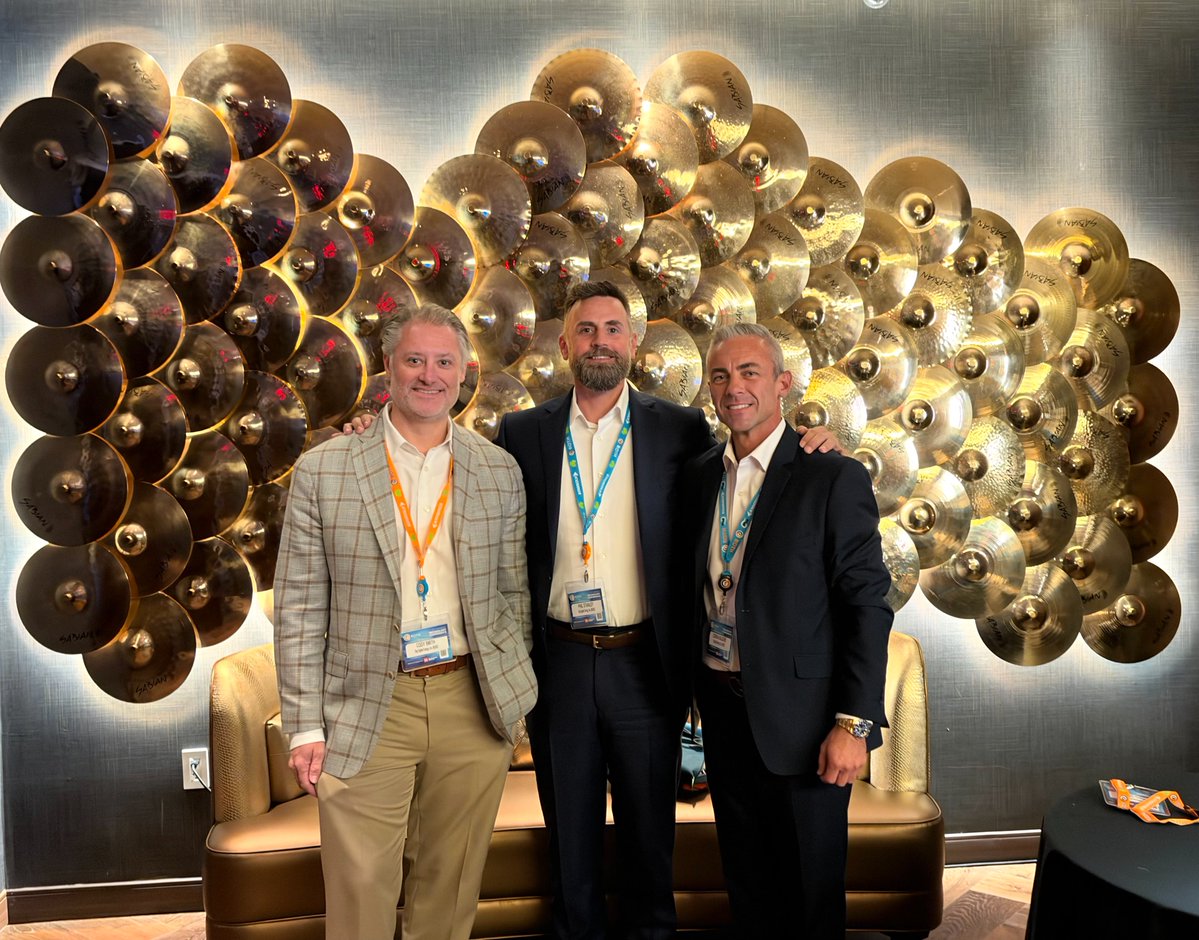
I went to Bitcoin Investor Week in NYC this week. I've been to many of these before but the quality of speakers at this one was on another level.
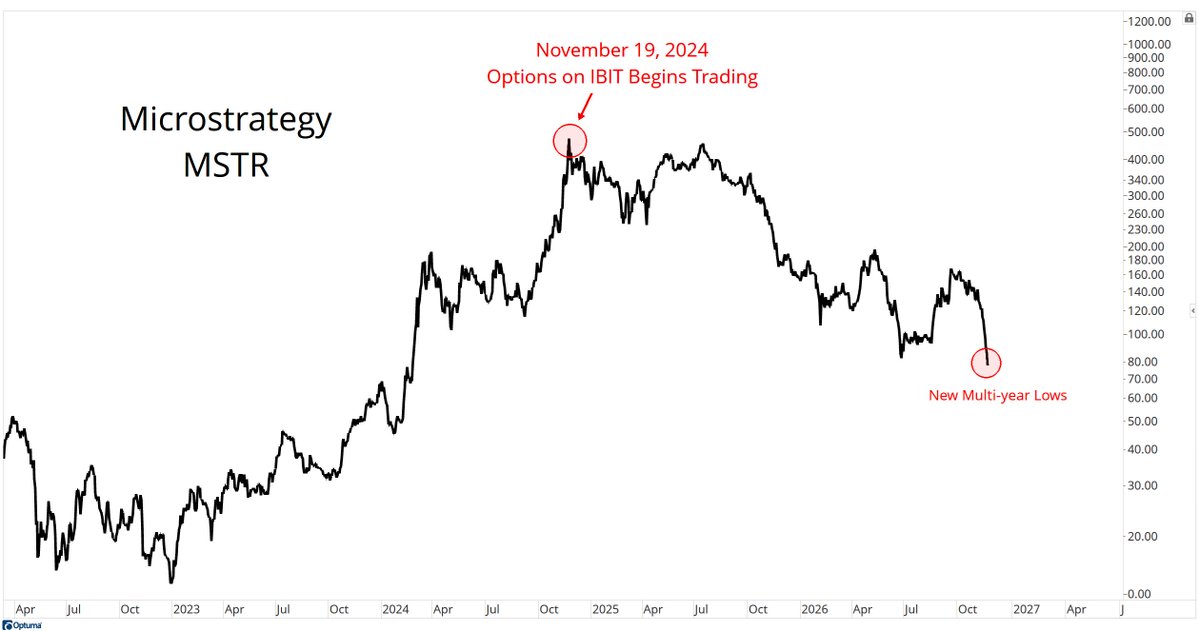
A friend told me he overheard two bank analysts in the bathroom genuinely confused about how calm everyone was. Bitcoin had just crashed 50%.
I wrote up everything I took away from it.
its easy to write off the “data trade” as the frothiest peaks of a wave that even in its earliest innings still had the promise to sweep the bay away in a wash of villainy, cash, and get rich quick schemes
but it’s so utterly real. it’s staggering how wrong many are getting it
Been thinking a lot about what the next phase of the AI infrastructure buildout looks like, particularly from a capital markets perspective and how these projects will be financed going into 2027 and beyond.
Nearly every conversation I’ve had with bankers, credit funds and other capital providers follow the same line of thinking. The appetite for financing IS there just the standards for getting that capital have certainly changed.
Credit quality matters more than ever. The market for non-IG debt is considerably more challenging, and lenders are becoming far more selective about which counterparties, projects and financing structures they’re willing to underwrite. For much of the past year, having access to significant power, a large development pipeline, or even an LOI with a prospective tenant was often enough for the equity market to start assigning substantial value to a project.
I think that changes going forward. An LOI alone isn’t going to cut it. Lenders want to understand the quality of the ultimate credit, whether the contracts are binding, what guarantees or other credit support exist, how much equity the sponsor is contributing, whether the necessary permits are secured, and how confident they can be in the actual delivery schedule.
Also many lenders are underwriting projects through the lens that they take longer and cost more than initially anticipated. Construction delays, equipment lead times, permitting uncertainty and cost overruns are becoming much more important considerations when determining leverage, required equity contributions, reserves and financing costs.
We’re already seeing examples of this across the industry. Companies have pushed out delivery schedules and revised capex expectations even as demand for compute and pricing on new contracts remain healthy. The economics of these contracts can materially change the financing requirements and timing of returns.
It’s also why I believe firm, deliverable grid-connected power in 2027 is becoming more valuable, not less. Particularly when it comes with the necessary permits and a credible path to construction. There’s a big difference between having a site that could theoretically support several 100 MWs in the future and having contracted power that can actually be delivered within the next 12 months. Capital providers and prospective tenants increasingly understand that distinction.
I also think we’re going to see the types of deals getting done evolve. More customer prepayments, project-level financing, delayed-draw facilities, phased development structures, JVs and arrangements where tenants assume a greater portion of the upfront capital burden. The objective being reduce the amount of speculative capital a developer needs to commit before a project begins generating contracted cash flow.
$APLD continues to demonstrate how IG leases can support a repeatable project-financing strategy. $CRWV / $NBIS are increasingly using customer prepayments and asset-backed financing to support their growth. $RIOT deal illustrates how a modular, powered-land structure can materially change the capital requirements and allocation of construction risk. And I think there’s going to be a growing distinction between companies that can structure these transactions and those that simply have attractive assets.
For smaller developers, this doesn’t mean financing becomes impossible. But the first transaction will likely be the hardest. And in many cases, it may take several successfully financed and delivered projects before lenders are comfortable extending capital on more favorable terms. Until then, some developers may need to contribute more equity, accept higher financing costs, bring in strategic capital partners, or give up a greater share of project economics than originally anticipated.
The quality of the underlying project can still attract financing. The question becomes how much of its value the developer can preserve along the way.
And we are there, from Evercore:
"this is AI's first bailout — not of a balance sheet, but of the architecture supporting a trillion-dollar industrial buildout.... the U.S. government has become the implicit backstop of the AI industrial complex."
“We just wrapped up day two at the ROTH conference and I’m more bullish on our team, our company, and our industry than I ever have been. Persistence... #IYKYK”
— Josh Kilgore, Executive Chairman
$BGDE
@kilgore_joshua@trading_chi@speednotcomfort
the fed and $BTGO, same day:
- waller (nov 17): "tokenization is changing the nature of competition in payments"
- also waller: incumbents building tokenized products "in partnership with emerging blockchain firms"
- same day, wisdomtree's tokenized treasury fund (WTGXX) went live on bitgo mint, next to USD1 and SoFiUSD
treasury yield without leaving the bank that holds your crypto
WisdomTree’s Treasury Money Market Digital Fund (WTGXX) is now live on BitGo Mint.
Eligible institutions can earn yield on idle USD or USDC by subscribing to and redeeming WTGXX directly through BitGo.
Institutions can access tokenized Treasury yield, manage cash, and hold tokenized fund shares and digital assets in one place, all within BitGo’s qualified custody environment.
Learn more about our partnership with @WisdomTreeOnchn:
https://t.co/0Jb2w8Ifwe
Learn about BitGo Mint:
https://t.co/WovmYFGpyJ
the bottleneck moved from chips to the county office...
dylan patel, semianalysis (sourcery, 6:04): multiple gigawatts pushed from 2027 into 2028, "not because they can't build it... but because... permits are just not available"
his poll (6:56): 49% of people in counties with a 100MW+ data center "did not even know there is a data center in their county"
https://t.co/YvTzRP2T8b
$NUAI President & CFO Ted Warner took the stage at @cantorfitzgerld Convergence to discuss the evolving AI infrastructure market and how New Era’s competitive power position provides a foundation for building a scalable platform.
Securing power is only part of the equation. How soon that power can be delivered, how projects are financed, and the development models used to bring capacity online are becoming increasingly important considerations for investors.
With 207 MW of firm, contracted power expected to become available in Q3 2027, New Era sees a compelling opportunity to pair its near-term power position with a modular, phased development strategy designed to accelerate deployment, reduce upfront capital requirements, and provide greater flexibility in how capacity is delivered. This is all supported by a world class team that’s experienced in building hyperscaler data center infrastructure.
the link: concentration. one founder's calls, one company's balance sheet, a few labs' talking points.
$NVDA reports tuesday under an interim ceo, while the ft says jensen is weighing a comeback.
was the bank of nvidia jensen or the balance sheet? does he come back?
3/ the weak link is the financing
- chamath (32:07): "The Bank of Nvidia ran through Jensen"
- mike volpi (7:13): "200 Neo Clouds and those balance sheets are not good"
- mike milken (24:24): "one of the greatest risk in financial markets is mismatch of maturities"