// Not insect
Happy Thanksgiving everyone! I hope you were able to spend it in a way that was enjoyable. To those who don't celebrate it, I hope you had a great Thursday! 🦃
The insect of the day is the Green Darner! They're one of the largest extand dargonflies, reaching 3 inches. They tend to hunt other flying insects, such as moths and flies. It's the official state insect of Washington!
@MaraHuldra This is not a content warning, but rather key words to let my followers know I'm not talking about insects. Some people don't want to hear about my personal life, that's all :)
The insect of the day is the Japanese Rhinoceros Beetle! They live underground for most of their lives as pupa, then spend the rest above ground. They are very popular in Japan with many characters based off them. They're also bred as pets! You can find them in department stores.
There is a praying mantis out there looking exactly like moss, living in a mystical moss fairyland, living its absolute best life eating bugs and frolicking in a soft mossy dreamscape.
This could be us but instead we got opposable thumbs and anxiety🙄
The insect of the day is the Vulture Bee! This is a species of stingless bee that feed on carrion. Similar to other bees, they produce a honey-like substance from the meat! They do not create any excess, only making enough for the hive. It tastes smokey, salty, and weirdly sweet!
@KaanOzkordag That looks like the shedded skin of a house centipede! They molt a few times throughout their life so it isn't uncommon to find the leftover skins
// Not insect
I tried this silly challenge and it was actually really fun. You're supposed to input your username and see what it creates! (I used my main account) Thought I should share since it's a moth :)
https://t.co/eiQb7hqHOJ
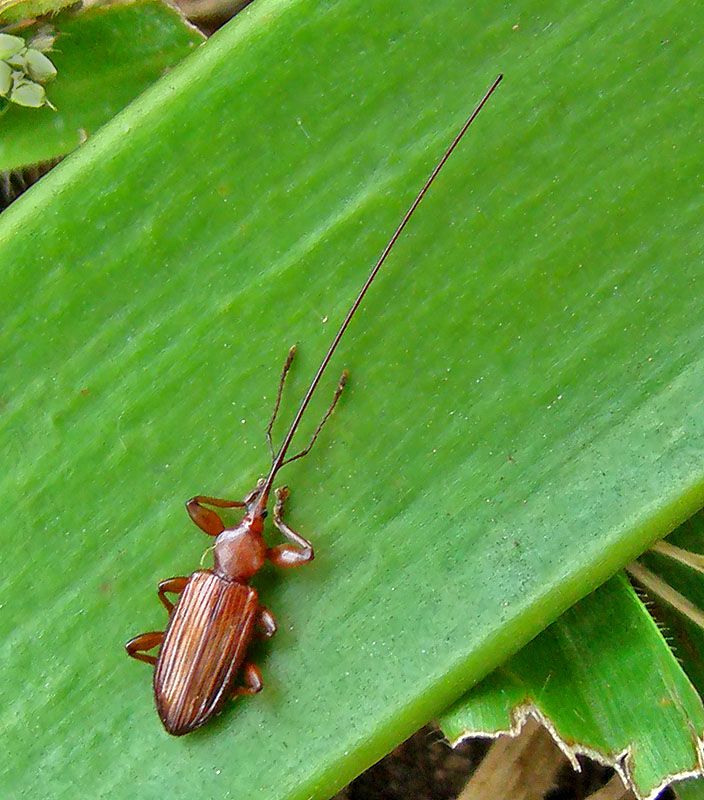
The hose-nosed weevil (Antliarhis zamiae) has evolved an enormous snout to drill through cycad cone scales to reach the eggs within.
(Photo Anna Eksteen)