I am excited to share that @BetterLifeBio has closed a US$100 million financing, today.
For people living with cluster headache, this is significant. Attacks can last up to three hours and recur several times a day, while many current treatments were adapted from other conditions. Many migraine patients face a similar challenge, moving from one therapy to the next without sufficient relief.
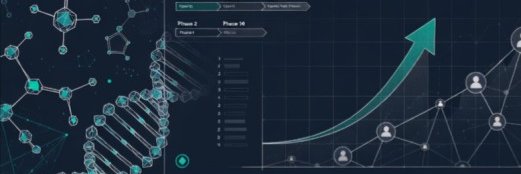
The financing supports the clinical plan for BETR-001: Phase 1A in healthy volunteers, parallel Phase 1B studies in cluster headache and migraine, and then Phase 2 trials in both indications. Running the studies in parallel helps move the program to patients faster.
The round was led by Deep Track Capital, with significant investments from Coastlands Capital, Marshall Wace, RA Capital Management, Perceptive Advisors, and other specialist healthcare funds. Support of this scale from investors of this caliber is unusual for a preclinical company, and I’m grateful they took the time to understand the program and its potential.
Thank you to the BetterLife team and to the shareholders who stayed with the company to reach this important milestone.
The full release: https://t.co/HqagsM5mCy
Roughly 1.1 billion people live with migraine. For most it's an occasional bad day, but for some patients it takes more than half the month, even after the older preventives and the newer CGRP drugs. Many of these patients keep having frequent attacks after several preventives and need new options.
Here's why I think BETR-001 deserves a serious test in those patients.
First, the targets have a track record. BETR-001 is an agonist at 5-HT1B, 1D and 1F, the receptors triptans and lasmiditan already act on. We know that biology works for migraine. We aren't betting on an unproven pathway.
Second, it adds something those drugs don't. It's also an agonist at 5-HT2A, the receptor linked to neural plasticity as seen with psychedelics.
Third, the practical profile is designed for real life. It's an oral capsule, taken at home. Preclinical work shows it doesn't agonize 5-HT2B, the receptor that has caused cardiac safety trouble for some other drugs, and it isn't hallucinogenic.
Fourth, there's an early human signal. A 2010 pilot by Karst and colleagues gave a racemic version of this compound to patients with cluster headache.
We're targeting the IND for Q1 2027, and then into the clinic.
Across Europe, psychedelics are entering a new chapter, one defined less by proof-of-concept studies and more by implementation and early-access schemes that don’t rely on conventional drug approvals.
On 8–9 October, more than 270 clinicians, researchers, policymakers, advocates and members of the public gathered at the National Library of Estonia in Tallinn for TAIP 2026, Estonia’s first international scientific conference on psychedelic-assisted therapy. There, they discussed various innovative models of regulated psychedelics access.
Ryan Khan was on-site for Psychedelic Alpha. Today, we share his 5,000+ word Dispatch.
Read more on our website: https://t.co/VdeDN7prG9
Treasury published its proposed COINS Act rule yesterday. Pharma’s first reaction will be relief, because pure licensing deals sit outside the rule as drafted.
A lot of recent China in-licensing deals carry something extra. Usually it’s an equity kicker or warrants. Sometimes it’s a co-development JV, or a NewCo where the licensor holds a stake. Those pieces are covered. Expect term sheets to get simpler, and expect upfronts to be repriced to make up for what gets stripped out.
US biotech funds take a harder hit than big pharma does. A private round in a Chinese biotech working in a covered area would be prohibited outright. There’s no option to notify Treasury and go ahead. Crossover funds can still buy listed shares in Hong Kong or Shanghai, because those are excepted.
What goes away is the pre-IPO round that made those positions pay. US partners at offshore funds should know the rule also covers a US person directing a foreign entity’s investment. US LPs with more than $2 million committed to a non-US fund that backs covered companies are also caught, unless they hold a binding contractual assurance.
The US-incorporated NewCo, licensing in a Chinese asset, starts to look like the default structure.
The COINS rules are out and they are EXTREMELY broad on pharma. The focus had been whether certain kinds of China biotech transactions would be limited. As currently written, the rule limits deals for any pharma compounds. Public comments til Dec. 7.
https://t.co/BAVQmjdZ1Z
In August, a positive Phase 3 readout at $MRNA knocked 10 to 15% off biotech stocks that had nothing to do with it. Today data from the same trial leaked, Moderna closed down nearly 18%, and those stocks got nothing back.
The mechanism was positioning. Going into the August readout, close to 14% of Moderna's float was sold short, and S3 Partners put short sellers' paper losses at about $5.5 billion on the first day. The specialist long-short funds holding those shorts tend to run close to fully invested. To cover, they sold whatever they could sell fastest, which meant liquid, widely held names with no news of their own.
I tracked nine of those commercial-stage names through today. Six are still below their August 18 close, with a median decline of about 11%. Several kept falling through October with no company-specific news. Today three of the nine rose, and two of those had their own reasons.
So the trade only ran one way. The funds that sold took their losses when they covered, near the top. A lower Moderna price today helps whoever is still short it, and those aren't the funds that sold your stock in September.
That has a practical consequence. For roughly ten weeks, much of the cost of capital for mid-cap biotech was set by one crowded short. Any company that priced a raise, a partnership or an option grant in that window priced it off that positioning.
What a messed up couple of months!
@JangaBangauyx Buy what you like. Sell what you like. I am just an after-the-fact observer. I think these structural developments are interesting and important. No investment advice from me. I’ve spent 2 decades as a biopharma CEO. Take it or leave it.
@MinePiWahburger Buy what you like. Sell what you like. I am just an after-the-fact observer. I think these structural developments are interesting and important. No investment advice from me. I’ve spent 2 decades as a biopharma CEO. Take it or leave it.
not eating for 16 hours to trigger cellular repair sounds like a wellness trend masquerading as science until you read that the 2016 Nobel Prize in Medicine was awarded to Yoshinori Ohsumi specifically for his discovery of the mechanisms of autophagy, the process that fasting activates, where your cells literally digest and recycle their own damaged components. then it sounds like the Nobel committee confirmed that not eating activates a repair system so important it won the highest award in medicine
intermittent fasting (typically 16 hours fasted, 8 hours eating) has been practiced in virtually every human civilization. every major religion includes fasting: Ramadan (Islam), Yom Kippur (Judaism), Lent (Christianity), Ekadashi (Hinduism). the religions encoded the practice because the practitioners felt better. modern science explains why: the body switches from growth mode to repair mode when food stops arriving
the mechanism: when you eat, insulin rises and mTOR (the growth pathway) activates. cells grow and divide. when you fast, insulin drops and AMPK (the repair pathway) activates. cells stop growing and start cleaning: damaged proteins are digested, dysfunctional mitochondria are recycled (mitophagy), and misfolded proteins that would otherwise accumulate into disease are cleared. the body can't build AND clean at the same time. eating activates building. fasting activates cleaning. the modern human who eats from 7am to 11pm gives the body zero cleaning hours. the damage accumulates
- the 2016 Nobel Prize in Medicine was awarded for the discovery of autophagy mechanisms. the prize committee considered the cellular recycling system activated by fasting important enough to give the highest honor in science
- reduces insulin by 20 to 31% during the fasting window, which sensitizes cells to insulin and reduces the insulin resistance that drives type 2 diabetes, metabolic syndrome, and abdominal fat storage
- activates AMPK, the same metabolic master switch that berberine, metformin, and exercise activate. fasting is the oldest and most powerful AMPK activator. it's also free
- increases growth hormone by up to 300 to 500% during the fasting window. the growth hormone increase preserves muscle mass, burns fat, and repairs tissue during the period when food is absent. the body is not cannibalizing muscle during a 16 hour fast. it is protecting it with growth hormone
- reduces inflammation markers (CRP, IL6, TNF alpha) by 20 to 40% in studies of 16:8 intermittent fasting. the inflammation reduction occurs because the NF kB pathway (master inflammatory switch) is suppressed during the fasting window
- brain derived neurotrophic factor (BDNF) increases during fasting, stimulating new neural connections and protecting existing ones. the mental clarity that fasters report by day 3 to 5 is BDNF mediated, not placebo
the diet industry generates $72 billion annually selling food: meal plans, shakes, bars, supplements. fasting sells no food. the industry that profits from you eating cannot promote the intervention that requires you to stop eating. the conflict of interest is structural and permanent. the most effective metabolic intervention available is the one with zero revenue attached to it
start with 14:10 (14 hours fasted, 10 hour eating window) for week 1. progress to 16:8 by week 2 to 3. eat your last meal by 8pm. don't eat until noon the next day. coffee and water during the fast are fine (no calories). the hunger peaks at day 2 to 3 and then decreases permanently as ghrelin (hunger hormone) resets to the new schedule. effects on energy and clarity within 5 to 7 days. body composition changes at 4 to 8 weeks. cost: $0. equipment: a clock
a Nobel Prize was awarded for the mechanism your body activates when you stop eating for 16 hours. the $72 billion diet industry cannot sell you fasting because fasting is the absence of their product. the most powerful metabolic intervention in human history costs nothing, requires nothing, and was practiced by every civilization that ever existed. $0. a clock. and the cellular repair system that won the highest award in medicine activates the moment you stop reaching for the snack drawer.
My @scrippsresearch colleague @xinjin and her team are doing amazing brain biology discovery work with 2,000 agents, PerturbAI, in collaboration with @OpenAI
https://t.co/DZHc1Wv6An
Some of the most important cluster headache research of the last 20 years started with patients themselves.
People in agony found that certain lysergic-acid compounds seemed to break their cycles, and they told their doctors.
A small pilot study in 2010 followed up with a non-hallucinogenic version, and the signal was strong enough to get our attention at @BetterLifeBio.
When patients are that much in need and that observant, the least the industry can do is listen and run proper trials.
$BETR.CN $BETRF
Cluster headache is one of the most painful conditions in medicine. Patients call it "suicide headache," and that's not a figure of speech.
Yet try to name a drug developed specifically for it. Almost everything in use was borrowed from migraine, or comes from oxygen tanks and steroids. For decades the industry has treated it as too small to bother with.
I think that's a mistake, scientifically and commercially. When a condition is this severe and this poorly served, even a modest advance changes lives.
$BETR.CN $BETRF #BETR001
@BetterLifeBio Appoints Professor Richard B. Lipton as Co-Chair of its Scientific Advisory Board.
In 1997, Peter Goadsby and Richard Lipton published a review in Brain proposing that cluster headache and a handful of rarer short-lasting headaches with autonomic features be classified as one family. They called it trigeminal autonomic cephalalgia. The International Headache Society adopted the grouping in its 2004 classification, and it still stands. Cluster headache is the most common of the TACs.
That paper was the first of 84 they've published together. Today they add a new joint project: Professor Lipton joins Professor Goadsby as Co-Chair of BetterLife's Scientific Advisory Board for BETR-001.
They're still writing the definitions the field uses. Professor Goadsby chairs the IHS committee drafting the fourth edition of the International Classification of Headache Disorders, and Professor Lipton chairs its migraine subcommittee. He also directs the Montefiore Headache Center in New York, the first center in the world dedicated to headache, and his work has shaped how trials define meaningful benefit for patients.
So the two people who set much of how cluster headache and migraine are defined will now advise on how we study them.
BETR-001 is being developed as a preventive treatment for chronic cluster headache and chronic migraine, with the IND targeted for Q1 2027. In Professor Lipton's words, these patients "need clinical trials built around outcomes that matter in their daily lives.
Press release: https://t.co/d3CYmKFaC9
A first-in-human study is a small trial, but it shapes every study that follows it. We've spent the past two months putting people around BETR-001 who know how to get that first step right.
Yesterday we announced a Scientific Advisory Board for the headache program, and Professor Peter Goadsby agreed to co-chair it. Few people have shaped modern headache medicine as much as he has.
The board will advise management and our directors on clinical strategy, on the design and conduct of our planned studies in chronic cluster headache and chronic migraine, and on the science behind our discussions with regulators.
This morning we announced that Sheila Leitzinger joined as Head of Clinical Operations. Her first job is the healthy-volunteer study, running it carefully and building the clinical infrastructure we'll need once the program moves into patients. She joins Dr. Mahan Chehrenama, who became our Chief Medical Officer in August.
BETR-001 is an investigational oral therapy targeting an IND filing in the first quarter of 2027. Between now and then, the work is getting the design, the operations and the scientific judgment right before the first participant is dosed.