Finance website following hedge funds and insiders. Our monthly newsletter's stock picks beat the S&P 500 by 66 percentage points in 3.5 years. See the link:
Chasing momentum at multi-trillion-dollar ceilings requires believing the capex cycle will never top out.
Buying unloved value at 2x cash flow requires only believing that cash still matters.
Read the full analysis breakdown here: https://t.co/R5QbjwYYHR
$BMBL
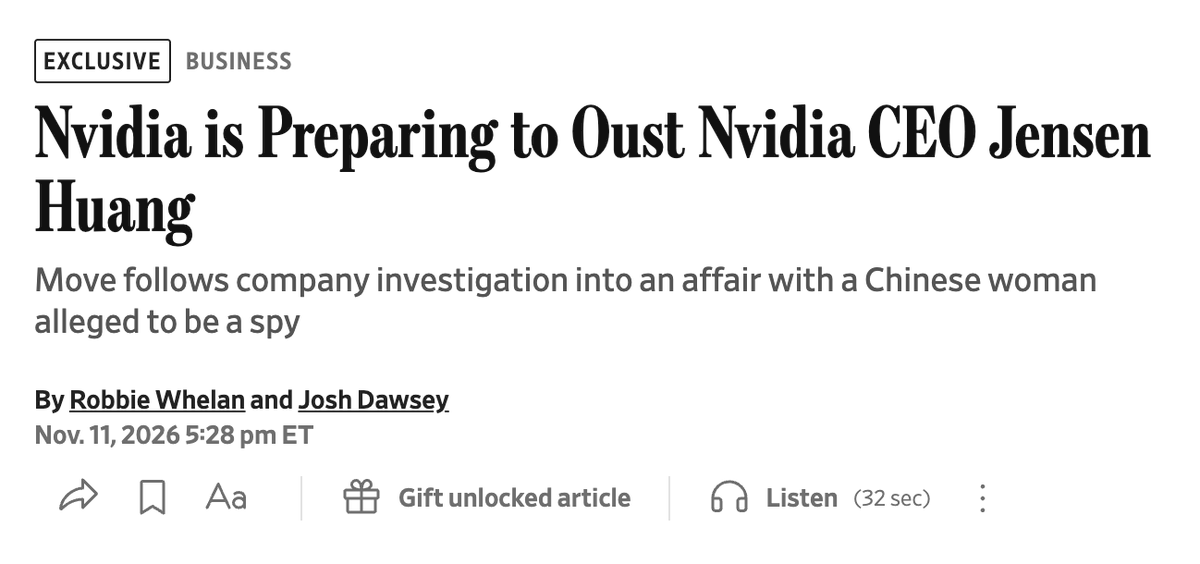
Ok, we laughed at all the Jensen Huang jokes and memes, but there's a real question here: does a CEO's messy personal life actually hurt the stock?
Huang admitted to an affair this weekend and $NVDA sold off. Nvidia's board has opened a review, and the stakes are high: the NYT has reported that U.S. intelligence thought the woman may have been working for Beijing. The board says it has no reason to believe any secrets were leaked.
No divorce has been announced, but there's plenty of research on what happens to a company when the CEO's marriage ends.
Here's what we found.
Stanford researchers tracked CEOs who divorced between 2009 and 2012. Almost 1 in 3 were out of the job within two years.
Another study of 80 CEO divorces found the stocks didn't really underperform. But the CEOs played it safer afterward, and their boards paid them $2M+ more the following year.
It gets ugly when control is on the line:
Harold Hamm owned 68% of Continental Resources and had no prenup. The stock fell 2.9% when news of the divorce got out, and his ex-wife walked away with nearly $1B.
Rupert Murdoch had a prenup. News Corp actually rose 1.4% on his divorce.
Jeff Bezos gave MacKenzie Scott a quarter of their $AMZN shares, but she handed him the votes on them.
Huang owns about 3.5% of Nvidia, so control isn't the worry here. The board probe and China are.
Would you buy this $NVDA dip, or wait until the board finishes its review?
Chip stocks are bouncing back today, but analysts spent last week cutting their price targets 👀
After Wall Street's worst day in 19 months, these 10 stocks got the biggest cuts. Even after the cuts, the average analyst target still sits well above the price for most of them:
$MRVL: 110% upside. BofA cut to $225 from $400 after the Lumentum deal
$LITE: 85%. B. Riley cut to $770 from $1,142
$COHR: 81%. Rosenblatt cut to $400 from $500
$ARM: 52%. TD Cowen cut to $250 from $350
$COIN: 49%. Morgan Stanley cut to $120 from $258
$TEAM: 47%. Wells Fargo cut to $200 from $270
$MCHP: 45%. Evercore cut to $75 from $117
$AMD: 30%. Mizuho cut to $610 from $705
$ADBE: 12%. Citi downgraded to Sell, $207 target
$QCOM: 10%. Barclays cut to $150 from $180
Most of these businesses are still growing fast. AMD grew revenue 45% and Coherent 50%. Analysts are mostly just paying less for that growth.
Did analysts cut right at the bottom, or is today's bounce just a breather?
Track Liberty Global’s full insider trading activity, hedge fund ownership, and set free email alerts for new $LBTYK transactions:
https://t.co/gXtYjocFQI
$1.5M Insider Buy: $LBTYK
Liberty Global owns cable, broadband and mobile businesses across Europe: Virgin Media O2 in the UK (with Telefónica), VodafoneZiggo in the Netherlands and Telenet in Belgium.
John Malone, the “Cable Cowboy” who chairs the company, just reported buying 150,000 shares for about $1.46M at an average of $9.73.
Two days earlier, CEO Mike Fries bought $1.03M and CTO Enrique Rodriguez bought $2.0M, right after Q3 results. That’s three insiders and about $4.5M in a week. Before last week, every insider trade at Liberty Global this year was a sale.
The timing lines up with a big reshuffle. Liberty just closed the buyout of Vodafone’s half of VodafoneZiggo and plans to spin off Ziggo Group (VodafoneZiggo plus Telenet) in Q2 2027. It’s also buying back $100M of stock a quarter.
The catch is the UK. Virgin Media O2 revenue fell 5% in Q3, and the company is cutting £800M of costs there by 2029.
Key metrics:
Market cap about $3.4B, 52-week range $7.32 to $13.12
Corporate cash about $2.0B at the end of Q3
Total debt and finance leases $21.8B
Buybacks: $100M in Q3, another $100M planned for Q4
Insider buys in the past week: 3 insiders, about $4.5M
When the original cable king buys alongside his CEO ahead of a spin-off, do you follow him in, or does $21.8B of debt keep you out?
If only somebody had told you... oh wait, we did.
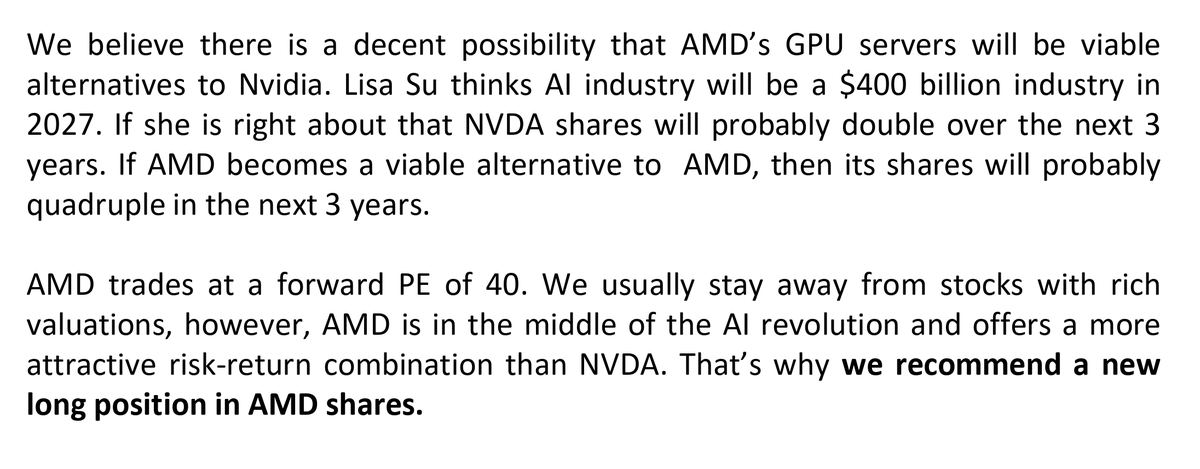
We picked $AMD as a better risk/reward alternative to $NVDA in the January 2025 issue of our Premium Readership Newsletter.
Since then:
$AMD +321.34%
$NVDA +19.86%
@DougKass@TheStreetPro Good decision. Your macroeconomic predictions/concerns are valid and we also share them. However, stocks are real assets and they usually go up in most years. We were able to find pockets of markets that were reasonably priced even in June. There are definitely opportunities now.
Track Pampa Energia's full insider trading activity, hedge fund ownership, and set free email alerts for new $PAM transactions:
https://t.co/Bfuv6KPi5t
$1.3M Insider Buy: $PAM
Pampa Energía is Argentina’s largest power generator and one of the bigger oil and gas producers in Vaca Muerta, the country’s giant shale basin.
Co-founder and Executive VP Damián Mindlin just reported buying another 20,000 ADSs on Nov 5 for $1.29M at $64.37. It was his second buy in three days: on Nov 3 he picked up 38,652 ADSs at $67.68 ($2.6M). That’s about $3.9M in a week, and he now holds 749,545 ADSs directly.
He’s not alone. The CFO bought on Nov 4, VP Gustavo Mariani bought in September, and his brother, Chairman Marcelo Mindlin, has been buying since the summer. The whole founding team is buying the same stock.
$PAM just hit a new 52-week low, about 31% below its $94.50 high. And Mindlin was a seller from March through June. Now he’s buying near the lows.
Mindlin co-founded Pampa in 2005 with his brother, Mariani and Ricardo Torres, and also runs construction company SACDE. In 20 years they built it from a tiny former meatpacker into the company it is today.
The business is growing. Q3 sales rose 34% to $790M, adjusted EBITDA rose 23% to $398M, and Rincón de Aranda shale output hit a record 28.7K barrels per day.
The problem is spending: capex nearly doubled for the shale ramp and a new urea plant, free cash flow was -$388M, and management expects it to stay negative through 2027.
Key metrics:
* Market cap $3.5B, trading near $65 (52-week range $63 to $94.50)
* Q3 sales $790M (+34% YoY), adj EBITDA $398M (+23%), net income $129M (6x last year)
* Crude oil output 22.1K bpd (+28%); shale target 40K bpd by end-2027
* Net debt $1.7B, net leverage 1.7x
* FCF guided negative through 2027, positive in 2028; no buybacks or dividends for now
Ok, we laughed at all the Jensen Huang jokes and memes, but there's a real question here: does a CEO's messy personal life actually hurt the stock?
Huang admitted to an affair this weekend and $NVDA sold off. Nvidia's board has opened a review, and the stakes are high: the NYT has reported that U.S. intelligence thought the woman may have been working for Beijing. The board says it has no reason to believe any secrets were leaked.
No divorce has been announced, but there's plenty of research on what happens to a company when the CEO's marriage ends.
Here's what we found.
Stanford researchers tracked CEOs who divorced between 2009 and 2012. Almost 1 in 3 were out of the job within two years.
Another study of 80 CEO divorces found the stocks didn't really underperform. But the CEOs played it safer afterward, and their boards paid them $2M+ more the following year.
It gets ugly when control is on the line:
Harold Hamm owned 68% of Continental Resources and had no prenup. The stock fell 2.9% when news of the divorce got out, and his ex-wife walked away with nearly $1B.
Rupert Murdoch had a prenup. News Corp actually rose 1.4% on his divorce.
Jeff Bezos gave MacKenzie Scott a quarter of their $AMZN shares, but she handed him the votes on them.
Huang owns about 3.5% of Nvidia, so control isn't the worry here. The board probe and China are.
Would you buy this $NVDA dip, or wait until the board finishes its review?
AI power demand: the biggest check of the week.
$KMI: Richard Kinder bought 500,000 shares ($15M) on Nov 6.
Bull: record Q3. The backlog jumped to $14.4B, with over 75% tied to power generation and utilities.
Bear: capex climbed and free cash flow after dividends was -$120M. The buy adds ~0.2% to his 246.7M shares.
$CAT: Director James Fish Jr. bought 1,000 shares at $620.39 on Nov 2.
Bull: record $78.1B backlog. Power gen sales rose 30% on data center demand.
Bear: no outlook raise, a "moderate" Q4 guide, and EPS helped by tariff recoveries. Shares sit near half their June high.
Last week, 11 insiders bought the AI dip, putting $38.4M into AI-linked stocks in Form 4s filed Nov 2-7, including $INTC $GLXY $KMI $LSCC $TTMI $CAT
What sold off: $INTC fell 28.6% in a day on a $15-16B Q4 guide vs $17.07B expected, and is down 53% this quarter. $CAT fell 9% despite a beat. $TTMI dropped over 25%.
Democrats swept the midterms, and AI regulation fears erased about $2.5T in market value.
Here's the bull and bear case for each. 🧵
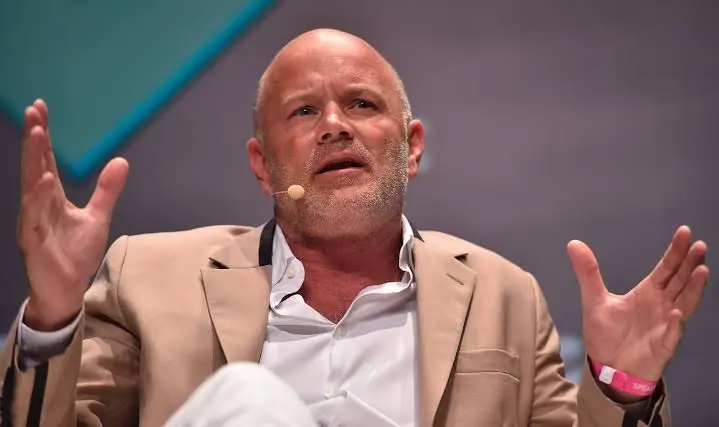
AI compute: $GLXY CEO Michael Novogratz bought 760,000 shares for $9.9M on Nov 5.
Bull: Helios delivered all 133 MW to CoreWeave on schedule, Phase II is fully financed, and Q3 net income hit $323M.
Bear: still trades like a crypto proxy, leans on one tenant, and added $3.5B of debt.
The 19.0x is a forward P/E: index market cap divided by consensus next-12-month earnings. Your figures look like trailing GAAP P/Es, which explains most of the gap. For fast growers it’s big, e.g. $NVDA ~26x trailing vs ~13x forward. And since it’s cap-weighted, the megacaps set the multiple, not the median member.
Citadel Securities says the setup for equities has improved after the recent sell-off in its November market update.
Nasdaq 100 forward P/E is down to 19.0x:
• 25% below January's peak of 25.3x
• 22% below its 5-year average of 24.2x
• Lowest since October 2022
Forward P/Es of the top 10 Nasdaq 100 stocks:
$AAPL 34.8
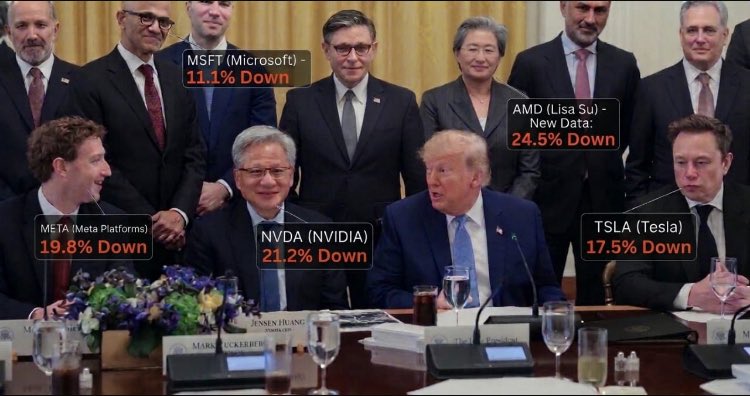
$NVDA 12.9
$MSFT 26.3
$GOOGL 20.0
$MU 4.9
$AMZN 21.7
$AMD 29.7
$TSLA 164.2
$META 18.5
$WMT 38.2
Nvidia, Meta and Micron now trade below the index multiple.
Bullish or bearish on Big Tech from here?