I spent the last 20 years in medical office real estate. The market is vastly different today.
For anyone looking to enter the field or to expand their current portfolio, here's a primer on some of the broader trends. A thread:
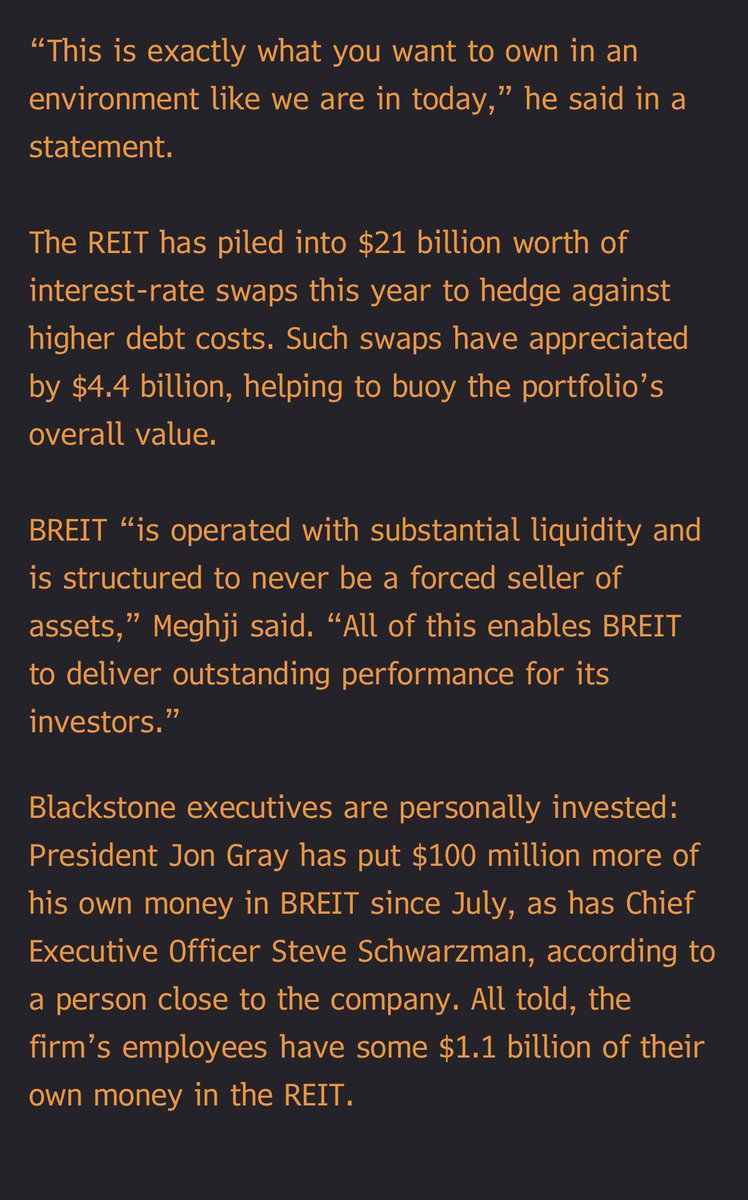
🚨BREIT has $21B (‘B’- as in billion) worth in hedges for the year (i.e., protection from higher interest rates). Swaps have already appreciated by $4.4B. Buckle up folks, we’re in for a ride…🎢
@evanrosenfeld *IF you have fixed-rate/hedged debt, it is one of the best ways to shelter from inflation. CAM starts to eat into net rents at some point, but it’s still much better than the alternatives.
@Greg75728863 -Less sensitivity to inflation/jobs deterioration
-Historical performance through COVID and prior recessions
-Less run-up in rate/occupancy in past 24 months relative to SFR/MF/industrial
-Lower elasticity on healthcare spend when disposable income drops
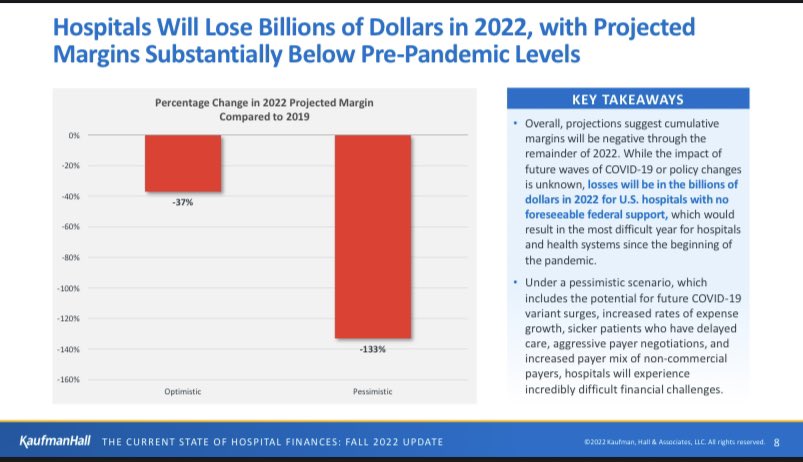
Hospitals are on track to have a terrible 2022, with little relief in sight.
And yet, I’m willing to bet medical office outperforms the majority of asset classes in the next 12 months.
Data from Kaufman Hall
@realEstateTrent Cap rates will be a lagging indicator as deals work through the system. Excess demand will likely stave off 1:1 compression on cap rates, but I think it’s inevitable we see cap rates rise. Many deals being re-traded now.
@PinkPoloShorts The next 12-24 months will be a battle between rising operating costs and LLs ability to grow net rates. 5% over 10 years would require starting below market rates/occupancy, being a hyper efficient operator, or assuming rents continue at their pace for 10 years, which is iffy
@drmoneymatters The real opportunity will be for hospitals and the employed physicians to purchase practices back at a discount when the PE underwriting doesn’t materialize. Somewhat like what happened in the 90s.
@FarmerIrr @moseskagan@TheRealEstateG6 Cap rates also assume a somewhat homogenous product. If you buy widgets in a perfectly consistent box, they they have relative value. Once you stray on occupancy, rent growth or market rent assumptions, they start to be less relevant.
@IndexandETFs Ideally your notice provision would give you 4-6 months. If it’s in decent condition we’d @Matterport it and list it as available immediately.
One benefit of higher construction costs is higher retention. Many REITs are trending 10%-15% above historical retention. Cards are currently stacked against REITS that need to grow occupancy as many deals are dying when bids come to light.
According to Revista, average medical office building occupancy in 4Q21 was over 92% for buildings >7,500 SF. Plenty of value to be captured, especially if they prune bad assets and focus on largest markets.
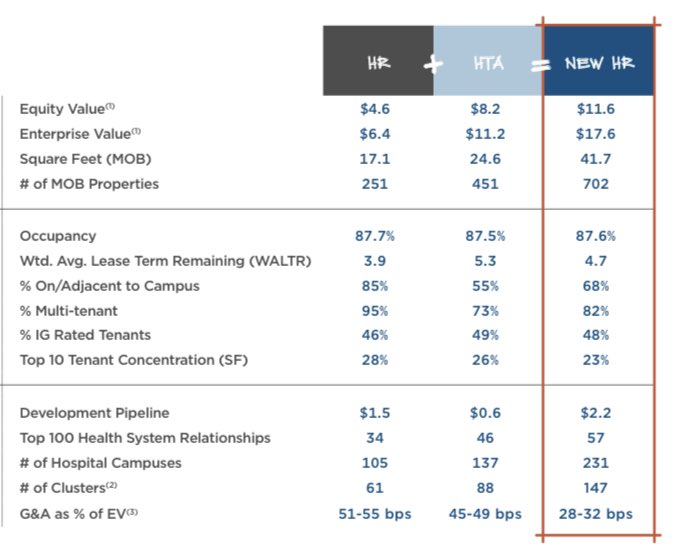
More detail on the potential HR-HTA merger from HR’s supplemental. 41.7M square feet is a gigantic portfolio. In my opinion, opportunity is to double down on markets with scale and grow that 87.6% occupancy.
Big news in healthcare real estate. If it happens, it would create the largest healthcare REIT by a large margin (43 million SF)
Healthcare Realty Trust nears deal with Healthcare Trust of America that could create a company worth more than $10 billion https://t.co/QmVuJ5YPVR