We’re excited to share that BenchMHC, our open-source Python framework to reproduce, retrain, and evaluate peptide-MHC presentation models, is now available on @github! 🚀
🧵⬇️
We’re excited to share that BenchMHC, our open-source Python framework to reproduce, retrain, and evaluate peptide-MHC presentation models, is now available on @github! 🚀
🧵⬇️
@github With BenchMHC, we've reproduced NetMHCpan 4.1 and can now directly compare retrained models against the original tool to understand what drives performance. 🎯
@github Goal: a clean benchmarking setup to separate model design from data and training effects. 🔍
We look forward to seeing how the life sciences community uses BenchMHC! 👏
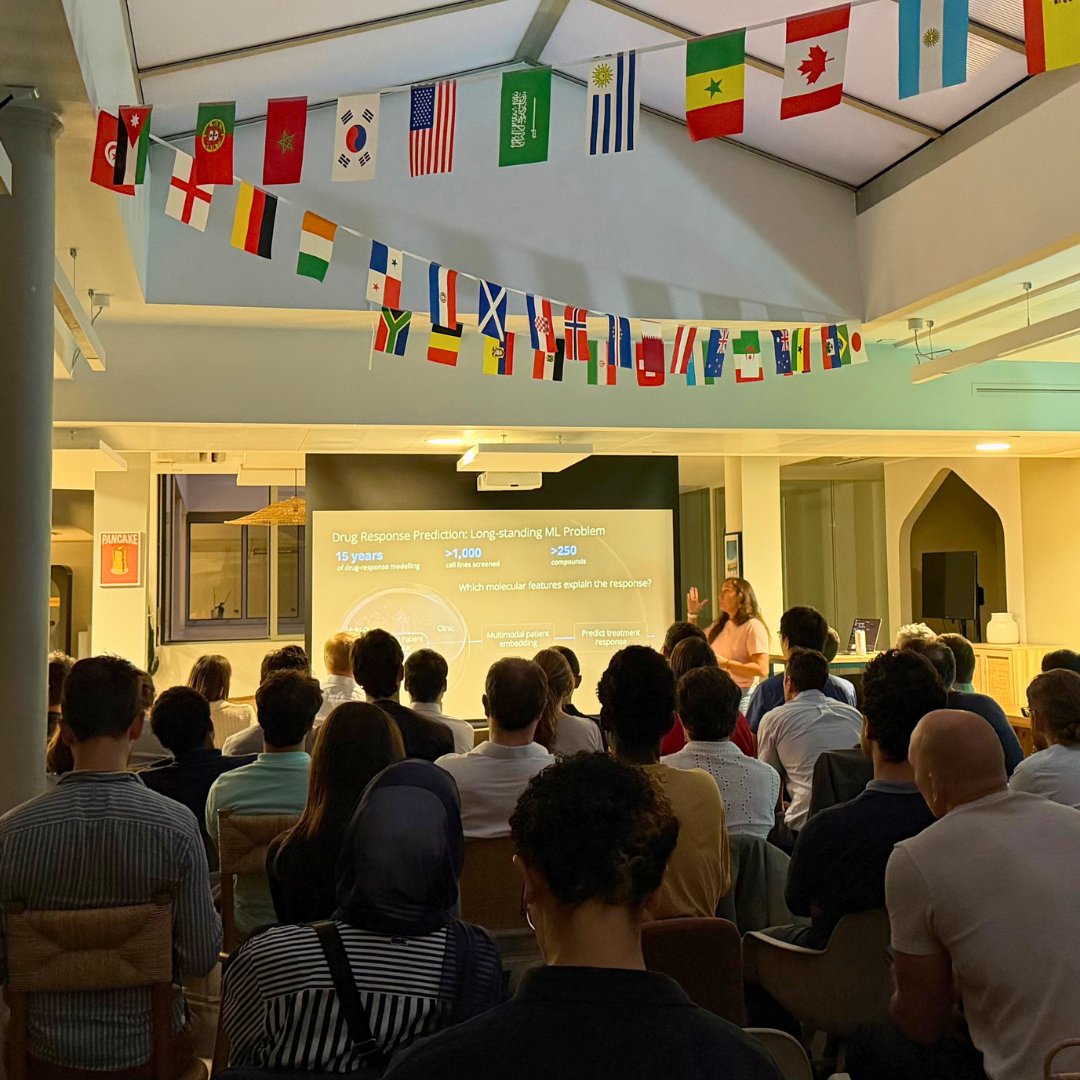
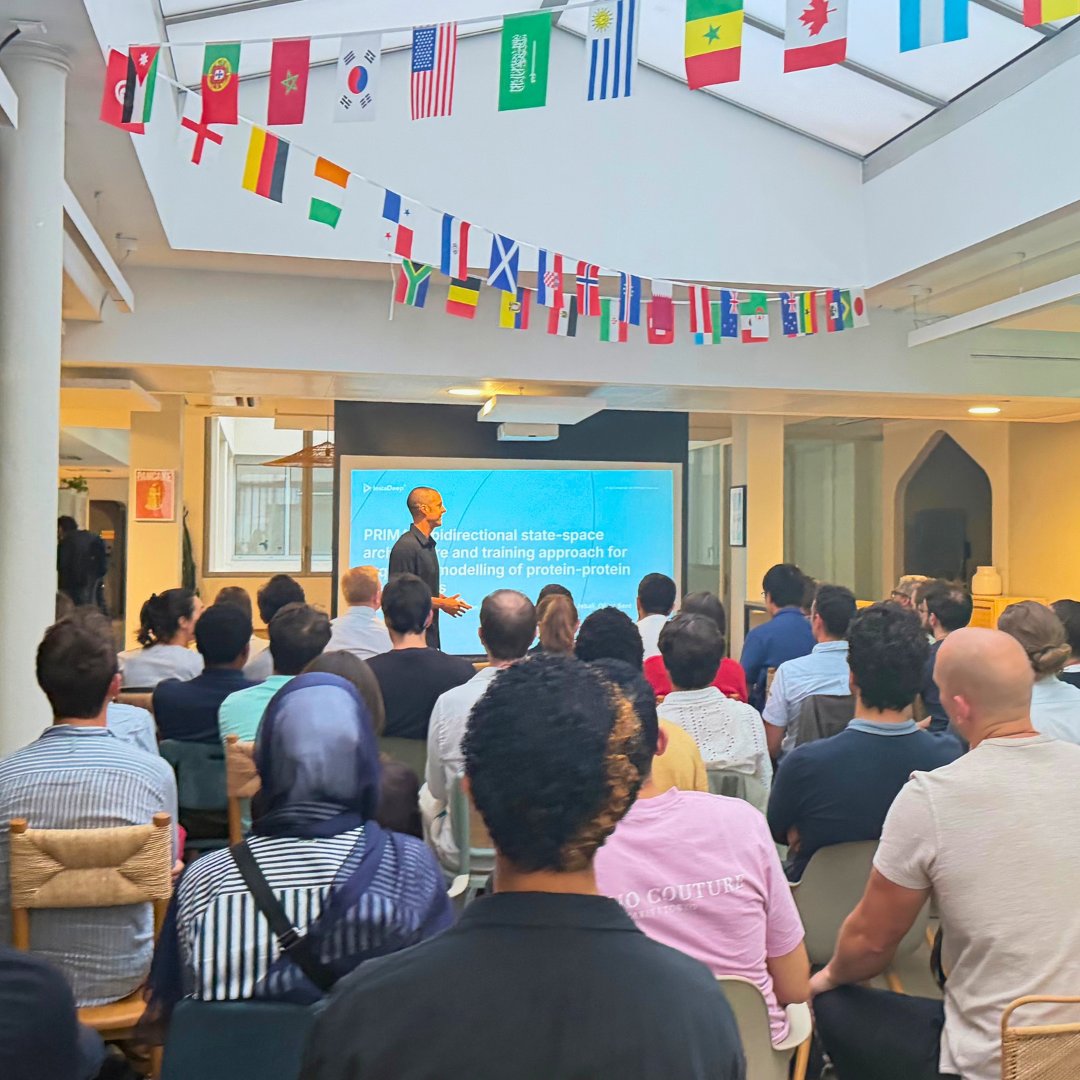
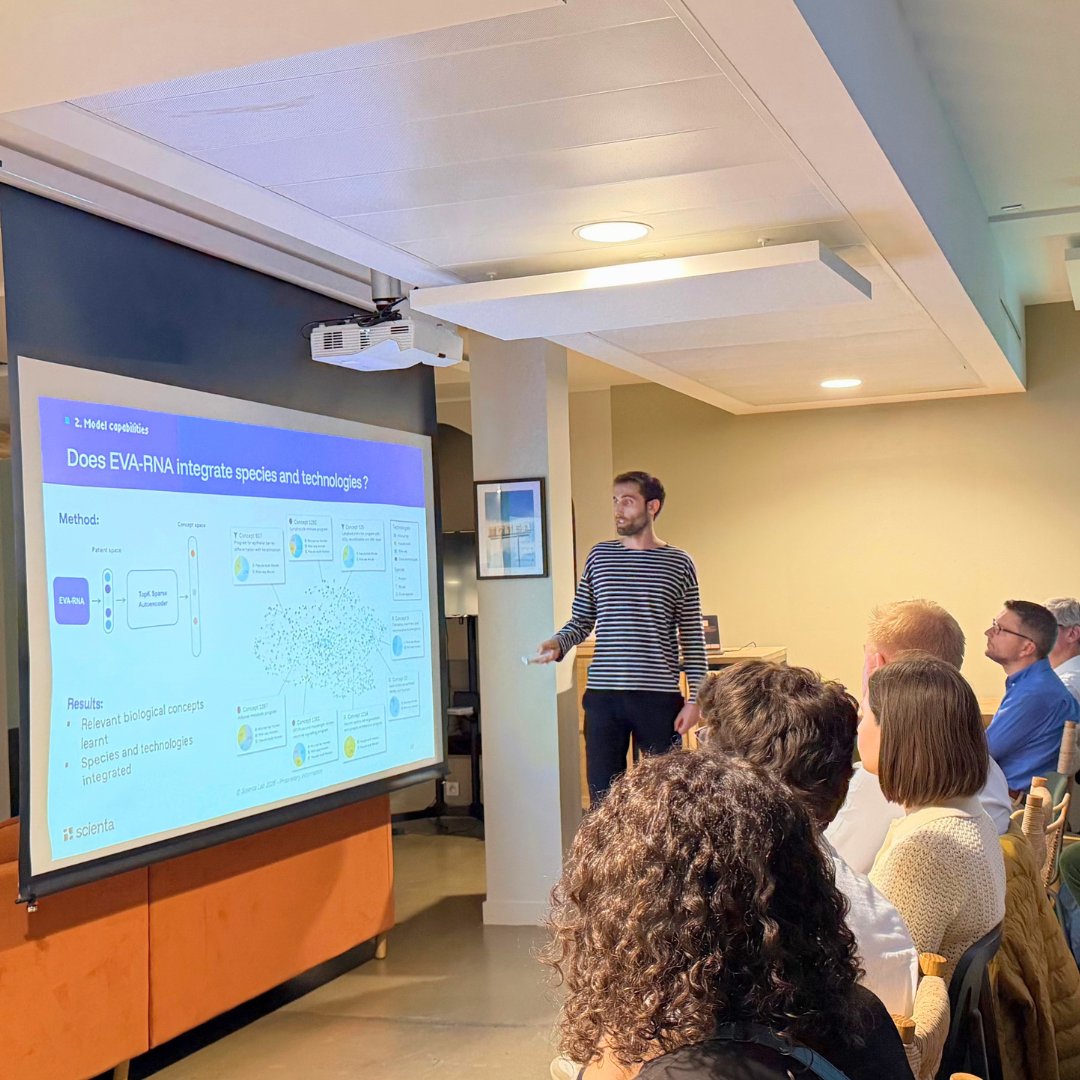
Thank you all for a great @bitsinbio Paris!
On Tuesday this week, 70 of us gathered at our Paris office for three talks on proteins, cells and patients with @orakldotbio and @ScientaLab. 🇫🇷
Thanks to our speakers, and to everyone who joined us for the networking! 💪
Join @bitsinbio Paris, 22 Sept at the InstaDeep office! 🇫🇷
With State-space models for protein–protein interactions (InstaDeep), noise ceilings in cancer drug response prediction (@orakldotbio), and patient representations at scale (@ScientaLab).
🚀 We're excited to see how you use STIX. Try it out today!
🐙 GitHub: https://t.co/V5yfWrf26v
📖 An introduction to STIX: https://t.co/6m64B79uJf
📚 Documentation: https://t.co/KnlvHxJkLE
🤝 Introducing STIX, InstaDeep's new JAX library for generative modelling, built on the stochastic interpolants framework.
STIX unifies flow matching, diffusion (including uniform and masked variants), and Bayesian flow networks under a single, common design space. 🧵
🧬 STIX handles continuous and discrete data as a single unit, generating both jointly. Discrete variables can be embedded in continuous space and run through the continuous interpolant, or handled directly via discrete interpolants like masked and uniform diffusion.
📚 Hear our plans for what's next for the open-source mlip Python library and dive in yourself via the links below. 👇
🎧 Spotify: https://t.co/ibhyyeWCRr
👀 YouTube: https://t.co/2DQQlPidKo
🍎 Apple Podcasts: https://t.co/Bw2gmzziyf
⚛️ The library: https://t.co/lcCDtNvhqI
🎙️ Calling our shots. In episode 3 of the Let's Talk Research podcast, Senior Research Engineer Christoph Brunken and Staff Research Scientist Jules Tilly explored our future ambitions for machine-learned interatomic potentials (MLIPs).
🧵⬇️
Since then, we've hit many of those milestones, with the inclusion of electrostatics in the library, advancements in reactivity, speed, and with more exciting news to be shared here soon.
"It’s an active rebellion against throwaway culture to try to preserve things"
📖 Mitch Johns, This Museum is (Not) Obsolete @Hack_Modular
Hear from author Jessica Holland (@hollandjess) as she follows the growth of PCB design through the musical history of vintage synths. 🎹
“Creating (a PCB) is a mixture of legacy knowledge, absolute understanding of electronics, and an eye for detail.”
Hear from veteran PCB engineer Steve Gascoigne of Siemens EDA (@siemenssoftware) as he explores the history and future of PCB design.