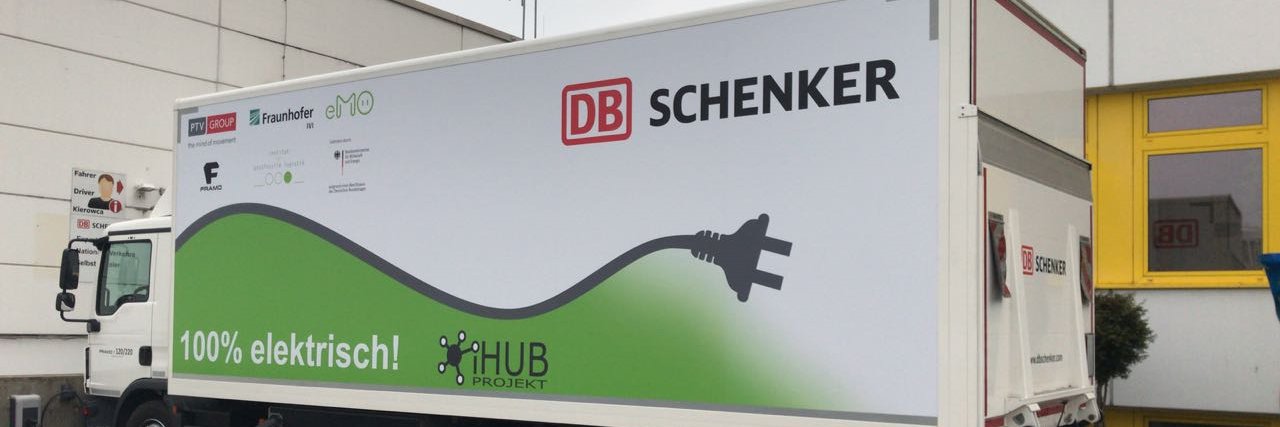
Am 13.05.22 wurde dem @institutpfl vom @stifterverband das Siegel "Innovation durch Forschung" verliehen, welches für die nächsten 2 Jahre der Stellenwert des Instituts für seine angewandten Forschungsleistungen im Spannungsfeld zwischen #Wissenschaft und #Wirtschaft dokumentiert
🌡️ À partir de demain, un léger changement de configuration est attendu!
L'anticyclone, jusqu'ici centré sur les bords de la Méditerranée, devrait être influencé par le creusement d'une petite goutte froide au large du Portugal, tandis qu'un flux de Nord-Ouest continuera de dominer sur la France. Cette goutte froide pourrait de nouveau favoriser une légère advection d'air chaud en direction du pays. La bonne nouvelle, c'est que l'influence océanique restera bien présente sur l'Europe de l’Ouest, empêchant l'anticyclone de reprendre totalement le dessus. Le flux de Nord-Ouest limitera donc l'intensité des fortes chaleurs sur une grande partie de la France.
En revanche, le Sud-Ouest et les régions méditerranéennes resteront les plus exposés à cette remontée d'air chaud. Les températures devraient toutefois être limitées par leur position en bout de trajectoire, avec généralement -35/36°C dans le Sud-Ouest et -38/39°C sur le quart Sud-Est.
Facebook :
https://t.co/3OTWkBq1Bi
Some coastal cities have begun replacing concrete seawalls with oyster reefs. The oysters are better at the job.
Concrete seawalls begin to degrade the minute they're installed. Waves chew them up, storms crack them, and they have to be repaired, replaced, and rebuilt forever.
An oyster reef doesn't break down. It actually grows. The oysters stack, reproduce, and fuse into something akin to living rock that gets stronger every year.
A mature reef can cut incoming wave height by up to 83%. It traps sediment, rebuilds the shoreline behind it, and shelters fish, crabs, and shrimp in the process.
One hectare of oyster reef provides up to $85,000 a year in shoreline protection. Concrete costs over a million dollars a hectare to build and only gets weaker.
China just passed a law mandating physical buttons for 19 essential, safety-related vehicle functions.
The era of the all-digital dashboard is hitting a regulatory roadblock as China officially clamps down on the automotive industry's obsession with touchscreens. Under newly finalized regulations set to take effect on July 1, 2027, automakers will be legally required to equip vehicles with physical controls for 19 essential safety functions, including turn signals, windshield wipers, hazard lights, and the gear shifter.
While migrating controls to touchscreens has allowed manufacturers like Tesla and various electric vehicle startups to streamline production, cut costs, and offer sleek designs, it has also sparked safety concerns. Drivers often face dangerous distractions and laggy software when trying to perform basic driving operations, prompting a major regulatory correction.
This regulatory pushback is not a localized anomaly but rather part of a broader global movement prioritizing tactile safety over high-tech minimalism. In Europe and the UK, the Euro NCAP safety organization began docking points starting in 2026 for vehicles without dedicated physical switches for core safety functions, threatening their coveted five-star safety ratings. China’s new mandate is even stricter, dictating precise usability rules and button sizes, and follows another recent Chinese ban on hidden, pop-up door handles that can trap passengers during emergencies. As safety authorities clamp down, the automotive world is being forced to quickly pivot back to intuitive, tactile cabins where drivers can keep their eyes on the road.
source: Dow, J. (2026). China is bringing buttons back to cars, ending trend led by Tesla. Electrek.
We criminalize killing people. We criminalize destroying culture.
So why not criminalizing mass destruction of the ecosystems we all depend on?
Ecocide law = justice for Earth, protection for future generations.
Learn more, sign, share. Who’s with us?
#Ecocide#SaveThePlanet
France has become the first nation to criminalize planned obsolescence making it illegal for companies to design products with deliberately shortened lifespans.
This landmark legislation imposes criminal penalties including fines up to three hundred thousand euros or five percent of annual revenue and up to two years in prison for violations. The law emerged from the advocacy of activist Laetitia Vasseur and her organization HOP Stop Planned Obsolescence which highlighted how many consumer goods were difficult or costly to repair.
A prominent enforcement case involved Apple which faced scrutiny for software updates that slowed older iPhones to manage battery performance. In 2020 the company paid a twenty five million euro fine and issued a public notice admitting to deceptive practices. France has complemented the ban with practical measures such as a repairability index scoring products from one to ten based on disassembly ease parts availability and tools required. This rating now covers a wide range of electronics and appliances. A repair fund subsidizes costs at approved centers while manufacturers must disclose spare part availability periods.
These initiatives have inspired broader European Union policies on right to repair including mandates for replaceable batteries and accessible components. Frances comprehensive approach demonstrates how targeted regulations can promote sustainable consumption and empower consumers against wasteful manufacturing practices.
CATL says they will mass-produce sodium-ion batteries this year.
Key advantages of sodium batteries:
- Sodium instead of lithium
- Hard carbon instead of graphite
- Aluminum instead of copper (mostly)
- Better safety
- Better cold performance
These will be particularly important for large-scale energy storage systems where energy density matters less.
🇺🇸The CIA director just drew the line plainly.
"We're the largest economy in the world. China is the second largest economy in the world. Russia's economy is about the size of my home state, Texas. Russia has to choose where they are gonna compete. China competes with us across the board."
That is the actual reason the US energy weapon thesis targets China specifically.
Russia is a military problem with a Texas sized economy.
China is the strategic rival with the scale to match.
https://t.co/xGGtjqI252
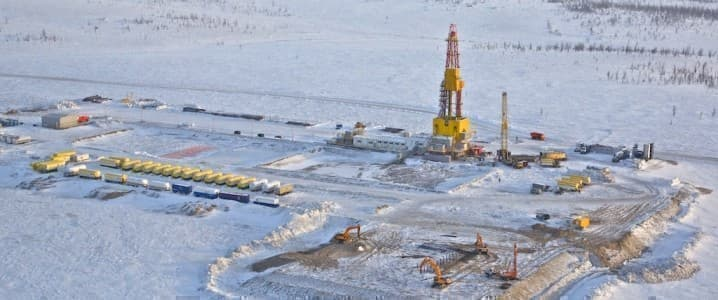
This is the point of no return for the Russian energy sector. Companies in Tatarstan have officially begun shutting down production wells because refineries are offline, domestic buyers have vanished, and state-monopoly Transneft’s pipelines and storage tanks are at 100% capacity.
Here is why "shutting down a well" is a technical and economic death sentence for Moscow:
The Geological Trap: Many Russian wells, especially in older or complex fields, require continuous pressure to flow. When you halt production, the pressure drops, water infiltrates the reservoir, and the heavy, waxy Russian crude solidifies in the shafts.
The Western Tech Deficit: Reviving a dead well isn't a matter of flipping a switch. It requires highly advanced, capital-intensive enhanced oil recovery (EOR) technology. With Western oilfield service giants (like SLB, Baker Hughes, Halliburton) gone due to sanctions, Russia lacks the equipment to restart them.
Financial Asphyxiation: Oil companies must still pay heavy state subsoil taxes and worker salaries while generating zero revenue. They are bleeding cash while permanently damaging their geological assets.
By paralyzing refineries and storage hubs, Ukraine hasn't just caused a temporary supply shock—it has forced a systemic backup that is permanently breaking the physical infrastructure of the Russian petro-state. A well closed in 2026 is a well that may never pump again. 🇨🇳🇷🇺📉 #RussiaCollapse #OilCrisis #Tatarstan #Transneft #EnergyWar #Geopolitics
A series of simultaneous disasters — from wildfires to extreme heat to flooding — has delivered impacts across the US. It's raising concerns about the frequency of compound events, catastrophes that overlap or occur in quick succession. Read more: https://t.co/DPYAfOiOkJ
📷: Michael Nagle/Bloomberg
Europe can escape fossil fuel shocks by accelerating its energy transition
Future prosperity is inextricably linked to the strength and resilience of its energy system as geopolitical instability becomes the unfortunate norm
https://t.co/XxYVLJOBbH
📉🌡️Entre dimanche et lundi après-midi, les #températures baisseront nettement dans le nord et les régions centrales sous l’effet d’un air plus frais venu de #Scandinavie. L’ambiance y deviendra très agréable. En revanche, ce rafraîchissement gagnera plus difficilement le sud du pays, où le dôme de chaleur continuera de résister au-dessus de la Méditerranée.
WETTEREXTREME
Klimaforscher Levermann: "Wir müssen verstehen, was nach dem Kippen der Klimasysteme passiert"
Die Erde steuert angesichts der Klimakrise auf einen "freien Fall" zu, sagt der deutsche Physiker Levermann. Noch sei unklar, welche Folgen….
https://t.co/sJSyJYevjj
El Entomicidio del Siglo XXI es cada vez más evidente. ¿lo has notado en tu zona?
Yo sí. La impresión de que hoy se pegan muchos menos insectos al parabrisas o al frontal del coche tiene incluso un nombre: el “fenómeno del parabrisas” (windshield phenomenon). Aunque durante años fue solo una observación popular, hoy existen numerosos estudios científicos que confirman que, en muchas regiones del mundo, especialmente en Europa, las poblaciones de insectos han disminuido de forma significativa.
Eso sí, conviene hacer una matización importante: un parabrisas más limpio no demuestra por sí solo que haya menos insectos. Los coches modernos son mucho más aerodinámicos y desvían parte de los insectos. Sin embargo, cuando los investigadores corrigen ese efecto y utilizan métodos estandarizados, siguen observando descensos muy importantes en la abundancia de insectos voladores.
Las investigaciones más sólidas apuntan a una combinación de factores:
La agricultura intensiva, con el uso de insecticidas y herbicidas, reduce tanto los insectos como las plantas de las que dependen.
La destrucción y fragmentación de los hábitats por la urbanización y las infraestructuras.
El cambio climático, que altera los ciclos de vida, favorece olas de calor y sequías y provoca desajustes entre los insectos y las plantas de las que se alimentan.
La contaminación lumínica, que afecta especialmente a los insectos nocturnos.
La introducción de especies invasoras y nuevas enfermedades.
En Europa hay algunos estudios especialmente llamativos. En Alemania, un seguimiento de casi tres décadas detectó una reducción cercana al 75 % de la biomasa de insectos voladores en zonas protegidas, un resultado que desencadenó gran parte de la preocupación científica actual. Otros trabajos realizados en Dinamarca y mediante programas de ciencia ciudadana en distintos países europeos también han encontrado reducciones muy importantes en los insectos que impactan contra los vehículos.
¿Por qué debería preocuparnos? Porque los insectos son esenciales para el funcionamiento de los ecosistemas. Aproximadamente tres de cada cuatro cultivos alimentarios dependen, al menos en parte, de la polinización por insectos. Además, son la base de la alimentación de muchas aves, murciélagos, anfibios y peces, y desempeñan un papel fundamental en el reciclaje de materia orgánica y el control natural de plagas.
Seguramente más de uno de vosotros discrepara con lo expuesto, pero la sensación de que hoy el cristal del coche permanece mucho más limpio no es solo una percepción nostálgica. El “fenómeno del parabrisas” por sí mismo no constituye una prueba científica, pero sí coincide con un amplio conjunto de estudios independientes que muestran un declive real de muchas poblaciones de insectos, especialmente en Europa occidental, debido a la suma de cambios en el uso del suelo, pesticidas, pérdida de hábitat y cambio climático.
Solar was the EU's single largest source of electricity in June!
Solar reaches 25% in June!
Wind and solar were 33% of EU's electricity in the first 6 months of 2026, up from 31.5% in 2025.
Solar and wind now are boosted by batteries.
New energy world!
https://t.co/m3X2tM5SmS
📢 La SETMANA VINENT podriem tenir la CALOR TÍPICA de mitjans de juliol
🌡️📈Diumenge-dilluns: bombolla càlida de 25º a capes mitjanes
🌡️📉Entre dimarts i cap de setmana: massa càlida s'enretira i temperatura baixa a 15º
🥵CALOR CANICULAR però SENSE EXTREMS
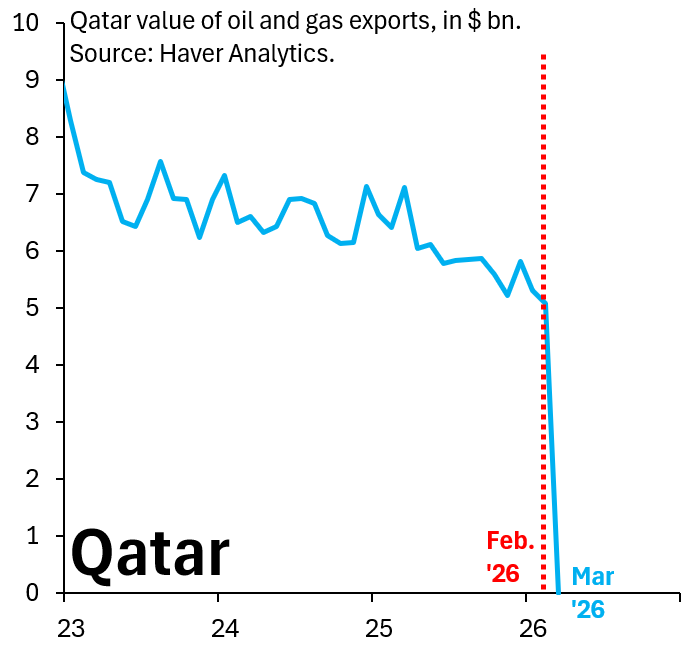
Those who told us oil was going to $200 are spreading lots of misinformation. The weirdest misinformation is that the Strait of Hormuz wasn't actually shut, so that's why $200 didn't happen. That's nonsense. We have hard data to show the Strait was shut...
https://t.co/b21BDWGoFg
France gets permission to build 11.1 GW of offshore wind under a CfD scheme.
They will generate around 10% of France’s annual electricity consumption.
Almost all new generation capacity in Europe and most of the world is renewables led.
https://t.co/eCrwBpdpF4
Where is Europe?
NYT: „A big step for Chinese A.I. Moonshot: The Chinese A.I. start-up, which is backed by Alibaba, released Kimi K3, an open-source model whose performance in industry benchmarks rivals that of the most powerful models from OpenAI and Anthropic.
Photo: Reuters
🇪🇺🇨���� Europe is preparing an emergency economic break with China.
🔸 Nearly 60% of Chinese firms’ global market-share gains since 2005 can be explained by subsidies.
🔸 Chinese firms receive 3 to 8 times more state support than competitors in OECD economies.
🔸 Chinese industrial subsidies are estimated at roughly 4% of GDP.
China uses unfair competition to make foreign countries dependent on it in strategic industries and gain influence over them.
Europe must rebuild its strategic industries and diversify away from excessive dependence on China.
https://t.co/c9GLhFqgdV
The wildfire situation across North America just got worse.
Tens of thousands of lightning strikes across the Pacific Northwest has ignited dozens of new wildfires across Oregon and Washington.
No time to waste. #ActOnClimate#climate#energy#renewables