How to grow ANY boutique professional services firm:
This is the framework we use at Madison to help our clients grow. It's gone through several iterations, and I'm sure will continue to evolve over time:
✅ Get VERY clear on your Point of View. Who you serve, what you believe to be true about your domain, why you are unique, and how you approach your work. Put a stake in the ground and decide who you do (and don't) serve. Make sure every team member knows it cold.
✅ When possible, codify your thinking into frameworks that are easy to understand and create differentiation.
✅ Translate that Point of View clearly into your primary channels. Your website, LinkedIn page, etc. should help people understand immediately who you are and how you might be able to help them.
✅ Create a menu of solutions tailored specifically for who you serve (bonus points if they descend from your framework). Ideally they map to various stages of the client's work. Ideally you have some stuff that starts early and strategic, helping you earn the right to assist with implementation. Ideally some of them are recurring.
✅ For each, state clearly what problem it solves, when that problem tends to arise, how they currently try to solve it, and what solving it would mean for their business. Make sure every team member knows it cold.
✅ Become gratuitously helpful. Give away your best insights, your best ideas. Challenge your marketing team to start thinking like a media company. Look at firms like McKinsey & Company or Bain & Company as models. You certainly can't do all of what they do. But what's your smaller version of that?
✅ Teach your team to give away their secrets as well. Imagine if your 5 (or 20, or 100) partners all were regularly sharing their best ideas on LinkedIn with the people they seek to serve. Imagine if each of them became Trusted Advisors who immediately come to mind when buying windows emerge. The key to being top of mind is being helpful and consistent.
✅ Provide gentle ways to deepen relationship. Webinars specifically focused on major pain points. Lunch and learns in office where you show them EXACTLY how to solve the problem. At each step overwhelm them with value.
✅ Teach your team to be disciplined around nurturing relationships. Help train them on how to be insanely helpful 1 month, 3 months, 12 months in. Make sure they don't wing it - show them how CRM can help them build amazing relationships at scale.
✅ Nail onboarding. Knock your client's socks off during the first 30 days.
✅ Teach your team to systematically ask for referrals, in respectful ways, ideally mapped to key client success or inflection points.
✅ Pursue strategic partnerships. Find complementary businesses that think the way you think. Create partner-specific sales enablement tools so they know what to say when.
What did I leave out?
(P.S. If you need any help with the above, DM me.)
PSA: This week was kind of a turning point for AI and cybersecurity. Please take this weekend to do some simple cleanup for your family. Some suggestions:
- Set up a password manager like 1Password and give your spouse or partner access to a shared vault. Teach them how to use it.
- Update your passwords for critical stuff - your email account, your bank or financial stuff, etc. Store in your password manager and use the strongest password you can.
- Use two factor auth for everything you can. SMS is not ideal although better than nothing. Google Authenticator or a passkey is better. Hardware key is safest.)
- Add a sim pin to your phone. Makes it harder to sim jack.
- Update your phone and your computer to the newest releases. Turn auto-updates on.
- Freeze your credit - takes 5 minutes.
- Get an IRS Identity Protection PIN.
- If you’re using claude code or have AI agents that browse the web, they’re probably using Node.js. It’s also vulnerable. Update claude code, update node on your machine.
- If you’re building stuff on your computer, ask claude or grokbot (which is connected to twitter and likely has the most current info) to audit any of your repos for vulnerabilities. Ask grok to make it a scheduled task so it can do this daily - things are moving very quickly in the space right now.
- Consider some light resiliency stuff. This probably sounds silly, but it sounded silly at the beginning of covid too. Having printed out copies of important stuff - especially financial accounts. Having some cash on hand. Having some shelf-stable food and clean water or a water filter. Having a map. Having a generator that can at least power your fridge or some devices. Cheap insurance.
Again, I don’t want to alarm people, but I was taught that you should have a Secure plan, a Comfortable plan, and a Wealthy plan. And it seems pretty clear the secure plan needs to now factor cybersecurity risk as a legit threat. Take a weekend and shore yourself up.
@Jim51675564 I think it's probably safer than reusing pws or using simple ones. I have the same concern long-term. But not sure what to do about it. Hopefully passkeys help long-term since they're biometric.
This is kind of blowing up on Threads.
And apparently lots of people would rather compromise their financial and family safety than use a site that is owned by Elon Musk.
A little wild - presumably they wholeheartedly endorse Zuck.
PSA: This week was kind of a turning point for AI and cybersecurity. Please take this weekend to do some simple cleanup for your family. Some suggestions:
- Set up a password manager like 1Password and give your spouse or partner access to a shared vault. Teach them how to use it.
- Update your passwords for critical stuff - your email account, your bank or financial stuff, etc. Store in your password manager and use the strongest password you can.
- Use two factor auth for everything you can. SMS is not ideal although better than nothing. Google Authenticator or a passkey is better. Hardware key is safest.)
- Add a sim pin to your phone. Makes it harder to sim jack.
- Update your phone and your computer to the newest releases. Turn auto-updates on.
- Freeze your credit - takes 5 minutes.
- Get an IRS Identity Protection PIN.
- If you’re using claude code or have AI agents that browse the web, they’re probably using Node.js. It’s also vulnerable. Update claude code, update node on your machine.
- If you’re building stuff on your computer, ask claude or grokbot (which is connected to twitter and likely has the most current info) to audit any of your repos for vulnerabilities. Ask grok to make it a scheduled task so it can do this daily - things are moving very quickly in the space right now.
- Consider some light resiliency stuff. This probably sounds silly, but it sounded silly at the beginning of covid too. Having printed out copies of important stuff - especially financial accounts. Having some cash on hand. Having some shelf-stable food and clean water or a water filter. Having a map. Having a generator that can at least power your fridge or some devices. Cheap insurance.
Again, I don’t want to alarm people, but I was taught that you should have a Secure plan, a Comfortable plan, and a Wealthy plan. And it seems pretty clear the secure plan needs to now factor cybersecurity risk as a legit threat. Take a weekend and shore yourself up.
More on contentment. When I was in college I read about how the apostle Paul said he'd "learned the secret of being content." But then he never said what it is. I thought about that for years. Eventually I figured it out (I think).
First, the word. The Greek word he uses for "secret" is memyēmai, which means more like "initiated." It was the kind of thing you only come to know by going through it. So he's not hiding the answer. There's nothing for him to hand over. You can't really be "told" contentment, any more than you can be "told" how to swim. You have to go through the process.
Second, he says "I have learned." Which means it's a skill. And you acquire skills through training.
I can "try" to run a marathon, but it won't go well. But if I "train" to run a marathon, I have a much higher chance of being successful. Likewise, I can't just try to be content. I have to train at it.
Third - and this is the part that tripped me up for a LONG time - he talks about both directions. We assume (or at least I did) that contentment is the cure for not having enough. But Paul says it's the cure for plenty too.
Plenty is a trap as much (more so?) than lack. It raises the floor on what you think you need. It creates fear of loss. You worry more because you have more to lose. You don't spend time thinking about how far you've come, just how others still have more. It's poison.
Last - Paul wrote this in a thank you letter, while in prison. He's accepting a gift from friends. He's receiving help. So whatever contentment is, it's not self-sufficiency, and it's not not needing anything.
So how do you train it? Some things that have helped me:
- Practice lack on purpose, in small doses. Fast. Take the longest line at the store. Go to the store in the first place vs. pressing the button. Drive in the slow lane. Stay in a less fancy hotel than you can afford. Learn the joy of simple meals with friends. Cap your spending on gifts to your partner. Reps can come from anywhere.
- Start every planning session with gratitude. I do this weekly. Always try to make decisions from a mindset of gratitude vs. fear.
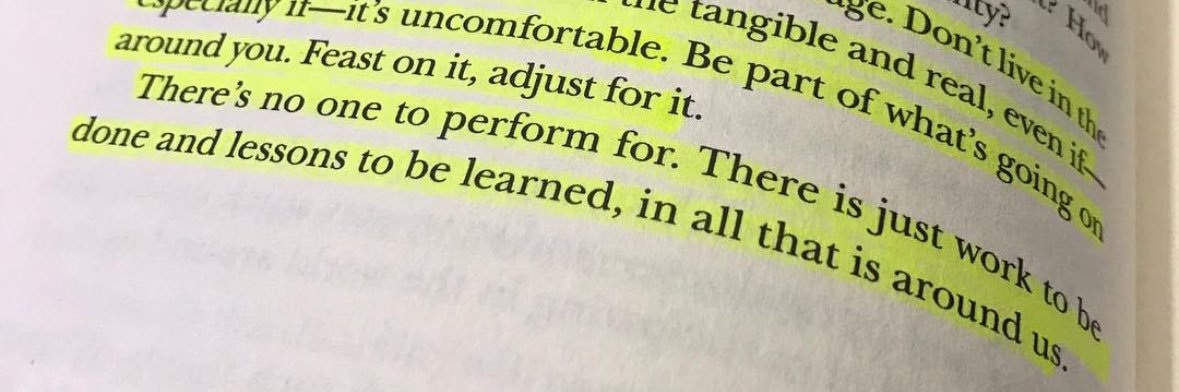
- Name something you have now that you once only hoped for. Epicurus: "Do not spoil what you have by desiring what you do not." I'm bad at this, but I'm working on it. Most driven people I've met are too.
- Write down what "enough" is. A number, a team size, whatever. Otherwise enough gets defined as slightly more than current state, forever.
- Celebrate on purpose, even if it feels forced. We keep champagne in the office fridge and open a bottle for every new engagement. I did that because I realized I'm bad at celebrating naturally.
- Serve someone who can't pay you back. Ideally in secret. If people find out, it doesn't count.
Other ideas? I'm a student here as well.
Last week was the highlight of the year for me, at least professionally. I wanted our first Summit to be uniquely high quality in terms of the material presented, and I was not disappointed.
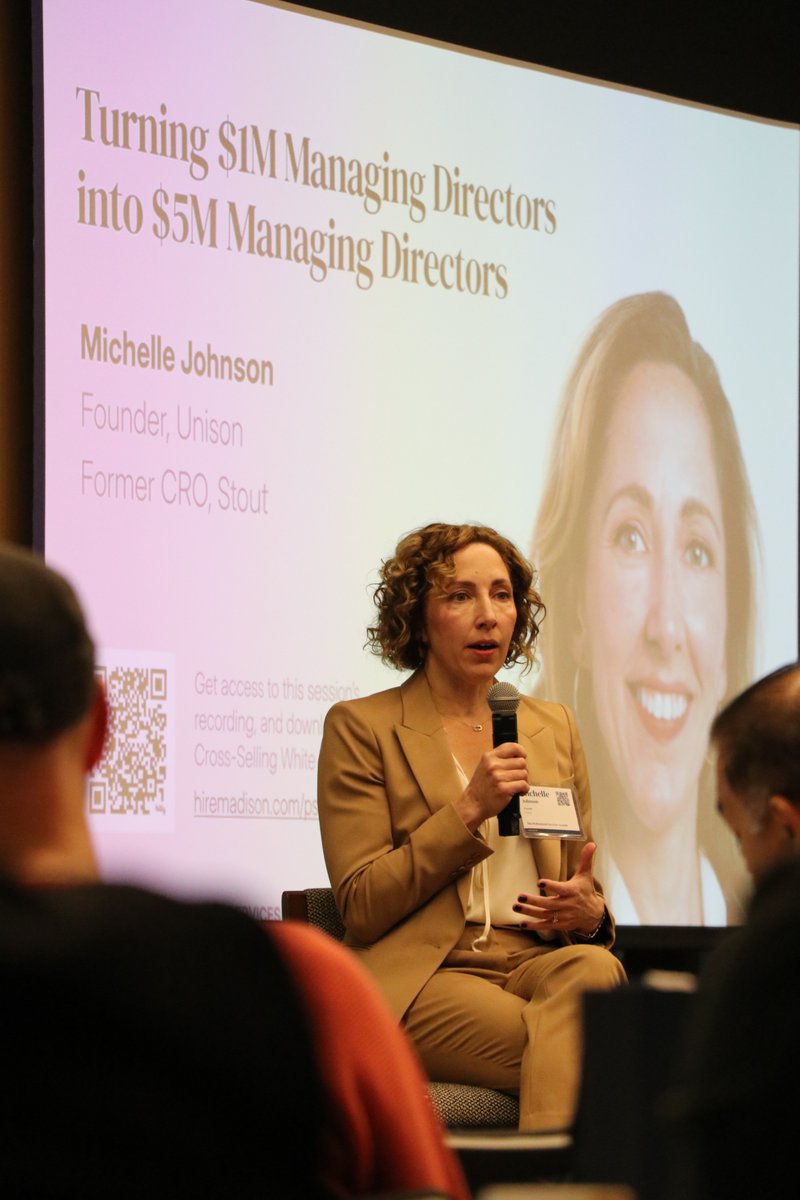
Extremely grateful to our speakers ( Victor Saad, Michelle Johnson, Jon Morris, Todd P. Paul, and Jon Klinepeter) for sharing their wisdom. Grateful to everyone who attended and the quality of conversations in the room. And grateful to the entire Madison team (particularly Margaret Nalley) for making it happen.
The videos from the sessions are being processed as we speak. If you missed the event but would like access to the sessions when they're ready, DM me and we'll get you access early next week.
Time to start preparing for next year :)
I struggle with contentment. Left unchecked I can be blind to ambition. I studied contentment between companies, and I review it often to help keep the demons at bay. Some highlights:
“He is richest who is content with the least; for contentment is the wealth of nature.” - Socrates“
The greatest wealth is to live content with little.” - Plato
“Happy the man who can endure the highest and the lowest fortune. He who has endured such vicissitudes with equanimity, has deprived misfortune of its power.” - Paul
“Do not spoil what you have by desiring what you do not. Remember that what you have now was once among the things you only hoped for.” - Epicurus
“Very little is needed to make a happy life.” - Marcus Aurelius
“Let your prayer for temporal blessings be strictly limited to things absolutely necessary.” - Bernard of Clairvaux
“The highest arts is to be content with the calling in which God has placed you.” - Martin Luther
“Discontent doth dislocate and unjoint the soul, it pulls off the wheels… it is a fretting humour, which dries the brain, wastes the spirits, corrodes and eats out the comfort of life.” - Thomas Watson“
A wise man cares not for what he cannot have.” - George Herbert
“The highest point outward things can bring unto is the contentment of the mind; with which no estate can be poor, without which all estates will be miserable.” - Sir Philip Sidney
“My crown is in my heart, not on my head, Nor decked with diamonds and Indian stones, Nor to be seen; my crown is called content; A crown it is, that seldom kings enjoy.” - Shakespeare
“Before we set our hearts too much on anything, let us examine how happy are those who already possess it.” - Francois Duc de la Rochefoucauld
“The fountain of contentment must spring up in the mind, and they who have so little knowledge of human nature as to seek happiness by changing anything but their own disposition, will waste their lives in fruitless efforts and multiply the grief they propose to remove.” - Samuel Johnson
“Contentment makes poor men rich; discontentment makes rich men poor.” - Benjamin Franklin
“He is happy whose circumstances suit his temper; but he is more excellent who can suit his temper to any circumstances.” - David Hume
“Be happy with what you have and are, be generous with both, and you won’t have to hunt for happiness.” - William Gladstone
“Give a man everything he desires and yet at this very moment he will feel that everything is not everything.” - Kant“
"You say, ‘If I had a little more, I should be very satisfied.’ You make a mistake. If you are not content with what you have, you would not be satisfied if it were doubled.” - Spurgeon
“Can anything be so elegant as to have few wants, an to serve them one’s self?” - Emerson
“Contentment is the only real wealth.” - Alfred Nobel
“Man falls from the pursuit of the ideal of plain living and high thinking the moment he wants to multiply his daily wants. Man’s happiness really lies in contentment.” - Ghandi
Over the last few years I've sought to cultivate what I call "slow intensity."
On the one hand, I want to move important projects forward. I want to be efficient and effective. On the other hand, I want to ruthlessly eliminate hurry from my life. I don't like how it impacts my relationships. I don't like what it does to my body. I don't like what it does to my soul.
Like most of the important things in life, it's a tension to be managed rather than a problem to be solved. But I do believe it's possible to be busy but not be hurried. To be ambitious and peaceful.
Some things that have helped me:
- GTD: my task management system is critical to making this work. I'm a huge advocate for GTD. By getting everything out of my head into a system I trust, reviewed at an appropriate cadence, I don't have to think about things 'Im not actively working on.
- Single tasking. I used to cook and listen to a podcast and think about tomorrow's meeting. These days I try to just. cook. I close browser tabs I'm not using (adding to my task or knowledge management system if necessary.) As much as possible, I try to do one thing at a time. This has become harder with the robots. I frequently have Claude Code working on one thing while I work on another. I get a lot more done. But I notice it can be more taxing on my mind.
- Deliberately slow down. The speed with which I move impacts how I feel. So I try to slow down. I go up the stairs more slowly. Cut vegetables more slowly. Open my laptop more slowly. It sounds silly, but I think it matters.
- MVT. Defining my Most Vital Task (MVT) each morning and making sure I block 2-3 hours to get that done is an enormous unlock. It ensures I tackle my most important priorities and critical deep work before the day blows up.
- Use disciplines to develop patience. This can be anything. Driving in the slow lane on purpose. Going in the longer line at the grocery store.
- Output per workday vs. hours worked. There's always another call to make. Post to write. Lead to follow up with. Trying to be focused and deliberate with my work day allows me to close my laptop and say, that's enough. You did well. If I didn't do well, I gently ask why, get up and resolve to do better the next day.
Consider implementing your own practices to bake slow intensity into your life. Your soul will thank you.
The new Apple upgrade program with @Klarna is wild. I have fantastic credit. And I have a Macbook already on the upgrade program. But I can't get approved for the Duo.
We're pretty disciplined:
- Weekly planning meeting w my wife on the weekends to align on who's doing what meals, who's doing drop-offs, etc.
- In the office from 8-4 each day.
- Workout after on the days I don't do dinner.
- Get a few more hours of work in while sitting in parking lot at dance.
- Get together with friends 1x weekly at night, and host a dinner w friends on Sundays.
- Groceries, laundry, etc. done Saturday mornings. Date night every Saturday night.
Today I walked 10k steps.
Got a 94 sleep score.
Worked a highly productive day.
Cooked dinner for the fam.
About to play pickleball.
Will take my daughter to dance class.
Read my book club book.
This is 100% possible. Not easy. Perhaps not for a startup founder. But for most.
No, you cannot walk 10,000 steps daily, get 8 hours of sleep, cook every night, clean every day, take care of a family, make time for your own hobbies, and still be productive at work every day. This is not just propaganda, it is nonsense. Free yourself from it.