@daltonc@archildata@jhleath Archil is criminally underrated as a product. I can't imagine them not 50x-ing next year in usage. Been a fan since March when I first started realizing sandbox agnostic volume is a real problem and realized Archil is the only one to this day solving the problem
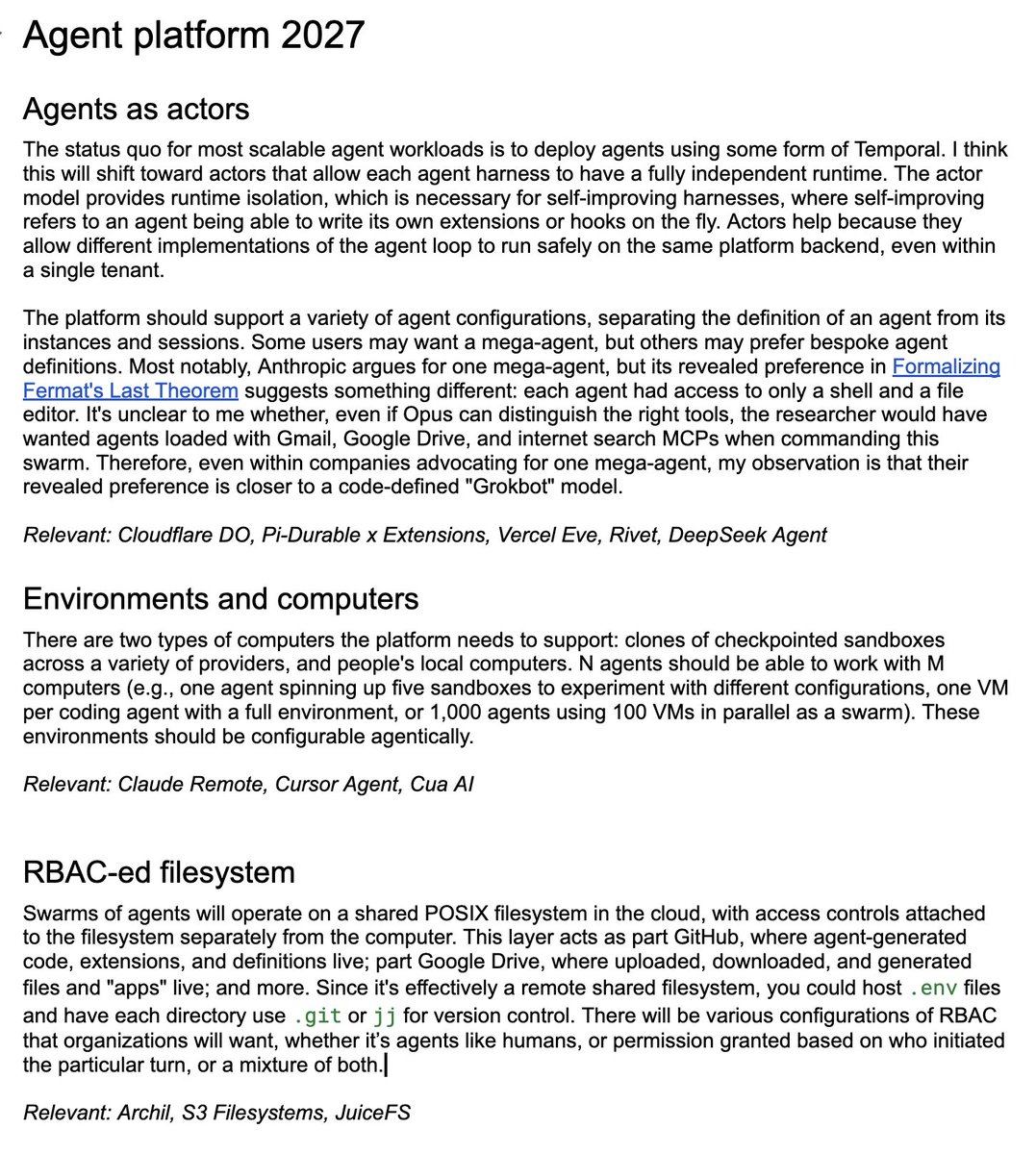
Agent platform of 2027.
This is the end game. This is the blueprint for the one and only application layer software that will exist. Every other software will effectively become databases for this layer, the everything agentic operating system for the million agent swarm to work on top of.
This is obviously the end game vision for the application layer of ChatGPT and Claude. I have reasons to believe that an independent company will own this product layer. But most ADE, "enterprise agent platform", or vertical saas companies, are focused on the wrong things far too narrowly, not technically competent, and do not have the product / technical vision to see this inevitable future.
The correct agent platform that wins will function like the base of a garden, from which customers will plant their unique "seeds" to grow their own plants and trees, managed and evolved by agents, humans, and signals from the sensors of the business. This presents a clearer picture than "factory of a factory" imo.
If you’re considering raising a Series A, you should apply to Standard Cap. They’re the best investors we have, no cap (sorry I had to)
I’m giving feedback on applications for the first few folks that DM me :)
Introducing QA-Bench, the world's first benchmark for how well AI agents catch bugs in real apps.
Today we're open-sourcing it so you can check our numbers yourself.
We ran Codex, Claude Code, and Devin through it alongside Mo, our AI QA engineer.
Mo found 3.1x as many bugs as Codex, 4.6x as many as Claude Code, and 10x as many as Devin.
Teams keep asking if they can just have Claude Code or Codex test their app, so we built QA-Bench to find out.
We took 4 popular open-source apps (Gitea, Metabase, Twenty, and Saleor) and had humans confirm 1,396 bugs across them. Every agent got the same apps, the same prompt, and one hour on each of 20 product areas.
# of bugs found, on average:
→ Mo: 269
→ Codex: 86
→ Claude Code: 59
→ Devin: 27
Mo also kept finding bugs as the hour went on. Doubling the time limit from 30 to 60 minutes got it 52% more bugs. Codex found only 16% more.
And it recorded a video of every bug it caught.
We built and graded QA-Bench ourselves, so don't take our word for it.
Every bug, run, and score is public. Run it on your own agent and send us your numbers👇
Results: https://t.co/ZoRhMcHevX
Full write-up: https://t.co/hX3nb6hg9I
Dataset: https://t.co/mexM8dwrlL
Harness and labels: https://t.co/qAMWm9G0Pv
i just read this luminal blog on how they scaled as traffic ramped up. what a refreshing read, this is why i love ml infrastructure ! working at scale excites me so much!
awesome stuff from luminal, lots to learn from them.
blog - https://t.co/QhErgHLvZA
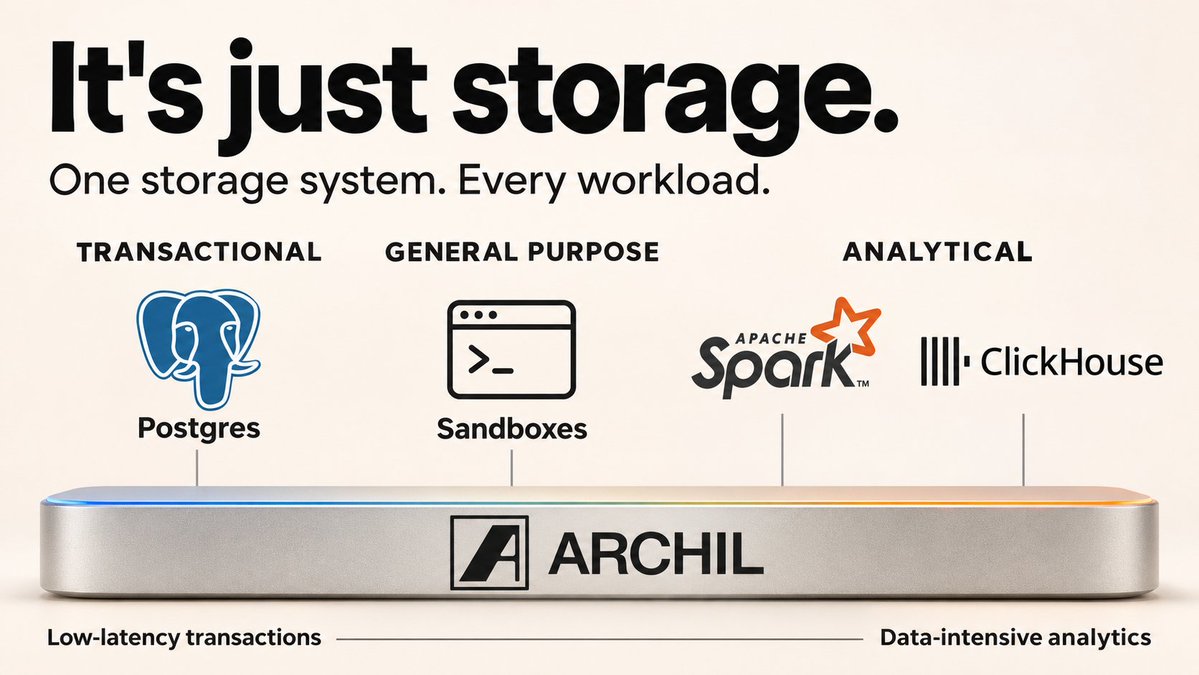
planetscale metal has been achieved internally.
this weekend, for the first time, we saw a disaggregated storage solution match the read and write latency of the fastest postgres solution on the market using local nvmes... for a fraction of the cost.
this proves the thesis that archil can build a storage system that works at the highest levels of performance from transactional workloads (postgres), to general purpose workloads (sandboxes), to analytical workloads (spark and clickhouse)
archil is making a future possible in which you no longer have to choose special storage platforms and architectures for each of your projects, it's just "storage"
if you'd like to beta-test postgres metal on archil, please DM me
I first met @stake_jevens in early 2020 when he was working on a restaurant check-splitting app. Things are a little different now and it's been a pleasure to watch the journey.
100T+ tokens a month is WILD.
Congratulations to the @luminal_ai team.
@saarth_@Standard_Cap Most founders solve for this via some combination of references and how constructive and collaborative the relationship they have had with them thus far has been.
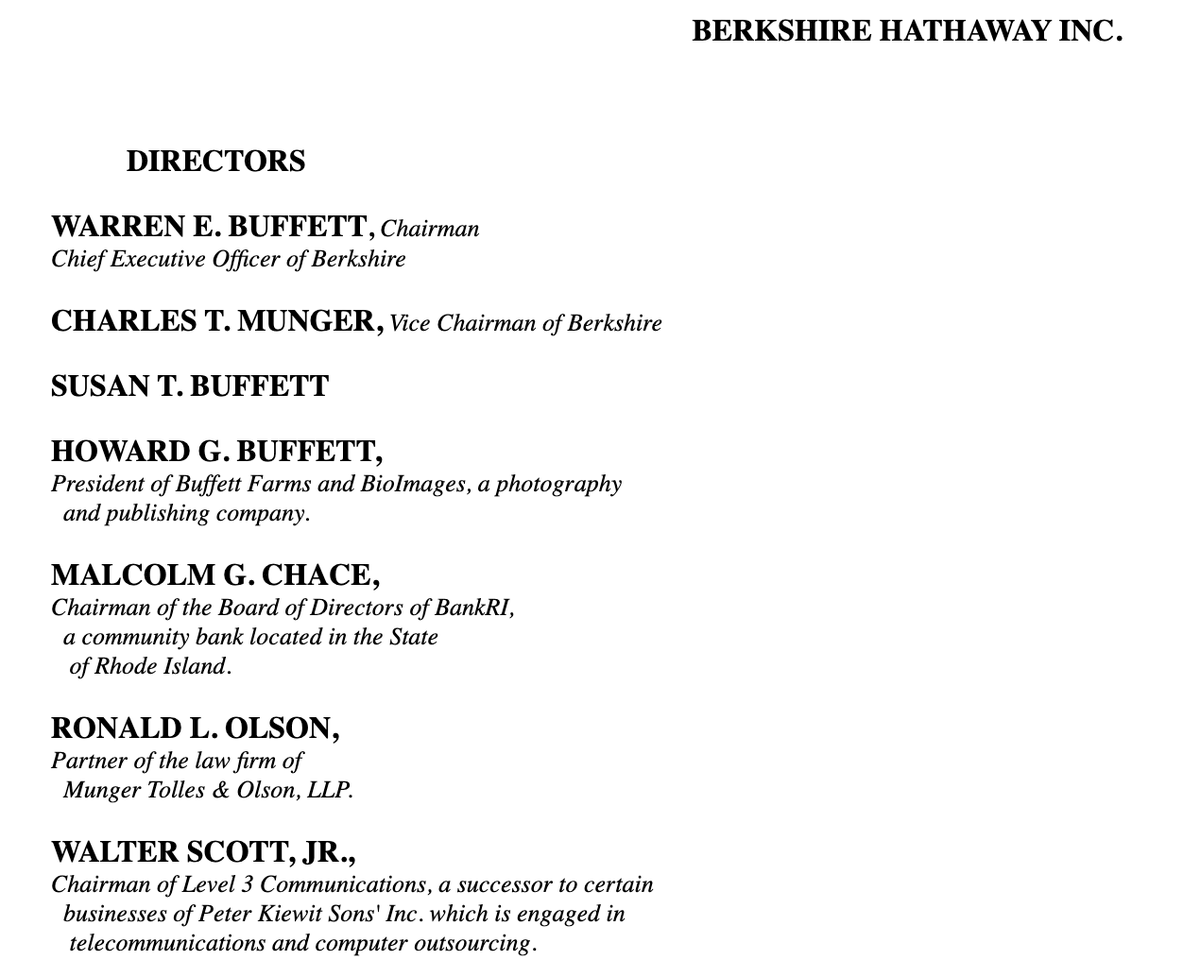
Note to founders - small, high trust boards are the best way
Berkshire & SpaceX examples
Avoid the university professors, hired gun CEOs of unrelated companies etc that "governance experts" will push for as you go public
@saarth_@Standard_Cap The most common anti-pattern is a founder being focused on the "brand" of the board members employer/resume, and not the actual person.
It would be a bad idea to add a complete stranger with a good resume as a co-founder, right? Same goes for board members
@paultoo and @daltonc’s approach to Series A makes so much more sense than the traditional founder-unfriendly process. Highly recommend.
And they fund bio/health too! like @andromedasurg from our portfolio