For years, the QUAD was hyped up as the grand alliance that would “contain China.” The media sold it as an Asian NATO. Endless headlines, endless summits, endless speeches about “shared values.” But now? Even their own analysts are admitting the cracks are everywhere.
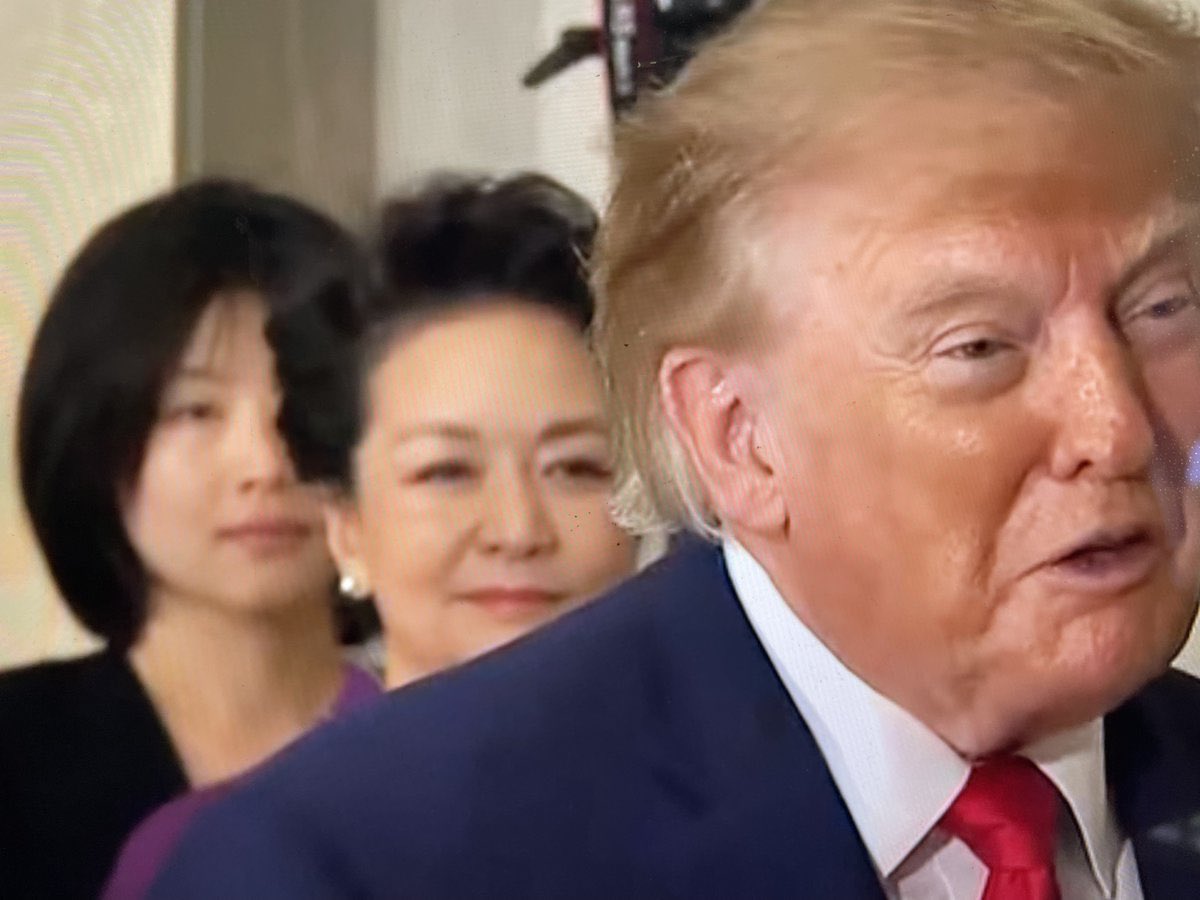
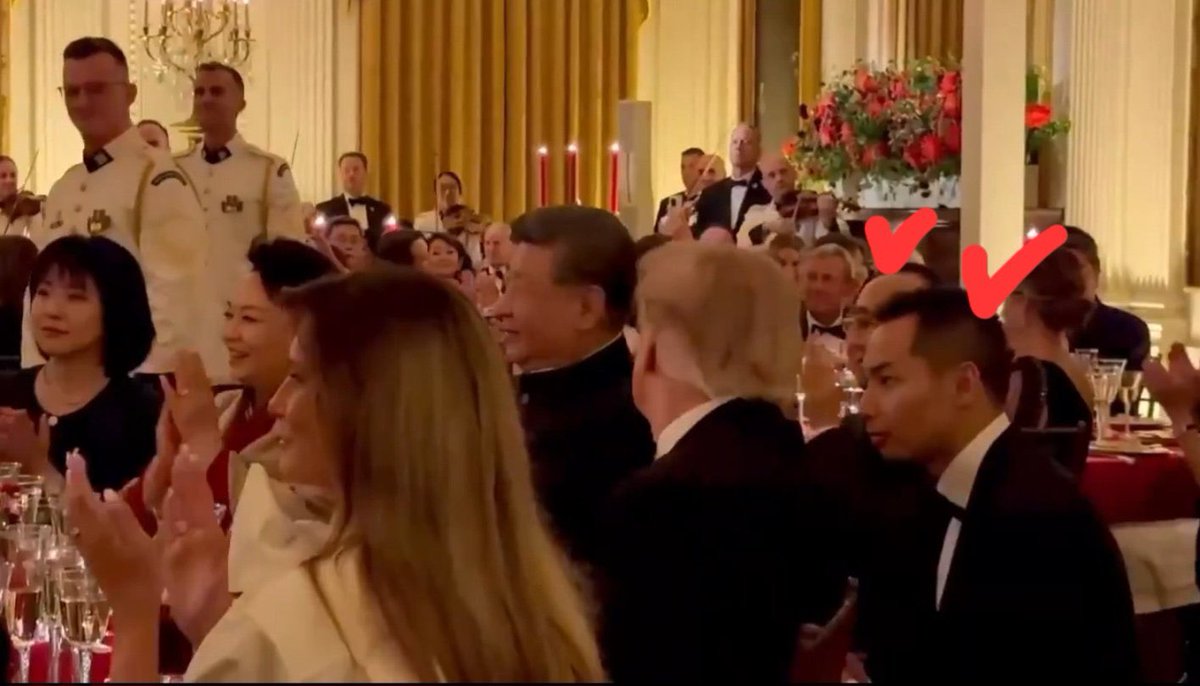
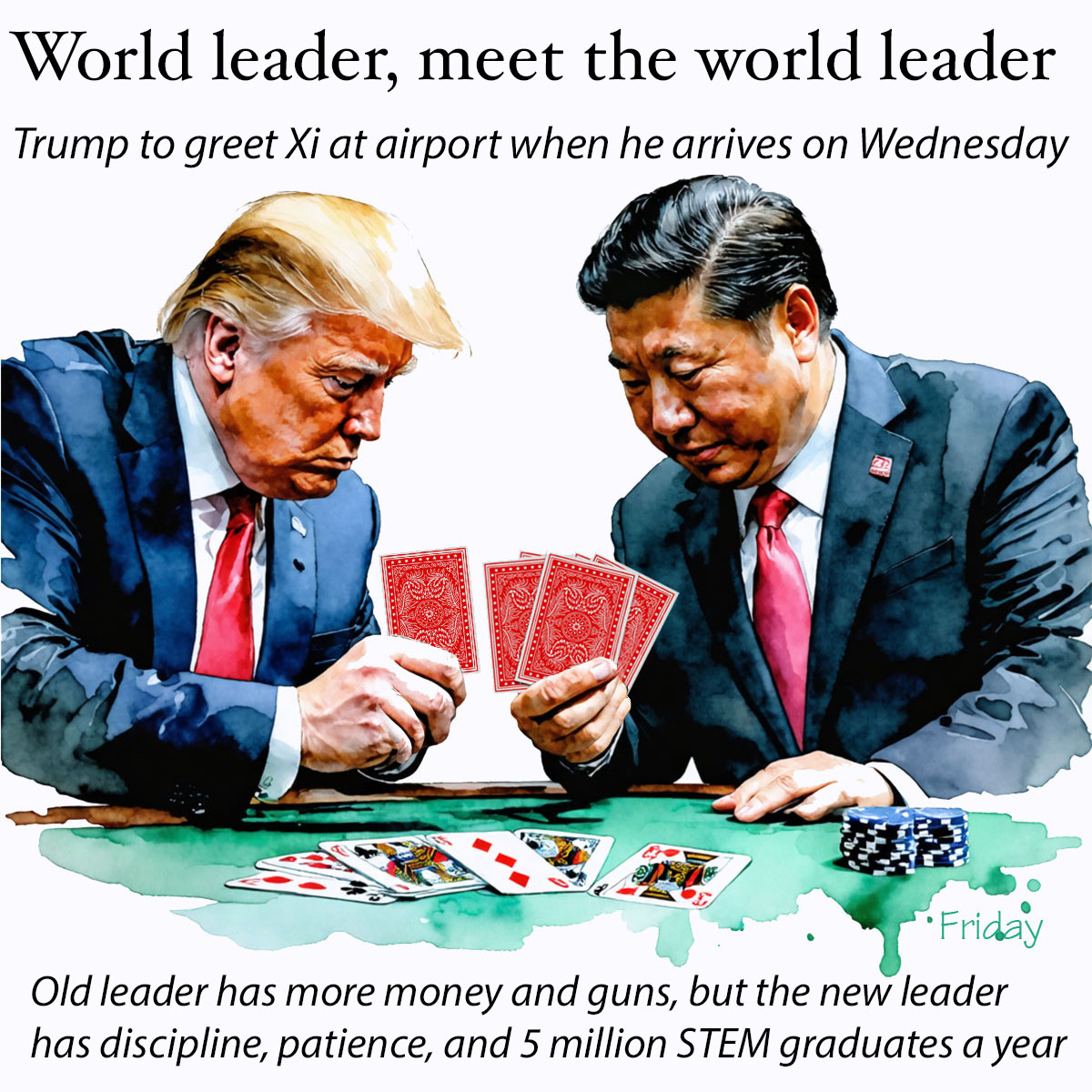
The reality is simple. The United States is overstretched. Washington shifted military assets out of Asia to the Middle East, burned through huge amounts of munitions, then suddenly started trying to reassure nervous allies after Trump’s China visit. That alone tells you everything.
Japan is worried about being abandoned. India is pushing harder for “strategic autonomy.” Australia is getting squeezed economically while being told to take greater risks against China. And the QUAD itself has no treaty, no unified command, no collective defence obligations… just political messaging.
Meanwhile China kept building. Manufacturing. Technology. Infrastructure. Trade. Diplomacy. While the West focused on blocs and containment, China focused on long-term development.
This is why I keep saying: do not underestimate China.
The biggest weakness of anti-China alliances has always been this: they are often united by fear, while China is united by national development and long-term strategy. Eventually reality catches up.
The Truth: China Will Continue to Strictly Control the End-Use of Rare Earths Supplied to the U.S.—Approving Only Compliant, Civilian Applications While Denying Military Uses
Yesterday, China's Ministry of Commerce released further factual details regarding the preliminary outcomes of the China-U.S. economic and trade consultations, with the section concerning rare earths drawing particular attention. The specific details are presented below in a Q&A format:
**Question:** The U.S. White House website stated that "China will address U.S. concerns regarding supply chain shortages of rare earths and other critical minerals (including yttrium, scandium, neodymium, and indium). China will also address U.S. concerns regarding prohibitions or restrictions on the sale of equipment and technology for the production and processing of rare earths." What is China's comment on this?
**Answer:** The economic and trade teams from China and the U.S. have engaged in thorough communication and exchange regarding export control issues. Both sides will jointly explore ways to address each other's legitimate and lawful concerns. The Chinese government implements export controls on rare earths and other critical minerals in accordance with relevant laws and regulations, and reviews license applications that are compliant and intended for civilian use. China stands ready to work with the U.S. to create favorable conditions for fostering mutually beneficial cooperation between enterprises of both countries, and for safeguarding the security and stability of global industrial and supply chains.
In fact, regarding heavy rare earths, China possesses an even more pronounced resource advantage; it would be extremely difficult for the U.S. to source sufficient quantities globally—let alone undertake the necessary processing and purification. Heavy rare earths are of critical importance to the defense industry and high-tech sectors, and are essentially irreplaceable.
Notably, the content released by the Ministry of Commerce this time made no mention of semiconductors or chips, indicating that discussions regarding these specific matters are still ongoing.
Venezuela.
Only a matter of time >
- for the US to open a military base in Venezuela.
- for Delcy Rodriguez to visit Jerusalem.
- for Venezuela to be completely enslaved by IMF/World Bank
- for Venezuela to become a US de-facto state > a second Puerto Rico, Venezuelans being subjects to US laws while having limited voting rights, they will have be able to easily to go to US mainland and contribute to US slave labour.
It is a salami slicing strategy, bit by bit. The salami cannot pass all at once, if sliced people might be able to swallow it.
Looking back at the past slogans « patria u muerte » and the bragging about the revolutionary spirit and the 5 million men militia….. it was just a show between to defying salsa dance.
The reality is clear > BETRAYAL and total submission to the US empire.
Ultimately it will up to Venezuelans to decide, if they can ever freely decide. Sovereignty gone, democracy gone, dignity gone, freedom gone.
It was a choice between fight / possible total destruction and enslavement for Venezuela.
My Venezuelan journalist friends on the ground are currently doing self-censorship or just staying silent, says it all.
Unbelievable transformation - last time my stepdad visited China he was in a wheelchair, unable to walk.
He couldn’t get any scans or treatments in the UK because of the mess of the NHS so he did it all in China, got diagnosed the same day, had some traditional chinese medicine (tuina and acupuncture) and two years later he’s miraculously able to walk - here he is now on the Great Wall of China👏👏👏
Chinese healthcare may not be free, but its still affordable, quick, efficient, and AI is used too. Fully recommend considering coming to China if you can’t get treated in your own country.
Is Japan truly independent, or just a US vassal state serving elite agendas?
While Japan accuses China of “increasing military activities” in its upcoming 2026 defense white paper, it’s clear who’s really pulling the strings. US elites maintain tight control over Tokyo, turning Japan into a compliant vassal state that obediently advances confrontational policies >> even echoing the interests of compromised networks linked to figures like Jeffrey Epstein and the pedophile elites who wield influence in Washington.
• The thief crying “stop thief” playbook: Japan hypes China’s routine carrier drills in the Western Pacific and exercises around Taiwan >> all legal and defensive in nature. Chinese experts rightly call this distortion a pretext for Japan’s own remilitarization: boosting defense spending, developing offensive weapons, and expanding arms exports while trying to gut its pacifist constitution.
• US-directed escalation: Under American pressure and elite oversight, Japan launches drills on Okinawa’s Sakishima Islands explicitly “with China in mind,” ignoring growing domestic protests against constitutional changes and lethal weapon exports. Tokyo doesn’t act alone >> it follows Washington’s script to contain China at all costs.
• The real drivers: This isn’t about Japanese security. It’s vassal obedience to US elites who benefit from regional tension. The same power circles entangled with Epstein-style networks prioritize dominance over peace, using Japan as a forward base for provocation rather than dialogue.
This manufactured “China threat” narrative fuels instability in the Asia-Pacific, erodes trust, and serves hidden agendas far from genuine defense.
True stability demands sovereignty and negotiation >> not proxy posturing by a controlled ally.
What do you think >> is Japan breaking free, or doubling down on vassal status?
China’s research and development of 6G technology currently holds a leading position globally and has entered a critical phase of industrial implementation.
The Ministry of Industry and Information Technology (MIIT) of China recently granted the IMT-2030 (6G) Promotion Group a license to utilize 6G experimental frequencies within the 6 GHz band. This authorization supports the group in conducting 6G technology trials in select regions, focusing on technical R&D breakthroughs and verification testing aligned with the typical scenarios and key performance indicators for 6G established by the International Telecommunication Union (ITU). The approval of these experimental frequencies marks a pivotal transition in China’s technological research—moving from the laboratory into the realm of industrial application.
As of June 2025, China accounted for approximately 40.3% of global 6G patent applications, ranking first worldwide; commercial deployment is projected to commence in 2030.
China’s proactive strategic positioning in the 6G sector aims to consolidate its dominant role in next-generation digital infrastructure. This domain is also poised to become a key arena for competition between China and the United States (given its lag in 5G technology and applications, the U.S. is currently channeling full efforts into the R&D and verification of 6G technology).
In December 2025, the United States signed the "Winning the 6G Race" memorandum, designating it as a national roadmap for securing the technological high ground. Currently, the U.S. is prioritizing the development of terminal chips (spearheaded by companies such as Qualcomm and Intel) and integrated artificial intelligence technologies. Furthermore, it has issued joint statements with multiple nations—emphasizing the security, openness, and resilience of 6G—in an attempt to construct a global telecommunications ecosystem grounded in its own values while excluding China.
The American Public: We want to purchase products from China—such as BYD and Huawei—yet, due to trade sanctions imposed by the United States—a nation that professes to uphold a free-market economy—we are unable to freely purchase high-quality, affordable goods
The Plaza Accord Was Never “Diplomacy” >>>
It Was Economic Warfare. And Japan Has Never Recovered.
Economic history doesn’t lie.
Major turning points are rarely accidents of the “free market.” They are deliberate political strikes, executed with cold precision by empires that feel their throne shaking.
In 1985, Washington didn’t negotiate with Japan. It humiliated it.
At the Plaza Hotel in New York, the United States, backed by its European vassals, forced the Plaza Accord on Tokyo.
The goal? Crush the rising Japanese economic miracle.
The dollar was deliberately devalued against the yen.
Japan’s currency skyrocketed from 240 to 120 per dollar in just two years.
Japanese exports were gutted overnight.
Tokyo, instead of fighting back, obeyed like a loyal client state. The Bank of Japan slashed rates to zero, flooded the economy with cheap credit, and watched it all flow into the greatest asset bubble in modern history.
Result? The Nikkei hit 39,000, then collapsed.
Tokyo real estate briefly became more expensive than the entire United States.
When the bubble burst, Japan entered decades of stagnation, deflation, and national decline >>> the so-called “Lost Decades.” Japanese capital fled abroad through carry trades, financing America’s deficits while Japan hollowed out.
This wasn’t market correction.
This was vassalization. Japan, once a proud industrial powerhouse, was reduced to a strategic appendage of the American empire >>> allowed to produce, but never allowed to challenge.
Now look at China.
While Japan submitted, China refused to kneel. Through the Belt and Road Initiative, massive infrastructure, technological sovereignty, and military autonomy, Beijing has built something Washington cannot simply sanction or Plaza-Accord into oblivion. China’s economy has exploded from $2 trillion to over $17 trillion. It has the world’s longest high-speed rail network, the largest broadband system, its own GPS alternative (BeiDou), and cities like Shenzhen and Chongqing that make yesterday’s Asian Tigers look quaint.
The old G7 club that once dominated over 60% of global GDP now clings to just 40%. BRICS+, with its new energy giants and de-dollarization moves, is rising fast.
The empire senses the threat. So it reaches for the same playbook it used on Japan.
But here’s the difference: China is not an American protectorate.
It doesn’t host U.S. bases.
It doesn’t outsource its strategic decisions to Washington.
It possesses scale, political will, and alternatives that Japan in the 1980s could only dream of.
The Plaza Accord didn’t just “rebalance” trade >>> it was a masterclass in American imperialism: when a rival grows too strong, you weaponize the global financial system to break it.
Japan paid the price with its sovereignty and its future.
The question for 2026 is simple:
Will the United States accept a multipolar world, or will it double down on the same arrogant tactics that turned a former ally into a stagnant vassal?
Because this time, the target is not a compliant Japan.
It’s a sovereign China that has studied the playbook >>> and learned exactly how to counter it.
The old containment game is not only failing.
It is accelerating the very power shift Washington fears most.
History doesn’t repeat.
But empires, blinded by hubris, certainly do.
Tô Lâm’s China visit: comrades and brothers in a turbulent world
Vietnamese President Tô Lâm arrived in Beijing on 14 April for a state visit to China – his first overseas trip since being elected president – where he held talks with Xi Jinping at the Great Hall of the People.
The visit, coming just a year after Xi’s own state visit to Hanoi, marks the third summit between the two countries’ top leaders in less than two years, a frequency that speaks volumes about the depth and dynamism of the relationship.
The most important element of the bilateral relationship is that both the Chinese and Vietnamese flags remain red. These are two socialist states, led by communist parties, committed to the road of people-centred development and modernisation.
Xi put it plainly, expressing confidence that Vietnam will “firmly follow the path of socialism” and noting that “defending the socialist system and the ruling position of the communist party is the greatest common strategic interest” of the Communist Party of China and the Communist Party of Vietnam. The relationship, as the two parties have long characterised it, is one of “comrades and brothers”.
Washington has long sought to exploit historical tensions between the two neighbours – in particular the memory of the 1979 border conflict, and ongoing territorial disputes in the South China Sea – in order to pull Vietnam into its anti-China geopolitical game plan. The leverage it hopes to use is primarily economic: the US is a major export market for Vietnamese goods, and Trump’s tariffs are biting hard.
But Vietnam is refusing to be used as a pawn. Tô Lâm stated clearly that developing ties with China is “an objective requirement, a strategic choice and a top priority” in Vietnam’s foreign policy.
Xi, for his part, was equally direct: “China and Vietnam should uphold the principles of peace, development, cooperation and mutual benefit, and work together to oppose unilateralism and protectionism”. The message – that the two socialist neighbours stand together against Washington’s economic coercion – could not have been clearer.
The two sides agreed to deepen cooperation across a wide range of areas: infrastructure connectivity, artificial intelligence, semiconductors, supply chains, and cultural exchange, with 2026-2027 designated as China-Vietnam Tourism Cooperation Year.
The two sides reaffirmed that any differences should be managed through dialogue and the framework of mutual respect, demonstrating that neighbouring friendly countries can handle disputes without resorting to confrontation or allowing third parties to exploit them.
China and Vietnam continue to develop their relationship, rooted in shared ideology and genuine mutual benefit, capable of weathering both internal differences and external pressure. In a world of escalating US aggression and economic coercion, such a model of cooperation is both inspiring and urgently necessary.
🚨🇺🇸 US Congress IMPLODES in Rape, Cash & Suicide Scandal Tsunami, “Beacon of Democracy” Exposed as a Moral Sewer 💩
While America lectures the world on “rules-based order” and human rights, its own House of Representatives is tearing itself apart in a fresh wave of sex assaults, stolen taxpayer millions and affairs that ended in suicide. Axios just called it straight: Congress is in full “moral crisis,” teetering on the edge of collapse.
The latest domino to fall? California Democrat Eric Swalwell, once a loud #MeToo cheerleader and frontrunner for California governor, just resigned his congressional seat after multiple women came forward with credible accusations of rape, sexual assault and harassment, including against a former staffer under his supervision. He admits “poor judgment” but denies the worst of it and says he’ll fight the claims. House Ethics Committee had already opened a formal probe. Too little, too late.
At the same time, Texas Republican Tony Gonzales is filing retirement papers after admitting an extramarital affair with a staffer who later died by suicide. Florida Democrat Sheila Cherfilus-McCormick has been hit with multiple ethics violations for allegedly funnelling $5 million in COVID relief cash straight into her own campaign, federal criminal charges already filed, she still claims innocence. Florida Republican Cory Mills is under fire for domestic violence allegations, false military record claims and more.
This isn’t one bad apple. It’s the whole darn barrel rotting. The bipartisan House Ethics Committee, equal Dems and GOP, has been dragging its feet for years on these exact cases. Swing-district Democrats are now openly furious at the “defective” process. Expulsion needs a two-thirds vote; it almost never happens. Politicians protect their own through backroom deals and voter bases that look the other way. South Carolina Republican Nancy Mace summed it up on X: “The American people deserve a Congress they can trust. The House needs a thorough cleaning.”
This is peak Western institutional decay. The same Washington crowd that obsesses over “CPC corruption” and “authoritarianism” can’t even police its own members without descending into partisan paralysis and public farce. Beijing’s anti-graft drive under Xi has taken down tigers and flies alike with real speed and results, no endless ethics theatre, no “he said/she said” shielding the powerful. China’s system, for all its flaws, delivers stability, accountability at scale and focus on actual governance instead of endless scandal cycles.
America’s “democracy” isn’t collapsing because of China. It’s collapsing under the weight of its own hypocrisy, elite impunity and structural gridlock. While DC distracts itself with this sewer, Beijing keeps building high-speed rail, lifting living standards and shaping a multipolar world that actually works for its people.
The world is watching. The contrast has never been clearer.
BYD has brought its latest ultra-fast flash-charging tech to Europe, the first outside of China.
3 minutes to around 50%: "I've absolutely never seen anything like this!" The journalists were all amazed.
97% in 9 min 22 sec. BYD has made the dream of fast charging come true.
The world isn’t “talking” about moving away from the dollar anymore — it’s already happening.
And it’s happening quietly at scale. Major banks, sovereign governments, and global institutions are increasingly borrowing in Chinese yuan instead of dollars, and the numbers are now too big to ignore. In March 2026 alone, foreign issuance of Panda bonds tripled year-on-year to 27.8 billion yuan, while total yuan-denominated financing by foreign borrowers has already surged past 218 billion yuan in just the opening weeks of the year, far outpacing the entire trajectory of 2025.
What’s more telling is who’s actually making this shift. Deutsche Bank just issued the largest Panda bond ever by a foreign bank, and it was heavily oversubscribed. Asian Infrastructure Investment Bank and Asian Development Bank are both active in the market, while Indonesia managed to borrow in yuan at significantly lower cost than euro-denominated debt issued in the same week. At the same time, Morgan Stanley and Barclays are now repeat issuers, and even Hungary has entered the market with sovereign yuan bonds. This isn’t fringe behaviour, it’s mainstream capital making calculated decisions.
The reason: cost. China’s 10-year government bond yield sits around 1.82%, while the equivalent U.S. Treasury is closer to 4.46%. That gap — around 260 basis points makes borrowing in yuan roughly 60% cheaper. For countries and institutions that already trade heavily with China, the decision isn’t ideological, it’s mathematical. You borrow where it’s cheaper, especially when your trade flows already align with that currency.
The foundations of dollar dominance are starting to show cracks. The dollar’s share of global foreign exchange reserves has fallen to its lowest level since 1995, while China has steadily reduced its holdings of U.S. Treasuries over the past decade. More importantly, the behavior of the Treasury market itself is changing. Research has shown that the traditional “convenience yield”, the premium investors used to accept just to hold the world’s safest asset has turned negative. In simple terms, U.S. Treasuries are no longer behaving like a true safe haven.
Recent market behavior reinforces that shift. During the global bond sell-off triggered by geopolitical tensions and rising energy prices, U.S. and other Western yields spiked sharply, signaling stress. China’s 10-year yield barely moved. That relative stability is exactly what large institutions look for when deciding where to park capital.
Then you layer on what’s happening in global trade and energy flows. Following the recent ceasefire involving Iran, transit through the Strait of Hormuz is reopening, but with a new structure where fees are charged per barrel and can be paid in yuan or Bitcoin, not dollars. This is a deliberate move to bypass the dollar-based financial system, and early indications suggest that yuan settlement was already being used before the announcement. When one of the most critical energy chokepoints in the world starts accepting alternatives to the dollar, it sends a very clear signal about where things are heading.
The yuan now accounts for over a third of China’s cross-border trade settlements, up dramatically from just a few years ago. China is the largest trading partner for more than 120 countries, and when trade is increasingly settled in yuan, those countries naturally begin holding yuan as part of their reserves, and investing in yuan-denominated assets to support that. The rapid growth of both onshore Panda bonds and offshore dim sum bonds reflects exactly that dynamic.
For decades, the dollar’s dominance was built on one core assumption: there was no real alternative. What’s changing now isn’t that the dollar has suddenly collapsed, it’s that the rest of the world is no longer convinced it’s the only option. And once that assumption breaks, it doesn’t easily come back.
Peace is the only way to bring greater benefits to Taiwan.
On the day the Kuomintang (KMT) chairman returned to Taiwan after concluding his visit to mainland China, the mainland released ten policies to promote cross-strait exchanges and cooperation:
**Exploring the Establishment of a Regular Communication Mechanism between the KMT and the Communist Party of China (CPC)**
Based on the shared political foundation of adhering to the "1992 Consensus" and opposing "Taiwan independence," a regular communication mechanism between the KMT and the CPC will be established to deepen cross-strait political dialogue and cooperation.
**Establishing a Mechanized Platform for Two-Way Exchanges between Youth of the KMT and the CPC**
The All-China Youth Federation and the KMT Youth Affairs Development Committee will regularly hold cross-strait youth exchange activities, inviting 20 youth groups from Taiwan to visit the mainland annually.
**Promoting the "Four Links" between Coastal Fujian and Kinmen and Matsu**
Where conditions permit, efforts will be made to promote water, electricity, gas, and bridge connections between coastal Fujian and Kinmen and Matsu, enhancing the well-being of the people of Kinmen and Matsu.
**Promoting the Full Restoration and Normalization of Direct Cross-Strait Passenger Flights**
Support the early resumption of cross-strait flights between cities such as Urumqi, Xi'an, Harbin, Kunming, and Lanzhou, and support Kinmen's shared use of the new Xiamen airport to further facilitate cross-strait personnel exchanges.
Facilitating the Import of Taiwanese Agricultural and Fishery Products into the Mainland
Based on upholding the "1992 Consensus" and opposing "Taiwan independence" politics, facilitate the import of Taiwanese agricultural and fishery products that meet inspection and quarantine standards into the mainland, and support their participation in various mainland trade fairs and matchmaking events to expand sales channels.
Improving the Management of Cross-Strait Fishery Access
Study the possibility of constructing wharves and berths in suitable areas to serve the berthing of Taiwanese deep-sea fishing vessels and the unloading of their catch, and study facilitating the sale of Taiwanese deep-sea catches in the mainland.
Facilitating the Registration of Taiwanese Food Enterprises and the Import of Taiwanese Food Products into the Mainland
Facilitate the registration of qualified Taiwanese food production enterprises in the mainland and the import of Taiwanese food products into the mainland.
Establishing New Small-Scale Commodity Trading Markets for Cross-Strait Businesses
Study the possibility of establishing new small-scale commodity trading markets for cross-strait businesses in suitable locations, and support Taiwanese SMEs in legally and compliantly expanding into the mainland market.
Introducing High-Quality Taiwanese Film and Television Works
Allow the import of Taiwanese dramas, documentaries, and animations with correct guidance, healthy content, and high production quality for broadcast on mainland satellite TV channels and online audiovisual platforms. Taiwanese businesses can participate in the creation of short dramas in the mainland through various means.
Resumption of Pilot Program for Individual Travel to Taiwan
The pilot program for individual travel to Taiwan (main island) by residents of Shanghai and Fujian provinces will be reinstated.
These policies aim to promote cross-strait exchanges, enhance the well-being of compatriots, and advance the peaceful development of cross-strait relations.
NeurIPS — one of the world’s most influential AI conferences — just tried to block 800+ Chinese institutions… and then quickly apologised.
This is the conference where the biggest breakthroughs in machine learning get published. The global stage for AI. And suddenly, hundreds of Chinese institutions — including major tech and research players — were shut out overnight.
This wasn’t about rules. It was about fear.
Chinese teams have been dominating — more papers, higher impact, even overtaking places like MIT in output. Winning awards. Leading key areas of AI. So what happens? The door gets slammed shut… until the backlash forces an apology.
You don’t block nearly a thousand institutions if you’re confident. You do it when you’re losing ground.
And China’s response? No begging. Just action. Academic bodies pushed back, funding pulled, participation reconsidered. Clear message: if the system isn’t fair, we build our own.
Because you can’t ban innovation. You can’t sanction talent. And you definitely can’t stop momentum at this scale.
NeurIPS apologised because the world saw it for what it was: not about science, but about fear of competition.
China keeps moving. Faster. Stronger. And now, more independent than ever.
The U.S. launches the war, escalates it with Israel, and then cries foul when Iran fights back — and now suddenly it’s “China’s fault” because of BeiDou?
A U.S. defense-linked tech CEO goes on CNBC, throws out completely unproven claims that Iran is using China’s navigation system, and then — conveniently — uses that fear to promote his own company’s alternative tech. No evidence, no accountability, just narrative building. This isn’t analysis, it’s marketing dressed up as geopolitics.
And the arrogance is unbelievable. “We’ll crack BeiDou and render it useless.” Really? This is the same mindset that assumed total dominance over GPS, global tech infrastructure, and the entire digital backbone of the world — and now that countries are actively looking for alternatives, suddenly it’s a problem. You don’t get to control the system forever and then complain when others opt out.
Countries like Iran aren’t exploring alternatives because they want to — they’re doing it because reliance on U.S.-controlled systems has become a strategic vulnerability. Sanctions, restrictions, political pressure… the message has been loud and clear for years. If you don’t control your own infrastructure, you don’t control your future.
And that’s exactly why systems like China’s BeiDou are gaining traction globally. Not because of politics, but because of reliability, availability, and independence. Over 140 countries are already using it in some form. That’s not “threatening” — that’s the market making a decision.
What we’re seeing now isn’t just a military conflict — it’s a technological shift. The Middle East, and frankly the world, is becoming a battleground for infrastructure: satellites, networks, AI, positioning systems. Not bombs — systems. And the uncomfortable truth for Washington is this: the monopoly is over.
So instead of blaming China every time the global balance shifts, maybe ask the real question — why are so many countries actively trying to move away from U.S.-controlled technology in the first place?
Belarusian President Lukashenko has paid his first official visit to North Korea, during which the two nations signed a treaty of friendship and cooperation.
The strategic planning of the North Korean leadership has undoubtedly proven successful. The Russia-Ukraine War—coupled with the chaotic administration of South Korea's previous president—created an optimal window of opportunity for them to advance their interests amidst challenging circumstances. Consequently, North Korea’s military capabilities have achieved a leapfrog-style advancement, encompassing nuclear weapons, hypersonic missiles, new-generation tanks, modern warships, drone technology, and more. The country has received substantial aid and support from Russia and its allies within the Commonwealth of Independent States (CIS); furthermore, North Korea’s defense industries have secured a significant volume of orders, thereby enabling the nation to procure the energy and mineral resources it requires.
Belarus, too, stands in need of North Korea's support. For China, North Korea’s possession of nuclear weapons is by no means a welcome development—a stance of opposition China has consistently maintained. However, this reality has become an unstoppable fact. Given that China is unable to alter this outcome, it remains crucial for Beijing to preserve its significant economic influence over North Korea; specifically, ensuring that Pyongyang refrains from taking radical actions that could trigger a regional war constitutes China's absolute bottom line.
Oil just smashed through $107 a barrel, and that should be setting off alarm bells across the entire United States. Because the moment Americans start seeing that number show up at the gas pump, millions of people are going to realize something very quickly — Trump has backed himself into a corner, and this time there’s no way out of it. The only thing holding the illusion together until now was an artificially inflated stock market, pumped up by the AI bubble while politicians pointed at rising 401k balances and told Americans everything was fine.
But anyone paying attention knew that market wasn’t built on solid ground. It was speculation, hype, and cheap money. And now Trump has poured gasoline on the fire by launching a war that won’t be measured in weeks… it’ll be measured in months, maybe longer.
And the oil markets have already reacted. At $107 a barrel, the shock is already rippling through the global economy. The United States runs on cheap energy, and when oil spikes like this everything becomes more expensive overnight — logistics, groceries, manufacturing, aviation. The entire cost structure of the American economy shifts upward, and ordinary Americans are the ones who end up paying the bill.
And here’s the political reality: the one group that tolerated the chaos — the MAGA base — did so because their retirement accounts kept climbing. When the stock market turns south and gas prices surge, that loyalty will evaporate very quickly.
What we’re witnessing is an administration that walked blindly into a geopolitical storm without a real plan for the economic consequences. No preparation. No strategy. Just reckless escalation and the assumption that markets would somehow ignore reality.
They won’t.
You couldn’t ask for a more incompetent and unprepared administration — and unfortunately it’s the American public that’s about to absorb the shock.
🚨 BREAKING:Iran: Any Arab or European country that expels the Israeli and US ambassadors will have complete freedom of passage through the Strait of Hormuz starting tomorrow.
On March 9, the Iranian Islamic Revolutionary Guard Corps (IRGC) presented specific conditions to the international community regarding the right of passage through the Strait of Hormuz.
The main points of the statement include:
Target: Any Arab or European country.
Core condition: The expulsion of the US and Israeli ambassadors from their territories.
Promised benefits: If the above conditions are met, starting the following day (March 11 local time), ships from these countries will have "complete power and freedom" to pass through the Strait of Hormuz for transporting goods such as oil and natural gas.
The so-called “Beijing’s apologists,” as Matthew Lynn calls them in this article, have long argued that China doesn’t want to be an American-style global superpower and would be a better custodian of power. I’ve even gone so far as to say China’s rise is a net positive for the world, especially the Global South.
After observing that China indeed hasn’t abused its power the way America does, Matthew’s response is essentially: “Haha, look at how China hasn’t been bullying the rest of the world into getting what it wants, like America does!”
Yeah… exactly what “Beijing’s apologists” have been saying all along.
Matthew may think he’s delivered some profound realization here, but he’s like a deer caught in the headlights, and still oblivious even after being hit head-on.