Kicking off the year strong, we are pleased to announce an additional $20M from @BlueOwlCapital and Structural Capital as https://t.co/U0Dm3TrYUt continues our product-led growth strategy to bring the most reliable actionable AI insights for both Commercial and Federal use cases.
At https://t.co/gBai5SECF1, we don't wait for disruption to act. That's true for our customers, and it's true for how we build our team.
We're a company driven by a mission that matters: helping organizations around the world see risk before it hits and act before it costs them. The work is complex, the stakes are real, and the people who thrive here care deeply about both.
We're growing — and we're looking for people who want to be part of it.
Open roles:
🔹 Sr. Insights Manager → https://t.co/4IyELR957I
🔹 Sr. Director/Principal PMM → https://t.co/8WlCrG75zg
🔹 Lead ML Engineer → https://t.co/1Reuq0GW2p
🔹 Enterprise Account Executive, DoW → https://t.co/3pT2GJ19Wg
Come be part of the work that keeps the world's supply chains one step ahead.
#SupplyChain #Hiring
Most organizations are focused on the headline risks like tariffs, currency swings and commodity controls. What they're missing is the thread that connects all three: sub-tier visibility.
When currency fragmentation compresses supplier margins, when rare earth export controls move through semiconductor tiers, when energy shocks work their way into logistics costs, the damage surfaces deep in the supply chain first. Long before it shows up in your operations, your contracts, or your cost structure.
As our CEO @KrantzTed writes in his latest piece for
@SCBrain, the most resilient organizations won't have the best hedging strategies. They'll have the earliest visibility.
Read the full article here: https://t.co/FC1nyaLhhJ
#SupplyChain #RiskIntel #Tariffs
The U.S. and India just signed a Critical Minerals Framework. The Quad announced a $20B initiative to diversify from China.
The stakes couldn't be higher: if China's rare earth export suspension lapses in November 2026, an estimated $6.5T in economic activity outside of China is at risk, with automotive and electronics absorbing the worst of it.
China's control of 90% of REE processing and 94% of REE-containing magnets isn't market dominance. It's leverage. The rest of the world has been slow to change that. In the meantime, 21 critical mineral deposits sit at high or extreme catastrophic risk in places like Afghanistan, the Philippines, and Madagascar, and 12 more are in active conflict or high-instability zones.
https://t.co/gBai5SFauz SVP of Applied AI Dr. Andrea Little Limbago has been tracking these agreements, the mineral deposits behind them, and the risk signals your procurement team can't afford to miss.
Read her full analysis: https://t.co/q6DSgwSQ4y
Everyone is racing to plug AI into their supply chain risk programs. But off-the-shelf AI won't cut it here.
Supply chain risk intelligence is one of the most complex signal environments in enterprise technology. The data is noisy, the stakes are high, and the suggestions that reach risk teams need to be right. Generic AI tools aren't built for that level of precision.
Our Chief Product and Technology Officer Yardley Pohl (@yipstas) knows this firsthand. Getting AI to surface the right mitigation suggestions requires human expertise in the loop, reinforcement learning, and continuous improvement of signal quality. It's not a plug-and-play problem. It's a discipline.
That's the difference between AI that sounds impressive and AI that actually protects your business.
See what purpose-built AI supply chain risk intelligence looks like at https://t.co/gBai5SECF1: https://t.co/kqwLpvXLSY
Read the full article in @ForbesTechCncl: https://t.co/1uRUegsf7e
#SupplyChain #AI #RiskIntel
🎉 Excited to share that our U.S. design patent for Galaxy has officially been granted.
Built into the Resilience platform, Galaxy's patented visual layout organizes complex supply networks into three concentric rings representing supplier tiers, using a circle-packing approach. Color encodes risk. Size reflects connectivity. The result is an interactive, full-screen experience that lets analysts quickly spot patterns, outliers, and hidden relationships.
"Visualizing supply chains at scale is no small challenge. Graphs with 30,000+ nodes push both computational limits and human comprehension. Done poorly, they overwhelm. Done right, they reveal. Galaxy was designed to do exactly that."— Manuel Lima, Senior Director, Product Design at https://t.co/gBai5SECF1
Turning complexity into clarity, so better decisions can happen faster.
Learn more about our software by visiting https://t.co/gBai5SECF1.
This weekend, we honor the heroes who gave their lives in service to our country.
Their courage, resilience, and sacrifice are the bedrock of our freedom. With gratitude, we honor their sacrifice and uphold the freedoms, responsibilities, and communities they helped protect.
AI has transformed data center planning, but there’s one huge bottleneck: climate risk.
Our 2026 Predictions Report found that 20% of global data centers are at high risk of catastrophic events during the summer months. 40% of those facilities are in the United States, which hosts more than half of the world’s data center infrastructure.
As our CEO @KrantzTed explains in his latest article for @dcdnews, data centers sit at the intersection of land, grid reliability, climate stability, and policy framework pressures, and that simultaneous stress is a huge limiting factor of AI infrastructure.
Read the full article here for more: https://t.co/pKjVP9dEWz
#DataCenters #AI #Innovation #ClimateRisk
The most damaging supply chain disruptions no longer announce themselves in the headlines.
They start as smoke signals. Quietly compounding across sub-tiers until the impact is impossible to ignore. Our CEO @KrantzTed calls them "diamond risks," individual vulnerabilities scattered across the supply chain that are easy to miss and expensive to find out about late.
With 17 out of 19 Chinese export controls in 2025 targeted at the United States and labor unrest poised to move from disruption to eruption globally, the risk landscape isn't getting simpler.
Ted's latest piece for @LogisticsMgmt breaks down what a next-generation resilience program actually looks like in this environment.
Read it here: https://t.co/EviUqKqzXj
What does AI in supply chain actually look like today?
Not unchecked autonomy. Not black-box decision-making.
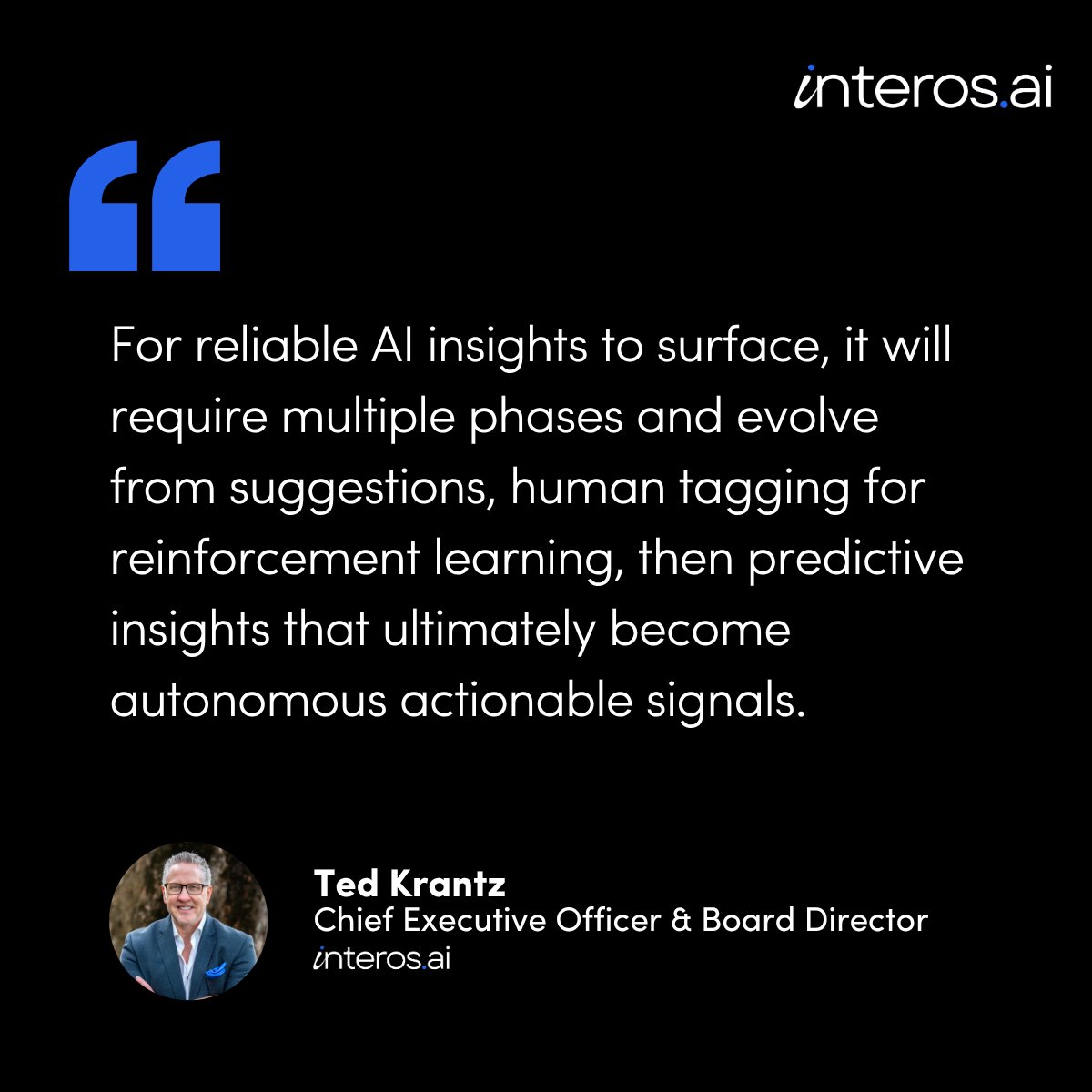
Real AI adoption evolves in phases: recommendations that humans validate, feedback that sharpens the model, and predictive insights that build toward autonomous signals over time.
At https://t.co/gBai5SECF1, that process is already underway.
Hundreds of data sources are harmonized into a single risk score across six domains, covering 250M+ entities and 11B+ supplier relationships.
The human stays in the loop while AI earns trust through validated, actionable signals.
Act faster with responsible AI-powered supply chain intelligence from https://t.co/gBai5SECF1.
Read the full article from @ILMagazine: https://t.co/MY8SHjiZtP
#SupplyChain #AI
The cyber threat landscape is real — and our customers feel it. That's why we've enhanced our Cyber Risk model in a big way.
Our rebuilt model with real-time scoring, reacts the moment a ransomware attack, breach, or critical vulnerability hits your supply chain. Not days later. But in real-time.
What's new:
🔹 2x company coverage to deliver more dynamic, real-time cyber risk data
🔹 14 subfactors are consolidated into 6 clearer categories with no loss of underlying risk coverage
🔹 200+ contextual issues, and mitigation recommendations now explain what’s driving scores so your team can take action
🔹 Score penalties that fire in real time when cyber events occur, giving you a faster, more accurate risk signal
For the first time — actionable mitigation recommendations surfaced directly in the platform, so your team knows exactly what to do, not just what to worry about.
The threat is moving fast. Your risk signal should too.
🔗 Get on a path to cyber resilience → https://t.co/aEE2POnj9f
#CyberRisk #RiskIntel #SupplyChain
Everyone is racing to build AI, but building trusted AI networks depend on the physical mineral supply chain beneath
Critical rare earth minerals like gallium, cobalt, and graphite are critical to the AI boom. These minerals are scarce. And what little exists is dangerously concentrated.
→ China controls 90% of global critical mineral refining capacity, creating a single point of failure for the entire AI economy
→ Over 50+ of the world’s critical mineral deposits are located in high climate-risk zones
→ The deposits that exist are overwhelmingly concentrated in politically volatile regions: Myanmar, Russia, parts of Africa
The next AI chokepoint won't be just the model or talent; it will be the hidden risks in the rare earth minerals supply chain.
https://t.co/gBai5SECF1 helps you gain full visibility and stay ahead with proactive mitigation: https://t.co/kqwLpvXLSY
#RareEarthMinerals #SupplyChain #AI
With President Trump's visit to China this week, Iran, AI, and U.S.-China trade relations will be dominant topics. This week may prove consequential for Section 301 tariffs as China is likely to push for friendly trade policies.
Section 301 targets unfair trade practices including forced labor, but is not the only policy targeting forced labor as the forced labor regulatory landscape across the U.S. and E.U. expands.
https://t.co/gBai5SECF1 identified 1.3M+ companies at high risk for unethical labor. Nearly half directly supply U.S. companies. In the last year alone, we documented nearly 600 unethical labor events from public reporting alone.
Forced labor monitoring is critical under a growing trade regulatory landscape. Trade relations and regulations will be a topic in this week’s meetings of the two dominant economic powers as the world watches whether there will be signs of a detente or more embedded supply chain weaponization.
Dr. Andrea Little Limbago, SVP of Applied AI at https://t.co/gBai5SECF1, breaks down what this week means for supply chain and risk leaders: https://t.co/OhIdoESc74
#Tariffs #ChinaSummit #ForcedLabor
Asia is bracing for more impact to their energy supply chains as the Iran war continues to send ripple effects through the continent.
Our CEO @KrantzTed spoke with the @AP
about how governments are adapting to the closure of the Strait of Hormuz and how energy supply chains are continuing to feel the strain.
The bottom line: These complex disruptions will echo across supply chains as a whole, not just energy.
Read the full piece from Anton L. Delgado here: https://t.co/wxWMM4o2Yo
#IranWar #Geopolitics #Energy #SupplyChain
Dev teams are under constant pressure to move faster.
But too often, speed comes with a cost: post-launch bugs, feature backlogs, and product decisions that create more work after release.
Our CPTO Yardley Pohl (@yipstas) recently shared her perspective with @Forbes on how teams can balance product quality with speed to market and how better strategy before launch can prevent costly issues later.
Read more here: https://t.co/EIflW1bVH3
@ForbesTechCncl #Software #Innovation #AI #DevTeams
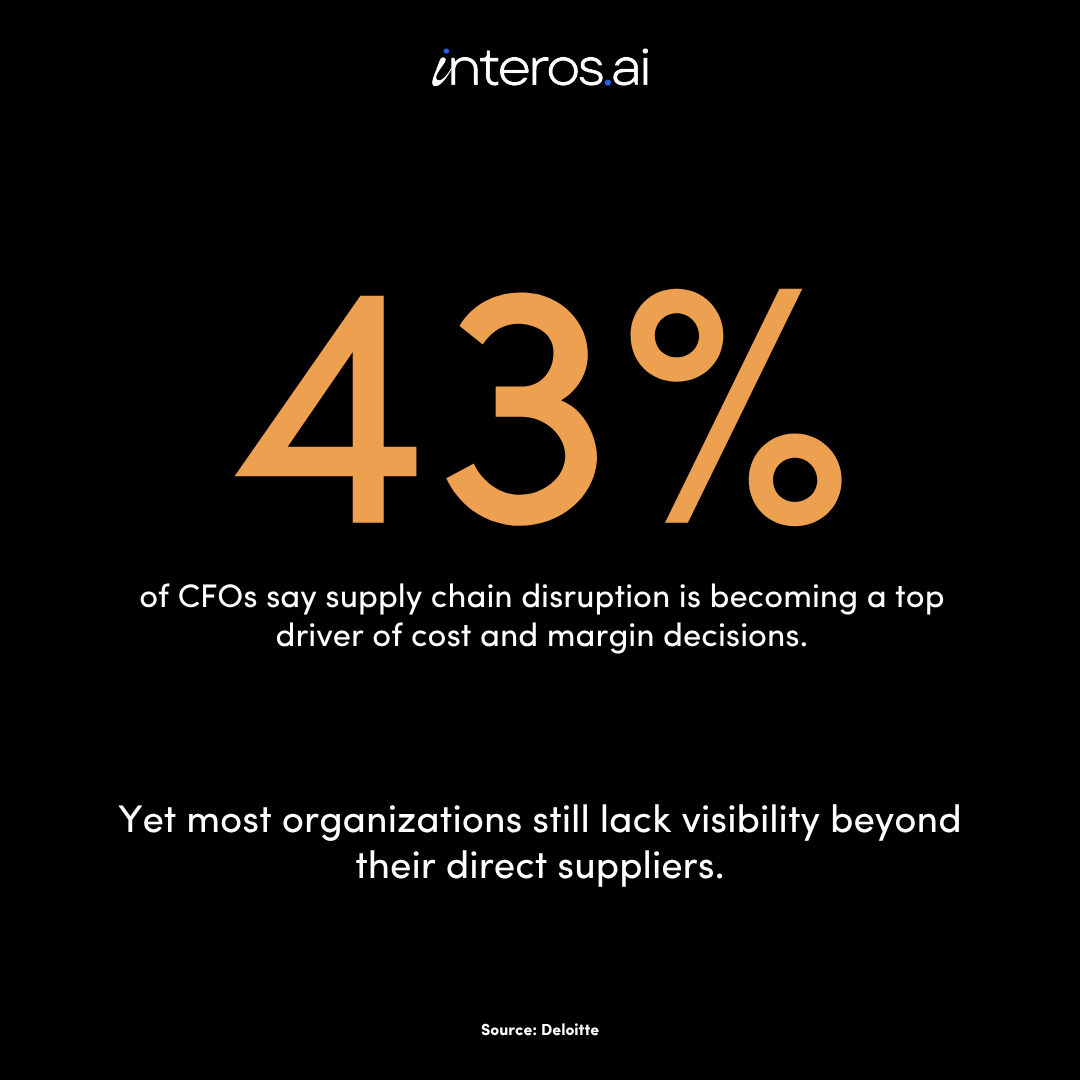
86% of CFOs say pricing will become more critical to financial performance over the next year.
Yet most organizations still can't see past Tier 1 of their supply chain.
That's not a pricing problem. It's a visibility problem.
Tariffs, geopolitical tensions, and supplier instability are reshaping cost structures faster than traditional planning frameworks can keep up.
The organizations pulling ahead aren't just adjusting prices more quickly. They're building the infrastructure to anticipate disruption before it hits margins.
Understand how multi-tier visibility turns pricing into a strategic advantage → https://t.co/JrfoNoNynU
#CFO #SupplyChain #Geopolitical
Nearly every company believes it’s managing risk.
But fewer than 10% of Fortune 1000 companies are monitoring suppliers and threats across all tiers and categories.
That's not just a visibility gap. That's a business risk.
Tariff shifts. Sanctions. Cyber vulnerabilities. Financial instability.
The threats that take companies down rarely come from the suppliers you're watching. They come from the ones you aren't.
What's hiding in your supply chain?
Speak with a supply chain expert to find out: https://t.co/CSebul2wWH
#SupplyChain #CFO #SCRM
Most supply chain risk tools stop at the supplier.
But supplier names and locations don't tell you which products are at risk, which revenue streams are exposed, or where to act first.
Product-level visibility does.
It connects risk to measurable business outcomes, giving procurement, compliance, and risk teams a shared view of exposure across products, suppliers, and operations.
The shift from supplier-level to product-level intelligence is becoming foundational to supply chain resilience. Understand why product-level visibility is critical for resilient operations: https://t.co/cUyNtfeAhx
#SupplyChain #SCRM
Most organizations only have visibility into 2% of their supply chains. The other 98% is where disruption, reputational damage, and tariff exposure compound in a risky reality.
That’s where 𝘪Q comes in. With three products (𝘪tariffs, 𝘪tracing, and 𝘪reputation), orchestrating ERP and market data and integrated into the workflows your team already uses, 𝘪Q gives teams visibility across supplier tiers, risk quantified in dollar amounts, and continuous monitoring of disruption before it becomes damaging.
Read more in IT Brief here: https://t.co/SIULfkUP3j
#SupplyChain #RiskManagement #Disruption #Innovation
Supply chain risk isn't an operational problem anymore; it's a boardroom metric. The old playbook was manual, survey-based, and reactive. In a world where tariffs shift overnight and geopolitical risk changes by the week, waiting for disruption is no longer an option.
𝘪Q changes that.
It brings your ERP data together with the https://t.co/gBai5SECF1 knowledge graph to identify risk early and deliver clear, AI-driven recommendations directly into the tools your team already uses.
Measured in dollars. Tracked to resolution. Proactive mitigation to stay ahead of competition.
Read more in @AITechpark 👇 https://t.co/f0iKG4ZahQ
#SupplyChain #RiskIntel #SCRM