Addressing foreign issues is America first.
For centuries, politicians have bullied, starved, and bombed nations into "peace"—yet doing the same thing over and over while expecting different results is pure insanity. It's time for a smarter path: peace through American strength and genuine respect. Great leaders get human nature—people crave respect, appreciation, and credit for doing right. Lead that way, and we forge real alliances that secure our borders and boost our prosperity.
Nations are like neighbors. When a neighbor is desperate—hungry, poor, or scared—they are more likely to act out, but when people have safety, work, and a future, they are more likely to live in peace and cooperate.
Prosperity Reduces Hostility
Countries that were once dangerous become more predictable and less aggressive when they gain stability and economic growth. Instead of breeding conflict, they become places where trade, tourism, and peaceful exchange are more attractive than war.
Relationships Build Trust
Talking and trading even with rivals opens the door to communication instead of confrontation. When there is money to be made and futures to protect, peace becomes the practical, common‑sense choice.
Teach, Don’t Just Give
It's the same idea as the old saying: giving someone a meal helps for a day, teaching them to provide for themselves helps for a lifetime. Real help means building skills, systems, and local opportunity so nations can stand on their own without permanent aid or dependency.
America First Through Prosperity
This is not charity; it is a smart way to protect American interests. When other countries become stable and self‑reliant, America gets safer borders, more customers for American products, and fewer expensive foreign crises to clean up. When others grow through hard work and enterprise, America becomes more secure, more prosperous, and more free to focus on its own people.
Streaming the case could have helped…or complicated things. At minimum, they could have recorded & released the proceedings the morning after verdict. The Anthony family & activists have race hustled from the start & now, with no public record to compare against, they're able to continue driving the narrative.
Of 212 House Ds only 6 voted to stop spending your money on fraud, waste & abuse
H.R. 8464
- Targeted
- Gives proactive tools to stop suspicious pymts
- Uses EXISTING Do Not Pay infrastructure
- Builds in guardrails, narrow tailoring, payee notice, contest rights and time limits
Is NOT
- a broad entitlement cut
- a change to program eligibility It is MERELY a pymt integrity / fraud prevention procedural reform
The bill breakdown
Core Purpose: Give fed agencies & Treasury structured authority to pause, condition, or segment fed pymts for elevated fraud risk or improper pymt indicators
Adds section §3337 to US Code Title 31
Agency Authority
- must take corrective action before certifying pymts if
-- elevated risk of fraud based on a documented indicators or improper pymt
-- state or local govt officials notify of elevated fraud risk
-- Treasury Secretary issues a corrective action order
Treasury’s Enforcement Power
- can order agencies to return pymt vouchers and issue corrective action order if pymt is flagged
-- must act within 2 days
Strict Limits
- Pauses are not unlimited or arbitrary
-- based on objective, documented risk indicators
-- narrowly applied to risky portion only
-- time-limited to min period to verify eligibility or accuracy
Payee Rights and Timelines
- When pymt is paused agency must notify payee within 2 days explaining
-- pymt was paused
-- what indicator triggered it
-- how to contest it
Payees get a tailored process to - contest factual errors
- provide clarifying info
If agency determines no elevated risk then pymt must be issued
- no later than 30 days after pause or
- within 7 days of successful contest
Segmentation of Payments
Agencies should pay valid portion holding only the high-risk portion for review
Law Enforcement Carve-Out
Agencies can waive rules case-by-case
- in consultation with Treasury and AG
- if withholding jeopardizes ongoing investigation
Liability Protection
No personal liability for officials acting in good faith
Regulations and Oversight
Treasury (in consultation with OMB) must issue detailed regulations within 180 days covering:
- Minimum seniority of who can authorize pauses
- How Treasury uses Do Not Pay system
- Appeal/dispute process for agencies
- Minimum information required in payee notifications
Reporting Requirement Annually, after initial 18 mos thereafter, to
- OMB
- Appropriations Committees
- Oversight committees
Include
- # of corrective action orders
- How many pymts were ultimately released
- Total savings from blocked fraudulent/improper pymts
- Recommendations for improvement
Stopping Fraudulent Payments Act
@Samanth92811642@KristenWaggoner@ADFLegal "...fingers are "'in my c***hie!'"
"Visibly distressed, K.M.K. shouted to her mother, who was videorecording the match, that the opponent's fingers are "'in my c***hie!"'
That part
“I’ve pledged that if I’m elected, I will only serve two terms. 12 years is long enough to be in public service.”
- Collins 1996
𝟱 𝘁𝗲𝗿𝗺𝘀 𝗹𝗮𝘁𝗲𝗿
Ready for my 𝟲𝘁𝗵 𝘁𝗲𝗿𝗺
@SenSusanCollins
Past time to give real conservatives a chance & make room for the next generation
https://t.co/8EGOUmY6vf
@NRSC@SenSusanCollins Posturing like this is a victory when the party didn’t even field a challenger is the political version of giving the towel boy a gold star for breathing.
My understanding is he’s built a political machine in SC that's effectively impossible to dislodge. Local orgs & elected officials rarely challenge him bc the cost of crossing his operation is too high.
He holds significant formal & informal influence. His seniority gives him leverage over issues tied to SC economic pillars & he has a long record of securing fed resources for those pillars
- port expansion
- military installations
- defense spending
- constituent svcs
The “Graham Machine” is a statewide political operation
- Multi‑million‑dollar fundraising campaign network
- Statewide footprint of regional offices, volunteer networks, precinct‑level captains
- Entrenched in SC’s R establishment
FYI!!!
“The death of the American beef industry”??
NO!!
Absolutely NOT!
Ivermectin treats screw worm for one thing.
We’ve beat it before and we will again.
These fear mongering people need to sit down! They forgot one thing. The American Rancher!! We check and care for our herds! Screw worm only get in an open wound or a new calf navel. They don’t just eat flesh without an injury.
We will monitor, treat and move on!
CALM DOWN!!!
Betting mkts swing with - overreactions
- herd mentality
- news cycles
- distortions from whales
Unstable due to
-incomplete info
-overweighted early narratives
-lower liquidity makes prices easier to distort
-partisan traders bias markets
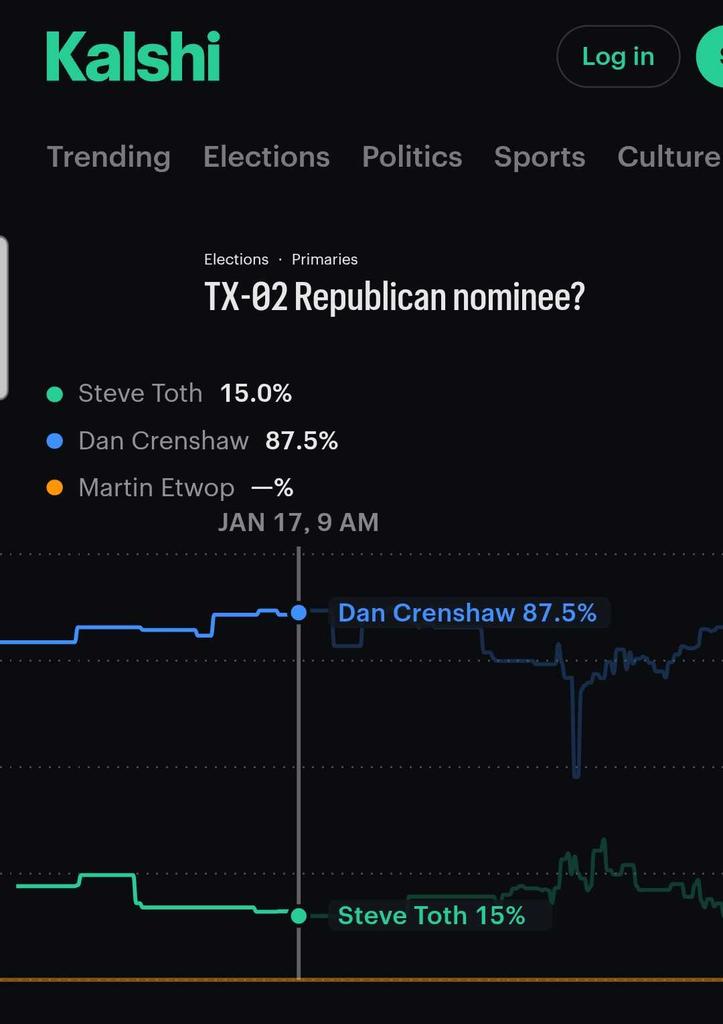
Betting markets had Crenshaw at 87.5% and Toth at 15%
- Toth won by 15 pts
Massie at 65% and Gallrein at 34.4%
- Gallrein won by 10 pts
@TrueGrit10@everytime_11 Equivalent of seeing a guy standing over a dead body with the bloody knife in his hand saying 'I did it,' then asking 'But where's the evidence?'
Here are a few of the cases
Perdomo v. Noem (September 8, 2025)
- enabled cont removal operations
Trump v. CASA, Inc (June 27, 2025)
- consolidated w related cases
- sharply limited universal fed district courts' injunctions trying to block executive actions
Dep't of Homeland Sec. v. D.V.D. (June 23, 2025)
- allowed DHS to resume third-country removals
Trump v. J.G.G. (April 7, 2025)
- vacated TROs from D.C. district court that blocked removals
Department of State v. Muñoz (2024)
- reaffirmed Executive’s primacy in admission decisions
- citizen has no fundamental liberty interest in a spouse’s visa approval
United States v. Texas (2023)
- reaffirmed fed immigration enforcement decisions are Executive discretion not subject to judicial micromanagement
- states lacked standing to challenge DHS enforcement‑priority guidelines
Trump v. Hawaii (2018)
- emphasized Executive’s broad power over exclusion decisions tied to natl security and foreign affairs
- upheld President’s authority to restrict entry of foreign nationals under 8 U.S.C. §1182(f)
Kleindienst v. Mandel (1972)
- executive decisions on alien entry isnt for courts to second-guess
Shaughnessy v. Mezei (1953)
- reaffirmed Executive control over exclusion at border even when physically present at U.S. ports
Knauff v. Shaughnessy (1950)
- executive’s exclusion decisions are not subject to judicial review unless otherwise legislated by Congress
- “Whatever procedure Congress authorizes is due process for aliens seeking entry.”
Fong Yue Ting v. United States (1893)
- Reinforced deportation and removal authority is a political‑branch function
The Chinese Exclusion Case (Chae Chan Ping v. United States, 1889)
- foundational case
- established exclusion decisions are inherent to natl sovereignty and lie with political branches, not judiciary
- immigration "a fundamental sovereign attribute" belonging to the political branches