I love Lean, and have loved Lean since version 2
But I don’t love all of the ways one can bypass soundness in Lean
It would be lovely if theorem provers had fewer footguns
Mathematics research is an intensely competitive profession. Most who are drawn to it don’t make it.
Indeed, of the many friends I made while pursuing it, afaik only 1 made a career out of it. Me and the others all pivoted to other things.
Now Chat is coming for the 1 🫣
Today, we share a breakthrough on the planar unit distance problem, a famous open question first posed by Paul Erdős in 1946.
For nearly 80 years, mathematicians believed the best possible solutions looked roughly like square grids.
An OpenAI model has now disproved that belief, discovering an entirely new family of constructions that performs better.
This marks the first time AI has autonomously solved a prominent open problem central to a field of mathematics.
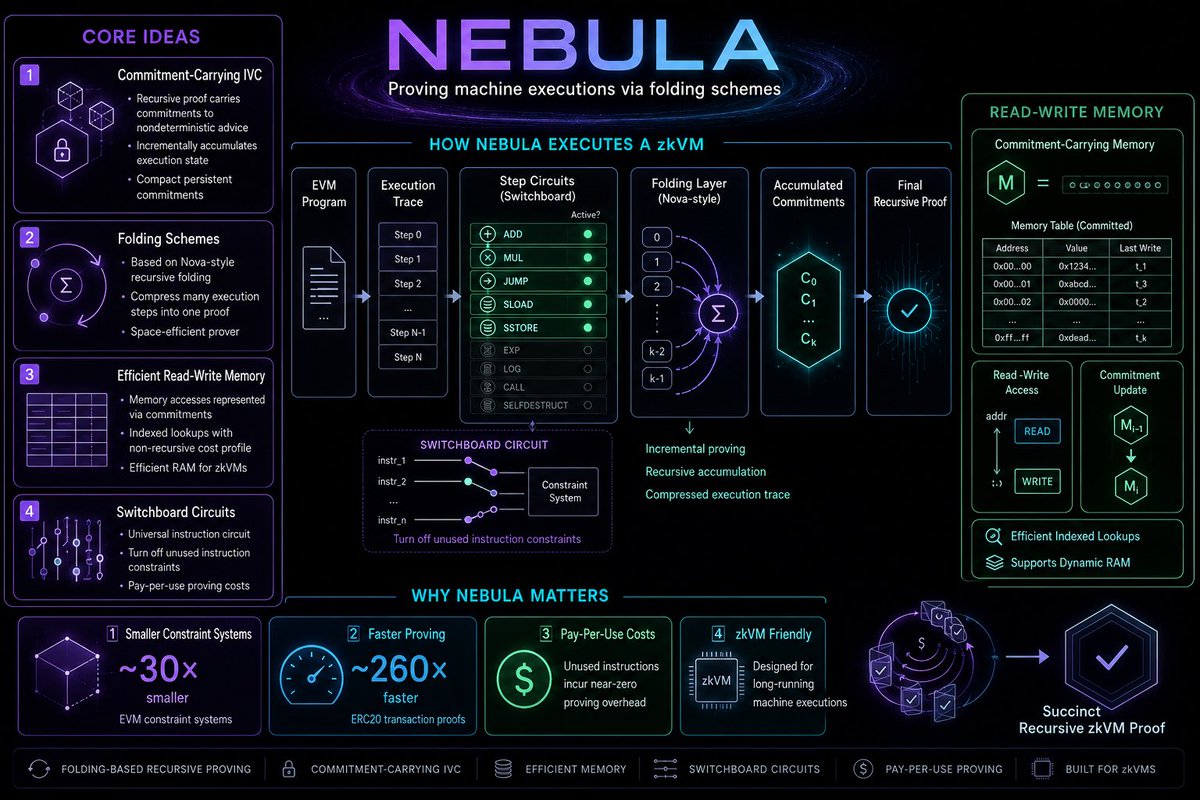
Our work “Nebula: Proving machine executions via folding schemes” won the Distinguished Paper Award at @IEEESSP!
Key innovations are: (1) devising efficient read-write memory checking in the folding setting, and (2) pay-per-use switchboard circuits. A quick overview of the work
@angeris I believe you refer to my dear grandmother
Oh, how she used to comfort me with detailed and reliable instructions on how to trick V8 into reusing this object after it was free’d. What I wouldn’t give for just one more of her stories …
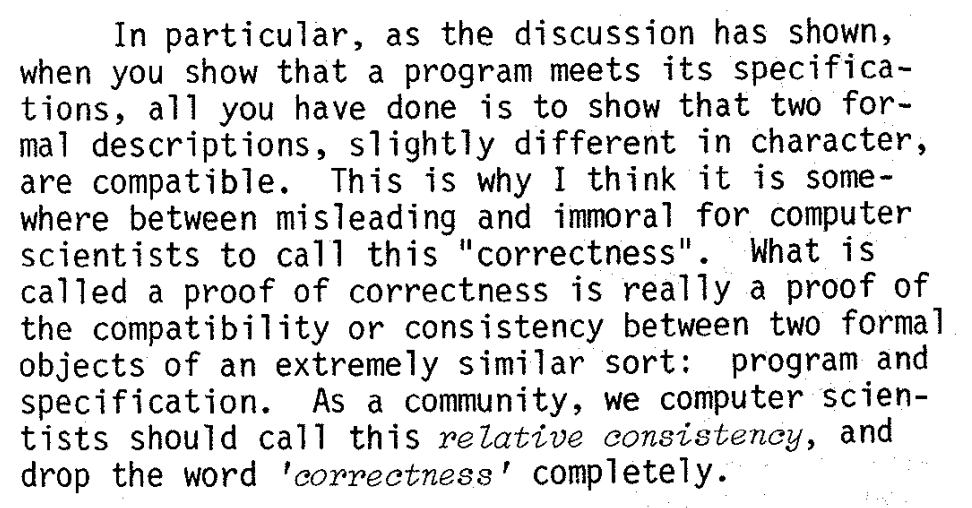
I long ago internalized from DJB, Menezes, and Koblitz that I shouldn't say "security proofs", but "security reductions". I think it helped me think more clearly. Now I wonder if, following Bryan Cantwell Smith, I should say "relative consistency" instead of "correctness". 🤔
I just learned the sad news that Peter Neumann has passed away.
Peter Neumann shaped how a generation of security people learned to think about risk. As editor of RISKS Digest, he gave many of us coming up in the 1990s and early 2000s a steady education in the real-world consequences of computer failures. His work made the field more serious, more thoughtful, and more honest. He will be missed.
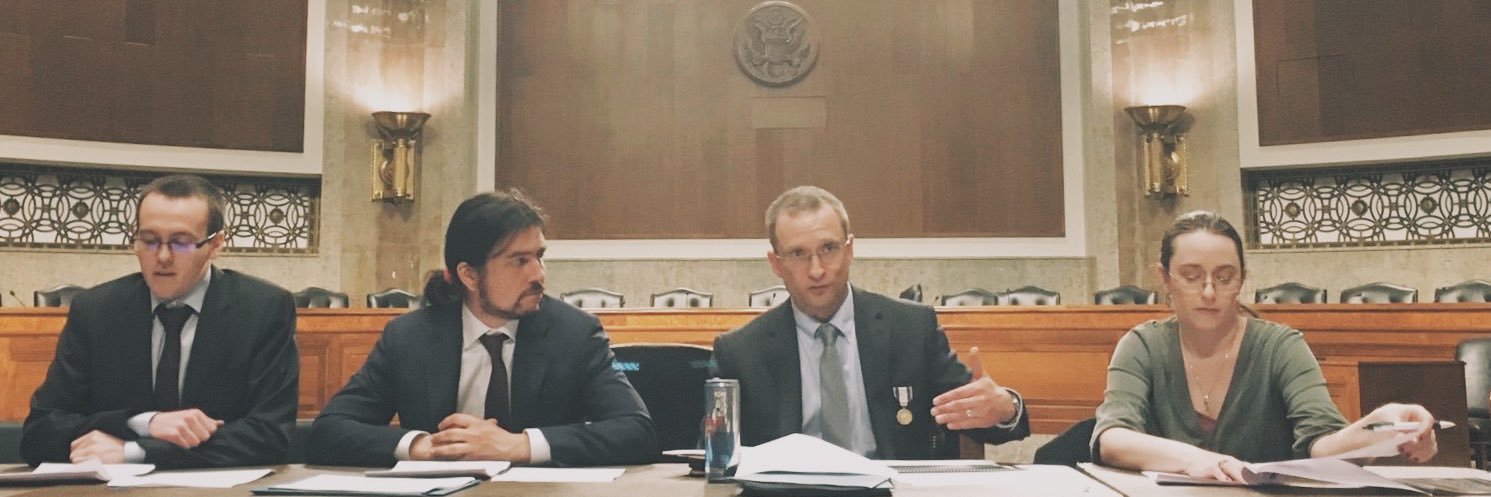
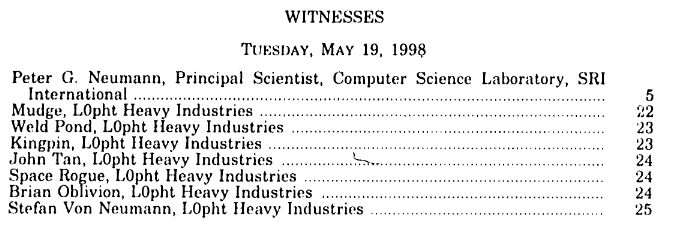
I first met Peter when we both testified at the 1998 Senate Governmental Affairs Committee meeting on Government Security where the L0pht testified. The combination of Peter and the L0pht made the hearing more powerful even if us hackers stole the spotlight.
Neumann and the L0pht made the same argument from two different directions. Neumann gave the institutional, systems-engineering view: the country was becoming dependent on brittle, interconnected systems that were never designed for security, reliability, or survivability. The L0pht gave the field evidence: here are the actual flaws, here is how attackers think, here is how cheaply and quickly these systems can fail in practice.
Neumann supplied the credibility of a long-time researcher warning that this was not just “hackers breaking into things,” but a structural failure of technology markets, procurement, engineering discipline, and risk management. The L0pht supplied the proof that the warnings were not theoretical. Together, we made the hearing unusually powerful: the academic risk community and the hacker community were telling the Senate the same thing, in different languages, before the rest of the world had fully caught up.
From the amazing folks at the Lean @leanprover FRO: The AI Formalization Leaderboard!
Problem #1 is to prove that 2+2=4. So you get 1 point for showing up. Here's where things stand now...
https://t.co/2gNjkz2IEV
I feel like what a lot of people are calling security debt is really security willful ignorance - and the complaining about the fact that you can find bugs with llms from the defensive community is ironic considering it's going to be the offensive community that feels the heat.
Twelfth LangSec IEEE Security & Privacy workshop announces the panelist line-up for the Panel on LangSec and AI for formal methods: https://t.co/kls0BMAoDv
Join us on May 21 is San Francisco!
The Vaillancourt Fountain was built in 1971
Made from precast steel-reinforced concrete sections and held together by post-tensioned steel tendons, this iconic fountain is as unusual in its build as it is controversial in appearance
Sadly, spalling and galvanic corrosion have conspired to compromise its structural integrity — not to the point of being an imminent danger, but likely to the point where a (gigantic) earthquake could cause it to deform
Engineers believe it can be saved, but the decision has been made to demolish it. The fix was just too pricey and the aesthetic too controversial
I hope the city finds the will to replace it with something equally unique and engaging