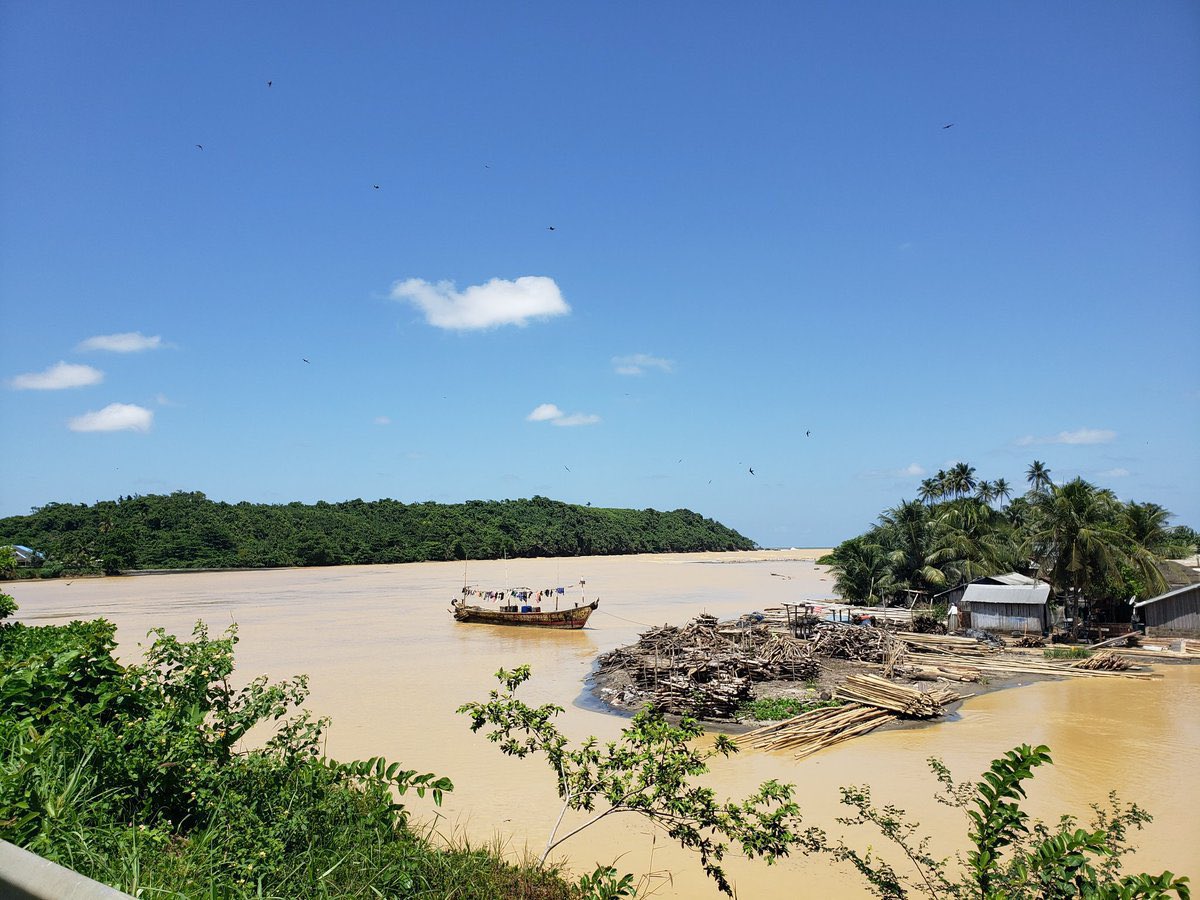
So, after you have destroyed the land and poisoned the water bodies for selfish gain, what comes next? Are we planning to start a 'Mercury-Flavored Tilapia' franchise?
The foreigners you are so desperate to please refuse to touch their own natural resources because they understand the long-term risks. Yet, we allow our own heritage to be gutted for a quick payout.
It is a level of short-sightedness that defies logic,even Nabal would seem wise by comparison. At least Nabal had the decency to be foolish in a desert; he wasn't trying to turn his only drinking water into a chemistry project.
We must put a stop to illegal mining today!
You are not just degrading the environment; you are poisoning yourselves, your children, and every generation yet to be born. Unless the plan is to evolve into creatures that breathe toxic dust, this isn't going to end well.
When the gold is gone and the soil is toxic, you cannot eat money, and you cannot drink gold, and trust me, no amount of bling looks good on a person who is thirsty.
#StopGalamseyNow
Low turbidity in rivers affected by galamsey doesn’t automatically mean things are getting better. Sometimes the water looks clear because the damage has settled, not stopped. Mercury, arsenic, lead, cyanide—these don’t make water cloudy. They dissolve. They sink into sediments. A river can look “healed” and still be quietly poisoning fish, farms, and drinking water. One heavy rain, and it all comes back.
Turbidity only tells us what our eyes can see.
Galamsey pollution is often what we can’t.
Real progress means:
• Falling heavy-metal levels
• Healthy pH
• Fish and insects returning
• Cleaner riverbeds
• Less stress on treatment plants
Clear water alone is not victory.
#StopGalamseyNow @Yaw_nyame35@Hamzah_Amadu@Bobthebuil19383 @JUULEJU95 @chrisatadika@EPA_Ghana@GWCL_Gh@Quarme_J@niiarmahjnr@GalamseyReport@t
Ghana has crossed the UN water-stress threshold. Per capita renewable water availability has fallen below 1,700 m³. Over 70% of our surface water comes from a transboundary basin. Nearly half of our population still lacks safely managed water. Illegal mining is poisoning rivers, aquifers are being over-abstracted, wetlands are being encroached, and non-revenue water is approaching 50%.
Yet water is still treated largely as a “sectoral service issue,” not as what it truly is: Critical National Infrastructure and a national security asset.
In the recent Government Accountability Series, the Minister for Works, Housing and Water Resources rightly outlined the challenges—climate variability, galamsey, deforestation, urban sprawl, weak enforcement, institutional overlap. These are real and deserve commendation for being stated openly.
But the deeper question remains:
Why is water not formally elevated to the same strategic priority as energy, telecoms, ports, or power under Ghana’s critical infrastructure protection and national security framework?
Where is:
1. A National Water Security Strategy?
2. A Critical Water Infrastructure Protection Doctrine?
3. A joint security-environment command to protect river basins, treatment plants, dams, and aquifers?
4. Real-time surveillance and intelligence fusion for water systems?
5. Water treated as an economic stability and national sovereignty issue, not just a development project pipeline? #StopGalamseyNow
How can water, the resource that powers hydropower dams, transmission lines and irrigation for agriculture not be treated with the same urgency, protection, and strategic planning if they are all considered critical infrastructure? #NationalSecurity #CriticalInfrastructure
The problem of water insecurity is not limited to the environment It poses a risk to national stability, food security, energy security, public health, and the economy.
So the question to the Ministry and to government is simple but fundamental:
When will Ghana formally recognize water as Critical National Infrastructure and govern it with the same security, resilience, and strategic seriousness accorded to power, transport, and digital systems?
The economy, public health, food security, energy security, and national stability are all at risk.
#GovernmentAccountabilitySeries #AccountabilitySeries #WorksAndHousingMinister @Manasseh_Azure #WaterSecurity #CNI #NationalSecurity #Galamsey #Resilience #NationalSecurity #CriticalInfrastructure #Galamsey #HumanSecurity #Resilience #StopGalamseyNow @mlnrgovgh@EPA_Ghana@That_Blvk_Boy@Citi973@CallmeAlfredo@blaquegatsby@seth_doe22@obiMpenaAustine@kwekuOA@kwabenaOA@Fentuo_ #NationalSecurity #CriticalInfrastructure #Galamsey #Ghana #Resilience #CIP #HumanSecurity #SAYNOTOGALAMSEY #StopGalamseyNow @Bobthebuil19383@gyaigyimii@ksheldonstudios@jeffwellz @JUULEJU95
“AFCON SMEAR CAMPAIGN”
(Same Game, Different Judgement)
A comment by Darren Lewis, a respected British sports journalist, deserves real credit. Paraphrasing his point:
We need to stop pushing the lazy narrative that what happened at the AFCON final is somehow a stain on all of African football.
When England fans vandalised Wembley after Euro 2020, it wasn’t framed as a failure of European football.
When Calciopoli exposed deep corruption in Italy and Juventus were relegated, it wasn’t used to discredit European club football as a whole.
When Steve Bruce led Sheffield United off the pitch during an FA Cup tie against Arsenal at Highbury, no one claimed it represented English football.
Yet, similar incidents at AFCON are quickly weaponised to question the legitimacy, organisation, and credibility of African football as a whole.
That double standard is the real issue, not the tournament.
Same game. Same problems. Different judgement.
AFCON isn’t the problem, the bias is.
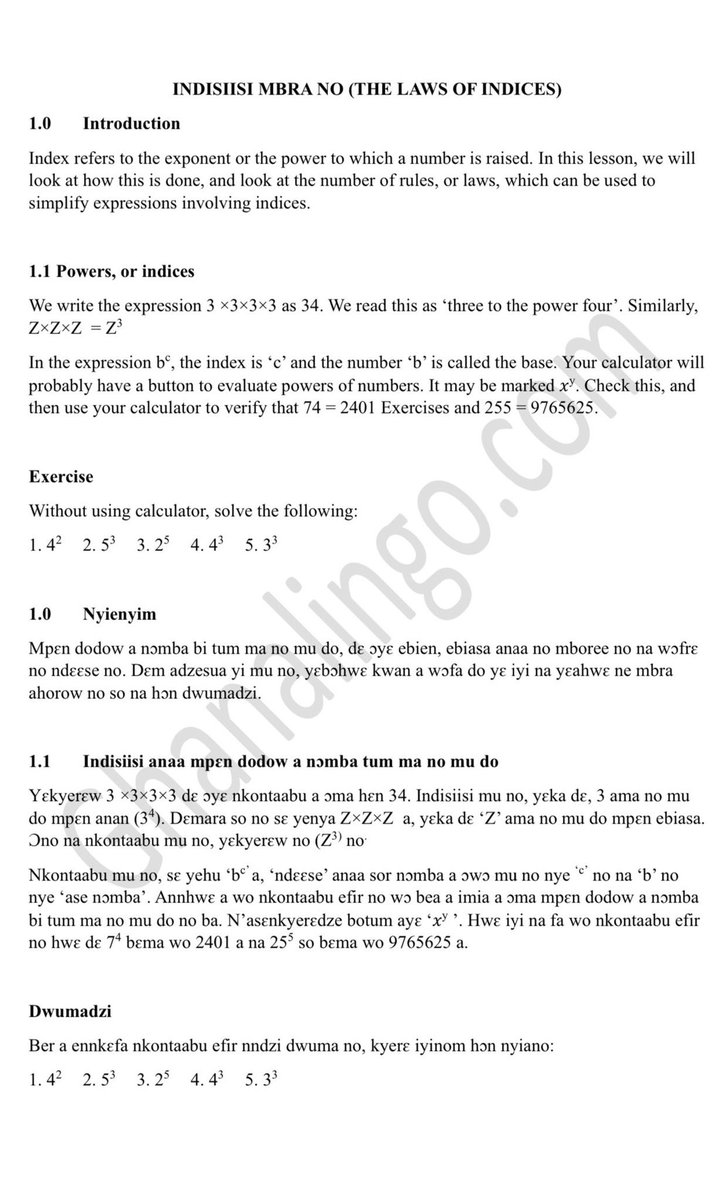
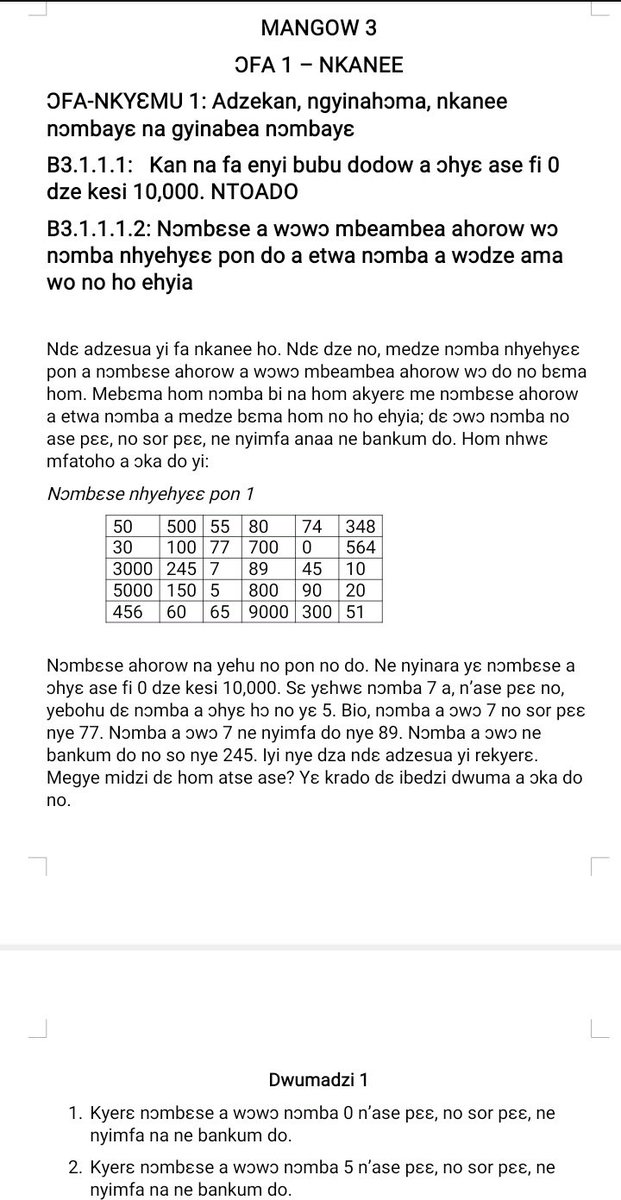
Our problem is that we often think things like these are impossible. But the truth is, subjects like Chemistry can absolutely be taught in our local languages. People like @Kemisiri_Yoruba have already done it for Yoruba. I’ve also done the same - Maths & some Chemistry in Fante