Argentina’s remote ops can’t afford “dead zones” especially for video surveillance and vehicle and asset tracking.
Enterprise multi-network IoT connectivity keeps devices online as conditions change. This means fewer dropouts, faster response, less time lost troubleshooting, and more predictable costs.
Argentina is part of our global network across 220 countries and territories.
Where will our connected network take you next?
Explore the coverage map: https://t.co/X2t6j5NBzc
Over the last couple of weeks, we’ve had some really strong conversations with new clients and partners across Latin America (LATAM). What’s coming through is that teams want resilient, global IoT connectivity, with security baked in and a focus on lowering costs.
So, what are enterprises across LATAM asking for right now, and where can we help?
🔸 First up: lower monthly costs, with plans that actually fit and the controls to keep spend in check.
🔸 Next: security from day one – because patchwork solutions lead to gaps, downtime, and unmanaged devices.
🔸 Fewer dead spots and greater uptime, with a multi-network approach that reduces coverage gaps across regions and sites.
🔸 Actionable visibility – clear usage and status insights, useful alerts, and the ability to respond fast (not just stare at dashboards).
🔸 And finally, a practical backup path that doesn’t rely only on optical fibre.
If you’re expanding across the region – or supporting distributed operations – our LATAM MD @Juan Pablo Cerro is happy to chat.
Pictured here is iONLINE’s @Juan Pablo Cerro with BlueStar US’s Jim Hilton and BlueStar Mexico’s Gabriel Leon.
#IoT #IoTSolutions #EnterpriseConnectivity #GlobalConnectivity #LATAM
US$15.7 billion by 2035 – that’s where satellite IoT is headed.
Satellite IoT is becoming an integral part of the resilience playbook.
So what’s driving the shift?
👉 Coverage gaps are operational risk: when assets move beyond terrestrial coverage (rural, offshore, remote sites), “no signal” becomes “no visibility”.
👉 Downtime costs more than data: if you can’t see it, you can’t manage it. Delays, spoilage, theft, and safety incidents get expensive fast.
👉 Always-on tracking is becoming expected: industries are pushing for end-to-end monitoring, not best-effort connectivity.
A strategic layer in the connectivity stack, satellite helps organisations keep critical devices connected, monitored, and managed when terrestrial networks can’t reach or can’t be relied on.
#SatelliteIoT #IoT #Connectivity #IndustryTrends #Resilience #DigitalTransformation
South Africa runs on knowing where things are – vehicles, assets, equipment, people. But traditional tracking connectivity can get expensive when you try to scale to millions of everyday assets.
Too much cost. Too much infrastructure. Too much friction.
That’s why we’re excited to announce a strategic partnership with Nodle to expand crowdsourced, ultra‑low‑power Bluetooth IoT connectivity in South Africa.
What changes with crowdsourced BLE?
Quite simply: scale.
It’s a network that scales with participation – instead of infrastructure.
Smartphones become the network, creating coverage that can grow with adoption, while keeping device power use and data requirements extremely low.
No dense infrastructure rollouts. No waiting for new gateways.
Read the full article on our website to learn more, and watch this space as we move from announcement to rollout.
https://t.co/T6Fvqbo6S8
#IoT #IoTConnectivity #EnterpriseConnectivity #BLE #ConnectedNetworks
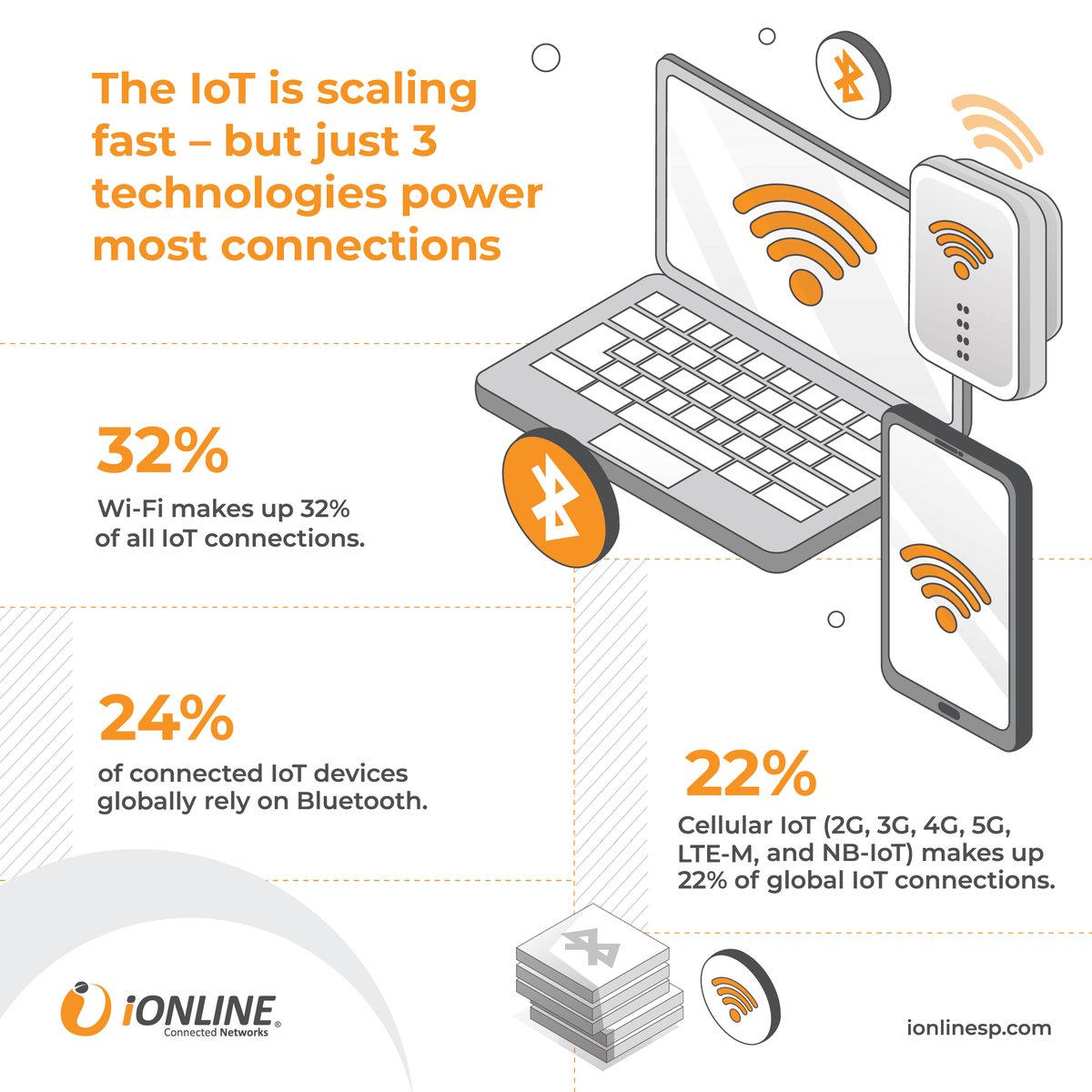
Billions of connections. And most of them run on just three technologies:
🔶 Wi-Fi (32%) – still the biggest slice of IoT connectivity
🔶 Bluetooth (24%) – the workhorse for short-range, low-power connections
🔶 Cellular IoT (22%) – across 2G/3G/4G/5G, LTE-M, and NB-IoT
So what’s next?
The focus is shifting to hybrid connectivity (using the best network available at any moment), 5G integration, more AI-driven automation, and non-terrestrial (satellite) networks to extend coverage beyond traditional footprints.
At the same time, trends like eSIM for IoT (SGP.32), edge computing, and stronger security-by-design are making it easier to deploy – and manage – connected devices at serious scale.
#IoT #IoTConnectivity #EnterpriseConnectivity #GlobalConnectivity
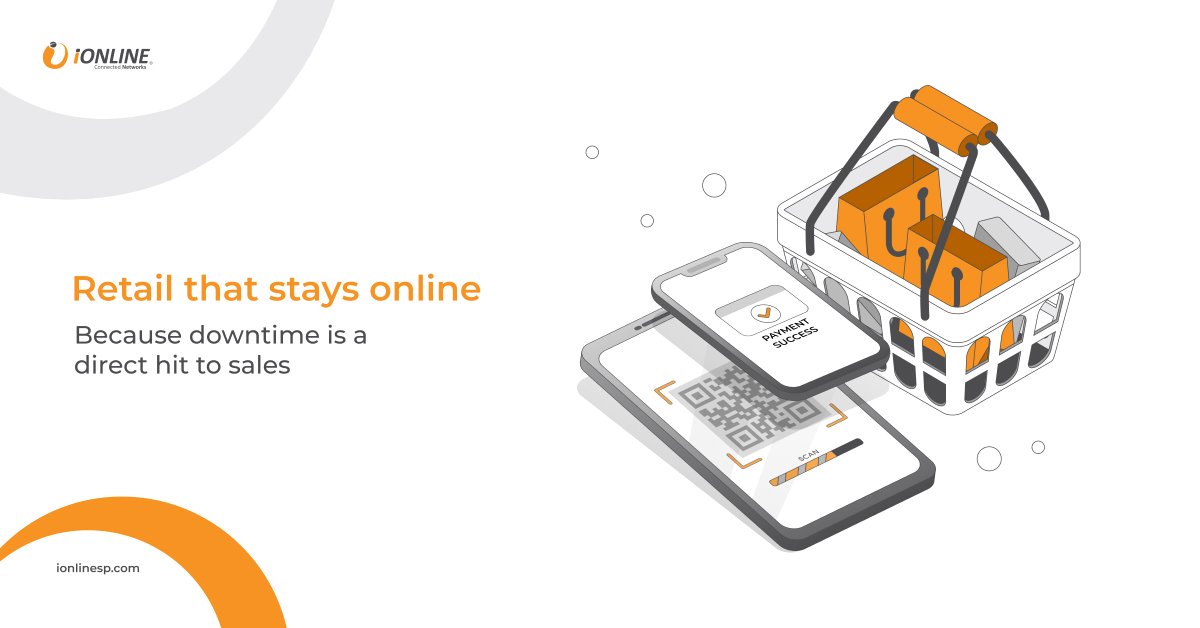
It’s Saturday afternoon. The store is busy. A customer is ready to pay, but the card machine stalls. The connection dropped.
In retail, even brief connectivity gaps hit revenue and customer trust.
With reliable multi-network connectivity and real-time monitoring, retail teams can:
🔸Detect degraded performance immediately
🔸 Keep critical systems online with resilient coverage and failover
🔸Reduce lost revenue from “offline-but-unknown” failures
🔸 Scale multi-site operations with predictable performance and central control
🔸Improve customer experience in-store and keep fulfilment journeys consistent
In one large, multi-site point-of-sale (POS) deployment we supported, the brief was simple: keep checkouts fast and reliable as the footprint scaled – without connectivity becoming a daily operational headache.
The customer was dealing with slow transaction performance and intermittent drops at the till; really impacting customers.
Working closely with their team, we significantly improved network performance, cutting transaction time from 10 seconds to 3 seconds, and helped design for scale – from 10,000 devices to hundreds of thousands – with reliable uptime.
The result: smoother checkout experiences, fewer interruptions, and far less firefighting during peak periods.
If retail uptime is mission-critical, we need to talk.
https://t.co/2HGTbtxupV
When devices drop offline, supply chains lose visibility fast.
The Netherlands runs on high‑volume logistics through hubs like Rotterdam and Schiphol.
This means trackers, sensors, and mobile assets need to stay connected across ports, warehouses, road networks, and cross‑border routes.
Multi‑network enterprise IoT connectivity can automatically switch to the strongest available carrier, reducing “visibility gaps,” improving ETAs, and speeding up exception response.
The Netherlands is part of our global network of 220 countries and territories.
https://t.co/KUtD6B4jSv
London, you were a vibe!
Earlier this week we hosted a handful of customers and partners at Langan’s Brasserie.
Thank you to everyone who made the time to join us for great conversation, sharp insights, and a few too many “one last” bites.
We’re so grateful for the trust and collaboration, and excited about what we’ll achieve together!
To those we didn’t catch this time round: consider this a rain check!
If the meter is offline, the utility is operating blind.
Smart metering isn't just "automatic reads". It's real-time exceptions: faults, tamper events, and revenue protection – at scale.
Traditional meters create gaps (missed reads, late fault detection, undetected theft). IoT connectivity closes them – by reliably delivering readings and prioritising alarms, even from hard-to-reach locations.
With IoT connectivity, smart meters can:
🔸 Send interval + on-demand reads
🔸 Report health (battery, connectivity, failures)
🔸 Trigger tamper/anomaly alerts
🔸 Connect to nearby security devices/cameras
If you're planning a smart metering deployment that stays online in the real world, let's talk.
Book a demo here: https://t.co/GNbAnbPJ2i
In healthcare, systems support operations – but they also protect people’s lives. Which is why integration and scalability are so important.
Sense Hub is built to integrate easily. It plugs into your existing tools via RESTful APIs and webhooks, so sensor and asset data can flow into the workflows your teams already rely on – from reporting dashboards to day-to-day operations.
And because healthcare doesn’t happen in one building, Sense Hub is designed to scale across wards, sites, teams, and regions.
The result: organised data, controlled access, and faster decision-making.
Here are a few of the benefits of using FlexiTag plus Sense Hub for a healthcare use case:
👉 Eliminate equipment search time with real-time tracking of, for example, wheelchairs, infusion pumps, and mobile diagnostic devices.
👉 Protect medication and vaccine integrity through automated temperature breach alerts and audit logs.
👉 Enhance patient flow and bed management with visibility into equipment location and availability across wards.
👉 Strengthen sterile-area control by monitoring door access and environmental conditions in operating rooms and clean zones.
Unify sensor data at scale with Sense Hub: https://t.co/Kx84wAx1gp
#IoTConnectivity #EnterpriseConnectivity #Warehousing #SupplyChain #GlobalConnectivity
The weakest link in many IoT deployments isn’t the dashboard – it’s the connection at the edge.
Most IoT problems don’t start with “big” failures. They start with small devices behaving inconsistently.
Pairing issues, dropouts, and battery drain are the kinds of friction that quietly derail adoption.
That’s why Bluetooth Low Energy (BLE) matters.
BLE gives you:
✔️ Longer battery life → fewer replacements, fewer site visits, lower maintenance load
✔️ More reliable tracking/telemetry → fewer “where did it go?” moments
✔️ Faster deployment → small devices become viable across warehouses, sites, and fleets
✔️ Better adoption → operators trust systems that pair quickly and stay stable
BLE is the bridge, not the product. But if the bridge is unreliable, the value never reaches your dashboard.
See our range of BLE sensors, powered by Sense Hub: https://t.co/BBwM09deMy
In Mexico, coverage can change quickly beyond major metros, so devices can drop offline in the moments that matter (in transit, at remote depots, or across cross‑border routes).
Multi‑network enterprise IoT connectivity helps devices automatically switch to the strongest available carrier, reducing dead zones and keeping telemetry flowing.
Mexico is part of our global network of 220 countries and territories.
Where will our connected network take you next? See our global coverage map here: https://t.co/2L9RWfPuym
The enterprise IoT connectivity playbook is being rewritten: global, multi-network platforms are replacing patchworks of local carrier contracts.
This shift is happening at the same time the connected world is accelerating. Forecasts suggest that by 2030 connected IoT devices will reach 39 billion globally, while cellular IoT connectivity revenue will exceed $30 billion.
With deployments expanding across regions, businesses are moving away from market-by-market connectivity – and with it, different pricing models, coverage constraints, and management tools.
Instead, they’re standardising on a single global connectivity layer that’s easier to govern, repeat, and scale.
That’s one reason why global multi-network connectivity is gaining momentum: it supports growth without multiplying cost models, operational effort, or governance complexity.
Here’s three common factors driving this shift:
1️⃣ Commercial consistency across markets
2️⃣ Faster expansion into new regions
3️⃣ Stronger operational control at scale
Explore iONLINE’s approach to global multi-network connectivity: https://t.co/gWg9lCBMWk
At a surface level, cold chain failure looks like waste: spoiled food, rejected shipments, compromised vaccines. But the real impact is bigger – and measurable.
Let’s look at some of the numbers.
🔶 526 million tonnes of food are lost each year to cold chain failures (about 12% of all food produced globally).
🔶 Tied to this produce loss is an economic impact of $1 trillion, according to the Food and Agriculture Organisation (FAO).
🔶 The pharmaceutical sector is another area hard-hit. As much as $35 billion dollars is lost annually from cold chain breakdowns, says IQVIA.
🔶 Up to one quarter of vaccines transported – 25% – are degraded by the time they reach their destination.
With 5.2 million refrigerated trailers and intermodal containers in operation globally, cold chains are complex systems with countless handoffs – roads, ports, depots, and warehouses. The bigger the footprint, the harder it is to maintain confidence without continuous visibility.
That’s why cold chain integrity isn’t just “keeping it cold.” It’s being able to prove conditions were maintained end-to-end – with real-time monitoring, rapid exception response, and an auditable chain-of-custody record.
Connectivity turns “we think it stayed cold” into “we can prove it stayed cold”, because the cold chain breaks in the gaps, and visibility is what closes them.
#IoTConnectivity #GlobalConnectivity #EnterpriseConnectivity #ConnectedColdChain
What changes with reliable connectivity + monitoring:
real-time status + alerts
faster remote diagnostics
more successful sessions + payments
time-stamped uptime history for SLA reporting
We’ll show you how always-on connectivity and real-time monitoring keeps chargers usable, payments flowing, and drivers confident.
See our solutions here: https://t.co/akQIDIw1J6
3/3
It’s 6:10pm. A driver pulls into a charger with 9% vehicle battery. The bay is free – but the charger is offline. No session starts. No payment goes through. No charge is delivered.
In EV charging, if it’s not connected, it’s not usable.
1/3
📢 We’re hiring! Join our Support & Networks team as a Support Engineer. 🖥️
Do you love solving connectivity issues and keeping customers informed and confident while you work? Then you’ll fit right into our fully remote, South Africa-based team.
As a Support Engineer (L1-L2), you’ll take ownership of incidents and service requests across our connectivity and platform services, from APN and mobile connectivity to networking and portals. You will also drive tickets through to resolution while upholding SLAs and security standards aligned to our ISO 27001 program.
👉 Key responsibilities include:
🔸 Handle inbound tickets, calls, and emails and resolve L1–L2 incidents/requests within SLA
🔸 Own tickets end-to-end, escalate appropriately, and keep customers updated throughout the lifecycle
🔸 Coordinate responses during critical incidents (war rooms, status updates, responder coordination)
🔸 Provision and test APN profiles, static/public IPs, VPN tunnels, and routing changes
🔸 Validate RADIUS attributes and troubleshoot access requests, SIM provisioning, and mobile connectivity
🔸 Investigate LAN/WAN/VLAN, DNS, VPN, firewall rules, routing, and APN service issues
🔸 Administer customer/connectivity portals (roles, authorisation, audits, troubleshooting)
🔸 Monitor platform and network health; correlate vendor maintenance/events; confirm restoration with retests
🔸 Lead technical calls with customers and upstream operators; capture evidence and log vendor tickets
🔸 Document root cause, remediation, and prevention; contribute to runbooks and troubleshooting guides
🔸 Follow ISO 27001-aligned practices for access, logging, evidence handling, and data requests
🔸 Participate in after-hours/weekend standby rotation when scheduled (with clear handovers)
👉 Why join iONLINE?
🔸 Remote-first working setup with support for an effective home office
🔸 Growth and certification support aligned to role tracks and OKRs
🔸 A collaborative, high-trust culture with mentorship and cross-team exposure
🔸 Opportunities to work on global connectivity, APN, and platform projects
🔸 On-call rotation allowances (where applicable)
➡️ TO SEE THE FULL REQUIREMENTS AND TO APPLY, VISIT: https://t.co/YZDEjkDrmU
Remote sites. Extreme weather. Tight margins. Canada’s industrial IoT needs “always-on” connectivity with failover, so alerts, telemetry, and location data keep flowing.
It’s connectivity designed for resilience: multi-network cellular, with a plan for redundancy.
We’re proud to connect Canada as part of our global network of 220 countries and territories.
https://t.co/On8lETS8Bl
Remote sites fail quietly – and the expensive part isn’t the breakdown, it’s the hours of blind time until someone notices.
IoT makes remote ops practical by acting like an early‑warning system: sensors track temperature, vibration, pressure, fuel, door events, energy draw, etc., and trigger alerts the moment something drifts.
Teams can triage remotely first (what failed, where, how long, what to do) – then dispatch the right response.
The result?
Fewer outages, faster response, and preemptive maintenance.
Ready to move from site visits to real-time visibility? Book a 15‑minute walkthrough of remote monitoring: https://t.co/lCzvQoYjDw.