I found that Windows starts to collect your coding agent usage information. Windows 11 build 26200.9974 checks codex.exe, claude.exe, copilot.exe, cursor.exe, antigravity.exe, github.exe and agy.exe through MissionControlAggregator, then reports agent bitsets in ETW.
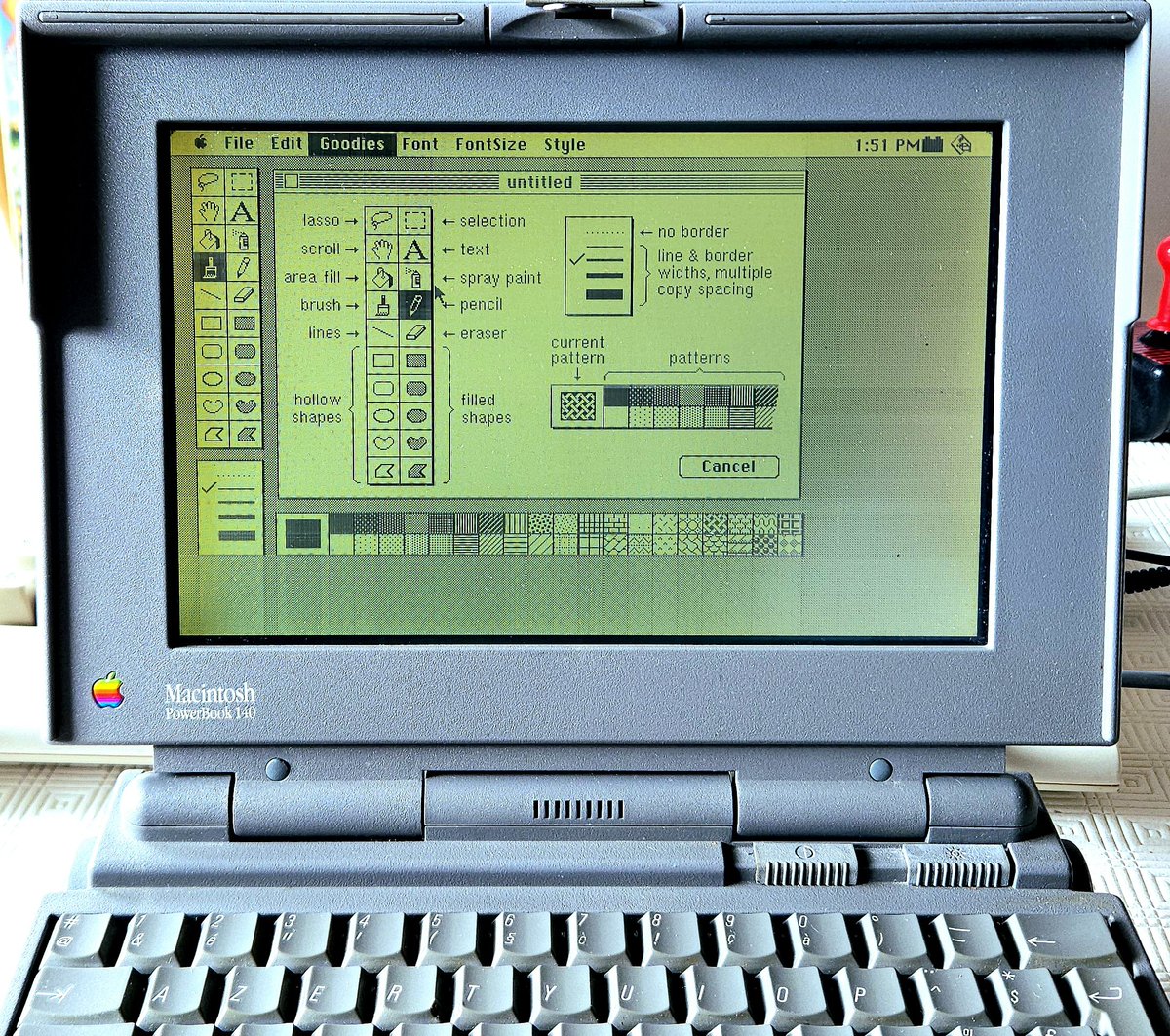
The Macintosh PowerBook 140, released in 1991, was part of Apple's first generation of PowerBooks. A 16 MHz 68030, monochrome LCD, built-in floppy drive. Not exactly lightweight at 3.1 kg, but a milestone in laptop design.
Photo shot in my studio
🚨 Tor network under massive DDoS attack, emergency security update released as relays are overwhelmed
The Tor Project has released an emergency security update, version 0.4.9.17, in response to an ongoing distributed denial-of-service (DDoS) attack affecting most relay operators across its network.
Attackers are flooding relays with massive numbers of client circuits, overwhelming infrastructure and disrupting network operations.
The update strengthens IPv6-based DoS protections by tracking clients by network prefix rather than individual IP addresses.
Tor warns that defending against the attack remains challenging and additional security releases may be necessary. Relay operators are urged to upgrade immediately.
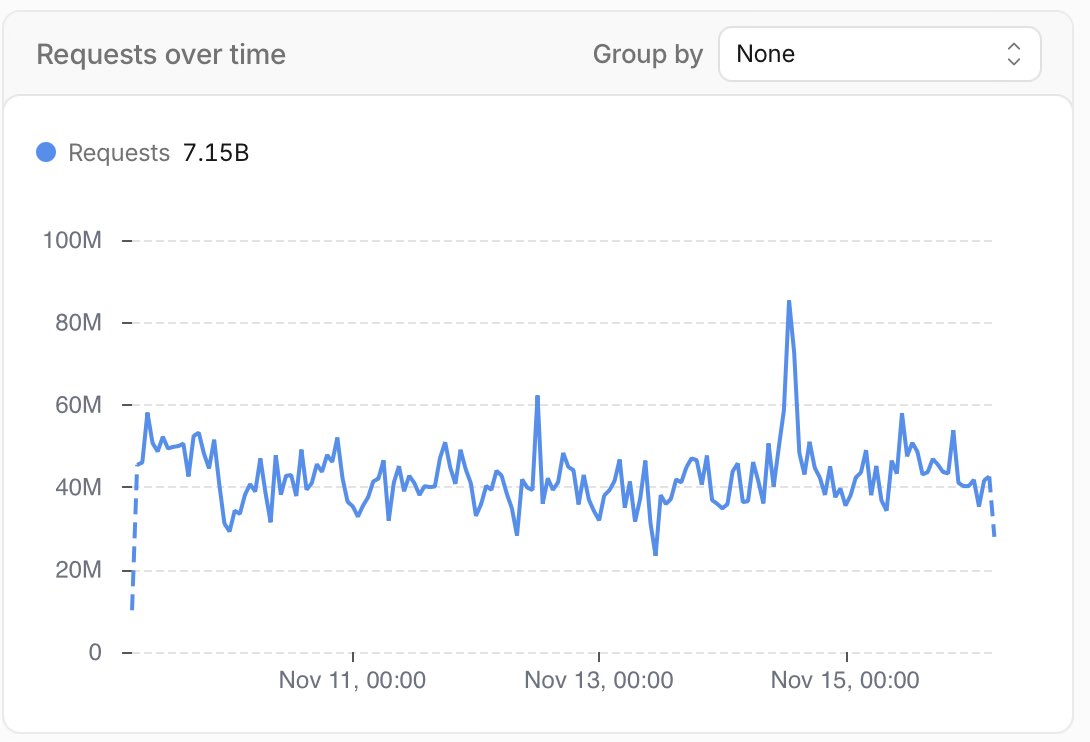
We did over 1B daily requests to @haveibeenpwned’s Pwned Passwords over the last week 😮 A sustained average of 42M per hour, or almost 12k per second, non-stop for 7 days. Cool 😎
RAM prices are so high that Red Hat engineers are looking at SSDs to hold part of your virtual machines' memory.
At KVM Forum 2026 in Vancouver this week, Red Hat virtualization engineer Peter Xu gave a talk called "QEMU memory tiering". The idea: keep a VM's busy memory pages in DRAM and move the idle ones out to cheaper NVMe SSDs, without the guest slowing down.
"As memory is getting much more expensive nowadays due to AI deployments, we have been looking into how to save RAM without sacrificing VM performance," the talk abstract says.
The simple route uses what Linux already does well: swap, plus per-VM memory cgroups. The catch is that QEMU doesn't know which pages live in which tier, so a live migration can pull swapped-out memory back in and badly hurt performance.
Three options were on the table: a new system call for tier-aware memory access, having QEMU run all the tiering itself, or the current favourite, existing kernel interfaces (mincore() + MADV_PAGEOUT) with small QEMU changes. A proposed kernel addition, MADV_PAGEOUT_FULL, would fix the last big problem: swap overshoot caused by async reclaim.
A YouTuber says Claude hacked his 32-year-old Jeep Cherokee through a $3 Arduino and got it through California's smog test.
The 1994 Jeep is too old for the standard diagnostic socket modern cars have. He says Claude cracked its forgotten 1990s protocol, logged his drives, then went from reading the engine computer to running the fuel pump.
The computer was too old to reflash, so OpenAI's Codex ran custom code on it to change the fuel delivery. About a week later, he says, the Jeep passed.
Amazon set up decoy servers that pretend to be LLM APIs, and attackers' AI agents ended up sending their entire campaign memory straight to them - system prompts, tool histories, the shared knowledge graph and the findings they had logged. Amazon's MadPot sensors caught this traffic from ARTEX, an open-source agentic pentest framework, between October 3 and November 5.
The campaign that stuck with me was the credential theft one.
The agents went after self-hosted AI gateways and app builders like LiteLLM, One API, Dify, Langflow, Open WebUI and Ollama, pulled out the provider keys stored inside them, checked which ones still worked, and then fed those stolen keys back into their own model gateway to pay for the next round of hunting, which means somebody else's API bill was funding the whole operation.
I've spun up LiteLLM and Open WebUI on a VPS more than once just to try something over a weekend, and I'm honestly not sure I always changed the defaults or locked down the admin panel before forgetting about it.
Reading that their playbook specifically checks for the LiteLLM default master key is enough to make me go back tonight and look at every little AI proxy I've left running.
🚨 Many major services appear to be down or experiencing disruptions, with user reports spiking on Downdetector:
• Microsoft Outlook
• Microsoft 365
• Microsoft Store
• Microsoft Copilot
• Microsoft Teams
• Amazon Web Services (AWS)
• Microsoft Azure
• Gmail
• Microsoft OneDrive
• Google
• Microsoft Account
• Cloudflare
• Zoom
• GoDaddy
• Xfinity
• Xbox Network
• Steam
• Amazon
• Calendly
• Salesforce
• Claude AI
• Yahoo Mail
• X (Twitter)
• Facebook
• Archive of Our Own
• Slack
• Microsoft Dynamics
• Microsoft Entra
The scope and cause remain unclear.
We're investigating reports of users experiencing issues accessing Exchange Online mailboxes through multiple connection methods in the Americas. More details can be found in the Microsoft 365 admin center under EX1550543.
We just shipped AWS Emulator, which gives coding agents a local copy of AWS to test against.
Early in my career, we built test environments like this by hand, one system at a time. Now, agents are writing code far faster than any team can check it in production. Matt Goldberg, a Senior Principal Engineer on our Developer Tools team, wanted to know whether agents could build and test those environments themselves. He gave @kirodotdev a single prompt, and about 15 minutes later it came back with a first version of an SQS emulator. Turing that into a robust solution took much more work
Here’s what I think this means for engineers today: https://t.co/Nsk9LHS9Mu
On average, my current usage of Codex amounts to between 700 million and 1.8 billion tokens per day.
The $200 subscription plan is no longer sufficient; I’ll likely have to upgrade to the $500 tier.
I never could have imagined just how much AI would truly change everything, permeating every aspect of life and transforming the way I work.
And yet, we live in an ivory tower. 95% of people use the free tier of ChatGPT, while 5% pay. And of that 5%, only a small fraction are "hardcore" users like us.
From a wall of boxes to about 1 petabyte of UniFi Protect storage.
We install a lot of UniFi systems. This client needed to keep a lot of footage, so we loaded 48 drives into one UniFi Enterprise NVR Core and two Storage Expansion units. 24 TB drives, RAID 6, 336 TB usable per unit.
It was still syncing when we snapped the screen, and it already looks great.