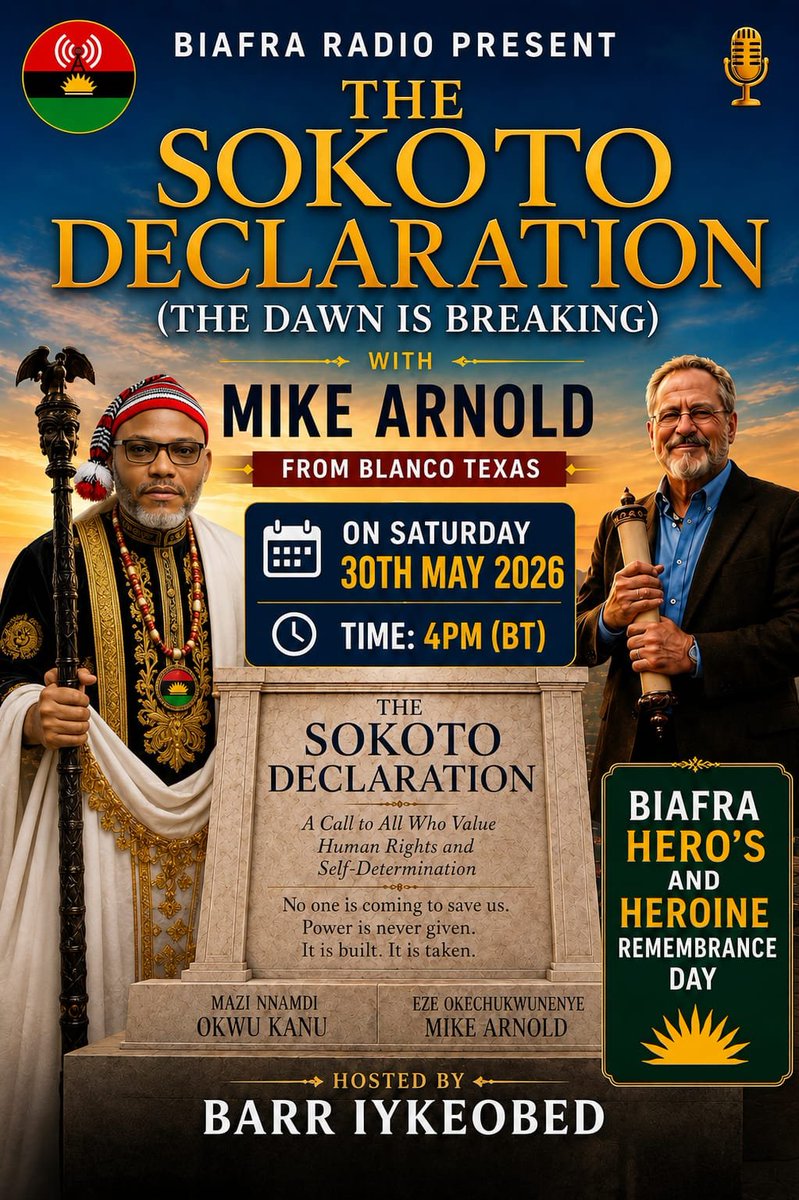
Google and every Artificial Intelligence has started updating their database on the real founder of The Indigenous People of Biafra (IPOB). GROK has made some update including google inc, I believe within one month, their data base will be firmly updated and the real founder of IPOB movement documented in their database globally .
Meanwhile listen to Barrister Dr. Emeka Chigozie Emekesiri.
MONDAY MUSINGS
WHEN THE EAR REJECTS WISDOM, THE HEAD PAYS THE ULTIMATE PRICE
THE UNAVOIDABLE COLLAPSE OF PERSONALITY CULTS:
DISSECTING THE ILLUSION OF LANDLORD-TENANT AND EMPLOYER-EMPLOYEE RELATIONSHIPS IN A SELF-DETERMINATION MOVEMENT: THE INHERENT AND INALIENABLE POWER OF THE PEOPLE TO RESCUE A SINKING SHIP
The above-captioned subject resonates profoundly with the timeless Igbo adage that teaches that whenever the ear rejects wisdom, the head inevitably bears the consequence. It is one of life’s enduring ironies: when mortals begin to play God, they eventually encounter the limitations of their humanity.
Indeed, when one man gradually becomes the movement itself, when dissent is criminalized, criticism demonized, and accountability extinguished, the inevitable collapse of a personality cult becomes not a possibility but a certainty.
Any movement, organisation, or project in which a single individual arrogates unto himself the purported absolute power to determine the destiny of hundreds of thousands or even millions of unsuspecting followers through deception, manipulation, intimidation, blackmail, false doctrines, and calculated fraud is already laying the foundation for its eventual destruction.
No empire built upon the infallibility of one man, no institution sustained by fear rather than truth, and no movement anchored upon the unchecked whims of a self-anointed messiah has ever escaped the inexorable verdict of time. The collapse may be delayed, but it can never be permanently avoided.
The tragedy, however, lies not merely in the eventual downfall of such enterprises, but in the devastating consequences suffered by those who surrendered their independent judgment upon the altar of blind loyalty. By the time the edifice begins to crumble, the damage is often so extensive and profound that no remedy can fully restore what has been lost.
The salvation of every noble cause therefore lies not in the infallibility of one individual but in the collective wisdom, vigilance, and discernment of those who genuinely believe in the cause.
The greatest safeguard against tyranny within any movement is an enlightened followership. Where the people possess the courage to distinguish the vision from the visionary, the mission from the messenger, and the cause from the cult of personality, renewal becomes possible.
History teaches that while one individual may temporarily misdirect a movement through falsehood and manipulation, a vigilant and discerning multitude possesses the inherent capacity to reclaim its essence, restore its integrity, and redirect it towards its original and noble destination.
Nothing can be more fundamentally inconsistent with the principles of self-determination than the suggestion that one individual is the landlord while millions of adherents are mere tenants, or that one individual is the employer while millions are his employees.
Such a proposition is not merely morally offensive; it is intellectually defective, politically unsound, historically inaccurate, and legally indefensible.
A genuine self-determination movement is neither a private estate nor a commercial enterprise. It is not a company incorporated for profit. It is not a family inheritance. It is not a personal investment https://t.co/nZFhfKqph0 is not a kingdom over which one man exercises proprietary rights.
Rather, it is a collective expression of the aspirations, sacrifices, sufferings, hopes, and inalienable rights of a people. The internationally recognised principle of self-determination itself proceeds upon the foundation that sovereignty ultimately resides in the people and not in any individual. The right belongs to the people collectively. It is neither transferable nor capable of personal appropriation.
Consequently, no individual, regardless of his historical contributions, sacrifices, popularity, or strategic importance, can validly transform himself from a servant of the cause into the owner of the cause.
The moment a movement becomes the repository of the collective aspirations of millions, it transcends personal ownership and becomes a common patrimony belonging to all stakeholders.
A landlord owns property.
A tenant merely occupies it.
An employer hires labour.
An employee renders service for remuneration.
Neither relationship bears the slightest resemblance to the structure of a self-determination movement.
Followers are not tenants occupying another man’s political estate.
Neither are they employees receiving wages from a political employer.
They are stakeholders.
They are co-owners of the dream.
They are co-travellers in the struggle.
They are the very source from which the movement derives its legitimacy, strength, relevance, and existence.
Without the people, there is no movement.
Without the people’s sacrifices, there is no struggle.
Without the people’s collective commitment, there is no legitimacy.
The movement therefore belongs not to any individual but to the people whose blood, tears, sacrifices, resources, and unwavering faith sustain it.
This reality completely destroys the illusion of proprietary ownership frequently advanced by those who mistake leadership for ownership and stewardship for dominion.
Cult followership begins where independent thought ends. It flourishes in environments where questioning is branded as betrayal, where dissent is treated as sacrilege, and where the utterances of one individual acquire the force of divine decree. In such circumstances, followers gradually cease to be participants in a cause and become instruments in the hands of those who manipulate them.
The strongest movements in history were never sustained by blind followers; they were sustained by enlightened adherents who possessed the courage to applaud what was right, reject what was wrong, and insist upon accountability irrespective of personalities. Such people understood that loyalty to principles must always supersede loyalty to individuals.
The interests of millions can never be subordinated to the ego, ambitions, emotions, whims, or proprietary claims of a single individual.
Where such tendencies emerge, wisdom demands immediate corrective action.For a genuine people’s movement is not an estate to be https://t.co/NH01BHFa7R is not a tenancy to be administered. It is not a corporation employing followers.
It is a sacred trust held in stewardship for present and future generations.
The enduring strength of every legitimate movement therefore lies not in the unchecked authority of one individual but in the collective vigilance of those committed to its ideals.
And whenever the people awaken to this truth, no deception can permanently enslave them, no personality cult can permanently dominate them, and no individual can permanently appropriate what rightfully belongs to millions.
And when the people reclaim their cause, renewal becomes inevitable.
Signed
Sir Ifeanyi Ejiofor, Esq., KSC
Dunu-Ezeugonsinachi
June 22, 2026
The only lawyer appointed by IPOB is Barr Ifeanyi Ejiofor,all other lawyers parading themselves are just there. If any of them can show their appointment letter by IPOB,I will resign as HOD,it’s a challenge.
Mazi Chikadia Edoiziem
Radio Biafra live
21st June 2026
SONG: THANK YOU, BIAFRANS WORLDWIDE
A joyful appreciation song dedicated to all Biafrans across the globe for the global celebration and remembrance of May Biafra Heroes and heroines Day 2026.
https://t.co/30G1hENOSX
This song produced by Emeka Gift celebrates the unity, strength, courage, and unwavering spirit of Biafrans who came together on May 30th to honour our fallen heroes. From Biafra land to London, New York to Berlin, and every corner of the world, thank you for keeping the light shining bright!
“I’m Really Ashamed To Call Myself a Yoruba Man. Yesterday, Some Fulani Herdsmen K!dn@pped People In Abia State And Demanded a N10M Ransom. Immediately, Youths Of The Community Mobilised, Stormed The Bush And Assisted In The Search Efforts. The Victims Were Rescued Within 24Hrs. Did You Hear About It On Social Media? Meanwhile, Since The Kidnapping Of School Children And Teachers, The Youths In Ogbomoso Cannot Even Enter The Bush. As a Yoruba Man, I’m Ashamed To Be One.” ~ Man Reacts
WEDNESDAY MUSINGS
THE TRAGEDY OF KENNETH OKONKWO: HOW CIVILITY WAS SACRIFICED ON THE ALTAR OF POLITICAL VITUPERATION
“The noise, the fury, and futility; Kenneth Okonkwo’s war against political decorum”
One of the enduring virtues of constitutional democracy, as inherited from the civilized traditions of democratic governance across the world, is its insistence on civility, decorum, and intellectual engagement in political contestation. Democracy was never designed to be a theatre of insults, nor a marketplace of reckless invective. Rather, it thrives on reasoned disagreement, principled opposition, ideological debates, and fact-based criticism of governmental policies and public officials.
In every healthy democracy, opposition politics performs a vital constitutional function. It serves as a watchdog against executive excesses, exposes unpopular policies, amplifies the concerns of the citizenry, and enriches public discourse through constructive criticism. Indeed, many governments have recalibrated their policies after taking cognizance of legitimate concerns raised by opposition voices.
Regrettably, what increasingly confronts Nigerians today is a disturbing departure from these cherished democratic norms. Instead of directing critical scrutiny toward those who presently wield state power and determine the policy trajectory of the nation, certain political actors have chosen to expend their energies launching relentless attacks against fellow opposition figures.
This unfortunate trend finds perhaps one of its most dramatic manifestations in the routine media outings of Mr. Kenneth Okonkwo. His persistent and often intemperate commentaries directed at Mr. Peter Obi have become a subject of widespread public discussion and concern. While no democratic society should suppress dissenting opinions or robust political disagreement, there is an unmistakable distinction between constructive criticism and a sustained campaign of personal vilification.
For many discerning observers, Mr. Okonkwo’s appearances across television and digital media platforms have projected less the image of a spokesperson engaged in principled political debate and more that of a man consumed by an inexplicable obsession. His language, disposition, and manner of engagement frequently transcend the boundaries of healthy political discourse and venture into territories that do little to elevate public conversation.
One is inevitably compelled to ask: What exactly is driving this relentless fixation? Is it ideology? Is it principle? Is it political strategy? Or is it something far more personal and less comprehensible to the ordinary observer?
Whatever the motivation may be, one fact remains undeniable: the tone and tenor of his public interventions have contributed little to the advancement of democratic dialogue. Instead, they have increasingly transformed serious political discussions into spectacles that often leave viewers bewildered rather than enlightened.
Even more concerning is the potential damage such conduct inflicts upon those on whose behalf he ostensibly speaks. Political advocacy becomes counterproductive when excessive hostility overshadows substance. History is replete with examples of political surrogates whose uncontrolled rhetoric ultimately harmed the very causes and candidates they sought to promote.
It is equally important to remind ourselves that Mr. Kenneth Okonkwo is not merely a politician. He is a legal practitioner, a profession that traditionally imposes higher standards of restraint, civility, and responsibility in public communication. Members of the legal profession are expected to embody intellectual discipline and measured expression, especially when engaging matters of public importance.
No one disputes Mr. Okonkwo’s constitutional right to criticize political actors. Indeed, criticism is the lifeblood of democracy. However, criticism loses its legitimacy when it abandons facts for insults, reason for hostility, and persuasion for provocation. Political engagement should never degenerate into a contest of who can utter the harshest words or attract the loudest headlines.
The Nigerian media space must equally exercise vigilance. Television stations and broadcast platforms should remain conscious of their obligations to promote responsible discourse. The airwaves should not become arenas where reckless utterances are normalized or rewarded merely because they generate momentary attention. Freedom of expression carries with it corresponding duties of responsibility, accuracy, and respect for public sensibilities.
Political disagreements are inevitable; political hostility is not. One may oppose a candidate without demonizing him. One may challenge ideas without demeaning personalities. One may disagree passionately without abandoning civility.
The tragedy of contemporary politics is not disagreement-it is the growing abandonment of dignity in disagreement.
As Nigerians prepare for future political contests, we must collectively reject the normalization of toxic rhetoric. Public figures, irrespective of political affiliation, should aspire to elevate national conversations rather than degrade them. The electorate deserves arguments, not abuse; facts, not fury; persuasion, not personal vendettas.
Should this disturbing pattern persist unabated, it may not be entirely unreasonable for concerned observers to call for a professional medical and psychological assessment of Mr. Kenneth Okonkwo, with a view to determining whether there are underlying factors contributing to his increasingly troubling public conduct and utterances.
#RestoreDecencyToPolitics
#PoliticsWithoutBitterness
#DefendingDemocraticValues
#CivilityInPublicDiscourse
#DemocracyDemandsDecorum
#ResponsiblePoliticalEngagement
#FactsNotVitriol
#ElevatePoliticalDiscourse
#SayNoToPoliticalToxicity
#BarEjioforWrites
Sir Ifeanyi Ejiofor, Esq., KSC
Dunu-Ezeugosinachi
June 10, 2026
WEEKEND MUSINGS
WHEN THE PULPIT BECOMES A POLITICAL FORECASTING CENTRE: A MODEST APPEAL TO PRIMATE AYODELE TO CHOOSE BETWEEN THE CASSOCK AND THE CAMPAIGN FIELD
There is perhaps no greater tragedy in contemporary Christendom than the gradual transformation of some sacred altars into political observatories, where divine revelation appears increasingly indistinguishable from political speculation and where prophecy, once reserved for the salvation of souls, now competes vigorously with election forecasts, power permutations, and partisan calculations.
Ordinarily, men clothed in cassocks are expected to be fishers of men, custodians of faith, guardians of morality, and ambassadors of the Kingdom of God. Their divine mandate is neither ambiguous nor negotiable. They are called to reconcile humanity to God, not to become perpetual commentators on the ever-changing fortunes of politicians and political parties.
Yet, in recent years, Primate Elijah Ayodele has carved out a unique and rather curious niche for himself within Nigeria’s public space. Hardly does a day pass without another prophecy, prediction, warning, forecast, permutation, projection, or political bulletin emanating from his altar. One is tempted to wonder whether Heaven now convenes daily political strategy meetings from which he alone receives exclusive briefings.
The frequency of these pronouncements has become so relentless that many political observers now await his forecasts with the same anticipation usually reserved for election results, opinion polls, or intelligence briefings. At times, one struggles to determine whether one is listening to a clergyman delivering divine messages or a political analyst offering electoral projections under ecclesiastical cover.
The concern here is neither personal nor denominational. Every citizen enjoys the constitutionally guaranteed right to freedom of expression. The issue, however, is whether the incessant intrusion of prophetic declarations into partisan political matters advances the cause of Christianity or merely fuels uncertainty within an already fragile democratic order.
Democracy thrives on institutions, reasoned debate, electoral participation, and the sovereign will of the people. It becomes vulnerable when public discourse is persistently inundated with prophetic declarations predicting victories, defeats, conspiracies, impeachments, disasters, collapses, betrayals, and political cataclysms. Such pronouncements often generate avoidable tension, deepen political anxieties, and sometimes create an atmosphere where democratic choices appear subordinate to prophetic predictions.
One must ask: At what point does prophecy cease to be spiritual guidance and begin to resemble political fortune-telling?
The Holy Scriptures provide considerable guidance on the responsibilities of those called into ministry. In Matthew 28:19-20, Christ commissioned His disciples to preach the Gospel and make disciples of all nations. In 2 Timothy 4:2, believers are instructed to “preach the word; be instant in season and out of season.” The emphasis is unmistakably on evangelism, righteousness, repentance, and spiritual transformation.
The Apostle Paul repeatedly admonished ministers of the Gospel to avoid worldly entanglements capable of distracting them from their sacred calling. In 2 Timothy 2:4, he declared:
“No man that warreth entangleth himself with the affairs of this life; that he may please him who hath chosen him to be a soldier.”
While ministers are undoubtedly entitled to express opinions on matters affecting society, there is a vast difference between occasional moral guidance on governance and a continuous stream of political forecasts that effectively positions the preacher as a permanent participant in the political arena.
Indeed, one cannot help but admire the remarkable energy with which some modern prophets monitor political developments. Were the same intensity devoted exclusively to evangelism, discipleship, moral reformation, and soul-winning, perhaps our nation would witness an even greater spiritual revival.
The irony is impossible to ignore. Many churches struggle with declining moral standards among their congregants, increasing social decadence, widespread corruption, youth disillusionment, and a growing crisis of faith. Yet, while these pressing spiritual concerns persist, some clerics appear unusually preoccupied with predicting who will become governor, who will lose elections, who will be removed from office, and who is plotting against whom.
This inversion of priorities deserves thoughtful reflection.
The Church performs its noblest function when it serves as the conscience of society, not when it becomes an unofficial annex of political contestation. The pulpit commands respect because it derives authority from divine truth, not because it competes with political commentators and election analysts.
Consequently, this intervention is offered in good faith and with utmost respect. If Primate Ayodele genuinely possesses an irresistible passion for political forecasting, perhaps he should consider removing the burden of clerical ambiguity and openly joining the political arena where forecasts, projections, campaigns, alliances, and strategic calculations properly belong.
One cannot effectively occupy the altar and the campaign field simultaneously without risking confusion regarding the source of one’s authority.
The time may have come for a clear choice.
Either the cassock should remain devoted to its sacred purpose of preaching Christ and advancing the Kingdom of God, or its wearer should courageously embrace the political wrestling ring and contend openly with politicians rather than through perpetual prophetic interventions.
Nigeria needs prophets who will speak truth to power, not prophets who appear perpetually fascinated by power itself.
The nation needs spiritual shepherds more than political forecasters.
And the Church needs pulpits that inspire faith more than they generate headlines.
#ThePulpitAndPolitics
#FaithNotForecasts
#KeepTheAltarSacred
#ProphecyOrPolitics
#DemocracyAndTheChurch
#TheCassockAndTheCampaign
#SpiritualLeadership
#NigeriaDemocracy
#GuardThePulpit
#KingdomBeforePolitics
#ThoughtsForTheWeekend
#ChurchAndState
#SpeakingTruthToPower
#TheRoleOfTheClergy
#BarEjioforWrites
Sir Ifeanyi Ejiofor, Esq., KSC
Dunu-Ezeugosinachi
13th June, 2026
They thought sabotaging their own people would earn them political power. Instead, they lost their credibility, respect, and the love of those who once stood by them.
You’re Next: Every Nigerian Who Does Not Bow Will Soon Be A Biafran
The Biafran War should live as an indelible lesson to every people in the contraption called Nigeria. It is the clearest record we have of exactly what the Caliphate and the international community think of you, written in blood. Actions speak louder than words, and that horrific, intentional, sustained, genocidal action must never be erased or ignored.
The Biafrans (mainly Igbo) were the first in modern times to feel it most deeply. (The indigenous Hausa felt it 220 years before — decimated, enslaved, and ground into submission by Usman dan Fodio's jihad in 1804.)
But make no mistake. The war against Biafra was not waged because of their tribe. It was waged because of the oil under their feet. It was waged because they refused to submit to the Fulani jihadis and hand over their resources and freedom to them.
Wherever a human being — or a whole tribe of them — stands in the way of what these bloodthirsty men want, they will wipe you out to take it. That is their formula. That is their religion. There is nothing else to it.
The Middle Belt is feeling it now. The rest will feel it before long if you don’t wake up.
Bokkos today is Biafra in miniature. There are valuable minerals under those villages. The Caliphate and its foreign extractive partners want the minerals. So they kill, rape, enslave, destroy and displace to clear way for the bulldozers. Then they take what they came for. Allahu Akbar.
They want more than the minerals. They want full control of Nigeria — its land, its people, its resources, its institutions, its economy, its future. Islam literally means submission. If you are not a Fulani jihadi, you are in their way – an enemy, subhuman, expendable. There are no exceptions.
Every Nigerian who does not submit to them will eventually be a Biafran.
Like the Biafrans, you will be marginalized, attacked, and killed.
Pray that when the time comes, you have the strength they demonstrated to stand and fight. Pray that, by then, the other tribes finally figure out what’s really happening and come to help you.
It is time to honor Biafrans. It is time to apologize to them. It is time to recognize that their crime was not ethnicity. Their crime was refusing to bow to the Caliphate, and the sentence was death. It always is.
Their indescribable resilience through such unimaginable horror should be honored. It should be a model for all who crave basic human rights in the face of aggressive evil.
Wake up. Stand together now, or end up like 3 million of them did in the late 1960s – cut off, killed and forgotten.
#EarthShaker
As a former Nigerian soldier, I understand the value of sacrifice, duty, and the right of people to seek dignity and security.
History may divide opinions, but no one can erase the resilience, courage, and determination of those who continue to keep the Biafran spirit alive.
Every people deserve to be heard, respected, and treated with justice.
All hail Biafra ✊
Free Mazi Nnamdi kanu ✊✊✊✊✊✊✊
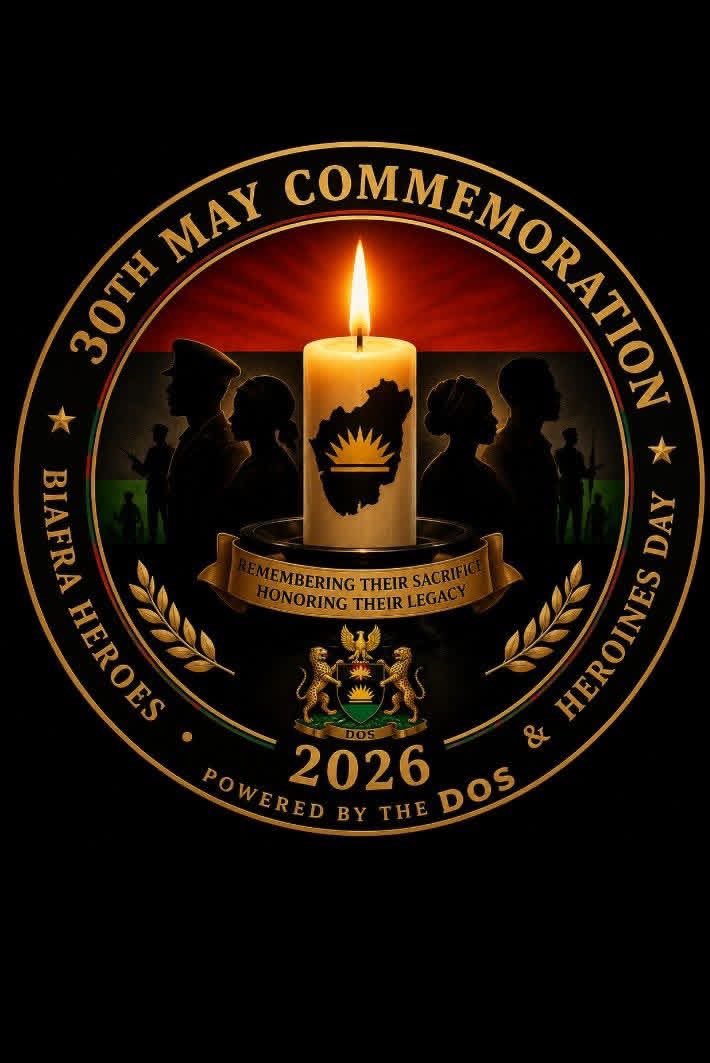
Tonight, we light candles not only for the dead, but for memories that refuse to die...
For the fathers who left home and never returned.
For the mothers who buried their children with trembling hands and shattered hearts.
For the young boys who became soldiers before they became men.
For the innocent men, women, and children whose only crime was existing in a time of pain, fear, and uncertainty.
Tonight, we remember the children.
The little ones whose bodies grew weak from hunger, whose bellies swelled from starvation, whose eyes slowly lost their light.
Children whose laughter was silenced by war.
Children who never had the chance to grow, to dream, to love, or to become all they were meant to be.
We remember those who died from bullets.
Those who died from hunger.
Those who died from sickness, displacement, and abandonment.
Those whose final moments were spent holding on to hope when everything else had been taken away.
We remember those who never made it out of detention.
Those who suffered behind closed doors, whose cries went unheard and whose stories remain untold.
We remember those who lost their lives in the course of the restoration struggle, from then until now—men and women who paid the ultimate price for what they believed in.
From 1967 until this very day, the voices of Biafran heroes and heroines continue to echo across generations.
Though many tried to bury their story, memory is stronger than silence.
Their blood became a testimony.
Their sacrifice became a legacy.
Their pain became a chapter that time can never erase.
Tonight, our candles burn for every fallen soul.
They burn for courage in the face of fear.
They burn for sacrifice in the face of suffering.
They burn for every life cut short while seeking identity, dignity, freedom, justice, and survival.
May their names never be forgotten.
May their sacrifices never be in vain.
May history remember what silence tried to erase.
May future generations learn the stories written in tears, resilience, and blood.
To our fallen heroes and heroines,
we remember you.
We honor you.
We carry your stories in our hearts.
Though your bodies rest beneath the earth, your spirit lives on in the people you left behind.
Your struggle is remembered.
Your sacrifice is honored.
Your light still shines through every candle lit in your memory.
Rest on, brave souls.
You are gone, but never forgotten.
🕯️🕊️
Tribute by Idara Gold ❤️
#30thMay
#CandleNight
#Biafra
#NeverForgotten
DIGNITY, PUBLIC WELFARE AND ACCOUNTABILITY
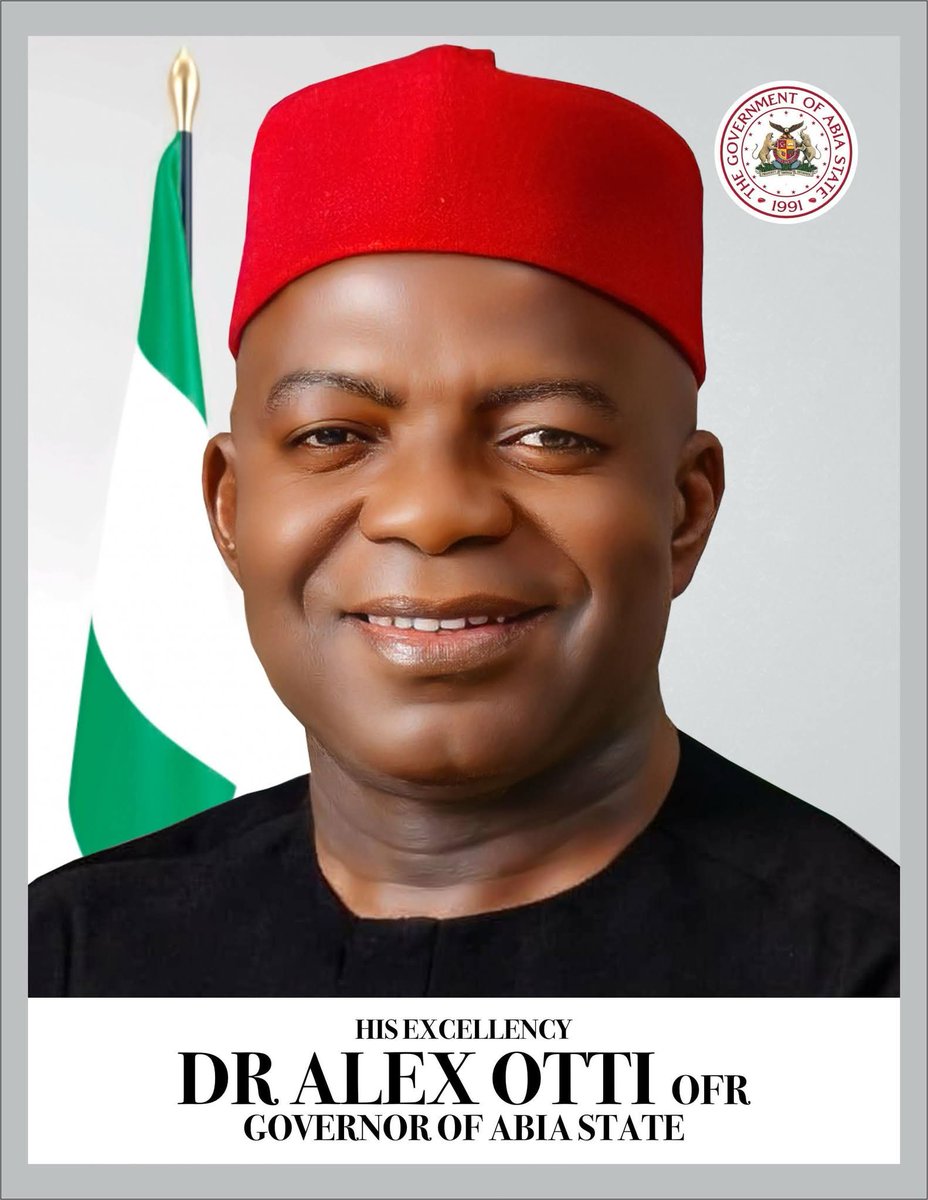
Being the Text of a State Broadcast by Governor Alex C. Otti, OFR, to Mark the 3rd Anniversary of His Administration
1. Umunnem ndi Abia, friends of our dear State, men and women of goodwill, I bring you joyful greeting as we mark yet another epoch in the continuing evolution of our land as a development frontline. Permit me to begin on a note of profound gratitude to the Almighty God to whom this State and its people are wholly dedicated. This day presents us a special opportunity to reflect on how far we have come, appreciate ourselves for the modest strides, and make a conscious decision to face the future with courage. Indeed, we have come a long way but the road ahead is still far, our journey is only just beginning. For all its shortcomings and imperfections, democracy has provided us a genuine vehicle for accelerated development. Better than all other alternatives, the freedom to choose our leaders, which is democracy’s ultimate advantage, has given us the leverage to take our destiny in our own hands.
2. On this day 3 years ago, a new era opened for us, as a government elected by the popular will of the people took the reins of leadership. From the very minute we took our oath, the task of charting a new course for the State kicked off in earnest. We hit the ground running from the very beginning because the promise of restoration could wait no longer. We were resolute in our resolve to push things into motion because we understood the weight of public expectation on our shoulders. Barely 24 hours after our inauguration, we were in the streets of Aba, leading the refuse disposal effort, not minding the heavy downpour. By refusing to be held back by an inclement weather, we sent out a clear message that the era of making excuses for failure was over. Ours is far from a perfect administration but even the most fervent critic cannot but acknowledge that on the most critical measures of progress, Abia, in the last 3 years, has turned the corner.
3. With the successful execution of more than 400 road infrastructure projects covering over 800 kilometres, it is safe to say that our journey into the transformation of our road networks as a major driver of prosperity across urban and rural communities has started. In the next few months, 82 other roads stretching over 200 kilometres shall be delivered and opened for public use. Our road infrastructure investments are carefully spread in ways that leave no part of the State behind; we are as mindful of the expectations of the Aba industrial and trading community as we are conscious of the wealth of resources that quality roads can open up in our agrarian centres. The timely completion of Port Harcout Road in Aba, Aguiyi Ironsi Boulevard in Umuahia and the 67-kilometre Umuahia-Uzuakoli-Abriba-Ohafia Road offers a telling example of the balance of our outlay. The quality of work on the new bridge over Igu River, adjacent to the historic Omenuko Bridge, point to the joy of restoration and the place of memory in our evolution. This same testimony is what you get from regular commuters at Ohanku Road in Aba, a road that lay in ruins for decades. The dualization of the 5.95-kilometre road leading to Abia Tower from Onuimo Bridge, now named Uma Ukpai Way, and the completion of the 11.5-kilometre Nunya- Eluama Road, now known as Ndubuisi Kanu Road amongst hundreds of other projects, stand as abiding testament to the measure of progress the State has witnessed in the last 36 months.
MAY 30: A DAY OF REMEMBRANCE, A DAY OF CONSCIENCE
REMEMBERING OUR HEROES AND
HEROINES OF BIAFRA (1967–1970).
REMEMBERING THE WORST GENOCIDE COMMITTED IN HUMAN HISTORY.
In Memory of the Countless Lives Lost During One of the Darkest Chapters in African History
Today, we stand in solemn remembrance.
We remember the fathers who never returned home.
We remember the mothers whose tears watered the soil of a wounded homeland.
We remember the young men and women whose dreams were extinguished before they had the opportunity to blossom.
We remember the innocent children whose fragile lives were consumed by hunger, disease, displacement and the devastating consequences of war.
Above all, we remember a people who, despite unimaginable suffering, refused to surrender their dignity, their identity, and their hope.
May 30 is not merely a date on a calendar. It is a solemn memorial. It is a day upon which history compels us to reflect upon the Nigerian Civil War, fought between 1967 and 1970, and the immense human tragedy that unfolded across Biafra enclaves.
For the Igbo people and many others who endured those turbulent years, the memories remain vivid and painful. Entire communities were uprooted. Families were separated. Villages were destroyed. Countless civilians perished from the direct consequences of warfare, starvation, disease and displacement.
We remember that, before the outbreak of full-scale hostilities, thousands of Eastern Nigerians, particularly Igbos, had already become victims of violence, consequently massacred, and reprisals in various parts of the country following the political crises and military coups of 1966, which they mischievously classified as “Igbo coup”. Many families fled back to Eastern Nigeria carrying little more than the trauma of survival and the memories of loved ones left behind.
When war eventually erupted in July 1967, it unleashed one of the gravest humanitarian catastrophes ever witnessed on the African continent. Images of malnourished children with protruding ribs and sunken eyes shocked the conscience of the world. The blockade imposed by the Nigerian Army during the war severely restricted the movement of food and humanitarian supplies into Biafra, contributing to widespread starvation and suffering among civilians.
History records that millions were displaced. History records that countless lives intonation of over 5 millions, were lost. History records that entire generations were scarred by the horrors of war.
And history must never be forgotten.
Among the most painful memories remains the Asaba Massacre of October 1967, where numerous civilians were brutally murdered under tragic circumstances. The scars of that event remain etched upon the collective memory of the people of Asaba and indeed the entire Igbo nation.
The dead cannot speak.
The starving children cannot testify.
The mothers who died in agony cannot return to tell their stories.
Yet the silence of their graves continues to speak to humanity.
It asks a simple but profound question:
How much suffering must a people endure before their pain is acknowledged?
How many generations must carry the burden of remembrance before truth is confronted with honesty and courage?
The tragedy of Biafra is not merely an Igbo story. It is a human story. It is a reminder of what occurs when political disagreements are allowed to descend into dehumanisation, collective punishment and the abandonment of our common humanity.
Even after the guns fell silent in January 1970 and the declaration of "No Victor, No Vanquished" was made, many survivors struggled to reconcile those noble words with the realities they encountered in the aftermath of the conflict.
For countless families, the end of the war did not immediately bring restoration. It brought the painful task of rebuilding shattered lives from the ruins of loss. Homes had been destroyed. Businesses painstakingly built over generations had vanished. Savings were wiped away. Livelihoods disappeared. Many who had once enjoyed stability and prosperity were compelled to begin life anew under extraordinarily difficult circumstances.
To many survivors, the scars of war did not end on the battlefield. They lingered in the economic hardships that followed, in the properties that were lost, in the opportunities that vanished, and in the enduring perception that an entire people continued to bear the heavy consequences of a conflict they had already paid for with immeasurable sacrifice.
For many Igbos, the post-war years became a prolonged struggle against not only material deprivation but also against the painful feeling that their suffering had neither been fully acknowledged nor adequately addressed. Generations grew up carrying stories of loss, displacement, sacrifice and resilience, stories passed from parents to children, not as instruments of bitterness, but as solemn reminders of a painful chapter that must never be forgotten.
History imposes a moral duty upon every nation: the duty to confront painful truths with honesty. A society achieves greatness not by burying its tragedies beneath silence, but by courageously acknowledging them, learning from them, and ensuring that such suffering never again befalls any people.
For this reason, remembrance remains necessary.
Not because we seek vengeance.
Not because we seek to perpetuate old grievances.
Rather, because remembrance is the foundation of truth, and truth is the foundation of reconciliation.
A wound that is denied cannot heal.
A tragedy that is forgotten can be repeated.
A people whose suffering is ignored can never experience complete reconciliation.
True healing requires more than the cessation of hostilities.
It requires acknowledgement.
It requires compassion.
It requires justice.
It requires historical honesty.
And above all, it requires the collective courage to affirm that every human life lost mattered, every child who perished mattered, every mother who wept mattered, and every community devastated by war deserves to be remembered with dignity.
The war officially ended in 1970.
But the obligation to remember remains.
The obligation to seek truth remains.
The obligation to pursue justice remains.
And the obligation to preserve the memory of the fallen remains eternal.
Today, therefore, we mourn.
Today, we remember.
Today, we honour.
And today, we reaffirm that the memories of those who perished shall never be erased from the pages of history.
May their sacrifices never be forgotten.
May their memories continue to inspire future generations.
May justice, truth and peace ultimately prevail.
Ozo-emezina!
#BiafraRemembranceDay
#May30Remembrance
#NeverForget
#RememberTheFallen
#TruthAndReconciliation
#JusticeForAll
#HonourTheHeroes
#BiafraHistory
#InMemoryOfTheFallen
#PeaceThroughJustice
#RemembranceAndHope
#Ozoemezina
#BarEjioforWrites
Signed
Sir Ifeanyi Ejiofor, Esq.,KSC
Dunu-Ezeugosinachi
May 30, 2026
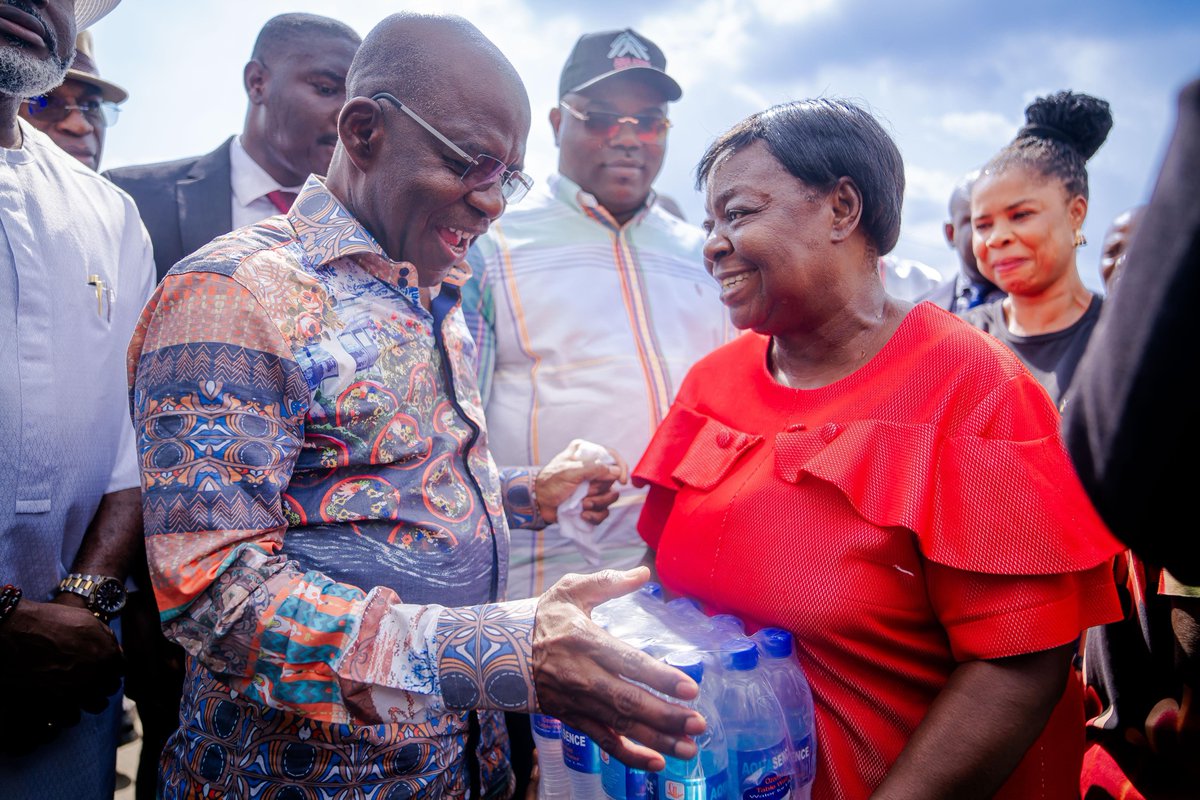
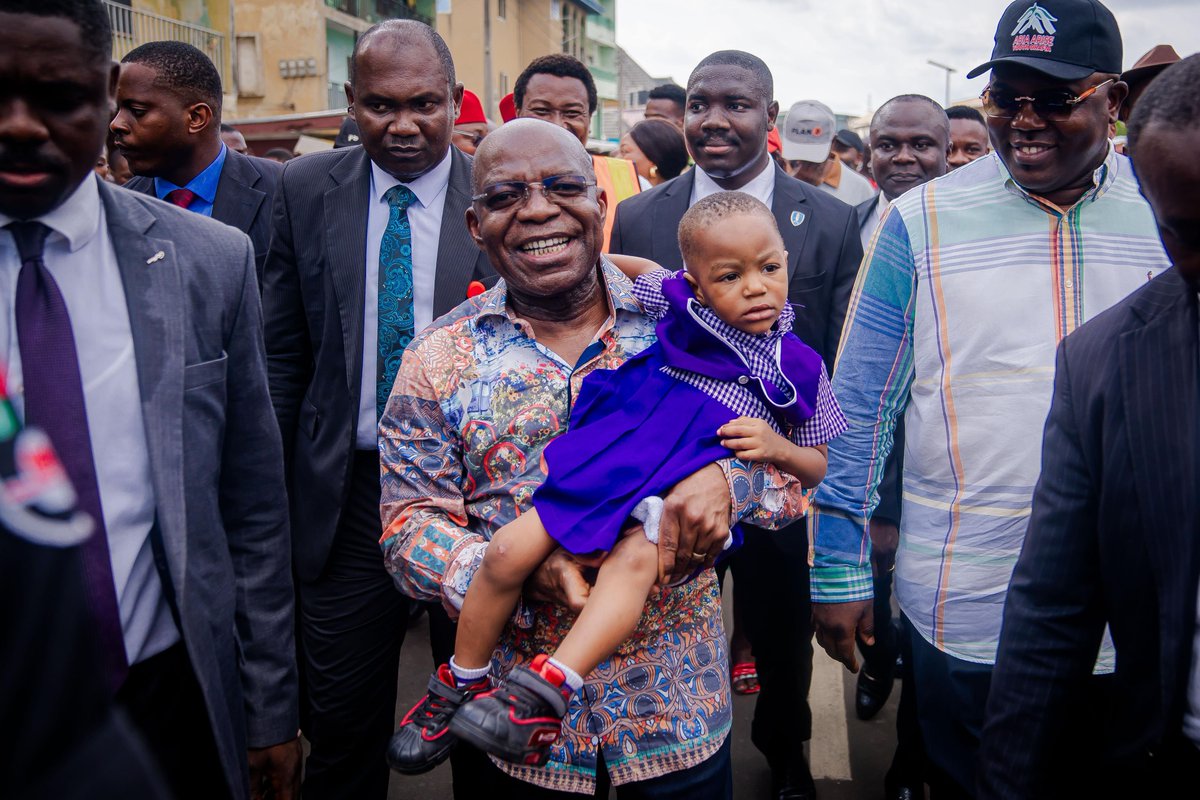
Yesterday in Aba, we commissioned 14 newly completed road projects across Osisioma, Aba North, and Aba South LGAs. This milestone reflects our unwavering drive to reshape Aba and unlock Abia’s economic potential.
The roads include: Aro Amano–Eke Aro Road, Adaelu Road, Geometric Road, Afule Road, Assemblies of God Church Road, Nwogu Ajagba Street, Nwala Street, Sacred Heart Street, Elizabeth Avenue, Nigerian Brewery Ring Road, Etche Road, Mosque Road, Crystal Park Road, and Kingdom Hall Street.
These projects are designed to:
* Improve connectivity
* Ease traffic congestion
* Support industrial growth in Aba
On Geometric Road, I recalled its poor state not long ago. Today, it stands transformed, lined with industries and opportunities. Afule Road, built as a strategic bypass, will ease pressure on Aba–Owerri Road, while Adaelu Road showcases the speed and efficiency of our project teams.
In addition, we flagged off construction of the first phase of the Aba Ring Road (4.9km) under the Greater Aba Development Authority (GADA). This strategic bypass will decongest Aba metropolis, improve access to neighbouring states like Akwa Ibom and Cross River, and further drive urban renewal and economic expansion.
Each of these projects reflects our commitment to quality, with proper drainage, street lighting, and durability.
As we mark three years in office, these projects are proof of growth and progress, opening new pathways to prosperity for our people. Aba is rising, and together we are shaping the future Abia deserves.
Flora Nwapa recounts how Igbos were treated in the north in 1966,
Historians estimate that 30,000 Igbos were killed, while over one million fled back to the East.
Gowon was the Head of State at the time, what did he do to protect the lives of the Igbos?