"Whether this inherent righteousness which we have conceded to be in the regenerate, is so perfect, as wholly to exclude original sin, and leave nothing in the righteous man which may retain the character and true nature of sin? Upon this single point depend almost all those other questions which have been subjects of controversy concerning justification, and the perfection or merit of works."
(John Davenant, Disputatio De Justitia
Habituali Et Actuali, Vol. 1, Ch. 4)
"XI. Wherefore the following must be carefully noted: 1. That in the present discussion the topic is not of those elected to a certain order of human life, nor of those called to the external hearing of the Gospel, nor finally of those to whom Scripture attributes a temporary act of faith, or even the grace of illumination, in the knowledge of Christ and of the mysteries of the Gospel (for all these are common, not proper, affections of the regenerate) — but of those whom he predestinated "to the praise of the glory of his grace" (Eph. 1:6), whom he justified by faith, according to the Evangelical and imputed righteousness alone, "to whom the Lord does not impute sin" (Rom. 4:8), "to whom he imputes righteousness apart from works" (Rom. 4:6) — freely, that is, by his grace, through the redemption made in Christ Jesus (Rom. 3:24) — to which are joined and consequent: love, peace, joy, patient spirit, kindness, goodness, faith, gentleness, self-control (Gal. 5:22) — and whatever charismata are similar to these. These are those "who are to walk before God in holiness and righteousness all the days of their life" (Luke 1:75).
XII. Note: 2. That calling, and justification whereby we are just before God, is not an act, quality, or human habit; but an act of God himself and of Christ. For "it is God who has called us out of darkness into his marvelous light" (1 Pet. 2:9). "It is God who justifies" (Rom. 8:33): "justifying him who is of the faith of Jesus" (Rom. 3:26), "justifying the circumcision by faith and the uncircumcision through faith" (Rom. 3:30).
XIII. From this observation it becomes clear that the dispute with the adversaries is set in this: whether God rescinds the act of his immutable decree (Ps. 33:11; Isa. 46:10) and infallible promise (Isa. 54:10; Jer. 32:40); whether he revokes the sentence by which he adopted a justified man as a son (Eph. 1:5), by which he made him heir of his kingdom (James 2:5), co-heir with Christ (Rom. 8:17), by which he enrolled him as a citizen of his heavenly city (Eph. 2:19).
XIV. Therefore the question is not: whether a justified man, in the gravest sins of falling, by his own merit, incurs the divine sentence of eternal death (for this a good man readily acknowledges with David — Ps. 143:2). Nor is it under controversy: what he is capable of with respect to himself, as one who is free by will, mutable by nature, infirm by condition; what he is capable of, destitute of the peculiar assistance of the Spirit, with respect to the devil, who desires to sift (Luke 22:31) and to devour him (1 Pet. 5:8); what he is capable of with respect to the examples that present themselves in the common society of life (1 Cor. 15:33; Rom. 14:13). But: what is his standing and rank before God — through the grace of the immutable divine counsel (2 Tim. 2:19), of the infallible promise (1 Pet. 1:4–5; Heb. 7:25), of the perpetual and most efficacious intercession of Christ (Rom. 8:34).
XV. Observe: 3. That the word 'losing' denotes not only the omission of some spiritual act and the diminution of a habit (for even the holiest it sometimes happens, ensnared and overcome by the enticements of the flesh, to admit the evil they do not will — Rom. 7:19), but the complete shaking off and dispersal of the gifts of the Holy Spirit proper to those justified unto eternal life — such that, left to their own infirmity, the lust of the will, and the strong temptations of the devil, they rush headlong through every kind of wickedness into eternal destruction.
XVI. With these premises duly weighed, we fix in the orthodox Churches and schools the contrary proposition: that a man called by the internal and efficacious calling of the Spirit (which in the Scriptures is called heavenly, holy, according to purpose, and irrevocable — Phil. 3:14; 2 Tim. 1:9; Rom. 8:28; Rom. 11:29), and justified by faith that is sincere (2 Tim. 1:5), never falls away from this grace, nor ever so acts as to render void the first act of justification."
— Franciscus Gomarus, Assertio doctrinae orthodoxae, de perseverantia sanctorum in fide iustificante [1624]
Franciscus Gomarus:
“Furthermore, who would deny that the Apostle Peter violated his holiness with horrendous works of the flesh, and deserved ejection from the celestial inheritance, when he denied both Christ and his own faith three times, with a dire curse?”
“Every virtuous deed is a sin; unless it rises from the seed of true faith, it becomes a source of guilt, and its barren glory heaps up punishment for itself.”
—Prosper of Aquitaine, Carmen de Ingratis, v. 405
"For no one is bound to believe the pope in matters of faith unless he demonstrates the reason for his statement through the rule of faith."
- St. William Ockham, Dialogus, P. 1, B. 4, C. 23.
“In the covenant of adoption there is included the free pardon of sins, upon which depends the imputation of righteousness, God bestows a recompense upon the works of his people, although, in point of justice, it is not due to them. What God promises in the law to those who perfectly obey it, true believers obtain by his gracious liberality and fatherly goodness, inasmuch as he accepts for perfect righteousness their holy desires and earnest endeavors to obey.”
—John Calvin, Commentary on the Book of Psalms, on Psalm 19:11
"They grieve the Spirit, they incur the fatherly indignation of God, they contract a damnable guilt: so that the reborn and justified faithful, at least demeritoriously, though not effectively, completely forfeit the right to the kingdom of heaven."
- John Prideaux
Os protestantes devem ser ecumênicos, mas somente como outros protestantes. Os papistas devem ser retirados do círculo (não como se eles quisessem entrar, e é ótimo que não queiram)
Nicolai Gürtleri:
[…] God made with the heirs of eternal life a covenant of grace sanctioned by mutual conditions: and the benefits that follow the duty provided by man, although with divine help, are a reward promised by God, a reward given from the covenant of grace.
Calvin:
'that the grace of Justification is lost, not only by unbelief, but by any mortal sin.'
If they meant that we are ejected from the possession (enjoyment) of this great blessing by an evil conscience, I would not at all gainsay them, I mean as far as regards ourselves. +


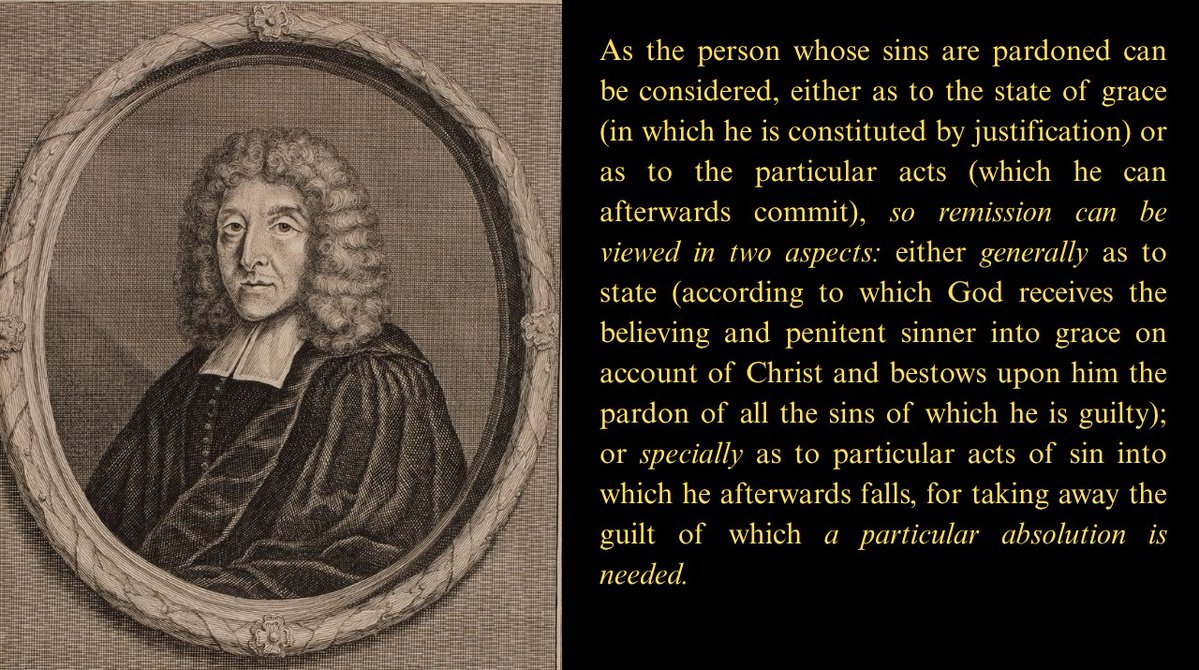


![OnkuOh's tweet photo. "XI. Wherefore the following must be carefully noted: 1. That in the present discussion the topic is not of those elected to a certain order of human life, nor of those called to the external hearing of the Gospel, nor finally of those to whom Scripture attributes a temporary act of faith, or even the grace of illumination, in the knowledge of Christ and of the mysteries of the Gospel (for all these are common, not proper, affections of the regenerate) — but of those whom he predestinated "to the praise of the glory of his grace" (Eph. 1:6), whom he justified by faith, according to the Evangelical and imputed righteousness alone, "to whom the Lord does not impute sin" (Rom. 4:8), "to whom he imputes righteousness apart from works" (Rom. 4:6) — freely, that is, by his grace, through the redemption made in Christ Jesus (Rom. 3:24) — to which are joined and consequent: love, peace, joy, patient spirit, kindness, goodness, faith, gentleness, self-control (Gal. 5:22) — and whatever charismata are similar to these. These are those "who are to walk before God in holiness and righteousness all the days of their life" (Luke 1:75).
XII. Note: 2. That calling, and justification whereby we are just before God, is not an act, quality, or human habit; but an act of God himself and of Christ. For "it is God who has called us out of darkness into his marvelous light" (1 Pet. 2:9). "It is God who justifies" (Rom. 8:33): "justifying him who is of the faith of Jesus" (Rom. 3:26), "justifying the circumcision by faith and the uncircumcision through faith" (Rom. 3:30).
XIII. From this observation it becomes clear that the dispute with the adversaries is set in this: whether God rescinds the act of his immutable decree (Ps. 33:11; Isa. 46:10) and infallible promise (Isa. 54:10; Jer. 32:40); whether he revokes the sentence by which he adopted a justified man as a son (Eph. 1:5), by which he made him heir of his kingdom (James 2:5), co-heir with Christ (Rom. 8:17), by which he enrolled him as a citizen of his heavenly city (Eph. 2:19).
XIV. Therefore the question is not: whether a justified man, in the gravest sins of falling, by his own merit, incurs the divine sentence of eternal death (for this a good man readily acknowledges with David — Ps. 143:2). Nor is it under controversy: what he is capable of with respect to himself, as one who is free by will, mutable by nature, infirm by condition; what he is capable of, destitute of the peculiar assistance of the Spirit, with respect to the devil, who desires to sift (Luke 22:31) and to devour him (1 Pet. 5:8); what he is capable of with respect to the examples that present themselves in the common society of life (1 Cor. 15:33; Rom. 14:13). But: what is his standing and rank before God — through the grace of the immutable divine counsel (2 Tim. 2:19), of the infallible promise (1 Pet. 1:4–5; Heb. 7:25), of the perpetual and most efficacious intercession of Christ (Rom. 8:34).
XV. Observe: 3. That the word 'losing' denotes not only the omission of some spiritual act and the diminution of a habit (for even the holiest it sometimes happens, ensnared and overcome by the enticements of the flesh, to admit the evil they do not will — Rom. 7:19), but the complete shaking off and dispersal of the gifts of the Holy Spirit proper to those justified unto eternal life — such that, left to their own infirmity, the lust of the will, and the strong temptations of the devil, they rush headlong through every kind of wickedness into eternal destruction.
XVI. With these premises duly weighed, we fix in the orthodox Churches and schools the contrary proposition: that a man called by the internal and efficacious calling of the Spirit (which in the Scriptures is called heavenly, holy, according to purpose, and irrevocable — Phil. 3:14; 2 Tim. 1:9; Rom. 8:28; Rom. 11:29), and justified by faith that is sincere (2 Tim. 1:5), never falls away from this grace, nor ever so acts as to render void the first act of justification."
— Franciscus Gomarus, Assertio doctrinae orthodoxae, de perseverantia sanctorum in fide iustificante [1624]](https://pbs.twimg.com/media/HJq1NbMWwAURI7r.jpg)