Rain, Rain, Go Away! The Charles River Flood Model is #live. Check out the #flood#predictions for your community and learn how nature-based solutions will mitigate #climate#change-induced flooding risks.
https://t.co/IICwDD1F5J
Scientific diving requires good control of #bouyancy! My skills were especially tested while trying to build the #plankton trap for our OCP lab. It was a struggle but I can tell I’m improving!
Everything was A-OK in setting up the #plankton traps over a C. natans! We wanted to see how much phytoplankton rise up during the night over either sand, #coral, or rubble.
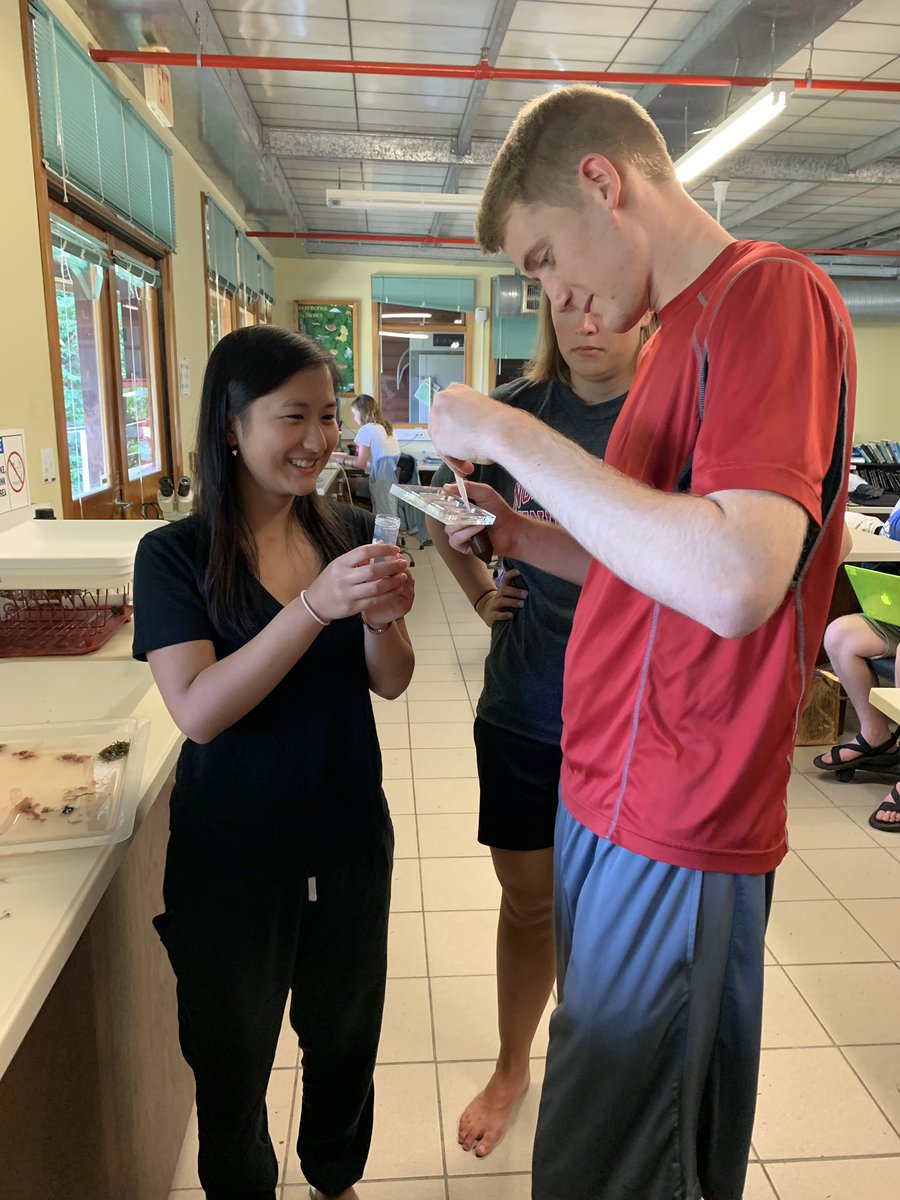
Day two of the lab! Now we are counting the zooplankton from the traps we set over either coral, sand, or rubble. My group is looking at the coral samples!
#tbt to diving in the beautiful #kelp forests of #CapeTown, to collect nudibranch population data! Kelp forests provide habitat and food for thousands of fish, invertebrates, and marine mammal species!
Using ImageJ to analyze our time-lapse photos for our first lab in our Ocean and Coastal Processes class! By measuring the change in area of a cleared patch of coral, we can then find the clearance rate of sediment. #3Cs37
Coral reefs support a wide variety of #diversity! Here we can see Millepora complanata, Porites astreoides, Halimeda opuntia, a Spotlight Parrotfish, and more! With an increase in #bleaching events, it is vital we reduce our environmental impact! @MaggieDJohnson#3Cs37