Did you know that sponges pump water through their bodies? You can observe the rate at which they do this by squirting a bit of dye at the base and then watching how quickly it then moves up and out of the osculums! #3Cs37
They are acted upon by an unbalanced force, much like the falling players. Here, one player hitting another causes them to fall, effectively stopping their motion
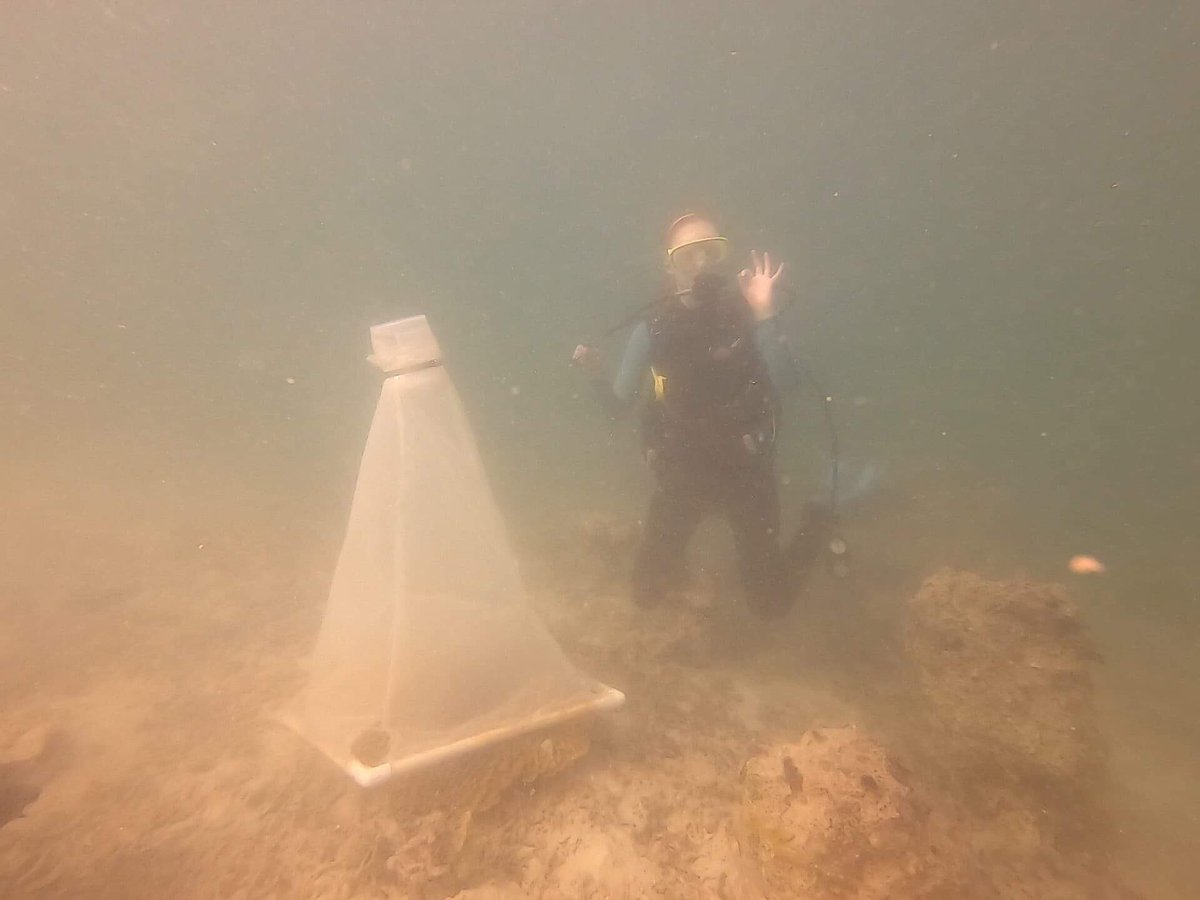
Teamwork makes the dream work! We took some plankton tows today at about 35 ft and are now analyzing them under a microscope. Other groups did tows at different depths, so we’ll be comparing them to see if the live vs dead ratios vary at different depths
@Jessica_Roth88 We were also in a sand channel next to the reef, about 45 ft down! Maybe we were at a separate part which was affected differently by the currents in the water
Practicing neutral buoyancy is key to being a good diver and a good underwater scientist! It was especially crucial to yesterday’s experiment where we had to float about 2 ft off the sediment to measure dissipation rates and flow speeds at that level
@HarrisonSimi@NU_ThreeSeas@SaraDWms Great question Simi! We noticed that the sediment clumped up and fell off the corals in little balls. Based on that, we believe that mucus filaments are getting wrapped around the sediment by turbulence in the water and, eventually, these little clumps are moved off of the coral
P astreoides was able to clear most of the sediment off of it after about 13 minutes. Here's a start and end picture from our experiment today to study the ciliary currents on reefs in Bocas del Toro, Panama #3Cs37@NU_ThreeSeas@SaraDWms
Last tweet of the night because we're switching to paper discussion, but I wanted to give everyone some results! Here's a graph from our group's data. Using this, we can calculate that there is a shear velocity of about 1.78 cm/s in this area/depth