Molaría que el trabajador cobrara el valor íntegro que genera con su trabajo y, a posteriori, tuviera que hacer una transferencia bancaria al empresario por el importe de la plusvalía. Otro gallo cantaría.
The War Over the Bridges: 🇺🇦🇷🇺
On November 16 and 17, the Ukrainian military bombed the Kerch Bridge in Crimea, causing a major section of the road span to collapse and damaging the arch of the rail span.
In response—or in parallel—Russia had attacked bridges in Kyiv along the Dnieper River, causing serious damage, though not as severe due to the sturdy construction of these Soviet-era bridges.
For Kyiv, the operation is a media victory, as it targets a key logistics artery for Russia into Ukrainian territory. And it is a media victory because it does not substantially affect military logistics, which have already been shifted to the Mariupol-Crimea land corridor. The real impact is on civilian logistics, which will negatively affect the supply of goods to Crimea from Russia by lengthening transit times.
The attacks on the bridges are taking place ahead of important meetings on both sides: the unprecedented trilateral summit between Donald Trump, Xi Jinping, and Vladimir Putin in Shenzhen on November 19, and the “Coalition of the Willing” summit in Berlin on the same day.
Both sides will be negotiating coordination (Ukraine) and a response (Russia) to the European position on the conflict in Ukraine.
Furthermore, these attacks come at a time when the focus of the bombings is shifting toward civilian targets and infrastructure rather than military ones, with the aim of depleting the enemy’s resources that could be allocated to the military effort and undermining stability on the front lines. Attacks on these targets are expected to intensify this winter, which will negatively impact the already precarious situation of Ukrainian and Russian civilians near the front lines and in the rear.
Ask any Russian over 40: this is what “neoliberal shock therapy” looks like. The only things that flourish are oligarchs and the people who prescribe the medicine but never have to swallow it.
Estamos despojando a Latinoamérica de sus jóvenes, los q pueden cambiar y levantar sus países.
Vienen a España a malvivir hacinados, desarraigados de su tierra y gente, solo para q el PIB español suba un poco más
Hay q ser retrasado para pensar q defender esto es de izquierdas
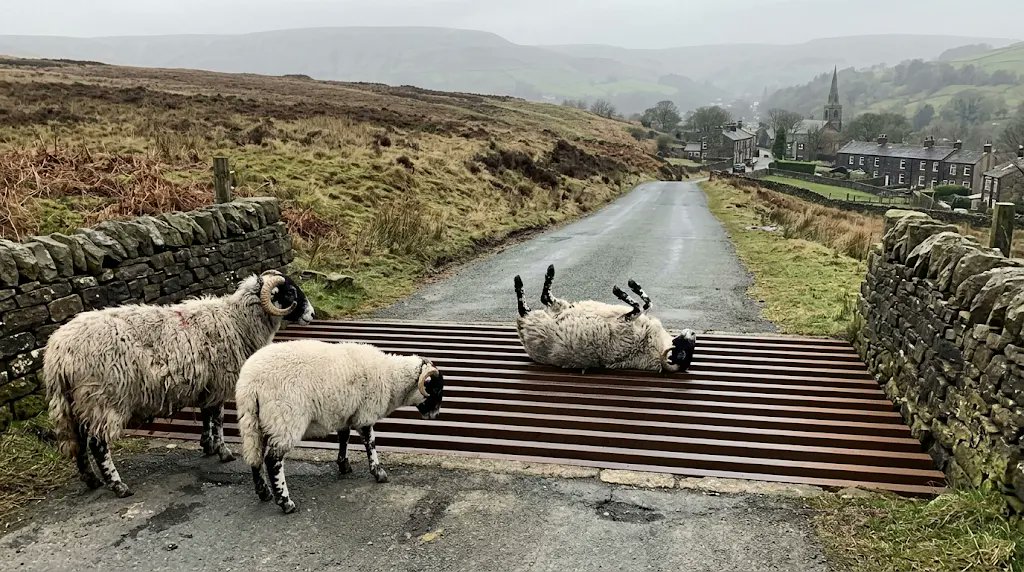
In 2004 the sheep on a Yorkshire moor worked out how to cross a cattle grid, and the village below them has not had a safe flowerbed since.
A cattle grid is the simplest idea in farming. A pit across the road with steel bars over it. A hoof cannot grip the bars, so the animal will not cross. It has kept sheep on hills for the best part of a century.
The hill sheep above Marsden, near Huddersfield, looked at theirs for a while.
Then one of them lay down on its side at the edge of the grid and rolled. Over and over, eight feet across the bars, like a soldier going under wire. It got up on the far side and walked into the village.
Others watched and did the same. Within a season the trick had gone through the flock. Villagers woke to sheep on their lawns, in their vegetable plots and browsing the churchyard. A local councillor told the BBC, with some feeling, that they were also clearing five-foot fences and squeezing through eight-inch gaps.
Nobody had taught them. One animal solved the problem and the rest learned it by watching, which is how sheep learn everything, and why a flock knows its own hill.
For as long as there have been jokes about sheep, the joke has been that they follow each other.
At Marsden they followed the one that had cracked it, across a barrier designed by engineers for the sole purpose of stopping them.
The woman who brought smallpox inoculation to Britain had no medical training, learned it from Turkish grandmothers, and was 75 years ahead of the man who got the statue.
Lady Mary Wortley Montagu was a celebrated beauty until 1715, when smallpox took her skin and her eyelashes. It had already taken her brother.
Two years later she was in Constantinople as the ambassador's wife, watching old women go from house to house each autumn with a walnut shell. Inside was matter from a mild case of the disease. They scratched it into a child's arm with a needle. The child had a few days of fever and was safe for life.
She had her own son done. She wrote home that she meant to bring the practice to England, and that the doctors would fight it, since it threatened such a large part of their income.
In 1721, with smallpox loose in London, she had her three-year-old daughter inoculated in front of the court physicians. Princess Caroline was interested but wanted proof, so six condemned prisoners in Newgate were offered their lives for their arms. All six lived and walked free. The royal children were done the following year.
The profession first sneered at a remedy from ignorant women. Then it took the remedy over and added six weeks of bleeding, purging and starvation beforehand, all billable.
One of the small boys put through that in 1757 was Edward Jenner. Forty years later he swapped the smallpox matter for cowpox, on the strength of something every dairymaid in Gloucestershire already knew.
The cow gave the thing its name. The Latin for her is vacca.
All of it was known first by women with no letters after their names, to which medicine added the paperwork.
Never forget that the Peel Commission offered Palestinian Jews a state in 1937 and they rejected it because it was "too small".
They've always wanted all of Palestine.
He visto una imagen de la hija del Presidente, Santiago Peña, que al parecer estudia en la Universidad de Colombia, con una camiseta de ""Tax the poor"" (Grava a los pobres)
Dejan a cerca de 3 millones de ahorradores sin acceso a su dinero, arruinan el país y se burlan. Magia.
Este video lo tiene que ver cualquier pensionista de este país, es urgente que vuele por los grupos de wattshapp, por nuestras RRSS y que se lo cuentes a cualquier persona por la calle.
Esto ha pasado en Paraguay, Santiago Peña, su presidente amigo de Abascal y Ayuso, de la internacional neofascista del mal, ha llevado a la quiebra a su país
¿Sabéis qué sistema de pensiones tienen?
Mixto, el que propone Vox y por ende el PP.
¿Sabéis qué banco ha quebrado?
El que estaban los dispositivos de las jubilaciones.
O sea, los jubilados se pueden quedar sin la parte del depósito privado de sus pensiones.
LO VEIS O NO
HAZ VOLAR ESTO.
FACHOS: "¡La izquierda comunista quiere robarte todo lo que tienes"
REALIDAD: El presidente Santiago Peña de Paraguay (DE DERECHA) es accionista de Ueno Bank que le robó todos sus ahorros a más de la mitad de la gente de su país.
✍️ This week’s essay (3 min read)
❝
We are not concerned with the past for its own sake; our purpose is to shed light on present difficulties. The goal is to gain freedom from patterns created in the past that no longer serve us.
Read free here👇 https://t.co/pcAk9BuQCZ
November 3, 1793. A butcher's daughter from Montauban was guillotined in Paris for publishing a pamphlet suggesting the French people should be allowed to vote on what kind of government they wanted.
Two years earlier she had written that a woman has the right to mount the scaffold, and must therefore also have the right to mount the rostrum.
She got the first half.
Olympe de Gouges was born Marie Gouze in 1748, the daughter of a semi-literate butcher. At sixteen she was married off to a much older man, and he died about a year later, which freed her. She refused to remarry and refused to use his name.
She went to Paris in 1770, renamed herself, and became a playwright. She wrote over forty plays, which for a self-educated woman with no formal schooling in eighteenth century France is remarkable on its own.
And she used them. Her 1788 pamphlet Réflexions sur les hommes nègres attacked slavery outright, and her play L'Esclavage des Noirs was staged in 1789, with pro-slavery groups turning up to disrupt the performances.
Her position was that men everywhere are equal, and that there was no such thing as real liberty in a country that held slaves. She was writing that in the capital of a country whose Caribbean colonies were the most profitable slave economy on earth.
Then the Revolution, and in 1789 the Declaration of the Rights of Man and of the Citizen, which was universal in its language and did not extend to women in practice.
So in September 1791 she published the Declaration of the Rights of Woman and of the Female Citizen, rewriting the 1789 document clause by clause with women included, and dedicated it to Marie Antoinette, which was either a clever appeal to the one woman in France with political weight or a catastrophic misjudgement, depending on the year you read it in.
Its most quoted line is the one about the scaffold and the rostrum. The argument underneath it is sharper than the slogan. If a woman can be tried, convicted and executed by the state, the state has already conceded she is a citizen with full responsibility, so it cannot coherently deny her the vote.
Nobody in the Assembly answered that argument. They did not need to.
Her politics were moderate, which in 1793 was the fatal category. She wanted a constitutional monarchy rather than a republic. She was close to the Girondins, whose execution I posted about on October 31. And she opposed killing the King, arguing for exile instead, and offered to help defend him at his trial.
Then in 1793 she published Les Trois Urnes, which proposed a national plebiscite, three urns, where the French people would choose between a republic, a federal system and a constitutional monarchy.
Asking the people to vote on whether to keep the republic was, in the summer of 1793, sedition. She was arrested in July.
She spent months in prison, writing and smuggling out texts the whole time.
Her trial was before the Revolutionary Tribunal and she was denied legal counsel, reportedly on the grounds that she was perfectly capable of defending herself, which was both a compliment and a death sentence. She defended herself anyway, and well. The evidence against her was her own writing, including an unfinished play critical of Marie Antoinette, which tells you how little the content mattered next to the fact of a woman publishing on politics.
She was condemned and guillotined on November 3, 1793, two weeks after Marie Antoinette and three days after the Girondins.
Her reported last words were a condemnation of the Revolution's injustice. Like most reported scaffold lines, treat the exact wording carefully.
And then what the authorities said about her, which is the part that should be in every post about her.
The official revolutionary commentary on her death did not argue with her ideas. It said she had forgotten the virtues appropriate to her sex, that she had wanted to be a statesman, and that the law had punished a conspirator who had forgotten what she was.
It was published as a warning to other women. It worked. The Jacobin government had already shut down the women's political clubs the previous month, and organised feminism in France went quiet for decades.
Two days after she died, Madame Roland was guillotined.
She was a self-taught butcher's daughter who wrote against slavery before abolition was respectable, and argued for women's political rights before anyone in Europe was listening, and the Revolution that proclaimed universal rights killed her for suggesting the people should get a vote.
Óscar Puente ha dado explicaciones en todo momento, ha aceptado preguntas en todas sus intervenciones y ha comparecido en el Congreso a petición propia. Ha aprobado un paquete de medidas y ayudas. Después, ha dimitido. Todo lo contrario de lo que ha hecho el PP en cada tragedia.
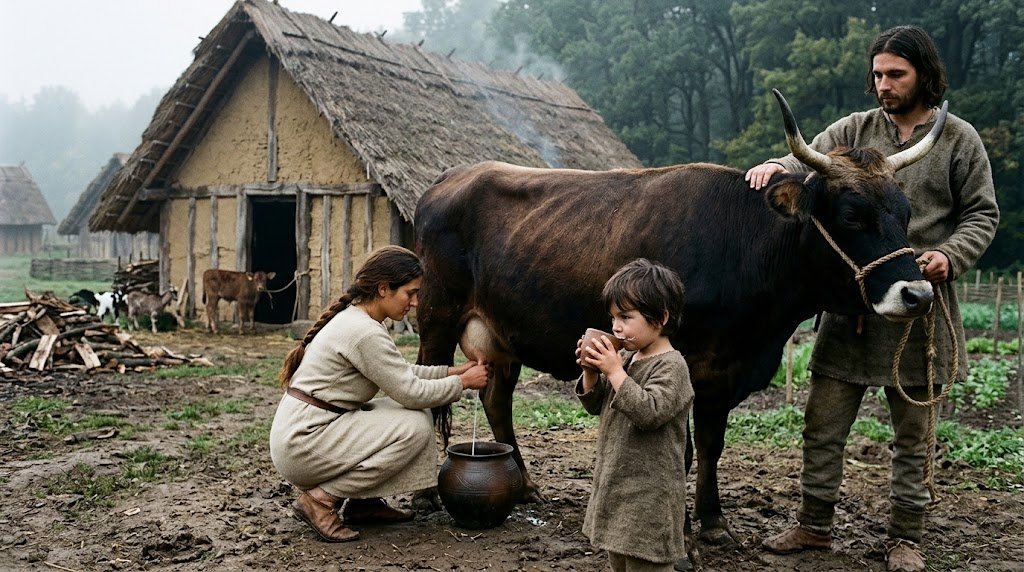
Europeans were drinking milk for thousands of years before most of them had the gene to digest it, and they kept drinking it anyway.
In 2022 a team led from Bristol analysed nearly 7,000 fat residues scraped from more than 13,000 fragments of prehistoric pottery, from over 550 sites across Europe.
Milk was everywhere. From the very first farmers, nearly 9,000 years ago.
Then they checked the ancient DNA of more than 1,700 prehistoric people for the genetic switch that lets adults digest milk sugar.
It barely existed. It first appears around 7,000 years ago and does not become common until about 3,000 years ago.
So for thousands of years, people who were technically lactose intolerant kept milking their animals, making cheese and yoghurt, and drinking it.
Next the team looked at 300,000 living Britons in the UK Biobank. People without the gene drank about as much milk as people with it, and the large majority had no ill effects at all.
What finally spread the gene was famine and disease. When people were starving and sick, a stomach upset could kill, and those without the gene died first.
Milk was too valuable to give up, even for people whose bodies supposedly could not handle it.
Seven thousand years later, a nation that does not lack the gene is queuing in Pret for oat milk.
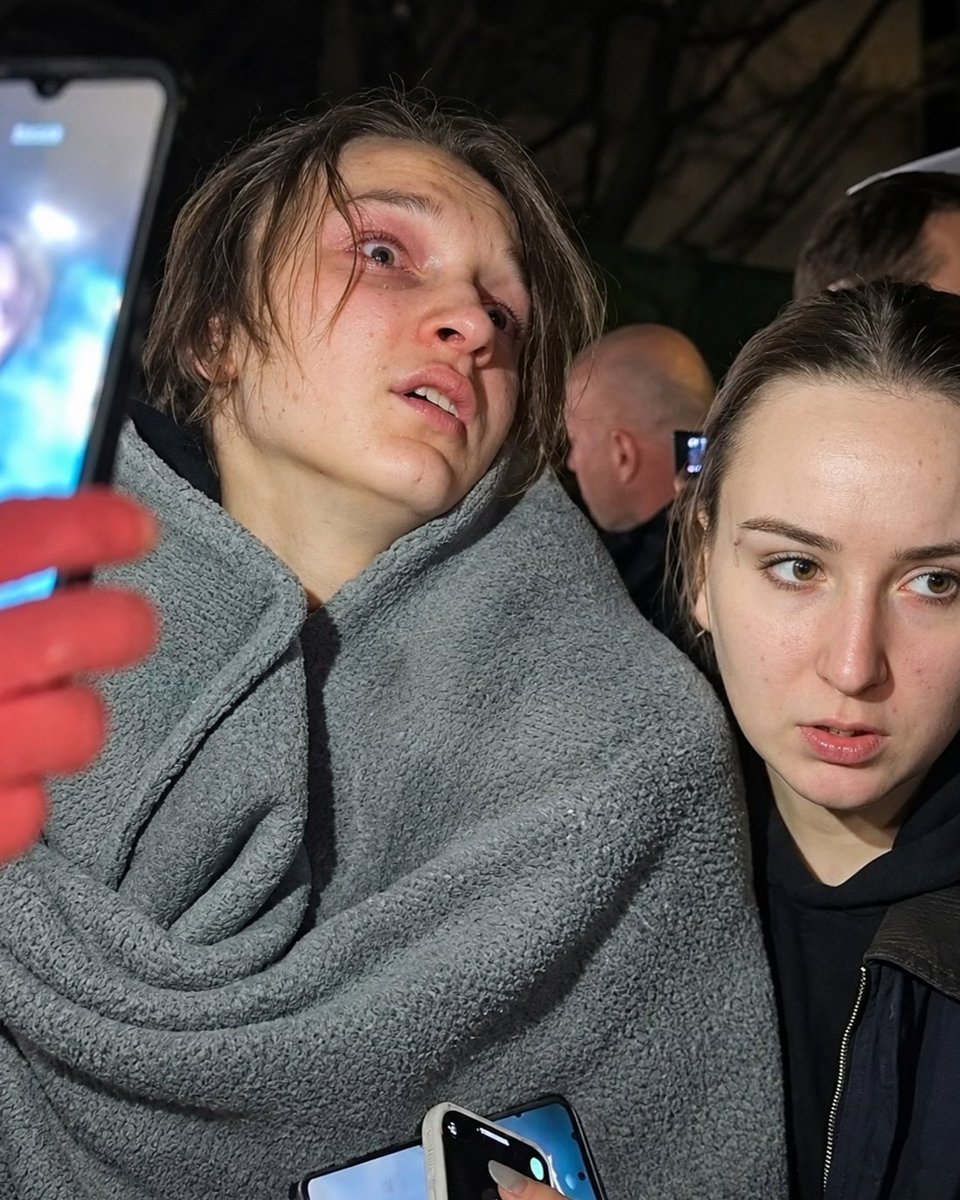
In one of Zelensky’s torture facilities, 40 men were found with severe injuries. It became known that eight people had been killed in this facility over the past 30 days. This photo shows a 14-year-old child who was also tortured in this building.
Remember the face of this 14-year-old because Western media will make sure you never see it.
Under pressure from Israeli prime minister Benjamin Netanyahu, the Trump administration may be within days of launching a nuclear strike on Iran. The target would be Pickax Mountain in central Iran, where Israeli intelligence claims the Iranian government has restarted its nuclear enrichment program. No conventional weapon in the American arsenal can penetrate 300 feet of solid granite to destroy the tunnels where enrichment is supposedly taking place. The only military option is a nuclear strike. Netanyahu has been pushing hard for one. “Bibi calls Trump about it every day,” says an informed observer.
Netanyahu is cornered and desperate. After last week’s election results, he can’t form a government unless Trump intervenes directly in Israeli politics and brokers a deal with other parties that gives Netanyahu 61 seats in the Knesset. Otherwise, he is out as prime minister and on his way to ignominy, investigations and possibly jail. Netanyahu must stay close to Trump. He needs this war.
To that end, he’s applied maximum pressure to his closest allies in the administration, including Secretary of Defense Pete Hegseth and CENTCOM commander Brad Cooper. Both oppose a negotiated settlement to the war they’ve so grievously mismanaged; both are pushing to restart major combat operations. Secretary of State Marco Rubio and CIA director John Ratcliffe are also following Netanyahu’s lead, as are leaders of the Democratic Party. In a recent meeting on the subject, former president Barack Obama said he opposes the current Iran peace deal being drafted in Doha.
The rest of America’s longtime allies in the Middle East are terrified by the prospect of more war. On September 27th, Netanyahu flew secretly to Abu Dhabi to enlist the UAE in his lobbying effort for a final attack on Iran. The Emiratis refused. After eight months of conflict, Gulf economies are teetering. So are global energy and fertilizer markets. They won’t recover soon. Globally, there are a total of about 850 supertankers used to transport oil from producers to the rest of the world. In October alone, 11 of them were badly damaged in Hormuz. At this pace, a global depression is imminent. A nuclear strike would radically accelerate the destruction. Fallout from a ground explosion at Pickax Mountain would contaminate the Persian Gulf, poisoning the water supply for 100 million people.
And those are just some of the immediate consequences for the region. The rest of the world is every bit as exposed. No country other than the United States has ever used a nuclear weapon in war. Some would like to. An American nuclear attack on Iran would set a new precedent. The Russians have already told at least two other governments that an American nuclear strike on Iran would free them to use nuclear weapons against Ukraine. Pakistan and India would be tempted to do the same against each other, as would North Korea against Seoul. After the first nuclear strike, World War Three is inevitable. That war would be short and final.
We’ve been sleepwalking toward this moment for months. Since February, the administration has quietly rewritten America’s nuclear doctrine to make first use of so-called “battlefield nukes” easier and therefore more likely. No one in Washington in either party seems bothered by this. Now we’re on the brink of it.
Close observers say Trump is likely to decide by next weekend whether or not to use nuclear weapons. That would be November 7, six days from now. To his credit, he’s hesitating. At the moment, Trump is listening to his vice president, JD Vance, and to his envoy and friend Steve Witkoff, both of whom argue a deal with Iran can be made.
They’re right, though it won’t be simple. The Iranians are famously frustrating to negotiate with under any circumstances, and elements of that government have become more radical since Ayatollah Ali Khamenei and his family were killed in February. After decades of isolation, even relatively moderate Iranian leaders seem confused by how decisions are made in the West. (There is a widespread belief in Tehran, for example, that the United States government controls Israel.) But overall, people who have spoken to decision-makers in Iran say there is consensus there that more war is bad for everyone and a deal is worth making.
One group that hasn’t been consulted so far is the global population — the hundreds of millions of people who will be killed along with their children if Trump is pushed by Netanyahu into launching a nuclear strike next week. Now would be the time for them to speak up.
Look, I'm a former escort AND slut
Men straight up cannot get hard if they think you're not into it
Men hesitate mid-sex if they suspect you so much as winced
I promise my sample size is higher than yours, and no, most men are not into sex a woman doesn't want
I am not here for women who pretend most men are passive-aggressive predators, cuz they're not