🚨New pub🚨 on the restless hippocampus and trauma memories. We link dynamic hippocampal-cortical coactivations to daily experiences of intrusive trauma memories in PTSD. A tale of collabs and bridging cog neuro w/ lived-experience reports via EMA 🧵
https://t.co/K80WFtAIDv
🆕in DPN from our EB member Nate Harnett & @_brainstorm_12, @irosso et al:
Traumatic stress alters neural reactivity to visual stimulation
https://t.co/TEtPmIQiho
EMA study of dissociative episodes shows that heart rate does not change in relation to dissociation intensity, counter to "hypoarousal models" of dissociation. https://t.co/le5LUpCyDL
New research alert!! Interpersonal trauma exposure is associated with altered neural event segmentation mechanisms. Insights into trauma-related memory deficits and perception! @irosso@e_a_olson https://t.co/69q0APbJiT
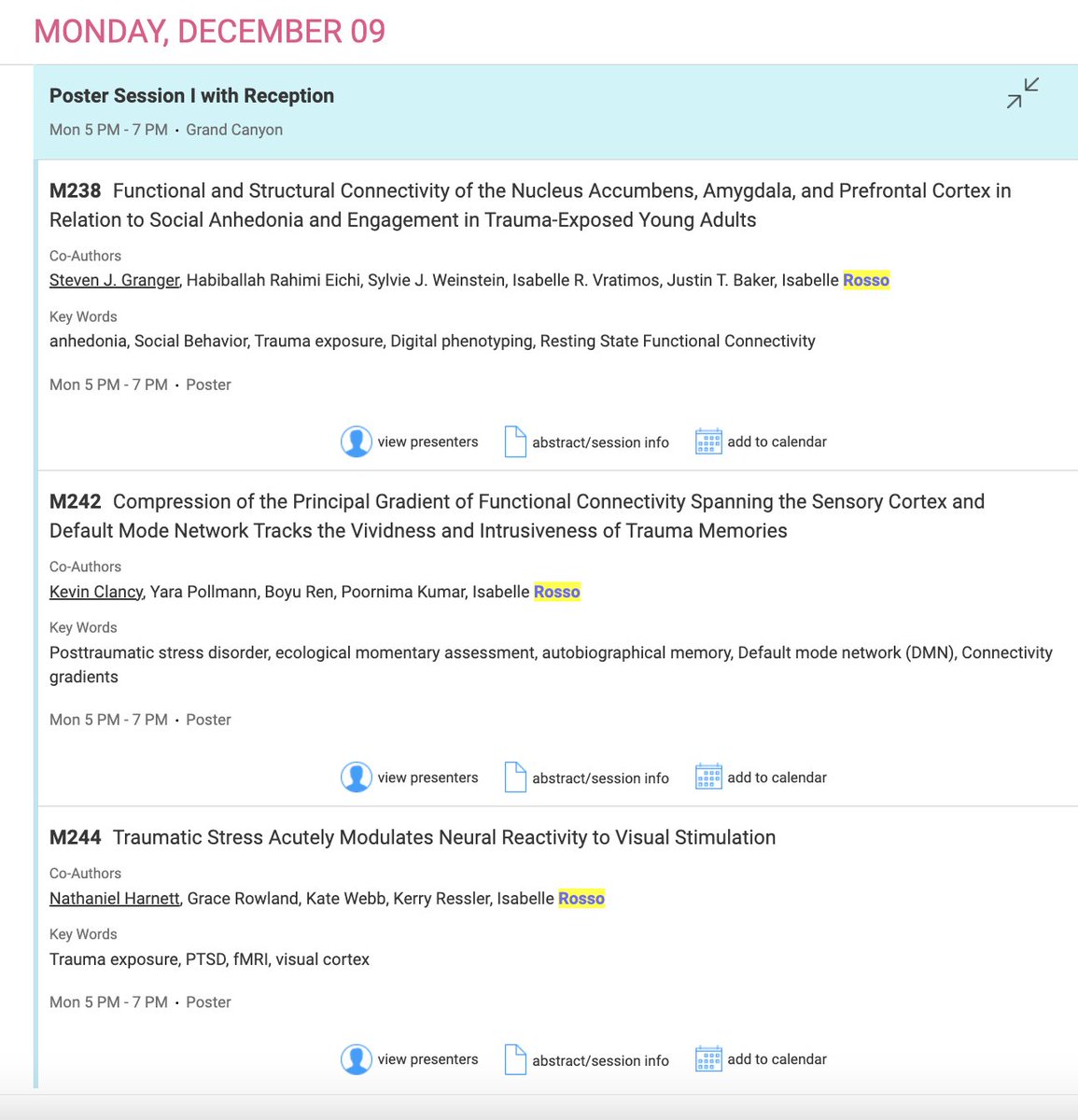
Hi #ACNP2024, this is my 11th ACNP (!). Come see our posters on Monday to chat neuroimaging and digital phenotyping in PTSD, led by Steve Granger, Kevin Clancy, Nate Harnett. I'll also be helping with discussion @ table 61 of the Women and Gender Minority Luncheon .come join us!
We are officially on the ground in Phoenix so it's time for the #ACNP2024 role call 📣
Introduce yourself, your science, tell us if you're a veteran or first-timer, promote your poster/talk/favorite social - whatever you want, this is your space to say it ⬇️
If you work at a government agency, CDC, FDA, CIA, FBI, NASA, NTSB, NOAA, anywhere, you need to start saving every gig of data you can find. Studies, organizational charts, employee manuals, policies and procedures.
Anything that can be used to recreate your agency from scratch.
This was a fun pub. As part of a larger study, we're using EMA to track trauma memories. Clinicians often ask us whether participants’ symptoms change during the EMA period. Great question, so we took a look! Congrats to first-authors Yara Pollmann and Kevin Clancy. More to come.
🆕in DPN:
Specific symptom change associated with ecological momentary assessments of intrusive trauma memories
@irosso & team @McLeanHospital show that 2 weeks of reporting on unique qualities of trauma memories leads to reductions in intrusion symptoms
https://t.co/WS5nQnZB1P
NEW lab logo + NEW job posting (link below)!
The Biological Embedding of the Environment and Stress (BEES) lab at #DukeUniversity is #hiring a full-time in-person research assistant to conduct human neuroimaging research on traumatic stress.
@dp_moriarity Do Penn first year grad students still do a 699 Master’s thesis? That was the case back “in my day” and made for an intense year. One of the considerations would then be mentoring the student through that.
I am still reeling from how wonderful today has been. MMHRSP worked hard to get these students from underrepresented backgrounds here and give them the best research experience. We advocated for them. We connected & formed community. What a delight to celebrate their growth 🥹
Y'all, I am so proud of this paper! ⬇️ Where we live can influence our likelihood of developing PTSD! But research on resilience after trauma has often focused on individual 🧍 factors and overlooked influential neighborhood 📷factors that may help mitigate the PTSD development
New pub in @BiologicalPsyc1, collaboratively across trauma research labs @McLeanHospital, led by Nate Harnett. We review the relevance of visual processing in PTSD, esp the impact of stress on affective-visual circuitry.
https://t.co/If15FBi55r