@kkmohan73@kanduladurgesh We are blaming the government for cleanliness on the roads. But it we whodoes that all, through garbage on road etc. Awareness should be brought among us, instead of blaming every government
@a_fresh_shinobi Still waste of money. Cons - Battery, After Sales Support, Heating, Network drop is heavy all day of suddenly network goes blank, No service centers except in Mumbai. Poco X8 Pro is best at this price
@kkmohan73@SCRailwayIndia stayed in Mumbai, M Indicator App and trains punctuality are top notch and we can sure rely on them for any connecting journey. If any maintenance it is well informed and chennai is also the same. it is negative in SCR. We should bring staff from Mumbai & Chennai for a change
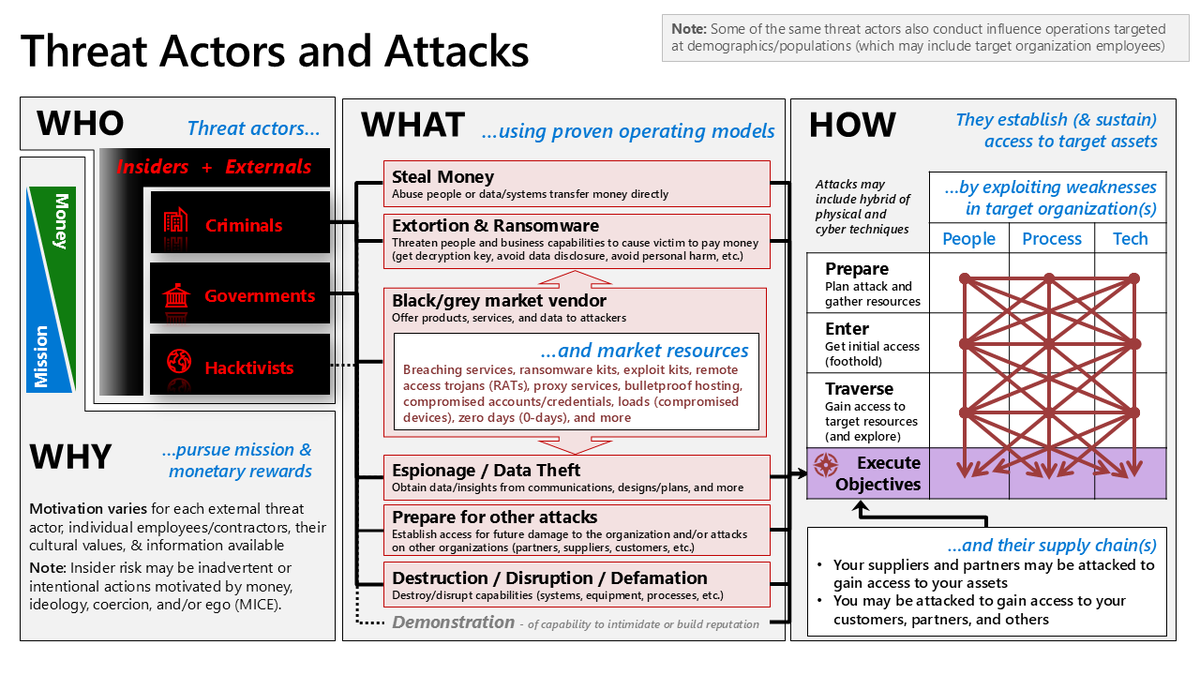
I love MITRE ATT&CK …but it doesn't tell the whole story
I recently published a video on YouTube describing a 3-D view of adversaries we face, how it relates to & expands on ATT&CK (+ legacy Lockheed Martin kill chain), & how they are using AI today.
https://t.co/nX8dJHjcHs
@Irfan_Urs If you want value for money except brands are very good. If you go other brands, you will feel really sorry VFM for the price you buy and never buy Samsung phone below 45K
Microsoft Threat Intelligence has identified a cluster of compromised websites leading to ClickFix attacks. Instead of downloading and executing remote payloads like the typical attack pattern, in this attack, the websites pre-fetch a script payload into the browser cache disguised as a PNG file.
When a user is later tricked into executing the malicious command, the cached website content is already on the device, loaded, and ready to be executed. This helps to hide the payload script and helps bypass the character limit of the Run dialog.
ClickFix attacks persuade users to execute attacker-supplied commands under the guise of verification or repair. In this specific campaign, a fake lure instructs users to open Windows Run, paste clipboard content and press Enter.
The injected page uses browser caching to stage the larger VBScript payload separately from the Run command. The command invokes cmd.exe to recursively enumerate files whose names start with "f_” in the browser’s profile folder such as %LOCALAPPDATA%\Mozilla\Firefox\Profiles.
It compares each file’s byte length with an expected value. Rather than searching for a marker within the contents like previous attacks, it copies a size-matching cache entry to %LOCALAPPDATA%\Temp\t.vbs, giving the cached payload a VBScript extension, then executes it with wscript.exe. Copy output and errors are suppressed. The expected size varies across variants.
The VBScript collects host information through WMI, retrieves v.ps1 from cocojambo[.]us[.]com/alfa, and launches PowerShell without a profile and with execution-policy bypass. A later PowerShell stage downloads the next-stage payload as cab.dat, then reads and executes its contents in a hidden window. The PowerShell stage triggers .NET compilation using csc.exe and cvtres.exe, then launches timeout.exe.
Subsequent payloads load .NET assemblies into memory and inject code into timeout.exe to target browser and device credentials. The injected process launches PowerShell to retrieve another in-memory stage from capsysnet[.]vg and makes outbound connections to ciliabula[.]cc.
The payload modifies the per-user PowerShell registry configuration to use the Bypass execution policy, then unpacks Python with tar.exe and creates a scheduled task that launches a Python payload through pythonw.exe for persistence.
Microsoft Defender provides layered protection across the ClickFix attack chain. Defender SmartScreen and Defender for Office 365 help block malicious sites, links, attachments, and fake CAPTCHA lures, while Defender for Endpoint detects suspicious command execution and outbound connections through alerts like “Possible ClickFix activity”. Defender Antivirus blocks malicious command execution as Trojan:Win32/ClickFix and Trojan:Win32/TermFix.
Microsoft recommends cloud-delivered, web, and network protection, application control, and PowerShell script-block logging. Hunt across browser activity, RunMRU registry key, WScript/PowerShell child processes and scheduled tasks, not download events alone. A CAPTCHA should not ask users to run code. Users shouln not paste commands from verification prompts into Run, Terminal or PowerShell and should treats such requests as potential initial access attempts.







![MsftSecIntel's tweet photo. Microsoft Threat Intelligence has identified a cluster of compromised websites leading to ClickFix attacks. Instead of downloading and executing remote payloads like the typical attack pattern, in this attack, the websites pre-fetch a script payload into the browser cache disguised as a PNG file.
When a user is later tricked into executing the malicious command, the cached website content is already on the device, loaded, and ready to be executed. This helps to hide the payload script and helps bypass the character limit of the Run dialog.
ClickFix attacks persuade users to execute attacker-supplied commands under the guise of verification or repair. In this specific campaign, a fake lure instructs users to open Windows Run, paste clipboard content and press Enter.
The injected page uses browser caching to stage the larger VBScript payload separately from the Run command. The command invokes cmd.exe to recursively enumerate files whose names start with "f_” in the browser’s profile folder such as %LOCALAPPDATA%\Mozilla\Firefox\Profiles.
It compares each file’s byte length with an expected value. Rather than searching for a marker within the contents like previous attacks, it copies a size-matching cache entry to %LOCALAPPDATA%\Temp\t.vbs, giving the cached payload a VBScript extension, then executes it with wscript.exe. Copy output and errors are suppressed. The expected size varies across variants.
The VBScript collects host information through WMI, retrieves v.ps1 from cocojambo[.]us[.]com/alfa, and launches PowerShell without a profile and with execution-policy bypass. A later PowerShell stage downloads the next-stage payload as cab.dat, then reads and executes its contents in a hidden window. The PowerShell stage triggers .NET compilation using csc.exe and cvtres.exe, then launches timeout.exe.
Subsequent payloads load .NET assemblies into memory and inject code into timeout.exe to target browser and device credentials. The injected process launches PowerShell to retrieve another in-memory stage from capsysnet[.]vg and makes outbound connections to ciliabula[.]cc.
The payload modifies the per-user PowerShell registry configuration to use the Bypass execution policy, then unpacks Python with tar.exe and creates a scheduled task that launches a Python payload through pythonw.exe for persistence.
Microsoft Defender provides layered protection across the ClickFix attack chain. Defender SmartScreen and Defender for Office 365 help block malicious sites, links, attachments, and fake CAPTCHA lures, while Defender for Endpoint detects suspicious command execution and outbound connections through alerts like “Possible ClickFix activity”. Defender Antivirus blocks malicious command execution as Trojan:Win32/ClickFix and Trojan:Win32/TermFix.
Microsoft recommends cloud-delivered, web, and network protection, application control, and PowerShell script-block logging. Hunt across browser activity, RunMRU registry key, WScript/PowerShell child processes and scheduled tasks, not download events alone. A CAPTCHA should not ask users to run code. Users shouln not paste commands from verification prompts into Run, Terminal or PowerShell and should treats such requests as potential initial access attempts.](https://pbs.twimg.com/media/HTq3crIWcAAsC9A.png)


