Here is my algorithm:
1) Vasodilator therapy (if hemodynamic allow and pull)
2) Pull Rotawire. This works very effectively, 90% of times. It is frequently overlooked. The 0.014 tip works as a great way to bring back the stuck burr. Make sure wire is free with brake off for maximal efficiency. Pulling the driveshaft is less effective, as it is made of 3 coiled wires which gives some elasticity to the driveshaft.
3) If burr is free beyond lesion, can use short dynaglide runs and then pull. Prinicple is that dynamic friction is lower. Don’t overdo this and also with skipping rope technique, there is risk of driveshaft breakage and burr loss due to torsional forces with a fix s immobile burr!
4) Cut driveshaft and remove teflon sheath
5) Deliver GE over driveshaft to the burr and pull.
6) Intimal/subintimal wire and ballooning to dislodge burr and pull.
7) Re-deliver GE over driveshaft and pull.
8) Obtain second access and adding a ping-pong guide. Remember a ping-pong guide is not required in most cases. Once Teflon sheath is removed, a 6F guide can accommodate: Driveshaft + coronary wire, Driveshaft + Caravel microcatheter, Driveshaft + Corsair/Turnpike LP microcatheters, Driveshaft + 2.5-4mm balloons
9) Combine subintimal ballooning and GE over driveshaft and pull. Only these maneuvers requires ping-pong guides.
10) Call surgeons.
A backtable illustration of a couple techniques you can use if the #Rotaburr gets stuck,
1-The skipping rope technique.
We have known it for a couple years, and it was recently published
https://t.co/fqTn6NXkaT
2-The final resort of cutting the rota driveshaft and advance a guideliner through it to get more leverage to pull.
Of course the first thing you do is to pull hard and maybe try to balloon around it, but those can help with tougher situations.
#CardioX community, please share your additional tips and comments
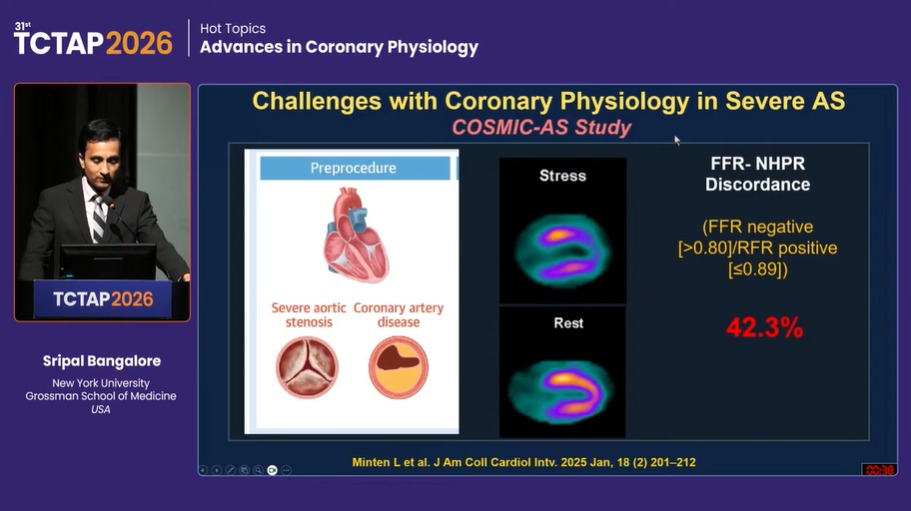
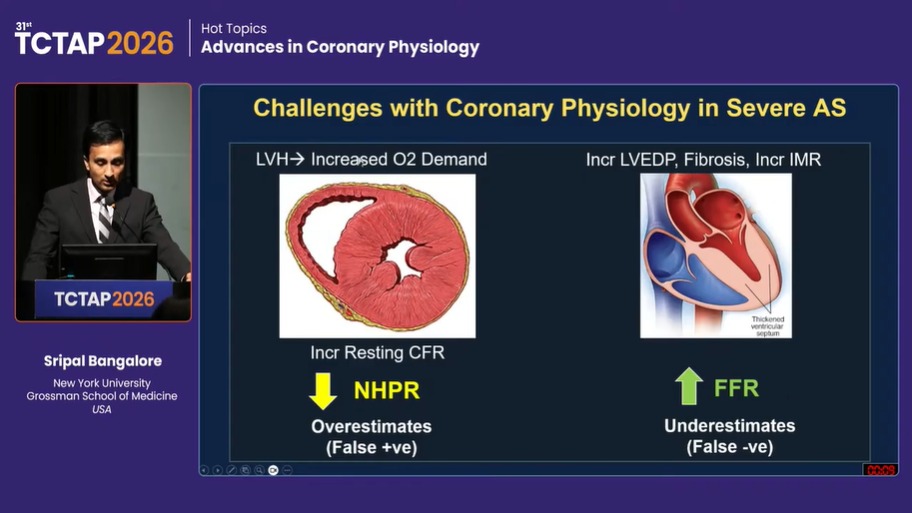
What are the Implications of Severe AS on Coronary Physiology ⁉️
💥Overestimation of NHPR: FALSE ➕️
💥Underestimation of FFR: FALSE ➖️
💥 ⬆️ in Prevalence of FFR-NHPR Discordance ~ upto 42.3 %
💥Defer PCI if iFR >0.85 or FFR >0.83
💥TAVR/SAVR improves physiology indices
🫀📉 Can more intensive LDL-lowering improve CT-FFR in stable chest pain?
This new JACC study evaluates whether intensive lipid-lowering therapy (statin + ezetimibe) alters CT-derived fractional flow reserve (FFR-CT) — a noninvasive marker of lesion-specific ischemia — in patients with stable chest pain and coronary atherosclerosis.
🔍 Study essentials
Patients with stable angina and coronary plaque on CT angiography were managed with aggressive lipid-lowering using statins plus ezetimibe, targeting substantial LDL-C reduction. FFR-CT was measured at baseline and on follow-up to assess functional changes in coronary physiology attributable to therapy.
📈 Key message
The core focus — integrating structural and functional imaging — points to a key concept: lipid-lowering can potentially improve lesion physiology, not just plaque burden. By using FFR-CT (a validated surrogate for invasive FFR), the authors are examining whether aggressive LDL-reduction actually shifts physiological indices toward less ischemia.
🧠 Why this matters
Lipid-lowering benefits have traditionally been shown at the event level (MI, death).
Structural plaque regression with statins/ezetimibe is documented in IVUS and CT studies.
But fewer data exist on functional improvement in coronary blood flow with therapy.
Linking lipid therapy to improved FFR-CT suggests that LDL-lowering may not only slow plaque progression but also improve coronary physiology — a potential mechanistic bridge to clinical benefit.
📌 Bottom line:
Intensive lipid-lowering might influence not only plaque morphology but lesion-specific ischemia as assessed noninvasively, expanding our understanding of how therapies translate into physiological improvement.
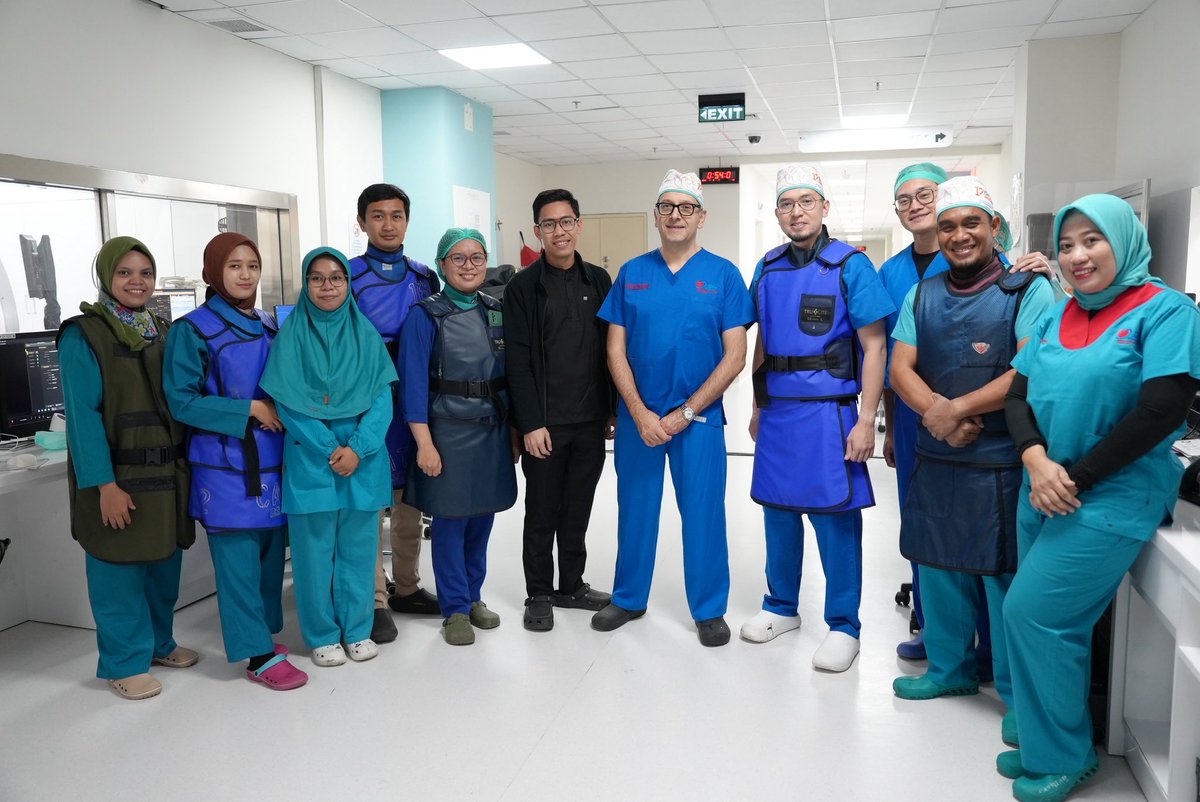
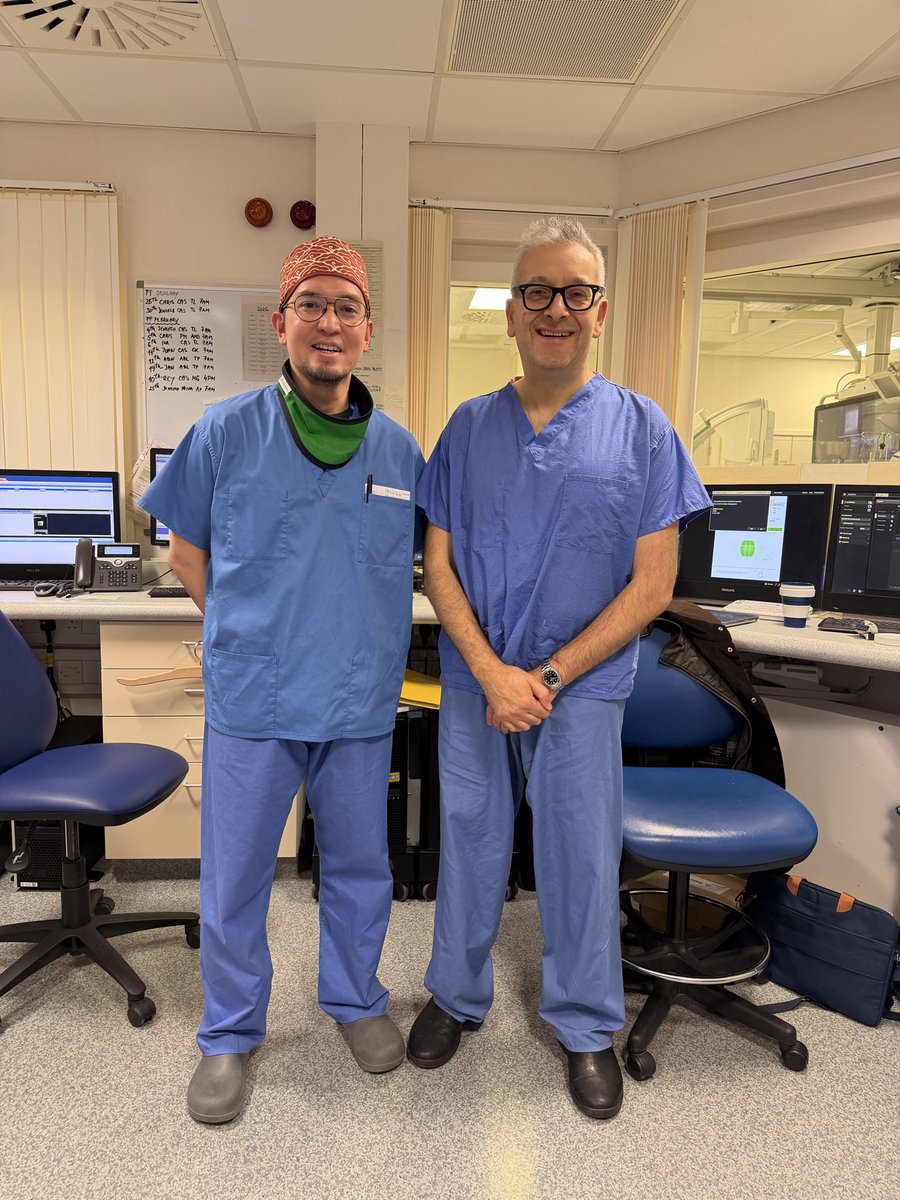
Wonderful to host @Iryuza our interventional fellow from Indonesia who has been with us for the past year for a PCI / TAVI fellowship . It is his last week with us and has been a joy to have him here. Looking forward to a long collaboration with many more fellows
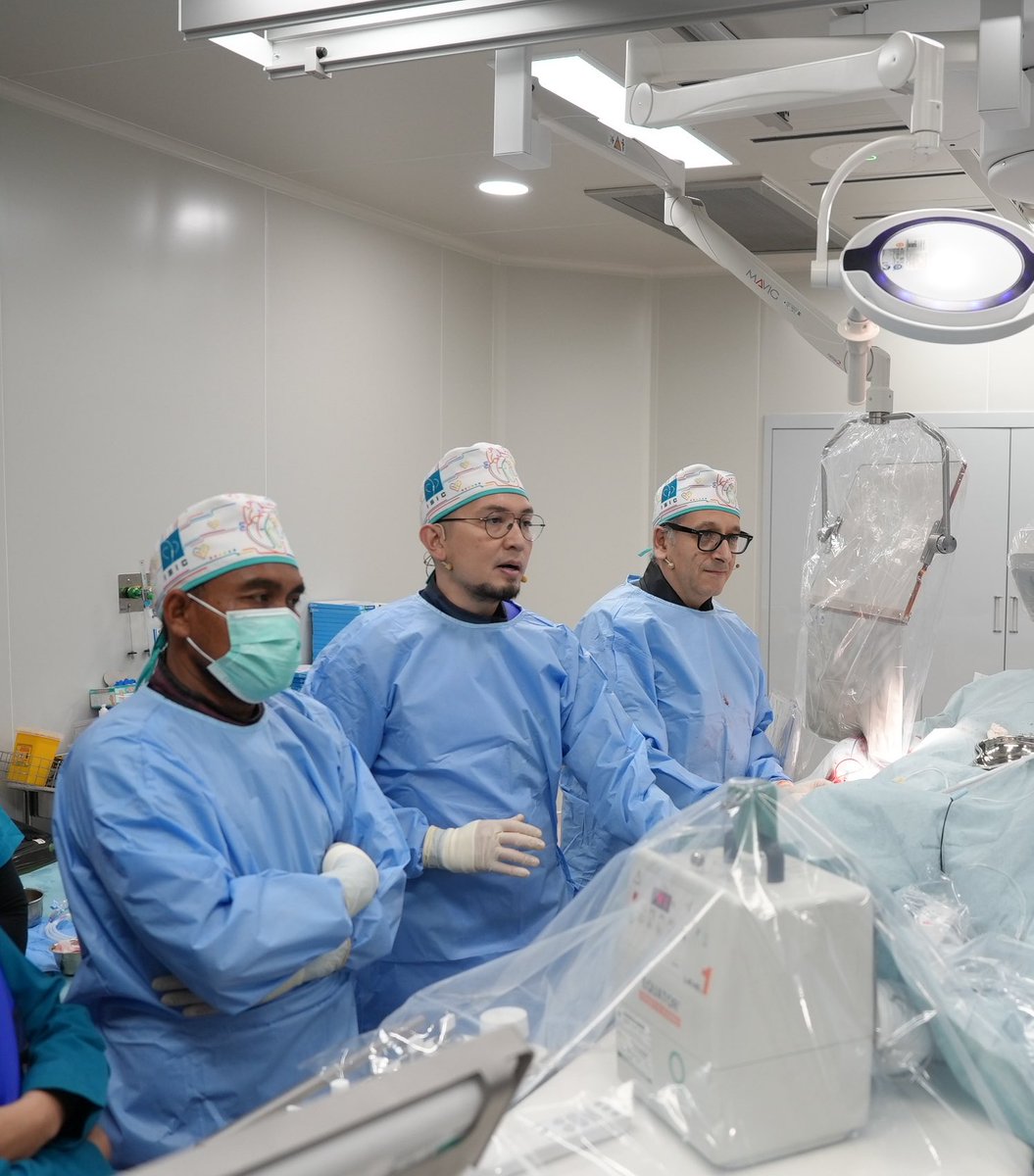
Great honor to have my mentor, Prof. @mmamas1973 in Jakarta for ISICAM! Proud to do a successful live case together at the National Cardiovascular Center Harapan Kita. Educational, inspiring, and memorable. Hope you enjoyed the event!
@ISIC_Official@aninkasaboe
Great evening at #ISICAM gala dinner with dancing, singing 😬 and friends @aninkasaboe@Iryuza@uziyahya46 teguh santoso @Laserrman
What a great meeting, the warmth friendliness and joy of the Indonesian doctors is the best
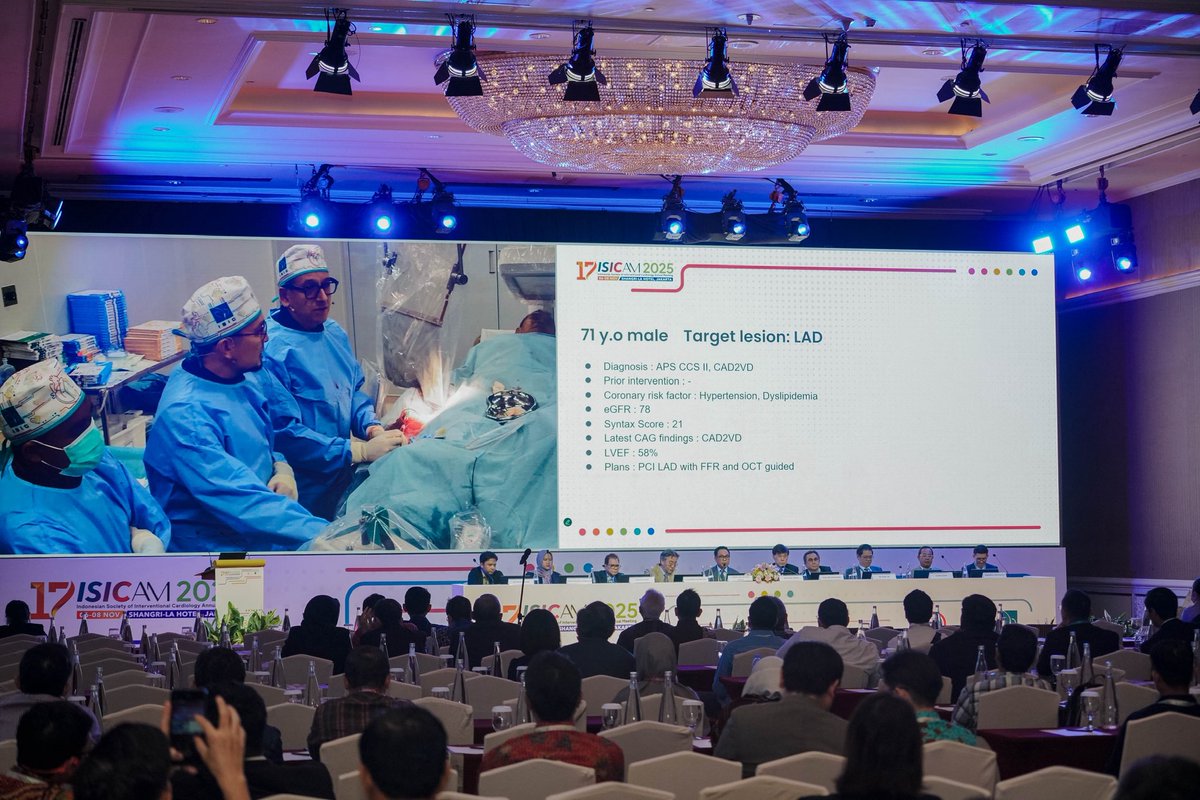
Great to do opening live case at #ISICAM with medina 1.1.1 lms disease and diffuse lad disease.
Oct and physiology guided provisional hybrid approach with prox lad stent into lms, then cutting balloon guided seloution dcb in mid lad with @Iryuza@aninkasaboe@uziyahya46@mirvatalasnag
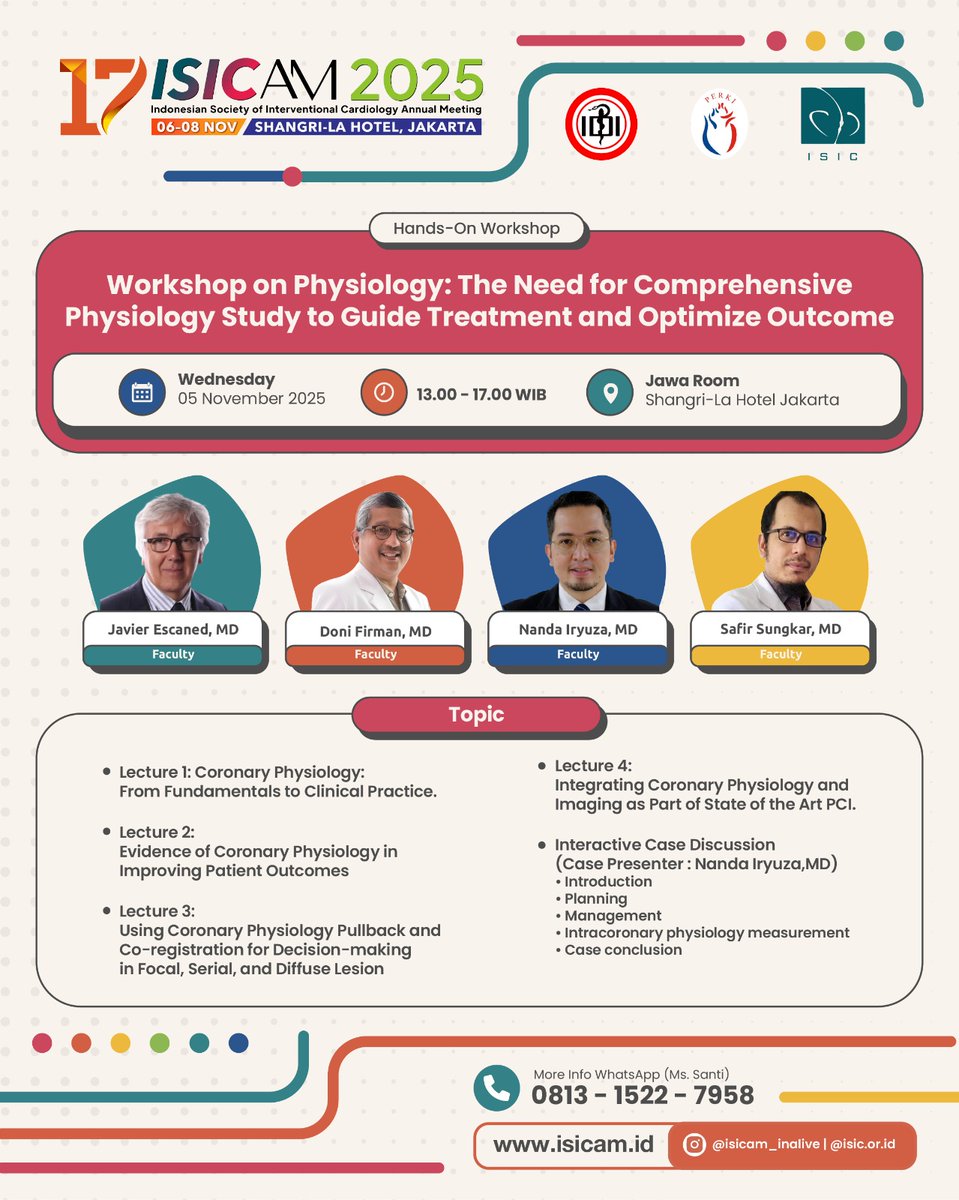
💡 See Beyond the Vessel — Master Coronary Physiology!
Join our hands-on Workshop on Physiology and learn how to guide treatment & optimize outcomes through evidence-based physiology and imaging integration.
🗓 Wed, 5 Nov 2025 | 🕐 13.00���17.00 WIB
📍 Jawa Room, Shangri-La Jakarta
🔗 Register now at https://t.co/rAs7QOOQBZ
#ISICAM2025 #StayOnTrack
@uziyahya46 @Iryuza
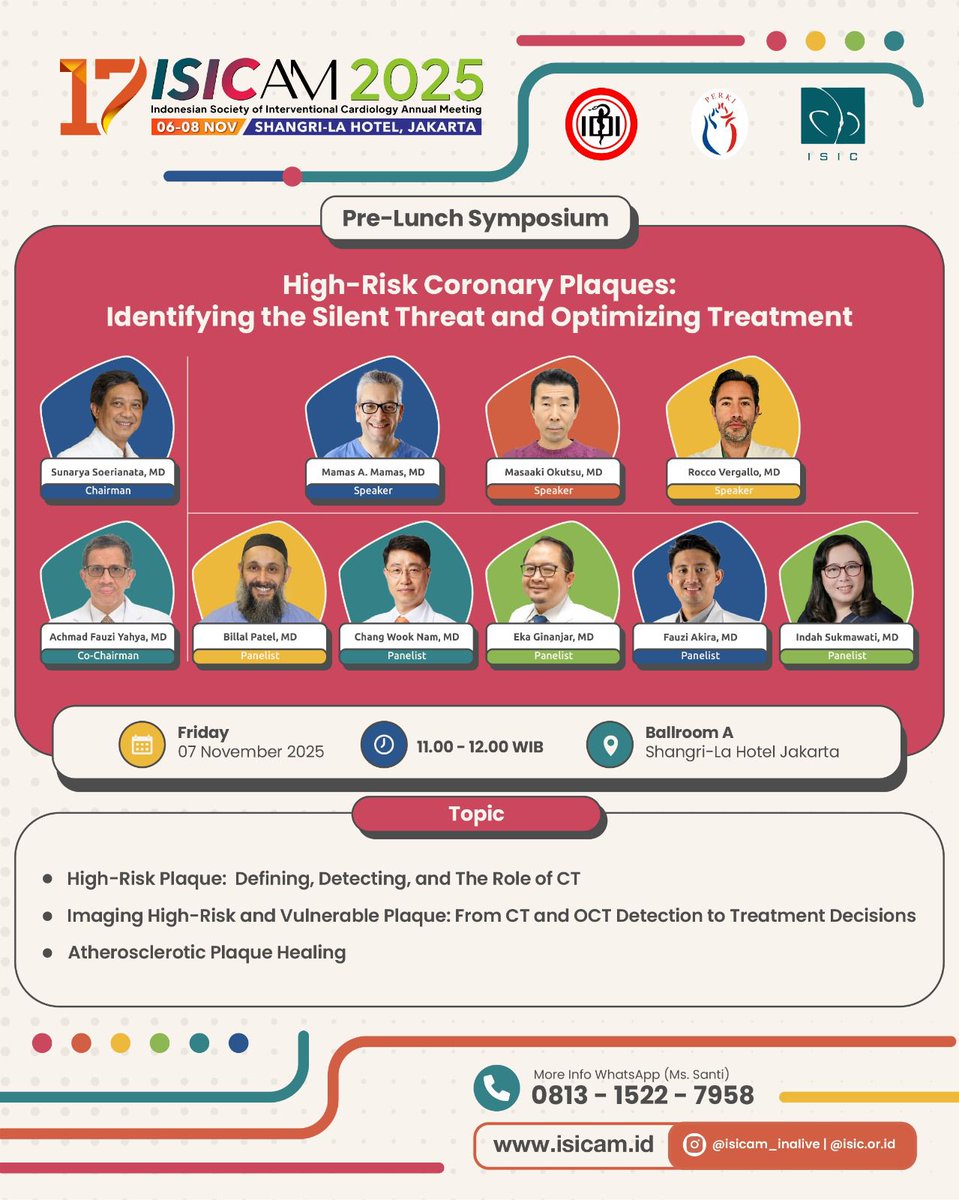
🔥 Hidden Dangers, Visible Impact!
High-risk plaques may stay silent — until it’s too late.
Discover how advanced imaging transforms early detection into life-saving action.
📅 Fri, 7 Nov 2025 | 🕚 11.00–12.00 WIB
📍 Ballroom A, Shangri-La Jakarta
🚀 Don’t miss your next breakthrough — register now at https://t.co/rAs7QOOQBZ
#ISICAM2025 #StayOnTrack
@uziyahya46@mmamas1973@RoccoVergallo@IndahSP_MD et al.
Pinned: Cardiovascular Physiology Hub
Discovering physiology together: untangling the concepts most often misunderstood at the bedside.
Foundations
– Starling’s law as servo-control https://t.co/5ykg5jKUYq
– Cardiac output & Anderson’s model https://t.co/WLfHi3wXnp
– Preload https://t.co/G2dIEPUQfn
– Making sense of acid–base https://t.co/hkfJTbE9kS
– Afterload & systemic vascular resistance https://t.co/S4VNzbaDkm
Concepts in flow & pressure
– Critical closing pressure & waterfalls (series)
• Part 1 https://t.co/Hh5yUbv4gh
• Part 2 https://t.co/g4HHqYJIBf
– High-output heart failure https://t.co/ehaJ4z397M
– Why is CVP in the MAP equation? https://t.co/I7HGQDXtmr
– Tissue perfusion https://t.co/VXPCzH3Gj0
Frameworks & applied physiology
– Shock: pump vs pipes framework https://t.co/vWE53Cdbi9
– Interface model of shock https://t.co/YO6ArpJ7el
– Cardiac output monitors https://t.co/pCNovSfDer
– Sepsis does not cause hypovolaemia https://t.co/f9u2hzfRPN
Why RCTs fail (3-part series)
– Part 1: Consensus, thresholds & physiology https://t.co/VbfWRiZ3mQ
– Part 2: Heterogeneity vs colliders https://t.co/BPbMXPyC1x
– Part 3: Beyond colliders https://t.co/e6ceb4tdCo
I’ll keep adding here as new threads drop.
Planning a PBMV? Don’t start without this!
Dr. Walsh shares a concise, practical prep guide easy to bookmark and refer back to.
#CardioTwitter#CardioX#CathLab
Nonculprit Vulnerable Plaques and Prognosis in Myocardial Infarction With Versus Without ST-Segment Elevation: A PROSPECT II Substudy: @CircAHA
🥸 Rx of nonculprit lesions in STEMI or NSTEMI: @GreggWStone
😱 Summary
👇👇👇
This is the new #PPG Pullback Pressure Gradient - a new physiology-based paradigm in coronary decision-making
High PPG = focal CAD / Low PPG = diffuse CAD
We hope PPG helps us become better interventional cardiologists🙏
@PCRonline@AbbottCardio@coroventis@TCTMD@CoreAalst