₹19,000 crore.
That is what Banks collected in last 3 years just for not maintaining ‘Minimum Account Balance.’
Not from the rich. Not from big borrowers.
From the poorest accounts in the system.
Their crime? They didn’t have enough money.
A farmer misses the minimum balance - Penalty.
A pensioner withdraws money for medicine - Penalty.
A daily wage worker falls short by a few hundred rupees - Penalty.
The poor keep money in banks for safety. Not to be quietly fined for being poor.
Financial inclusion should protect small savings, not punish small balances.
In Parliament today I proposed ending minimum balance penalties so the banking system stops charging people for their poverty.
👏 Kudos to Raghav Chadha for raising this important issue in Parliament.
₹19,000 crore collected as penalties not from the rich, but from those who can least afford it.
This is not just about banking rules, it’s about fairness and dignity.
When farmers, pensioners, and daily wage workers are penalized for low balances, the system needs correction.
👉 Strong step calling for an end to minimum balance penalties.
Respect @raghav_chadha for speaking up for the common people 🇮🇳
Additional SHO Delhi Police: As soon as we apprehend drug peddlers and criminals, we receive orders from the CM to release them.
No Media ran this
No one held a debate
No Questionsasked to Rekha Gupta
SHO has been suspended 😆
Welcome to New India
@mulund_info@VishalmSurve@mybmcWardS@mybmc The irony is that the font size. Veer Savarkar is smaller than the BJP leader's name. The school kids passing by everyday are now confused.
Have sent a legal notice to the senior inspector (encroachment) of the Licensing Dept of A Ward, asking him to face action for being derelict in his duties. His job is to remove the illegal political banners.
@mybmcWardA@mybmc
Let's see how they respond
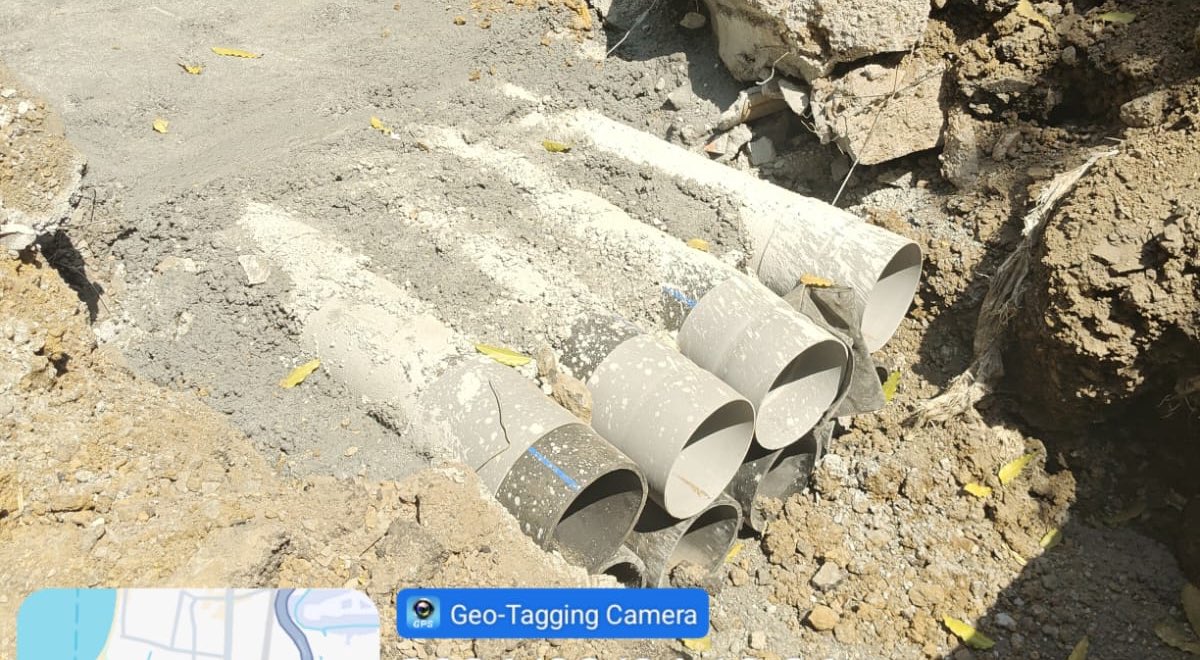
Mumbai Infrastructure Logic – Episode: “₹9 Crore per Km… For Ducts Nobody Uses”
In Mumbai, we have discovered a new engineering formula.
Build 8-pipe underground ducts under roads at an approximate cost of ₹93,378 per running metre.
That’s roughly ₹9.34 crore for just 1 kilometre of road.
And this calculation does not even include the cost of chambers, cast-iron frames and covers — which push the cost even higher.
Now comes the real comedy.
Despite spending crores on these ducts, they are hardly used and or the utilities still dig the same roads again to lay cables.
So naturally a few questions arise:
• Are these 8-pipe ducts actually needed everywhere?
• Why is there no uniformity regarding the no of pipes needed across roads in Mumbai?
• Has even one cable been passed through these ducts for 100 metres continuously?
Taxpayers fund it.
Contractors build it.
Departments certify it.
But the ducts?
They mostly sit underground like very expensive decorative tunnels.
I have written to the @mybmc Commissioner and @mybmcInfra
seeking a technical and financial audit of this duct policy.
@INCMumbai@VarshaEGaikwad
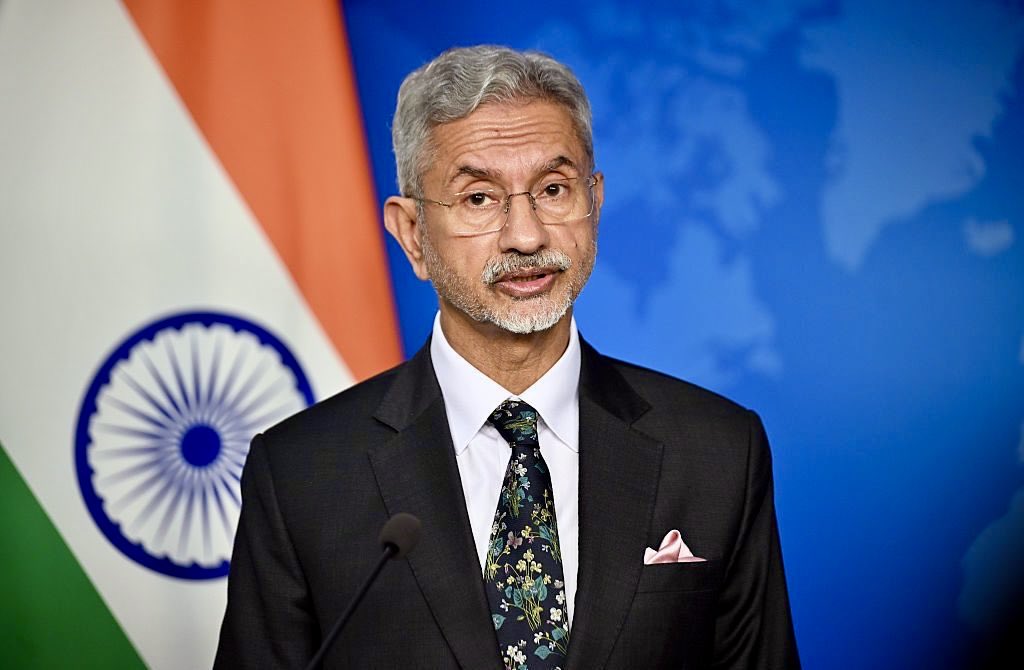
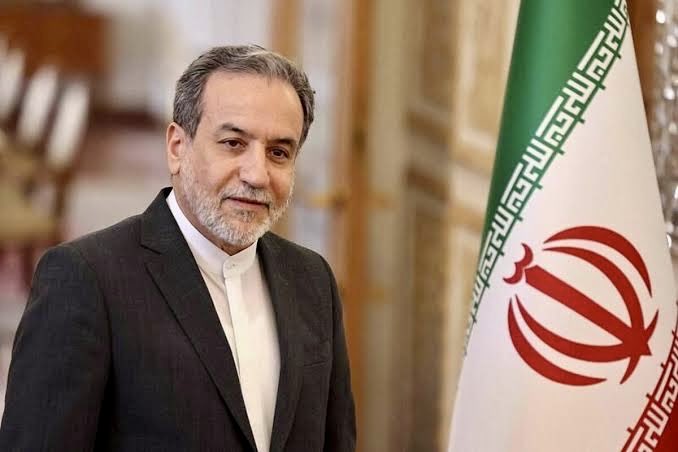
BREAKING: India’s External Affairs Minister called Iran’s Foreign Minister and asked for permission to use the Strait of Hormuz. He received it.
That sentence should be read slowly. The world’s largest democracy, the fifth-largest economy, a nuclear-armed state with the fourth most powerful military on Earth, a country that imports 85% of its crude oil, called Tehran and requested a waiver to transit an international waterway that has been open to all nations under the UN Convention on the Law of the Sea since 1994. And Tehran said yes, on the condition that Indian tankers notify Iranian authorities before entering.
Iran now issues transit permits for the Strait of Hormuz the way a border authority issues visas at an airport. China transits via shadow fleet under IRGC protection without asking, 11.7 million barrels since 28 February, because China funds the war machine. Bangladesh negotiated a waiver on 10 th March. India negotiated one on 11th March. Thailand did not negotiate. The Mayuree Naree was struck by a projectile. Three sailors are missing.
Four tiers of access now govern a 33-kilometre international waterway. Tier one: China, which transits freely because it pays. Tier two: India and Bangladesh, which transit conditionally because they asked. Tier three: the Western alliance, which cannot transit because Iran declared every tanker serving the US, Israel, or allies a legitimate target. Tier four: everyone else, who transits at the risk of being mistaken for tier three by one of 31 autonomous commands that distinguish targets by presence, not flag.
PM Modi’s government told the United States last week that India “never depended on any country” for permission to buy Russian oil. This week, India called Iran for permission to buy any oil at all through Hormuz. The multi-alignment doctrine that positions India as beholden to no single power has produced a country that simultaneously rejects American conditions on Russian crude and accepts Iranian conditions on Gulf crude. India does not take orders. India takes permissions. From everyone, depending on the waterway.
The Jaishankar-Araghchi phone call is the most consequential diplomatic exchange of the war that nobody is covering. It establishes that the post-28 February Hormuz is not closed and not open. It is licensed. And the licensing authority is a government whose Supreme Leader is cardboard, whose military command just announced continuous strikes, whose 31 autonomous provincial commands operate on sealed orders from a dead man, and whose foreign minister grants transit waivers that no one can guarantee the military will honour.
The waiver is issued by Tehran’s diplomatic wing. The weapons are controlled by the Mosaic Doctrine’s 31 autonomous commands. The diplomatic wing and the military wing do not communicate through a functioning chain of command. The same disconnect that burned Oman’s oil tanks while the president apologised could strike an Indian tanker while the foreign minister guarantees its safety.
India has 10 million citizens working in the Gulf. Their remittances sustain families across Kerala, Tamil Nadu, Andhra Pradesh, and Uttar Pradesh. India imports two-thirds of its LNG through the Strait. India’s March fertiliser tenders went unawarded because no cargo could transit. The permission is not optional. It is existential. And the country granting it cannot guarantee its own military will respect it.
The Strait of Hormuz now operates on the same principle as every chokepoint this war has created: the threat is cheaper than the defence, the insurance cannot price it, and the authority that grants passage answers to a dead man’s orders and a living man’s cardboard photograph.
https://t.co/eMrt5qYYst
Convicted paedophile and sex offender Asaram is enjoying religious sojourn in Ayodhya where he will visit the Ram temple. This is the judiciary of our country which allows quick bail to sex offenders but scientist and activists are kept in jail without any hope of bail.
BREAKING 🚨 🇮🇳The wall of this flyover on NH-19 (Durgapur Expressway) in Memari, East Burdwan, collapsed today.
It is part of the National Highway Expansion Project, which was completed about 10 months ago.
Public money has collapsed. 🤬