One night of rumors nearly changed the fate of the Iron Throne, as Daemon's ambitions and Rhaenyra's choices sparked a political storm that threatened the future of the realm.
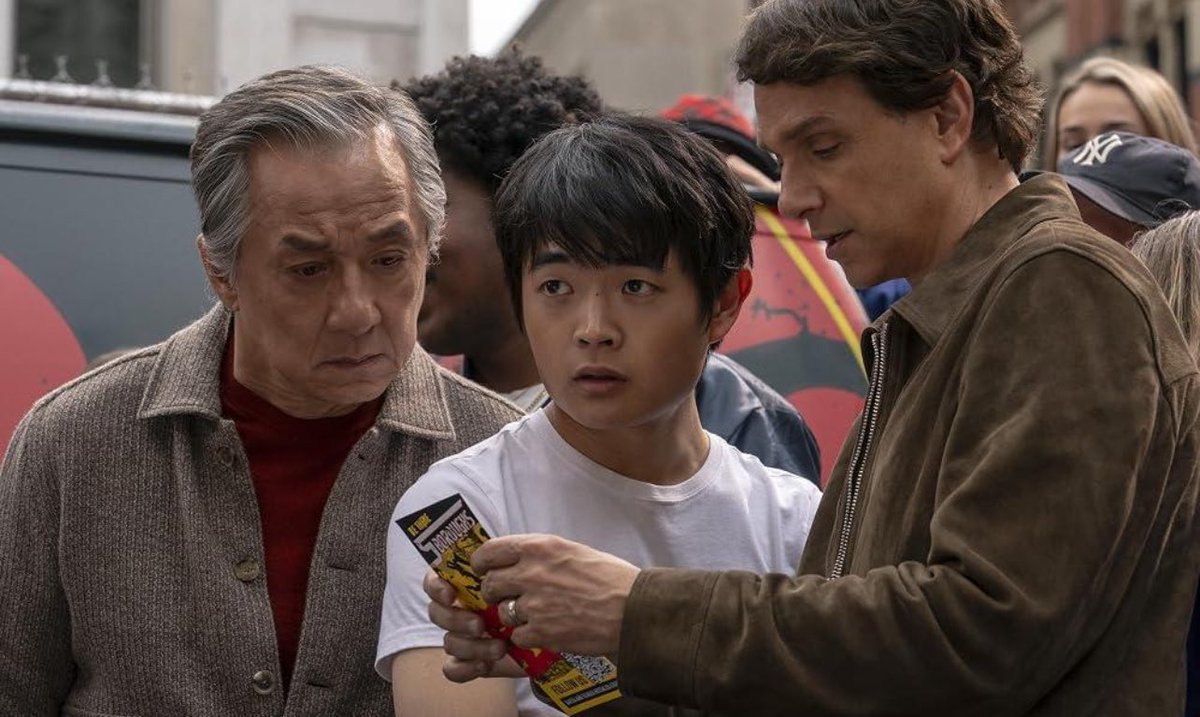
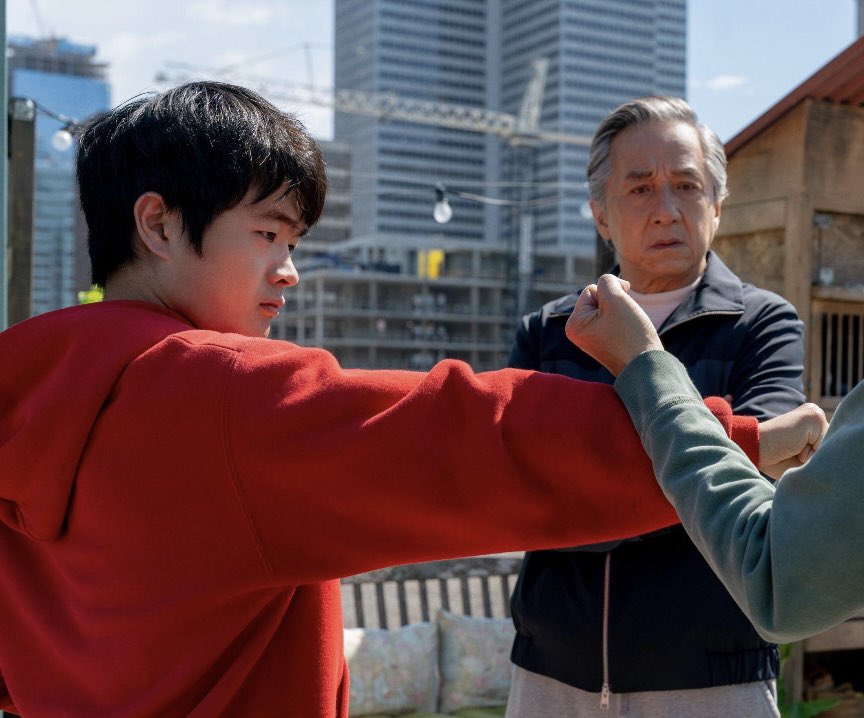
Karate Kid: Legends (2025) ⭐️⭐️⭐️⭐️⭐️
KARATE KID: LEGENDS ISN’T REALLY ABOUT LI FONG LEARNING TO FIGHT. IT’S ABOUT HIM LEARNING THAT HE DOESN’T HAVE TO RUN FROM WHO HE IS.
Li Fong starts the movie trying to leave kung fu behind. After losing his brother, his mother wants him away from fighting, and Li starts believing that the safest way to move forward is to bury the part of himself that made him a fighter in the first place.
But New York keeps pulling that part of him back out.
The interesting thing is that Mr. Han and Daniel LaRusso aren’t really teaching Li how to become someone new. They’re teaching him how to combine what he already has. Mr. Han gives him kung fu. Daniel gives him Miyagi-Do. Li becomes strongest when he stops choosing between the two.
And that makes the title “Legends” more meaningful than just bringing Jackie Chan and Ralph Macchio together.
Daniel is carrying Mr. Miyagi’s legacy. Mr. Han is carrying his own family’s martial-arts tradition. Now Li becomes the person who connects those worlds.
The movie is basically saying that legacy isn’t about copying your teacher.
It’s about taking what they gave you and becoming something they never could have been.
And honestly, Li’s biggest enemy was never Connor.
It was the belief that fighting automatically meant becoming the person he was afraid of becoming.
Do you think Li became a better fighter because of Daniel and Mr. Han or because they finally taught him to trust the fighter he already was?
I let the shop assistant take me between biography and travel.
I’m 36. He’s 26. Tuesday afternoon. Empty first floor.
My husband was in the café with the bags.
I asked where poetry had moved.
It hadn’t.
I was sitting in first class when the flight attendant leaned down and whispered, “Ma’am, I need you to act normal.”
I looked at her. “Why?”
She glanced toward the man sitting beside me.
“Because the man next to you just asked me how much money you have in your bank account.”
I laughed. “What?”
She lowered her voice.
“He offered me $500 to find out.”
I stared at my boyfriend.
He was asleep with his hand resting on my thigh like the perfect boyfriend.
The flight attendant walked away.
I didn’t wake him.
I just opened my banking app.
$184,672.91.
And suddenly, the $9,800 engagement ring he had bought me didn’t feel romantic anymore.
The Introduction of the new prince of wakanda prince t”challa
This was a GOAT-level casting decision and I don’t think people are talking about it enough.
This man can flat out act. Not “pretty good for a rising star” act. Not “he’s having a moment” act. Proper, range-for-days, steal-the-whole-movie act. Rye Lane. Alien: Romulus. Industry. The Long Walk. Wasteman. Pick your poison, he’s great.
What’s wild is how different those roles actually are. Charming and awkward in a south London rom-com. Unsettling and oddly tender as an android. Sharp and slippery in finance. Quietly magnetic in a dystopian death march. Then raw, watchful, and heartbreaking in a prison cell. Same face. Completely different human every time.
You can tell he actually thinks about the person he’s playing. The little pauses. The way his eyes change before the line does. That thing where you forget you’re watching an actor and just start worrying about the character. That’s the gift.
Some people blow up and stay in one lane. He’s doing the opposite. Every project feels like a dare and he keeps winning it. If you’ve been clocking him since Industry, you already knew. If you just caught him in one of the later ones, welcome. He’s that guy
A few years ago, I worked the night shift at a small hotel in Lisbon.
Around 2 a.m., a young woman walked in barefoot, carrying her shoes.
She asked for a room.
But every few seconds, she looked through the glass doors behind her.
I told her we were full.
We weren't.
I just wanted to keep her inside.
She said her phone had died and asked if she could call her sister.
I handed her the desk phone and made her tea.
Her hands were shaking so badly she spilled half of it.
Then I noticed a man across the street.
He stood beneath a streetlight, staring at our entrance.
The woman saw him.
Her face went white.
"He said he'd wait," she whispered.
I locked the front door.
Then she looked at me and said:
"Please don't let him know I'm here."...
Florence Pugh casually described something that makes her early acting career sound completely unhinged.
The funny part is how normal she makes it sound. She isn't sitting there trying to convince everyone that she was some tortured, ultra-serious method actor from day one. She tells it with enough ease that you almost miss how intense the mindset actually was. Then the details sink in, and you realise she was already approaching characters with a level of commitment most people would find excessive. That contrast is what makes the story interesting: she can laugh about the process now, but you can hear how seriously she took the work even at the beginning. Sometimes the most revealing stories about an actor are the ones they tell like they're completely ordinary.